
Forget chasing the latest body trend: building strength is one of the best investments you can make in your future fitness. Celebrity trainer Dan Roberts shares five kettlebell exercises to help women over 40 develop stronger muscles, better coordination and the confidence to keep doing the things they love
“Spend any time in the gym or follow female fitness creators on social media, and it’s clear that many women aspire to have a strong physique,” says Celebrity Trainer and Strength, Conditioning and Performance Coach Dan Roberts, who has worked in the industry for over 30 years, training established supermodels and Victoria’s Secret Angels to look, move and feel their best.
But once you hit your 40s, there’s an even better reason to start lifting – you want a body that’s actually strong.
“Body trends come and go, but what doesn’t change is that if you’re training with me, you’re lifting heavy-ass weights,” says Roberts. “It’s the best way to build a strong, resilient body and gives you a foundation for all the cool stuff I want my clients to learn, like powerlifting, plyometrics and martial arts.”
And as we get older, strength becomes increasingly tied to the things that really matter: getting up off the floor, carrying the shopping without tweaking your back and having the strength and balance to stay confidently on your feet.
“The aim is to build the foundations now so that, as we get older, we can maintain our quality of life – whether that’s getting up from the floor independently or continuing to walk confidently without assistance,” says Roberts.
His expectations of what women are capable of don’t suddenly drop once they hit 40, either. “All my clients in their 50s over the past 10 years can deadlift at least 1.3 times their bodyweight and do full chest-to-floor press-ups. Most can do at least one strict pull-up too.”
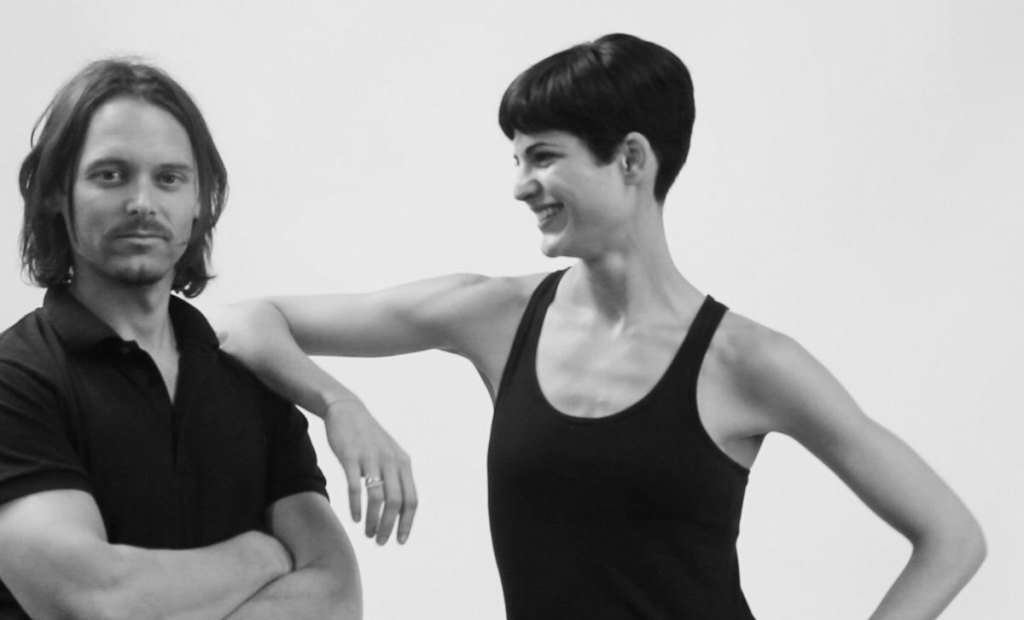
Roberts sees no reason to stop there. “There’s absolutely no reason why a woman in her 40s or 50s can’t do all the fun athletic things we associate with 20-year-old athletes.”
So, which exercises should we be doing to stay strong, mobile and capable as we age? Roberts recommends these five exercises to help build the strength, stability and mobility that matter beyond 40.
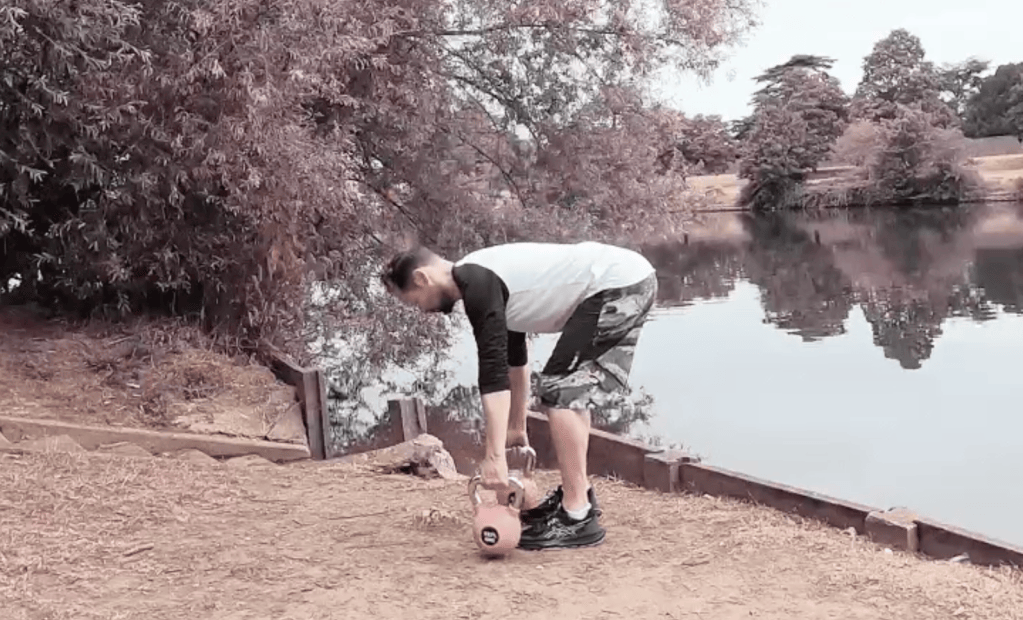
Move 1: Romanian deadlift (RDL)
Time: 40 seconds
Benefits: A brilliant move for strengthening your glutes and hamstrings while also working your lower back and core, and helping to support good posture.
How to do it:
Stand tall holding a kettlebell in front of your hips, with a slight bend in your knees. Push your hips backwards as you lower the kettlebell towards the floor, keeping your chest lifted and your head in line with your spine. Stop when you feel a stretch through the backs of your thighs, then squeeze your glutes and drive your hips forwards to return to standing.
Move 2: Unilateral bent-over row
Time: 40 seconds each side
Benefits: Strengthens your back, biceps and shoulders while giving your grip and core a workout, too.
How to do it:
Take a wide, stable stance and hinge forwards, resting your left forearm on your left thigh for support. Hold a kettlebell in your right hand, with your arm extended towards the floor. Brace your core, then drive your right elbow upwards to bring the kettlebell towards your ribs. Keep your torso still and lower the weight slowly and with control. Continue for 40 seconds, then swap sides.
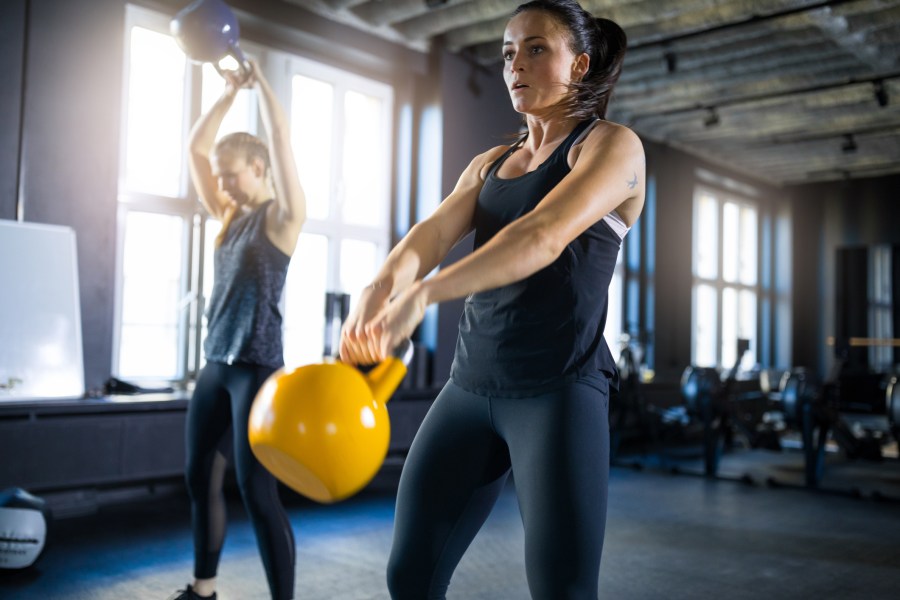
Move 3: Kettlebell swing
Time: 40 seconds
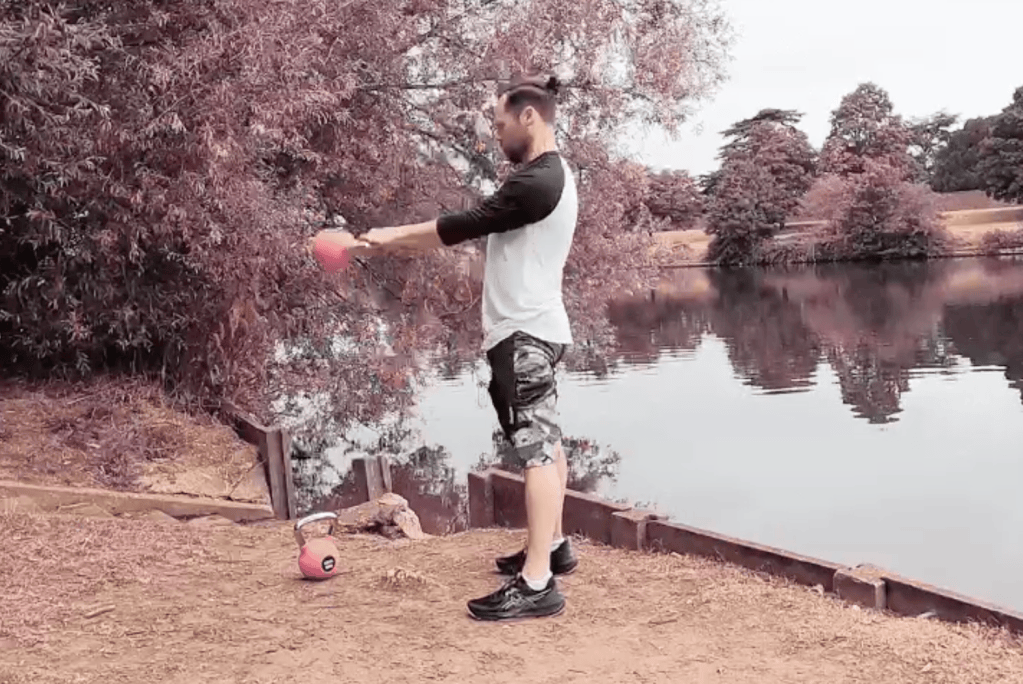
Benefits: This dynamic exercise strengthens your posterior chain – the muscles running down the back of your body, including your glutes and hamstrings – while developing power, endurance, grip strength and cardiovascular fitness.
How to do it:
Stand with your feet slightly wider than shoulder-width apart and hold a kettlebell with both hands. Push your hips backwards and allow the kettlebell to travel between your legs, keeping your core engaged and spine neutral. Drive your hips forwards to propel the kettlebell to around chest height, then let it fall naturally as you hinge at the hips again. Think about generating the movement from your hips rather than pulling the kettlebell up with your arms.
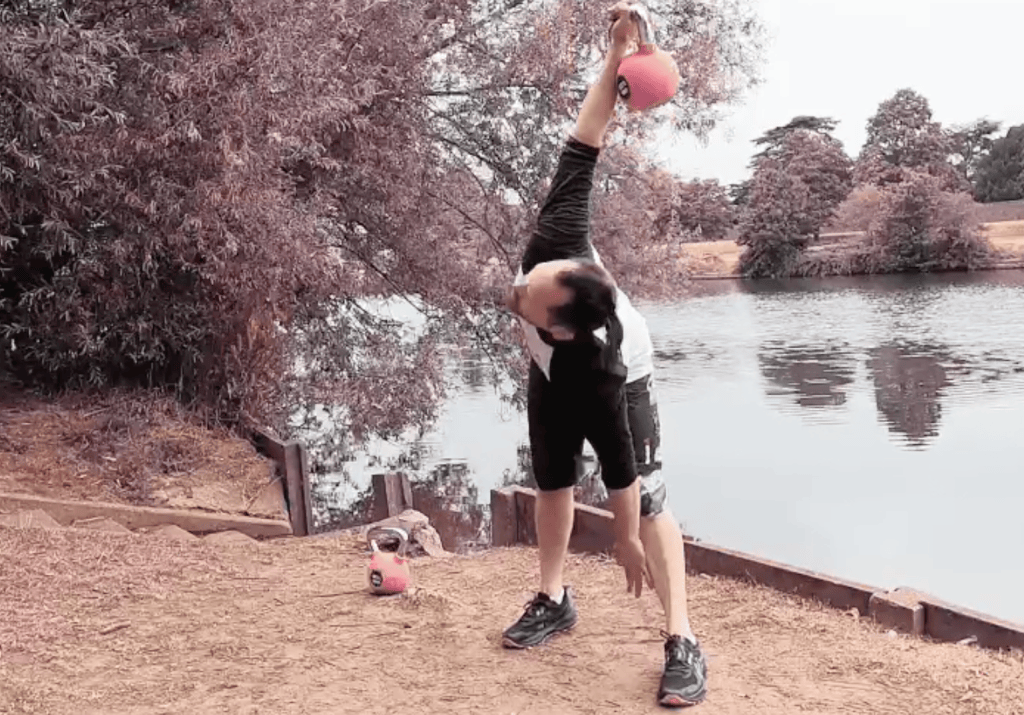
Move 4: Kettlebell windmill press
Time: 40 seconds each side
Benefits: This challenging move works your obliques, triceps and shoulder stabilisers, while also testing your coordination, mobility and balance. You should feel a lovely stretch through your hamstrings, too.
How to do it:
Stand with your feet about one and a half times shoulder-width apart and hold a kettlebell in the rack position at your right shoulder. Turn your feet approximately 45 degrees to the left and push your right hip out to the side. Keeping your heels grounded, hinge to your left as you press the kettlebell overhead, reaching your left hand towards the floor. Return to standing with control and repeat, then swap sides.
Move 5: Tactical clean to reverse lunge
Time: 40 seconds
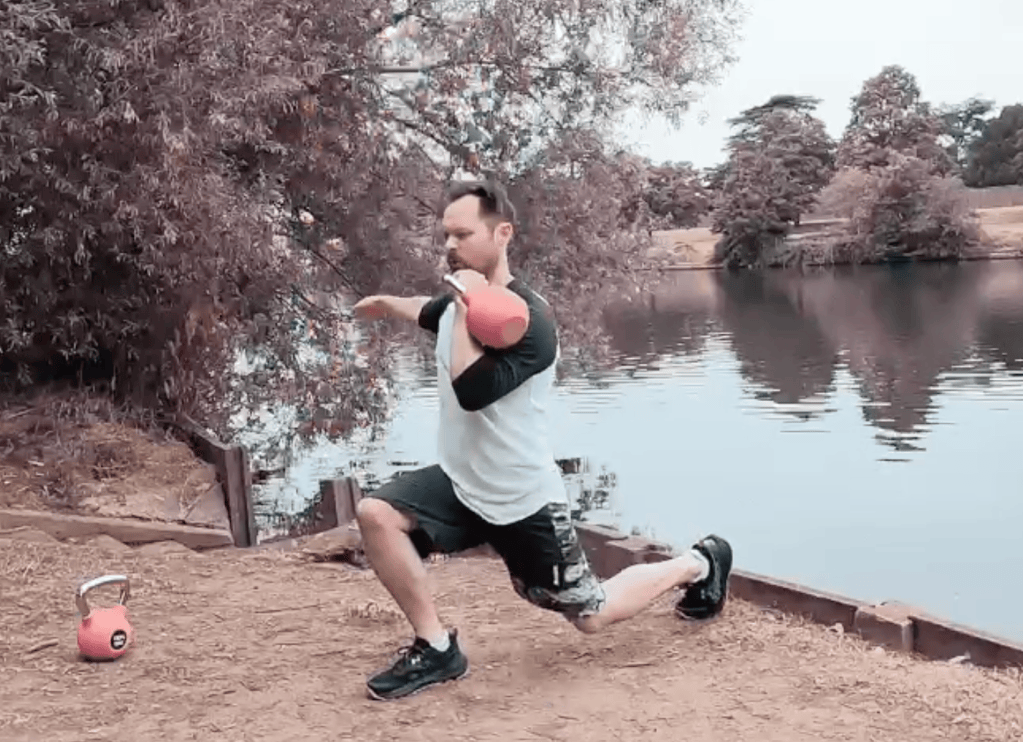
Benefits: A great full-body exercise for building strength and coordination, working your glutes and legs as well as your core, arms and shoulders.
How to do it:
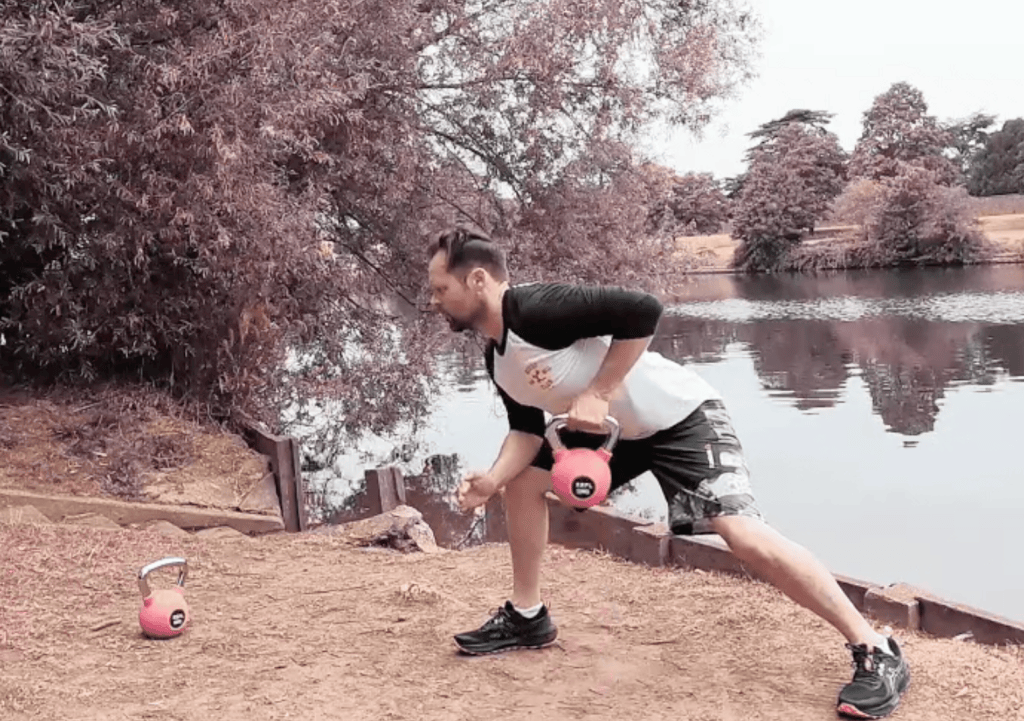
Stand with your kettlebell on the floor between your feet. Hinge at your hips and pick it up with your left hand, using a clean to bring it quickly towards your chest. As it reaches your chest, transfer the kettlebell into your right hand and bring it into the rack position at your right shoulder.
Step your right leg backwards into a reverse lunge, then push through your front foot to return to standing. Lower the kettlebell to the floor with your right hand and repeat on the opposite side, this time bringing the kettlebell to your left shoulder and stepping your left leg back.
How much should you do?
“I don’t tend to prescribe reps and sets,” says Roberts. “Instead, I like to mix things up – it might be 100 reps in total, trying to get there as quickly as possible, or a target time such as four sets of 90 seconds.”
And there’s a reason for his approach. “I don’t like my clients always counting reps because I find the mind naturally wanders to how many there are until the end. I want them training mindfully – focused on what they’re doing rather than simply getting the exercise over with.”
For this workout, try each move for 40 seconds, resting as needed between exercises so you can maintain good form. For single-sided exercises, complete 40 seconds on each side.