
A healthy pelvic floor is about more than doing your Kegels – it can transform your daily life. But if you can never find the time to do a pelvic floor workout, there’s no need to worry – it doesn’t have to be separate from your strength training at all
Words: Amy Dowrick | Images: Shutterstock & Connect Pelvic Floor Fitness
“Pelvic floor training isn’t separate from strength training,” says Dr. Caroline Packard, DPT, founder of Connect Pelvic Floor Fitness. “Your pelvic floor is literally the floor of your core. It works with your diaphragm, deep abdominals, the muscles along your spine, your hips and your glutes to keep you stable when you move.”
Keeping your pelvic floor strengthened helps build a healthy foundation for just getting through your day-to-day. Every time you cough, lift, run, jump or even stand up from a chair, pressure increases inside your abdomen – and when you prioritize supporting this muscle area, everything else can be managed much better.
“When your diaphragm, deep core and pelvic floor coordinate well, that pressure spreads through your trunk instead of bearing down on your pelvic floor,” adds Dr. Caroline. “That’s pressure management. It supports your spine and pelvis and lets you produce force without leaking, heaviness or excessive bracing.”
And according to Dr. Caroline, a functional pelvic floor should do far more than squeeze – it must lengthen, contract and respond all at the right moment.
“That’s why someone can be objectively strong and still leak or feel pelvic pressure when the load gets heavier,” she says. “When the system is coordinated, it supports bladder and bowel control, your pelvic organs, a stable spine and pelvis, sexual function and your ability to keep adding load.”
So don’t see pelvic floor strengthening as something to work on in isolation. Dr. Caroline suggests training to make it responsive, coordinated and capable under real-life demands.
Signs you need to train your pelvic floor
While leaking is the symptom most people recognize, it isn’t the only one.
“Urinary urgency or frequency, pelvic heaviness or pressure, a sensation of vaginal bulging and pain with intercourse can all be signs that your pelvic floor deserves closer attention,” says Dr. Caroline. “So can constipation or repeated straining, difficulty starting your urine stream or feeling fully empty, and persistent low-back, hip, tailbone or pelvic pain.”
And you don’t even need to have given birth. Dr. Caroline says that she sees a weak pelvic floor in many of her clients, including lifters, runners and women in perimenopause and menopause.
“Also pay close attention to what happens under load,” she says. “Holding your breath, bearing down, gripping your abs, clenching your glutes or seeing your abdomen push outward are all clues.”
“So are symptoms that only show up when you run, jump or lift heavier,” she adds. “They can mean your coordination or capacity no longer matches the demand.”
Dr. Caroline also suggests thinking of any symptoms as information rather than failure. “They show you the threshold where your system is losing its strategy, and that gives you something specific to modify and retrain,” she says.
But symptoms equally don’t tell you the diagnosis – and leaking doesn’t automatically mean weakness. According to Dr. Caroline, the pelvic floor can be weak, overactive, poorly coordinated, or tight all at the same time, and each one needs a different starting point.
“A lot of pelvic floors aren’t weak, they’re tight, and a muscle often needs to lengthen before it can get stronger,” she says. “If yours is already tense, more squeezing can make things worse.”
If you’re already reorganizing your life around a symptom, whether that’s avoiding certain workouts, wearing pads, scouting bathrooms or skipping activities you love, that alone says everything – but if your symptoms aren’t changing with consistent work, or you can’t even tell whether you’re lifting your pelvic floor or bearing down, Dr. Caroline suggests seeing a pelvic floor physical therapist.
Why should pelvic floor training not be considered a separate exercise?
Your pelvic floor is involved in everything you do – so why isolate its training?
“It moves with every breath, helps stabilize your trunk and helps manage pressure whenever you squat, hinge, press, carry, run or jump,” says Dr. Caroline. “So, treating it as ten minutes of isolated contractions, then ignoring it for the rest of your training, misses how the body works. Why would the pelvic floor matter for ten minutes of ‘pelvic floor exercises’, then somehow stop mattering when you go run or lift afterward?”
To make it simpler, Dr. Caroline suggests thinking about pelvic floor rehab the same way you’d think about any other rehab. “If your goal after a knee injury were to return to running, you wouldn’t stop once you could do a few basic exercises on a treatment table,” she says. “You’d keep building load, speed and coordination until the knee was ready for your sport. Pelvic floor training deserves the same progression, from foundational control into the strength and impact your activities demand.”
And you won’t even have to think about your pelvic floor in every rep forever. As you practice the breathing and coordination at a simple level initially, Dr. Caroline says that the strategy will become more automatic as the movement gets heavier, faster and more complex.
How to integrate pelvic floor training within your existing workouts
You don’t need a separate pelvic floor workout tacked onto the end of your session. According to Dr. Caroline, just a few minutes at the start to set up your breathing is enough and then carry on by adding one cue into every lift.
“Start with the breath,” she says. “Before you pick up a weight, take a few slow 360-degree breaths and let your ribs expand to the front, sides and back. On the inhale, your pelvic floor lengthens. On the exhale, it lifts. That’s the pattern you’re about to load.”
“Then exhale on the effort,” she adds. “Inhale on the easier part of the lift and start your exhale as you come up from the bottom of a squat or press overhead. I think of it as blowing the pressure off your pelvic floor instead of holding your breath and bearing down on it.”
But don’t skip your hips and glutes, as they work closely with your pelvic floor, and Dr. Caroline says that strengthening them is often a missing piece for women whose symptoms aren’t improving with pelvic floor work alone.
Try this pelvic floor workout before you strength train
Dr. Caroline shares her pelvic floor workout to set you up before your standard strength training routine.
Narrow child’s-pose breathing
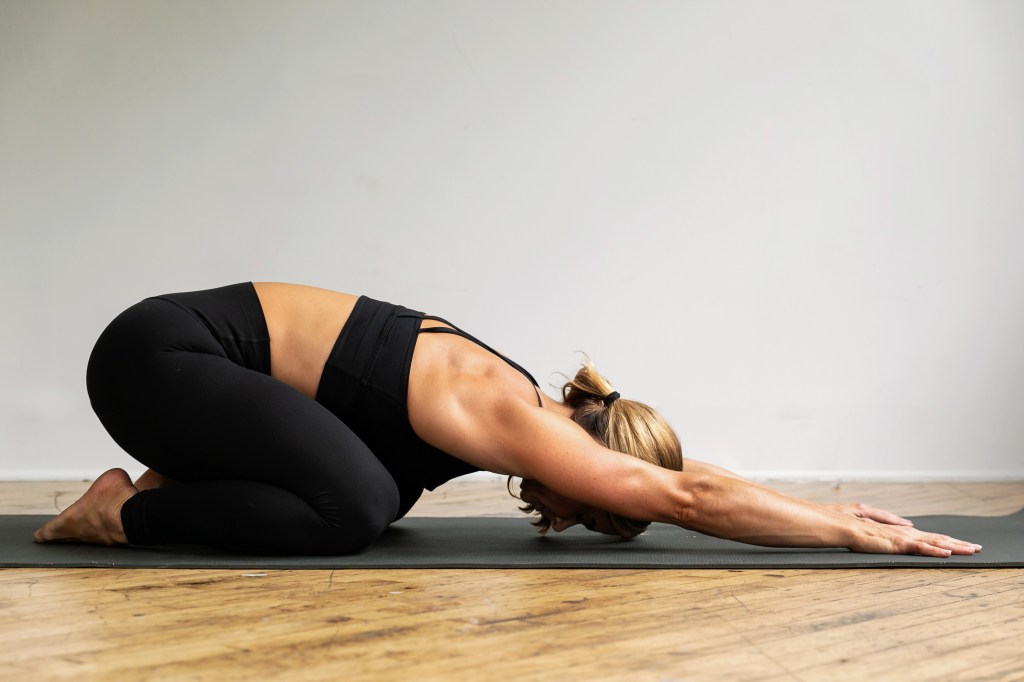
“Breathe into the back and sides of your ribs and let your pelvic floor lengthen on the inhale. It’s the easiest position to feel the breath before you add load.”
90-90 progression
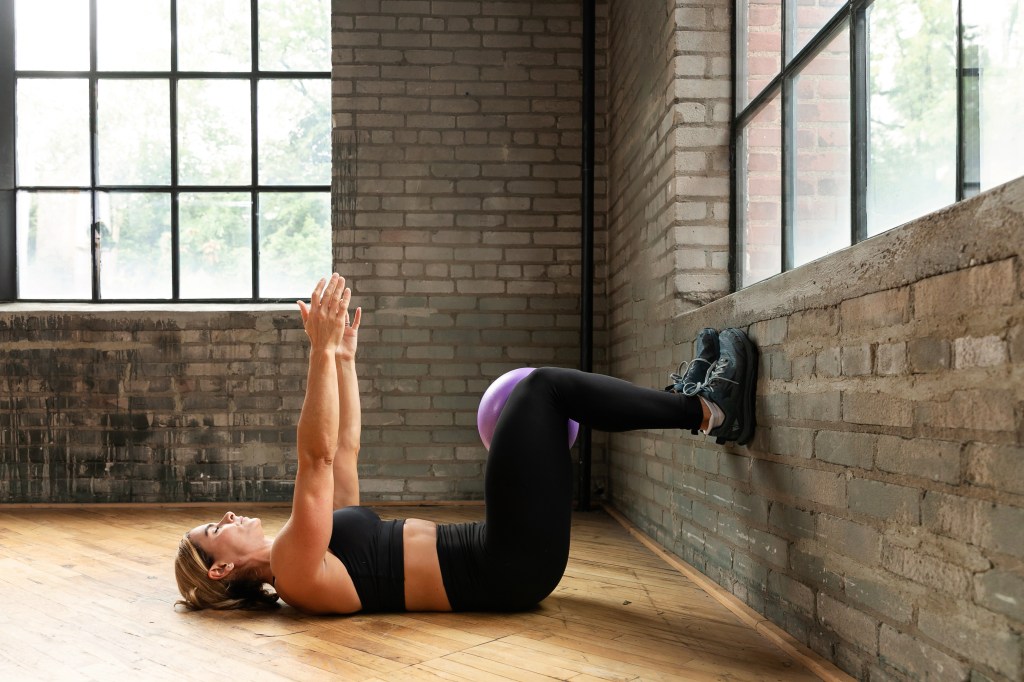
“Connect your rib cage, core and pelvis, then make it harder by moving toward one leg while you keep the same breath. This teaches you to breathe 360 degrees while your core is already working.”
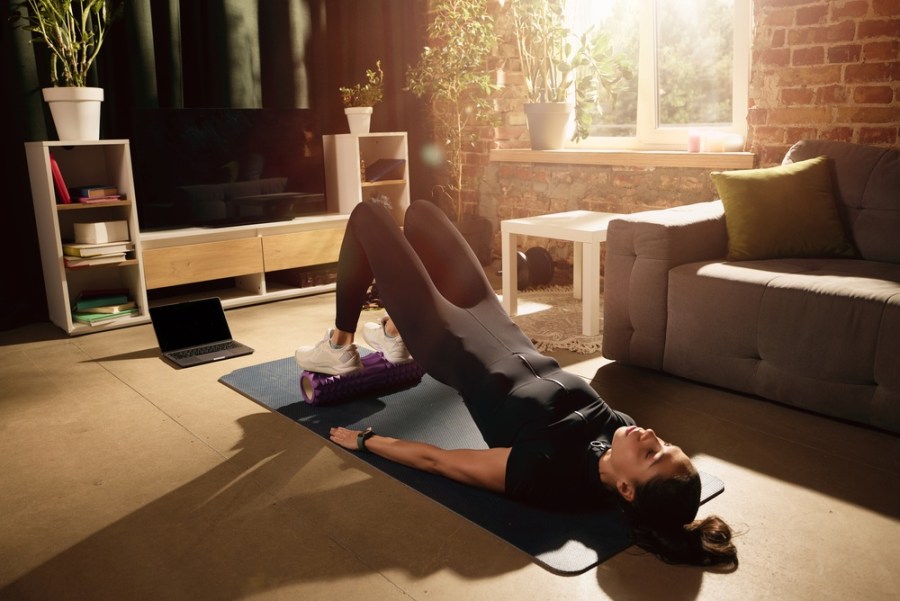
Bridge with abductor engagement
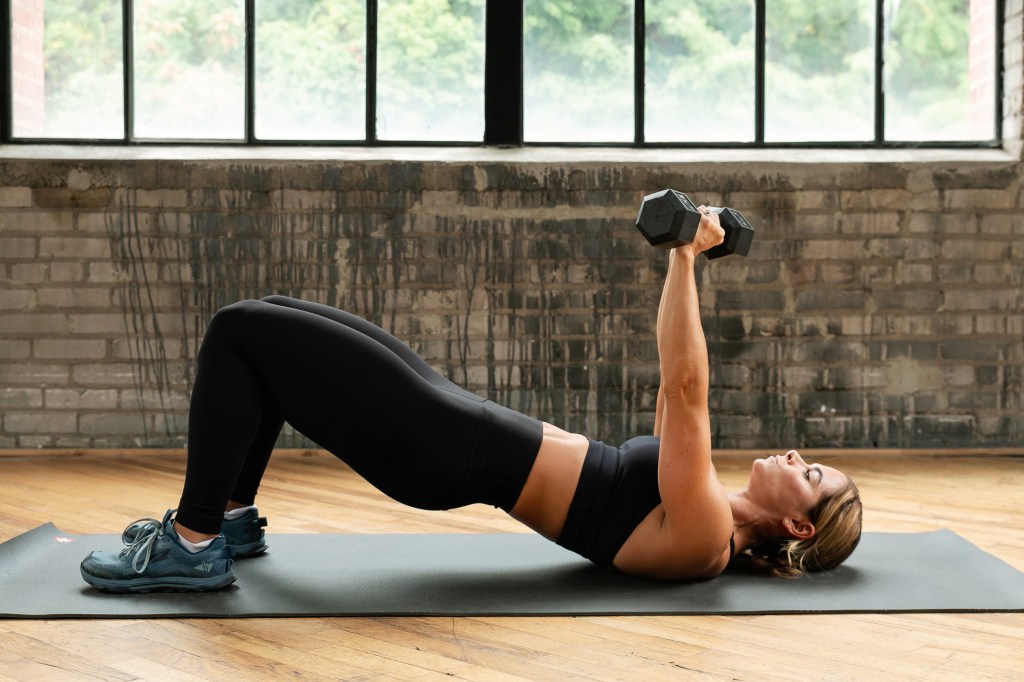
“This brings in your glutes and inner thighs while you keep the same breathing strategy. It reinforces the coordination you’ll need later in a squat.”
Goblet squat or squat hold
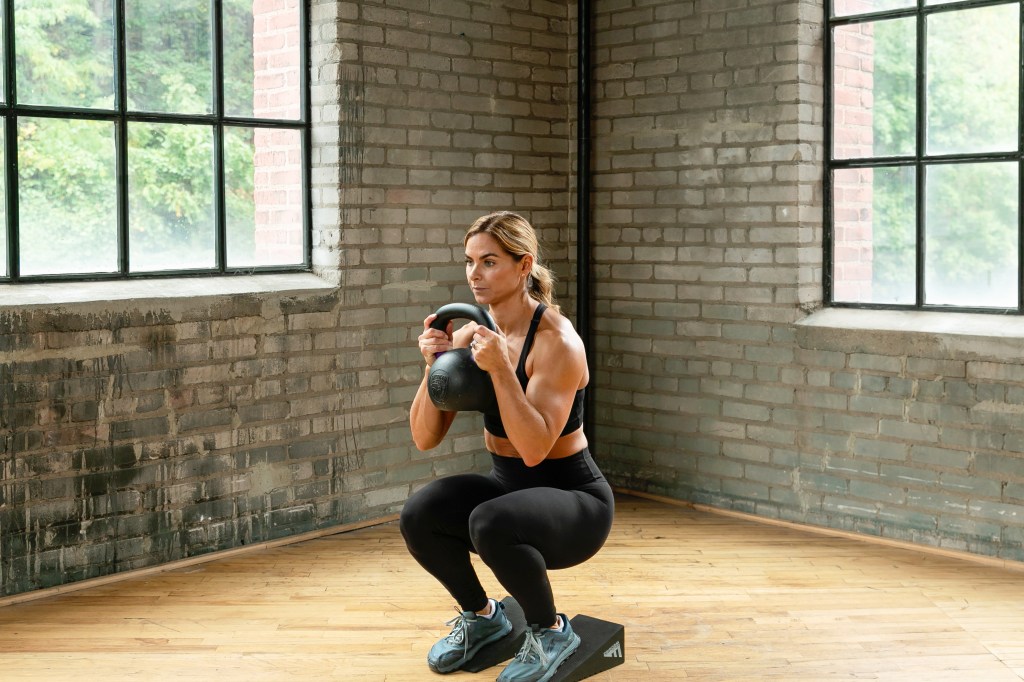
“Same breath, now under load. This is where the foundational work starts to look like regular strength training.”
And if symptoms continue to show, Dr. Caroline says to not panic and scrap the routine altogether. Instead, see it as an insight into where your strategy might be lacking.
“They tell you where your strategy ran out, so change one thing: lighten the load, slow the tempo, shorten the range or change the position,” she says. “Then build back up. There are no good or bad exercises, just the version your body can manage well right now. For example, someone with an anterior pelvic tilt needs different positioning and breathing guidance than someone with a swayback pattern.”
Follow the workout step-by-step:
How to support your pelvic floor outside of training
Your pelvic floor is influenced by the other 23 hours of the day, so maintaining healthy support outside of your training is crucial.
“One of the biggest patterns I ask women to notice is chronic gripping,” says Dr. Caroline. “That’s sucking in your stomach, clenching your glutes or jaw, locking into a rigid posture or holding your breath over and over. These all limit how well your diaphragm moves and keep your pelvic floor shortened, so it can’t lengthen and respond when pressure increases.”
She also adds how bowel and bladder habits matter just as much. “Don’t push to empty your bladder, don’t hover over the toilet and skip the ‘just in case’ trips,” she says. “Those habits can make it harder for your pelvic floor to relax and can feed bladder urgency. Constipation deserves attention too, because straining keeps adding downward pressure. Staying hydrated, getting enough fiber and using a footstool to bring your knees above your hips all help.”
And if urgency or frequency is part of the picture, Dr. Caroline says to look for your own bladder irritants instead of drinking less water. “Caffeine, alcohol, carbonation, citrus and artificial sweeteners can aggravate symptoms for some people, and concentrated urine can be irritating in its own right,” she adds.
The role of breathwork
Dr. Caroline also suggests keeping a little 360-degree breathing in your day. “Regular practice reinforces how your diaphragm and pelvic floor work together outside the gym, so that coordination takes less thought when your body is under more demand,” she says.
And remember that pelvic floor health isn’t a Kegel habit. “It’s how you breathe, brace, use the bathroom, manage pressure, build strength and move through daily life,” adds Dr. Caroline.
Dr. Caroline Packard, DPT, is a Doctor of Physical Therapy and pelvic floor physical therapist, certified yoga instructor, lifelong athlete and mother of three. After navigating her own experience with pelvic floor dysfunction following pregnancy, she founded Connect Pelvic Floor Fitness, a training platform that treats the pelvic floor as the foundation of total-body strength. With 15+ years of clinical experience, she’s a trusted voice on women’s pelvic health, fitness, posture and movement. She has impacted more than 100,000 women in addressing pelvic floor dysfunction and rebuilding functional strength.