

Personal trainer Sarah Campus explains how to use walking for fitness training this season
Words: Sarah Campus | Images: Shutterstock
When most people think about improving their fitness, they think about strength training, running, HIIT classes or gym sessions. Walking rarely gets the same attention. It’s often viewed as something we do between workouts rather than a training tool that can improve our results. It might be time to rethink that.
As a personal trainer, women’s wellness expert, run coach, marathon runner and hybrid athlete, I’m a huge advocate of structured training. However, one of the most underrated fitness habits I see women overlook is walking more – not because it’s easy, but because it’s effective.
Walking sits in a unique sweet spot. It supports recovery without adding stress, increases daily energy expenditure without leaving you exhausted, and improves cardiovascular fitness while being accessible to almost everyone. Better still, it’s one of the easiest habits to maintain during holidays, family breaks, busy schedules and everyday life.
If your usual routine has become disrupted or you simply want to maximise your results without spending more hours doing heavy training, upgrading your daily steps could be one of the smartest things you could do this season.
Think beyond the 10,000-step target
The 10,000-step goal has become fitness folklore, but the truth is that walking isn’t about hitting a magic number. What actually matters is increasing your overall movement and reducing the amount of time you spend sedentary. For some women, moving from 4,000 steps a day to 8,000 will have a significant impact on energy, fitness and body composition. For others, 12,000+ may feel achievable and sustainable.
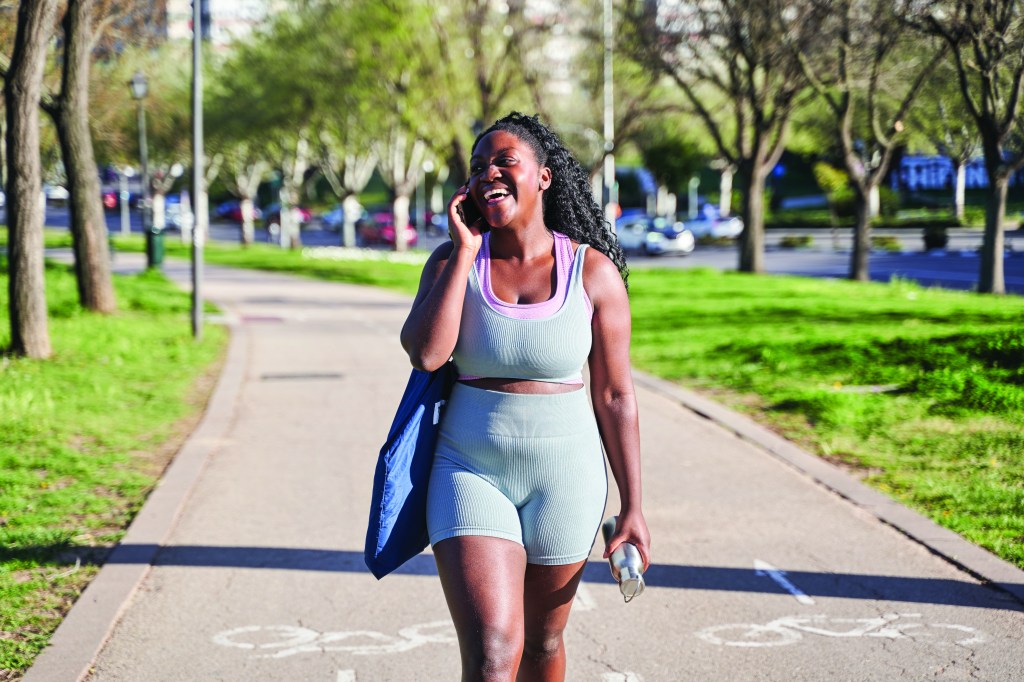
Instead of obsessing over a specific target, focus on building movement into your day consistently. Ask yourself: Could I walk to the shops instead of driving? Could I take a walking meeting? Could I add a 20-minute walk after dinner? Could I get outside during my lunch break? Could I walk my kids to their activities? Small increases quickly add up over weeks and months.
Use walking to support fat loss
One of the biggest benefits of walking is its role in increasing daily energy expenditure without significantly increasing fatigue. Unlike intense workouts, walking places very little stress on the body. You don’t need extra recovery days, and it doesn’t leave you ravenous or depleted. This makes it an incredibly valuable tool
for women pursuing fat-loss goals.
Many people immediately reach for more HIIT sessions when they want to burn calories. The problem is that high-intensity training can be difficult to recover from, particularly if you’re already balancing work, family commitments and a busy social life. Walking allows you to create a meaningful calorie deficit while protecting recovery and maintaining training performance. In simple terms, it’s often easier to add an extra 3,000 steps to your day than it is to squeeze in another demanding workout.
Turn your recovery time into progress
Recovery is where adaptation happens. Whether you’re lifting weights, running or following a hybrid training programme, your body needs time to repair and rebuild. Yet many women view recovery days as days where they’re doing nothing. Walking changes that mindset.
A gentle walk increases blood flow, helps deliver nutrients to recovering muscles and can reduce feelings of stiffness after harder training sessions. As a marathon runner, recovery walks have become a non-negotiable part of my training. The day after a long run or tough workout, I often find that an easy walk helps me feel better far more quickly than spending the entire day on the sofa. Movement supports recovery. Complete inactivity often doesn’t.
Weight loss lies exposed: Experts share the 3 biggest myths that are actually making you GAIN weight
Build your aerobic base
Walking may not feel like a traditional fitness workout, but it plays an important role in improving cardiovascular health. When performed regularly, brisk walking helps strengthen the heart, improve circulation and develop your aerobic system. This aerobic base underpins everything else. The stronger your aerobic fitness, the better you’ll recover between strength sets, the easier running feels and the more energy you’ll have throughout the day. One of the reasons elite endurance athletes spend so much time training at lower intensities is because aerobic fitness is built through consistency, not constant maximal effort. Walking gives you an accessible way to improve this foundation without adding significant training stress.
Make your steps work harder
Not all walks need to be the same. If you want to upgrade your daily steps, introduce some variety. Walk uphill or on inclines. Increase your pace. Wear a weighted vest or carry a backpack. Add short bursts of faster walking. Explore uneven terrain, such as trails or coastal paths.
These small adjustments increase the challenge without dramatically increasing impact. A brisk 30-minute walk with purpose can leave you feeling surprisingly energised and accomplished. The key is to walk intentionally rather than simply accumulating steps while distracted.

Use walking to manage stress
This time of year can be busy. Holidays, childcare, travel, social events and disrupted routines all place demands on your physical and mental energy. Walking offers something many workouts can’t always provide: space.
Research consistently shows that spending time outdoors and engaging in low-intensity movement can help reduce stress levels, improve mood and support mental wellbeing. A walk can become more than exercise. It can be a chance to clear your head, process your thoughts, listen to a podcast, connect with a friend or simply enjoy being outside. Sometimes the most productive thing you can do for your health isn’t another workout, it’s slowing down enough to recover mentally.
The secret is consistency
The real power of walking lies in its sustainability. Most people can walk every day, but few people can perform high-intensity workouts every day. That’s why walking creates such impressive long-term results. It’s accessible, repeatable and easy to maintain even when life gets busy. A 30-minute walk completed six days per week often contributes more to your overall health than an intense workout you only manage once every fortnight. Never underestimate the impact of small actions that are repeated consistently.
This season, don’t treat walking as an afterthought – treat it as a training tool. Use it to support recovery, increase energy expenditure, build aerobic fitness and improve your overall wellbeing. Add purpose to your steps, embrace opportunities to move more, and remember that fitness isn’t built solely through hard workouts. Usually, the most effective strategy isn’t doing more, it’s making better use of the movement opportunities already available to you.
So lace up your trainers, get outside and start upgrading your daily steps. Plus, it’s a great habit to encourage the kids to do, too. Your body and mind (and theirs) will thank you for it.
Sarah Campus is a highly qualified women’s PT and nutrition coach. She is a mum-of-three and founder of LDN MUMS FITNESS. Sarah regularly features on TV and in the media, offering tips and advice to keep the whole family healthy and active. Visit sarahcampus.com and instagram.com/sarahcampus, or listen to new podcast Showing Up Stronger (available to stream on Apple, YouTube and Spotify).