

Expert Sean Murphy reveals what you need to know about strength training and GLP-1 medication, and how GLP-1 weight loss drugs change your workout routine
Words Sean Murphy | Images: Shutterstock
How GLP-1 weight loss drugs change your workout routine
If the GLP-1 medication is working, you’re losing weight, and, for the right person, it can be a really positive step. But here’s the part that doesn’t get talked about enough: not all of that weight is fat.
The medication isn’t attacking your muscle, it’s suppressing your appetite so effectively you can end up in a very large calorie deficit without it feeling like one. And in significant calorie deficit, without progressive resistance training and protein, the body loses lean mass.
That’s not a drug problem, it’s a deficit one. Without training, up to 40 per cent of weight lost can come from lean mass. With the right training and enough protein, that drops to under 10 per cent. And it’s entirely within your control.
The medication handles appetite. What it doesn’t handle is what kind of weight you lose. That is down to how you train and how you eat alongside it, and getting those two things right is what separates a result that lasts from one that doesn’t.
Progressive resistance training isn’t optional
When you’re in a significant calorie deficit, your body is looking for energy wherever it can find it. Fat is one source. But muscle is metabolically expensive tissue, and if there’s no strong signal telling the body to keep it, it will happily let it go. That signal can only come from resistance training. This is true in any calorie deficit, but it matters more here because the deficit that GLP-1 medications create can be larger and more sustained than most people would manage on their own.
You might already be exercising – classes, walking, running, cycling – and all of that is good for your health and fitness. However, it doesn’t challenge your muscles in the way that forces the body to preserve them. Cardio keeps your heart and lungs working. Progressive resistance training preserves your muscle. They do different jobs.
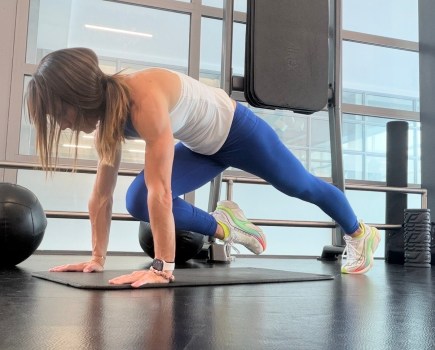
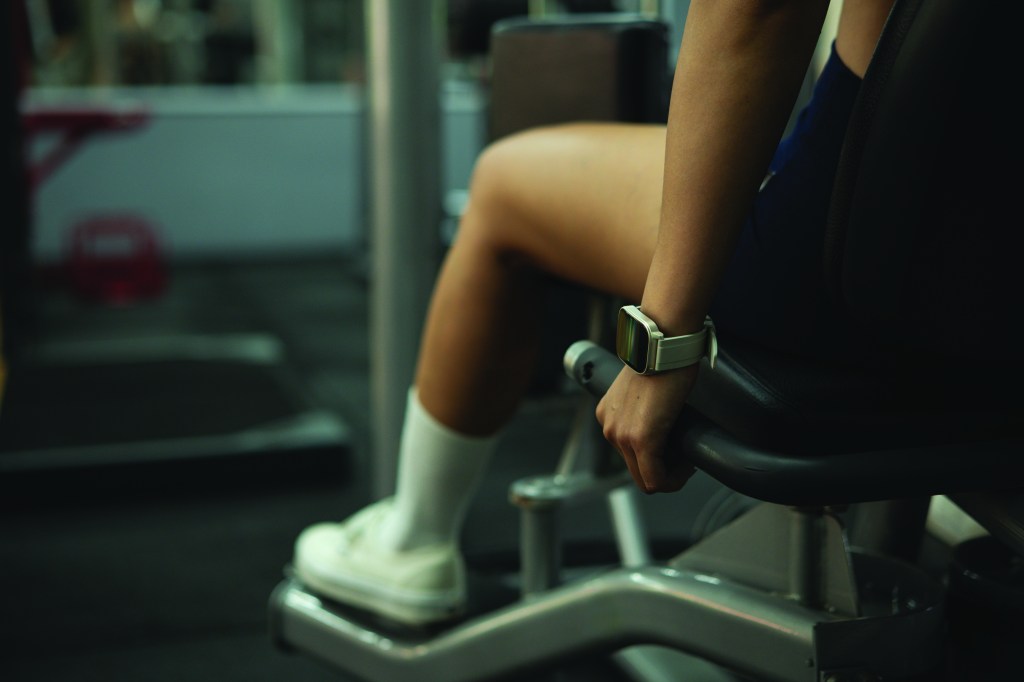
The training itself doesn’t need to be complicated. Two-to-three sessions per week covering the main compound movement patterns is enough: a lower body push such as a squat or leg press, a hip extension such as an incline hyper, an upper body push such as a chest press, and an upper body pull such as a row or pulldown. What matters more than the exercises is the effort you put into each set. Every set should finish within a few reps of the point where you physically couldn’t do another one. If you’re finishing sets with five or six left in you, the weight isn’t doing its job.
If the reason you’re stopping is discomfort somewhere other than the muscle you’re trying to work, the exercise is wrong for you. Squats are a good example – they’re a great exercise, but if your lower back gives out before your quads and glutes do, you’re better off with something you can push harder on.
The goal is to challenge the muscle. Pick exercises that allow you to do that. On a GLP-1, with calories low and energy sometimes unpredictable, that effort matters even more because you have fewer sets to work with and each one needs to count.
Protein is a hard problem to solve
This is the bit that catches most people out. Before the medication, appetite drove your meals – you ate because you were hungry – but now that signal is reduced. When appetite drops, protein intake is usually the first thing to suffer. Dense protein foods such as meat and poultry feel harder to eat when you’re not hungry, so people end up eating less of the thing their body needs most.
A practical target is roughly 2g of protein per kilogram of your bodyweight each day. For most women, that lands somewhere between 120g and 160g. If you fall a bit short on some days, that’s fine – you’re still in the range that protects muscle – but consistently fall well below that and your body won’t have the building blocks it needs to hold onto lean tissue during rapid weight loss.
Build every meal around protein first. Eat it before anything else on your plate. If three bigger meals feel too much, shift to four or five smaller ones spread throughout the day. That’s often easier to achieve with a suppressed appetite. On the days where solid food feels challenging, a protein shake containing 30-40g goes down a lot easier than a chicken breast. Greek yoghurt, cottage cheese, eggs and fish are all high protein without requiring large portions.
The medication has removed the signal that previously remind you to eat. You have to replace it with structure. Plan your meals the way you’d plan your training sessions – with structure and consistency.
Weight loss lies exposed: Experts share the 3 biggest myths that are actually making you GAIN weight
Weight loss and fat loss aren’t the same
The number on the scales going down tells you something is happening, but it doesn’t tell you what you are losing, and the difference matters more than most people realise.
If you’re losing fat while preserving muscle, you end up with an improved metabolism, better body composition, more energy and create results that are far more likely to last when you come off the medication. That’s sustainable fat loss, structurally supported by the muscle and habits you’ve built alongside the medication.
If you’re losing muscle alongside the fat, your resting metabolic rate drops, your strength drops and, when your appetite returns (which the evidence consistently says it does), the body can regain fat very quickly. You can end up at the same weight but in a worse body composition than where you started. Less muscle, more fat and less ability to maintain the result. That’s fragile weight loss, and it’s far more common than it should be.
The medication is doing its job. Supporting your body alongside it matters too. Two or three sessions of progressive resistance training each week, protein at every meal, and the discipline to keep both consistent even on days where your energy is low. That’s what determines whether the weight
you lose is the weight you actually want to lose.
Sean Murphy is global chief personal training officer at Ultimate Performance (U.P.), with more than 15 years’ experience as a leading authority in the fitness industry. He oversees more than 300 trainers worldwide and sets the standards that have made U.P. the global benchmark in strength training since 2009. A senior member of the Executive Team, Sean leads the development and execution of the U.P. Method, with responsibility for trainer education, exercise execution, gym-floor performance and clients’ results. Visit ultimateperformance.com