

With conflicting advice about how best to care for our gut health, it can prove overwhelming to know what we actually need. Here Olympic runner Eilish McColgan reveals the simple gut health habits that help support her training, recovery and wellbeing – and why you don’t need to overhaul your entire routine
Having represented Great Britain and Scotland at the Olympics, World Championships and Commonwealth Games, athlete Eilish McColgan is very experienced in knowing how best to fuel and care for her body. Below, the long-distance runner tells us about how gut health has played a huge part in her work as an athlete and gives us her top 10 tips on what has worked for her – and can help us too.
Pics Getty Images
Why advice around gut health can be overwhelming
“Gut health is something I’ve become much more aware of, particularly as part of my training, recovery and overall wellbeing,” she explained. “As runners, we spend so much time thinking about what we put into our bodies to fuel performance, but we don’t necessarily think about the specific link that gut health has to so many areas of our health and wellbeing. It impacts everything from energy levels and digestion to mood!
“According to Biotiful Gut Health’s recent Confidence Report, it revealed that 57% of Brits find conflicting advice around gut health overwhelming, while 76% say social media creates unrealistic expectations about how quickly healthy habits should work. I can understand why people feel overwhelmed when there’s so much information out there. For me, the answer is to keep things simple: focus on the fundamentals, choose products I trust and build habits that can realistically fit into my routine.”
Eilish McColgan’s top gut health tips:
1. Keep gut health simple
“I already have a lot to think about with training, so I don’t want looking after my gut to become something that takes up further energy. For me, it’s about getting the basics right, eating a varied diet, getting enough fibre and staying hydrated – making those things work around my routine, rather than my routine having to shift.”
2. Choose products that fit into your day
“There are so many gut health products out there, so I look beyond the packaging and big health claims and check what’s in them. I like simple options that fit naturally into my routine, whether that’s breakfast or something I can have after training.
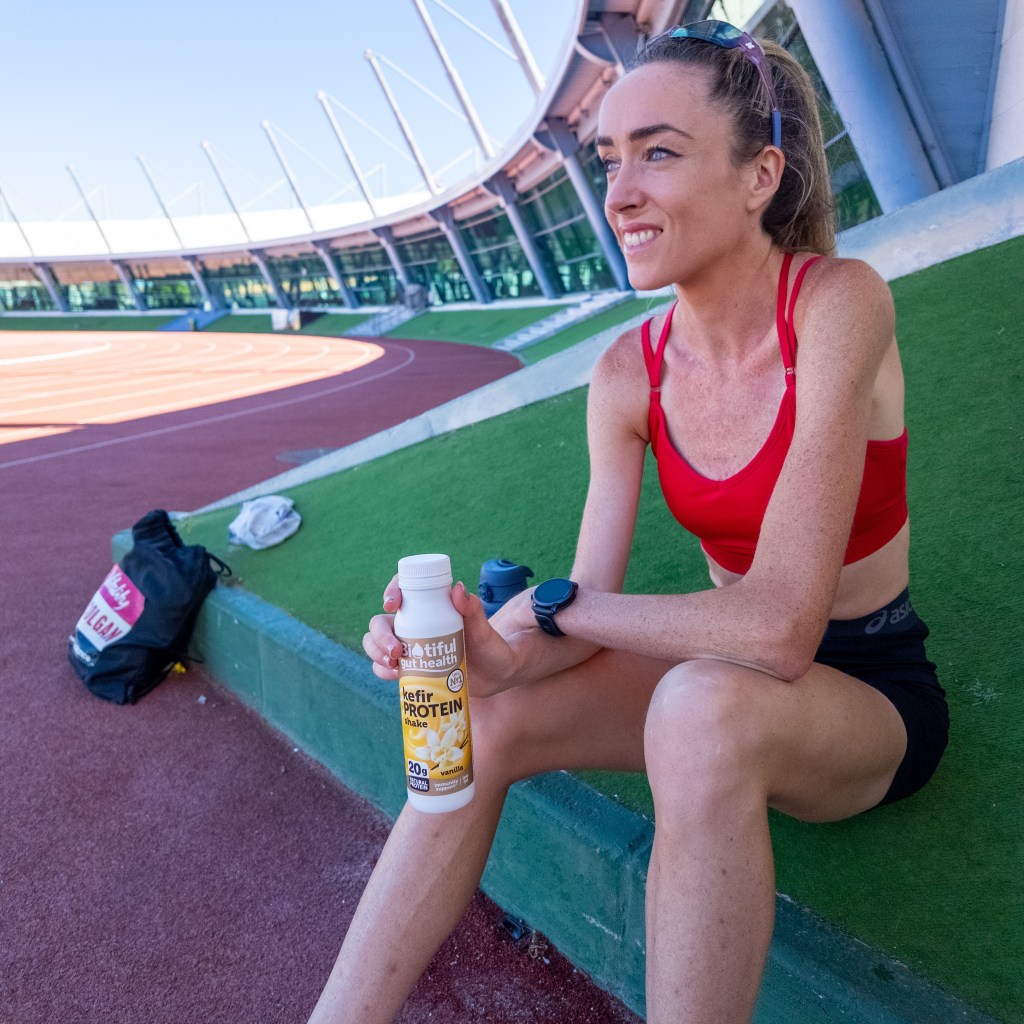
“A big favourite of mine is Biotiful Gut Health’s Kefir Protein Shake. The live cultures support my gut microbiome, which I really notice have a direct impact on both my physical and mental wellbeing. When I’m on the go, having a small bottle of Kefir in my bag means I can easily take it with me when I’m travelling to races, heading from a training run to the gym or just having a busy day.”
3. Give small changes time
“Research found that 52% of people have given up a healthy habit because they didn’t see results quickly enough. Training has taught me that progress doesn’t happen overnight. A slightly better warm-up, a more consistent bedtime or staying on top of my nutrition during a busy day might seem small, but those things can add up over time.”
4. Make healthy habits convenient
“The habits that stick are usually the ones that don’t feel like extra work. I’m often going from a training run to the gym, travelling to races or fitting other commitments around my day, so I look for easy ways to support my routine rather than adding more to it. Even something as simple as adding kefir to a morning yoghurt bowl can be an easy swap.”
5. Listen to your own body
“There’s no one-size-fits-all approach to gut health. My training, energy levels and tolerance can change from day to day, so I’ve learned to pay attention to what works for me. What feels right on a rest day might not be what I want before a hard session.”
6. Don’t underestimate fuelling during a run
“For longer runs, I’ve learned that fuelling isn’t something to leave until you feel like you’re running out of energy. Practising with things like gels or other fuel during training means you know what works for you before race day, rather than trying something completely new when it matters.”
7. Practise your race day nutrition
“I try not to leave nutrition to chance on race day. Training is the time to work out what I want to eat and drink before and during a run, and how my body responds. It’s one less unknown to think about when I’m standing on the start line.”
8. Don’t forget the basics around hydration
“Hydration is something I have to think about, particularly when I’m training in warmer weather or running for longer periods. I try to start sessions well hydrated and pay attention to replacing the fluids I’ve lost afterwards, rather than trying to catch up all at once.”
9. Recovery matters too
“Looking after myself isn’t just about training and nutrition. Sleep, managing stress and giving my body enough time to recover all play a part in helping me stay consistent, especially when my schedule is busy. This is another benefit I find from integrating probiotics into my diet – I find my sleep quality is better, and I’m able to train feeling stronger and more supported.”
10. Be kind to yourself, gratification isn’t always instant.
“My background as an athlete has helped me realise that success is built over time, and gratification isn’t always instant like we are sometimes led to believe on social media. When it comes to Gut Health, there’s so much advice online, and it can be difficult to know what to believe. Everyone’s body is different, so I think it’s important to look at the evidence, choose trusted sources and focus on habits that work for you on your own time plan, rather than feeling like you need to see results instantly for them to be meaningful.”