

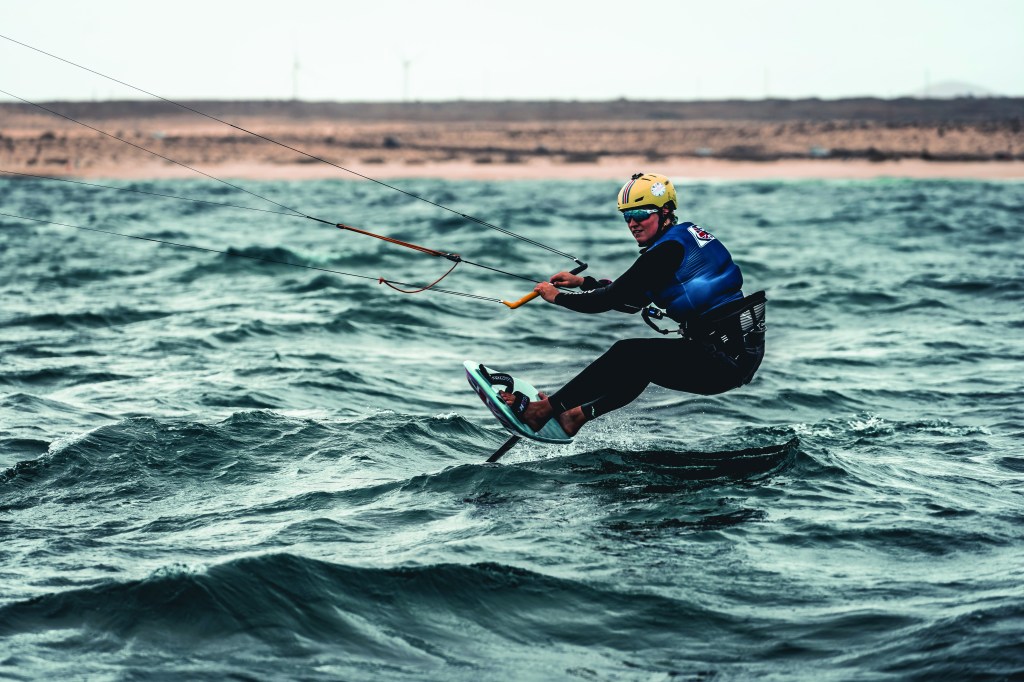
World number one kitesurfer Lily Young, 27, represents the British Sailing Team in the Formula Kite class – one of the fastest, most physically demanding disciplines in sailing. A silver medallist at the 2025 Formula Kite European Championships, she is currently chasing her LA 2028 Olympic dream…
Early days
I always knew I wanted to be a professional athlete from a young age, because I just loved competing. Growing up in Weymouth, I was a swimmer to begin with, but my dad, uncle and granddad were really into water sports, and I finally gave in and tried windsurfing when I was around 13 – probably because swimming can be a bit tedious. After that, I got super addicted and started windsurfing competitively with the British Sailing Youth Team in 2014.
I was about to enter the senior team when it was confirmed that kitesurfing would be making its debut at the Paris 2024 Olympics. That’s when I was approached to try kitesurfing, because they were looking for taller women to compete who could be more on the stronger side. I switched sports in 2018, fell in love with kitesurfing almost immediately, and I’ve been really successful at it ever since.
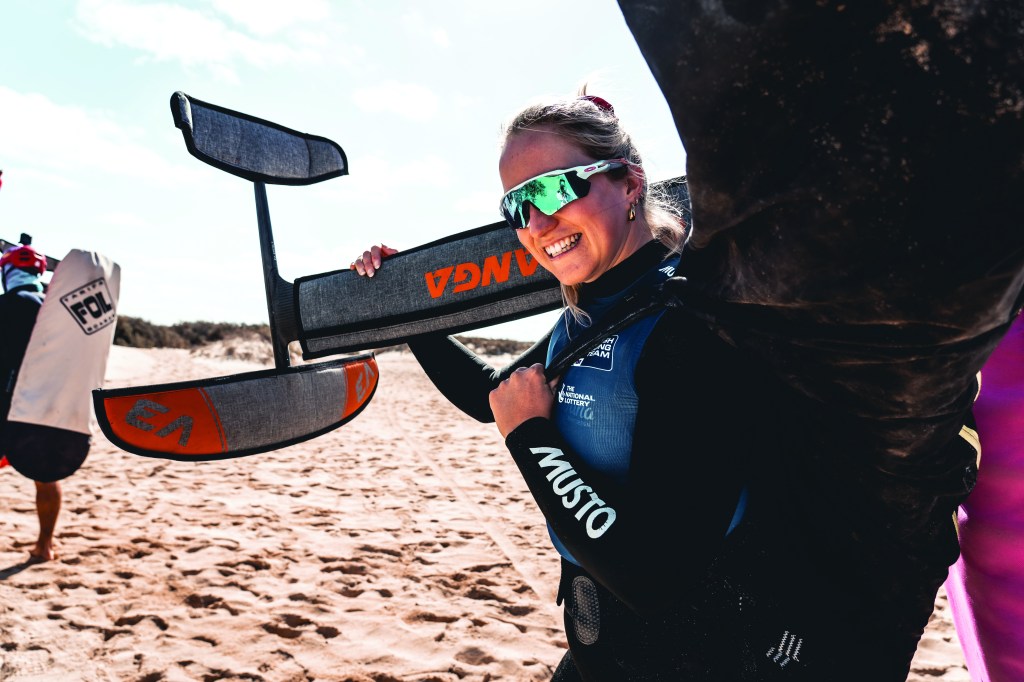
The Olympic-class version of kitesurfing I do is called kite foiling, and it’s a more extreme version of the traditional kind you see people doing at the weekend. Our boards have a hydrofoil attached, which helps lift the rider above the water so we can go super fast as we race around a course, which usually takes around 12-15 minutes to complete.
While I’ve won medals at both the World and European championships, I just missed out on qualifying for the 2024 Olympics because I got beaten by a friend, but we’d worked together, and it was super special when she won an Olympic medal. Things like that have made the journey really enjoyable, and when I look back on what I’ve done so far, I realise I’ve had the best time ever – and it’s not over yet!
Lily Young’s training
Competitive kitesurfing events usually happen between March and October, so when we’re not training at our home base in Weymouth, we’ll spend much of November to March in training camps abroad to avoid the English weather (rain isn’t great for kite foiling). Unfortunately, I injured my hand very badly in training in mid-December, which required a skin graft from my arm, so I missed the main training block of the year. But with the help of my amazing team of doctors and physios, I was able to return to training this March.
If we’re training hard in the summer in Weymouth, a typical training week might include four-to-five sessions on the water for around two-and-a-half hours each, at least four strength and conditioning (S&C) sessions that are heavily leg-based, and two bike rides. You’ve got to have really strong legs to help you control and resist the power going through the board, so my S&C sessions involve lots of squats, single-leg squats, leg presses and leg extensions. You also need a strong core to help you resist the elements, and any upper body work we do is more about injury prevention, so a shoulder doesn’t pop out when we hit the water at 30 knots.
I do a lot of cycling to train my legs and increase my cardio endurance, which helps to increase the time I can train on the water while being mentally present. We usually do four races a day during an event, and when you’re racing, it can feel like you’re doing a really uncomfortable wall-sit that burns your glutes, quads and hamstrings, so I do stretching and foam rolling for recovery when I can’t see my physio.
Lily Young’s mindset
I work on my mindset a lot, because my sport involves an element of fear. I’ve had to accept that doing an extreme sport means I can experience awful injuries sometimes, and I often have to weigh up the risk versus the reward in terms of how hard I push myself on the water.
I love learning new skills and new sports, and the method I’ve always used to do that is to watch something, practise it a thousand times on my own, and break it down into really small bits. I also apply that same strategy when I’m trying to get over a mental block (rather than jumping straight into something), so it feels less overwhelming. Right now, if I’m out on the water with my coach, we won’t talk about my hand. But if at any point I say I’m done, or I’ve had enough, that’s totally fine.
I found it really hard to deal with nerves when I was younger, and I’d get super anxious before competing. These days, however, I know that the person who’s going to win on the day isn’t the person who’s best in training: it’s the person who can best deal with the pressure on the day. Now, I know I perform better when there is pressure, and I tell myself that all my hours of training will pay off in the end.
Jamie Chadwick on training, recovery and the journey to the top of motorsport
Lily Young’s goals
My dream is to win gold at the LA 2028 Olympics, and my amazing team help me work towards that goal every day through the programme we’ve developed. In January 2027, we’ll be trying to qualify as a team for a spot at the Olympics, so that’s the first big marker towards my main goal before I can try to earn my spot as an individual.
To stay updated with Lily’s journey towards the LA28 Olympics, follow @britishsailing and @lily_mayyoung on Instagram.