
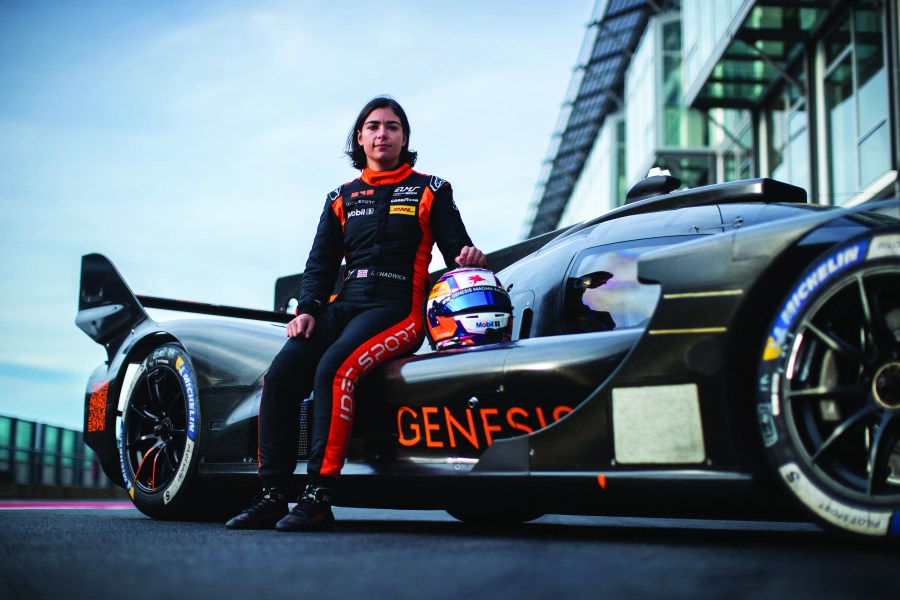
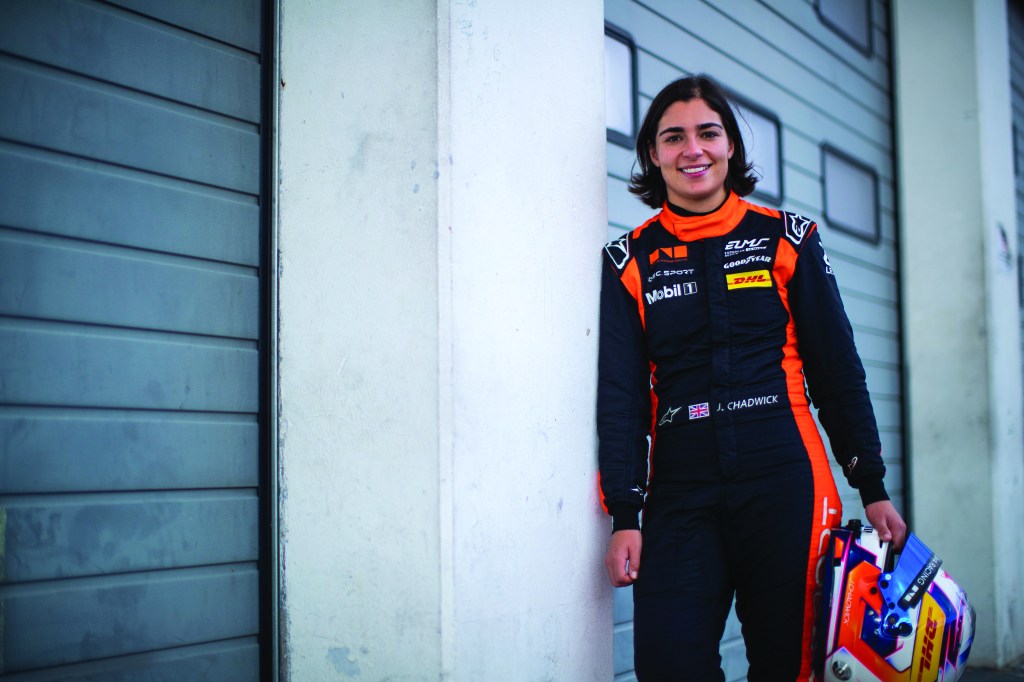
From her training and recovery methods to her goals set for the European Le Mans Series this year, here is why British racing driver Jamie Chadwick is one to watch…
Early days
I got into go-karting for fun at the age of 12 but, as I progressed, I got my own go-kart and started racing more regularly in competitions. Then, when I was 14, I won the prestigious Ginetta Junior Scholarship to race in the Ginetta Junior Championships, and that win gave me a springboard to move into racing sports cars.
There are many barriers to getting into motorsport, including financial ones, but I never felt different because I was a girl – I just wanted to drive and do the best I could. My biggest opportunity came through the W Series, which was an all-female championship that ran for three seasons from 2019
to 2022. It was significant because it was professionally funded, so it removed any financial barriers to participation and gave lots of female drivers the opportunity to compete. I won all three seasons and, without it, I think that I probably would’ve stopped racing.
There are many different avenues in motorsport, including Formula One where you drive purpose-built single-seater cars. I’ve dabbled in quite a few disciplines, but I’m now specialising in endurance racing, where a team of drivers rotate racing one car (the pinnacle event being the 24-hours of Le Mans). Last year, I competed for the first time in the European Le Mans Series (ELMS) alongside two other rookie drivers for IDEC Sport and it was an amazing experience. We didn’t have any expectations, but we ended up getting three wins across the season which was a pleasant surprise for all of us.
While it is always an honour and a privilege to be able to compete in any championship and have success, I often find the ‘first women to…’ accolades a bit funny because they highlight the fact that I’m the only woman to have competed – and that’s not something I feel too fondly about. That said, the sport is changing a lot and increased visibility is definitely helping to get more young girls involved, which is a great thing.
Training
I can be in the car for more than three hours during an endurance race and I can’t afford to lose focus through fatigue, otherwise my race would be over very quickly. That’s why physical training has become a priority and a huge part of my routine now; I always think being in the best physical shape makes it mentally easier for me to concentrate during a competition.
My training varies because no two weeks are the same with travel, but I’ve been in a big pre-season training block recently while gearing up for the start of a new ELMS season in April, doing two or three training sessions a day, usually six days a week. I’ll always go for a run in the morning before breakfast, do a strength training session three or four days a week, and then I normally do more cardio at the end of the day, whether that’s going for another run or getting on the bike to stop things from getting too monotonous.
Working on my cardio endurance is essential because my heart rate stays elevated for an entire race and averages between 160-170bpm, although it has hit 200 in the car before. Part of it is the adrenaline, but mainly it’s because the cars get very hot (around 50-60°C), and that can be really tough when you’re wearing many layers and sweating a lot.
Steering a car around a track also places extremely high forces on the neck, core and body in general, so strength training is crucial for helping stabilise my body and prevent fatigue and injury. I’ve always struggled in the car with my upper body strength – I have a strength and conditioning coach who helps me work on my weaknesses – but I also have to work on leg strength because hitting the brake pedal can feel like doing a leg press every single time.
Formula 1 experience at Silverstone: the wellness test drive I didn’t expect
Recovery
I love using saunas. If nothing else, I find being in one helps me to relax mentally, but I also really like them for recovery in combination with a cold plunge. I always try to make sure I can get the best night’s sleep possible, so I take a couple of supplements to aid that, and I like using a WHOOP device to see where my body is at. I try not to get too wrapped up in it – I generally like to listen to my body based on how I feel – but it’s nice to have some data to back it up. I don’t meditate or anything to help with the pressure of racing, but I do nap a lot on race weekends, just to let my mind switch off a bit.
Goals
Obviously, I’d like to do well in the European Le Mans Series this year, but as it’s the second tier class of endurance racing, my goal is to be able to compete in the top class, now called Hypercar. No female has competed in Hypercar yet, so it would be great to reach that level and represent all the amazing women across endurance racing.
The Jamie Chadwick Series is set to return for 2026. Find out more at daytona.co.uk/the-jamie-chadwick-series-returns