
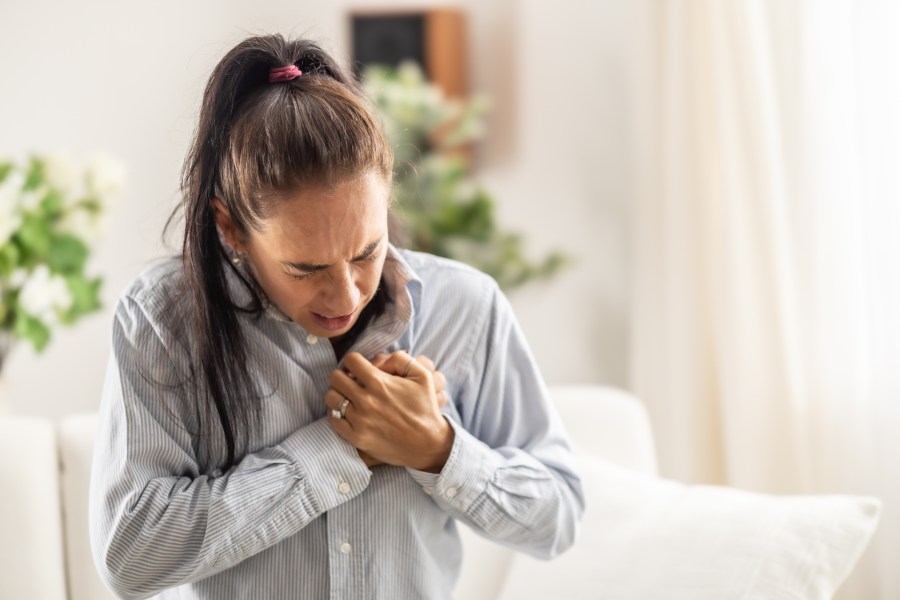
Davina McCall has urged women to take their heart health seriously, but would you recognise the signs of a heart attack? From chest pain and breathlessness to nausea and unusual exhaustion, a cardiologist explains five symptoms women should never dismiss – and when to seek urgent medical help.
Pics: Getty Images
Apart from the obvious actions like increasing fitness and avoiding smoking, many are stumped on where to turn to for the best ways to improve their heart health once and for all.
Cardiologist Dr Mike MacDonald has over 15 years’ experience giving advice on preventing heart attacks and strokes and said: “Coronary heart disease kills more than twice as many women in the UK as breast cancer but most women still think of it as a man’s issue. That is a big part of the problem. Women don’t expect to get heart disease so may not recognise it as possible when they get symptoms.
“You often hear that women have ‘atypical’ heart attacks. That’s only half true. Chest pain, pressure or tightness are still the most common symptoms in women. Around nine in ten women having a heart attack get it, almost exactly the same as men. The difference is that women are more likely to get other symptoms alongside it, and slightly more likely to have no chest pain at all.”
He added that it’s the heart attacks that no one recognises that are the biggest problem.
“Many heart attacks can be ‘silent,’ where they are only picked up years later in routine heart checks. Young women are also more likely than men to put their symptoms down to stress or anxiety.
“So don’t brush it off. If something new comes on with exertion, see your doctor that week. If it comes on at rest and lasts more than a few minutes, call 999, and don’t drive yourself.”
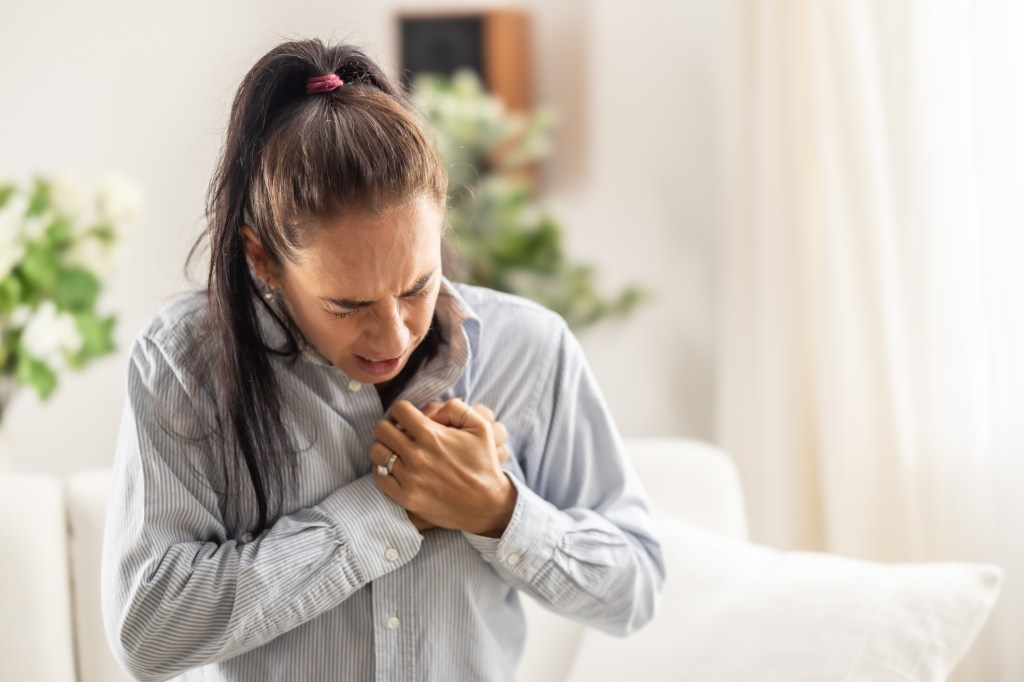
Symptoms women should never ignore:
Chest pain, pressure, tightness or heaviness. Take it especially seriously if it comes on with exertion and eases with rest or comes on at rest and lasts more than a few minutes.
Pain between the shoulder blades, or in the jaw, neck or arm. Women are about twice as likely as men to get pain between the shoulder blades.
Breathlessness. This is more common in women than men.
Nausea or vomiting. This is also more common in women and is often put down to indigestion.
Unusual exhaustion in the days or weeks beforehand. In one study, seven in ten women noticed this in the run-up to their heart attack.