
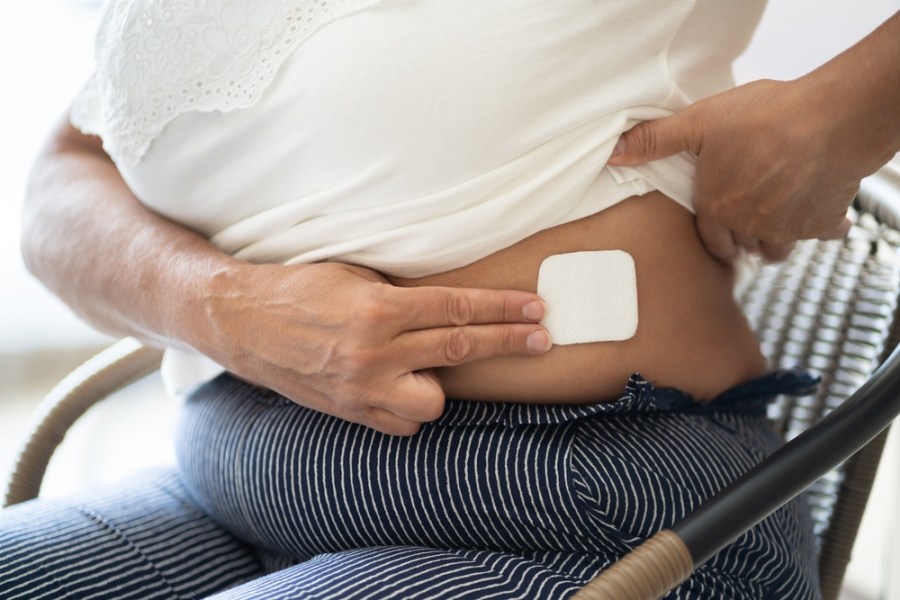
As a new study has found that Hormone Replacement Therapy (HRT) may reduce the risk of dementia, we take a look at the ways you can help by keeping your mind active during menopause
Words: Amy Dowrick | Images: Shutterstock
Carried out last month, the study tracked 180,000 postmenopausal women – and researchers found that those who used HRT appeared to be less likely to develop dementia and Alzheimer’s disease, with the greatest reduction seen in women who had undergone surgical menopause.
“We’ve been quite interested in why there’s twice as many Alzheimer’s patients who are female compared to male and quite interested in the contribution of the menopausal transition to that higher lifetime risk in women,” says Anne-Marie Minihane, Professor of Nutrigenetics at the University of East Anglia and lead author in the study.
The research aimed to discover whether HRT may or may not be protective and supportive of cognitive health into older age and associated with a reduced dementia risk – an area that’s been investigated for a number of years.
How HRT reduces dementia risk
“What we found is when we followed women up for 13 years, women who used HRT had a 10% lower risk of dementia, a 16% lower risk of Alzheimer’s disease, which is the most common form of dementia, and interestingly, the association seemed to be strongest in women who had undergone early surgical menopause such as a hysterectomy,” says Anne-Marie, who also claims that women who had a naturally shorter lifetime exposure to oestrogen (either from a late period or early menopause) had the strongest association.
There was also evidence in research first published three years ago of a smaller analysis of around 2000 women that suggested starting HRT earlier seemed to be more protective for cognitive health – and it also seemed to be stronger in women who had a genetic predisposition to Alzheimer’s disease.
“It’s kind of indicating that, certainly for women who’ve had surgical menopause, they should immediately go on to HRT for all sorts of reasons,” says Anne-Marie.
When should you go on HRT?
According to Anne-Marie, if a woman is thinking about going on to HRT (for example if undergoing menopausal symptoms such as hot flashes, night sweats, or if they have a family history of osteoporosis) the research suggests that earlier initiation is better than later initiation.
“In our research, the associations with lifelong risk of dementia seem to be most evident in women who had started HRT between the ages of 46 and 56,” she says. “I think it kind of makes biological plausibility that you don’t leave a big gap between your natural decline in oestrogen and when you start HRT.”
“HRT functionality is dependent on having functional oestrogen receptors in your cells, and its depending on having all the kind of molecular machinery in your cells to be able to utilise that oestrogen,” she adds. “If there’s a long gap, the chances are the function, or the effect, of oestrogen will be less.”
“Also, as you get older, there’s a theory around the healthy cell bias that once damage starts to happen, for example in your neurons in your brain, it’s very hard for HRT to reverse that damage.”
Anne-Marie says that this is because oestrogen is much better at preventing it from happening in the first place.

What are the drawbacks?
According to Anne-Marie, we are still a long way off recommending HRT as a proven therapy to reduce lifelong risk of dementia – and the study is still so new.
“There’s a lot of inconsistency at the moment,” Anne-Marie adds. “I guess what our research is starting to tell us is that once we plan our future research, there’s certain groups of women that we might want to do the control trials in, such as women in perimenopause rather than in later in life.”
Anne-Marie also suggests that there may be something else associated with HRT that researchers just haven’t thought about, that could partly explain some of the benefits.
“HRT users are associated with a higher socioeconomic status, higher education attainment, more engagement with the health services and a better overall lifestyle,” she says. “This is an association we’ve corrected for a lot of the things we thought might be associated with HRT, so we’re reasonably confident that HRT is mediating the effects – but certainly randomised controlled trials are needed to back this up.”
How to keep your mind active during menopause
“It’s becoming really clear now that for us women, perimenopause and early post menopause is critical for lifelong health,” says Anne-Marie. “Between the ages of 45 to 55, us women really need to take care.”
Alongside following the general healthy lifestyle guidelines during this period, Anne-Marie also recommends omega-3 fatty acids.
“Women in pre menopause are able to make the beneficial omega-3 fatty acids – that drops off when we’re postmenopausal,” she says. “Omega-3 fatty acids are critical for brain health in women.”
There’s also a lot of interest in the gut-brain axis.
“We know that menopause negatively effects our microbiome,” she adds. “Fibre can mitigate some of those changes.”
“Ensure your fibre intake is as high as it possibly can be to really maximise that gut-brain axis effect.”
Anne Marie heads the Nutrition and Preventive Medicine Group in Norwich Medical School. She is academic advisor to ILSI Europe (a tripartite consortium of Industry, Academia and Policy organisations), Deputy Editor of the British Journal of Nutrition and Frontiers in Nutrition, and the UK representative in a Federation of European Nutrition Societies (FENS), Nutrition External Communication and Public Trust Panel. For more information visit healthyageingnorwich.com