

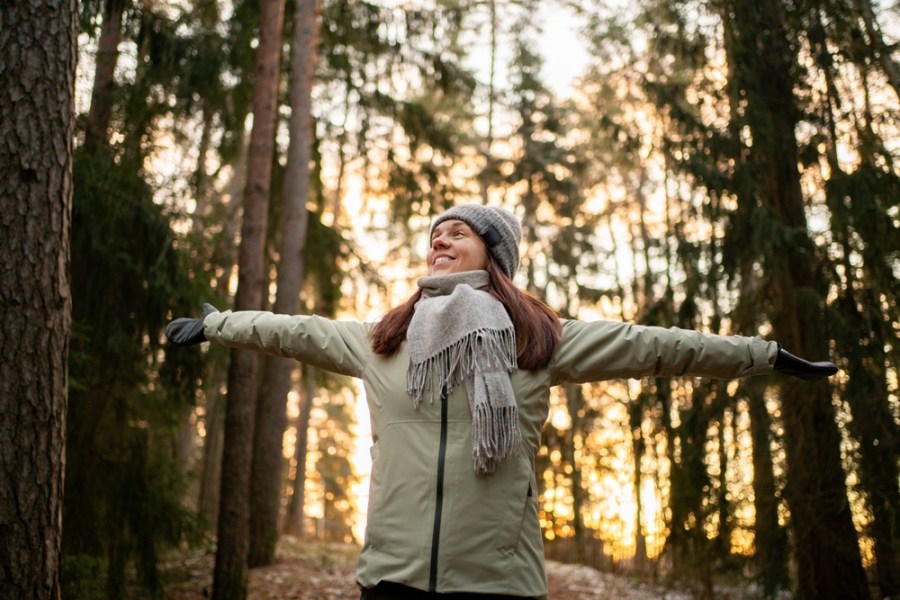
Yes, it’s getting chillier and much darker this season, but don’t let that put you off getting out in the fresh air. From resetting our nervous system to how birdsong can reduce anxiety, discover how to get the health benefits of spending time outdoors, even if you live in a busy city
Words: Amy Dowrick | Images: Shutterstock
It’s no surprise that being outside, going for walks and looking at greenery is good for our mental health. On the surface, it calms us down, our thoughts feel clearer and we’re distracted from the stresses of our day to day. But it actually works much deeper than that – and can even reset our nervous systems.
“It’s really all about slowing down, about engaging your five senses, about getting off technology and about being quiet and still and being in the moment,” says conservationist Merlin Hanbury-Tenison, who says that anything as low as 30 minutes ‘forest bathing’ out in wild nature can do the trick.
“It reduces our cortisol levels, increases our immune response, and it puts us from our sympathetic nervous state, our fight or flight, and helps us to move into our parasympathetic state, our rest and digest,” he adds.
And there’s even a science behind it. Universities like Oxford and Exeter have been looking into the clinical impacts of these wild habitats and what happens to our physiology when we simply breathe in. The research has found that certain species of plants can improve aspects of physical and mental health, such as reducing levels of stress and anxiety along with lowering levels of stress hormones and elevated nature killer cells in our blood serum.
“I think it’s unimaginable that someone could be healthy, happy and fulfilled as a person with no connection to the natural world,” says Merlin. “I think the more we can interact with, heal, and integrate with our wild and natural spaces, the more we’ll heal ourselves.”
“It’s always that key thing about stopping, slowing down, getting off tech and remembering that this is our most ancient, visceral and welcoming habitat.”
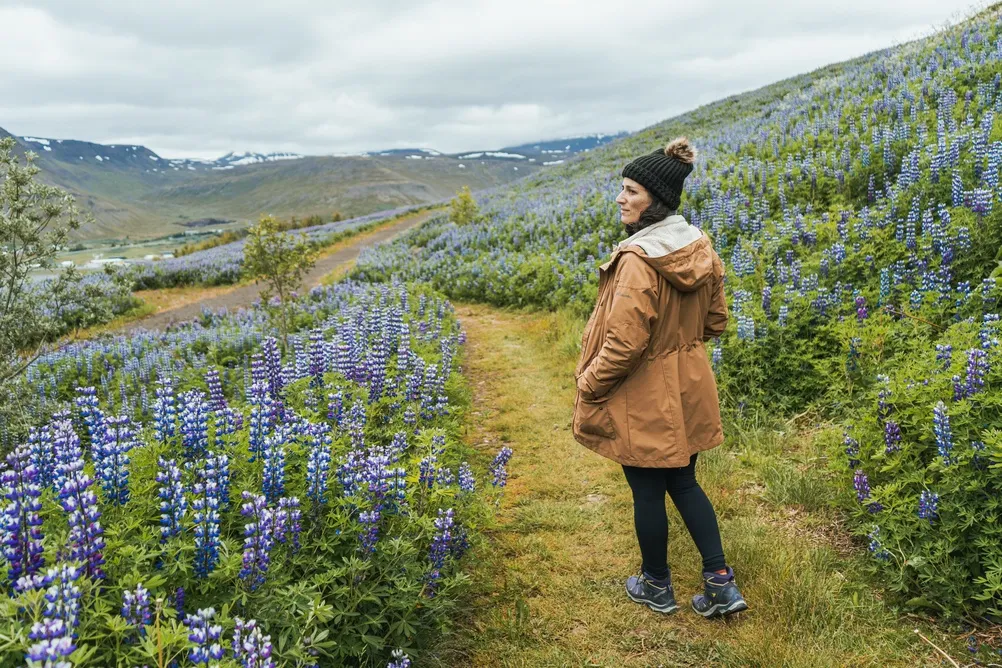
How to reap the benefits of nature if you live in a city
But not all of us have the chance to escape to the wilderness. Many of us live in busy cities or towns and it can sometimes feel hard to spend time in nature. So how can you get the health benefits from a little closer to home?
“Even in the middle of a city, there are living ecosystems all around us that we can connect with.” says activist Nadeem Perera, who says that a recent study by King’s College London showed that just listening to birdsong can actually reduce stress and anxiety in the body.
“It’s scientifically proven to reduce your anxiety, and reduce your stress,” he adds. “When birds sing, they sing when they are confident that there are no predators around. They’re at peace – so we know there’s no predators around. On a biological level, it helps us.”
So, you don’t have to be in a wild landscape to reap the benefits of nature at all. If you wake up on a cold winter’s morning, listen out and you can often hear birdsong – even in urban and built-up environments.
“That birdsong is going to give you that boost for your day,” says neuroscientist Katherine Templar Lewis. “It’s like nature’s coffee shot.”
And it’s not just the sound of nature that can give you a mental boost. According to Katherine, engaging all your senses has the power to slow you down, allowing you to be more present and drop daily stresses.
“Everything from smell to sight, it makes you more present,” she adds. “And when you’re more present, you can handle stuff – and that’s going to have this wonderful impact across your day, across a couple of days, across a week.”
Even just staring up at the clouds can provide health benefits, and Katherine says that when our eyes look over the swirling patterns of things like leaves, grass and clouds (known as fractal patterns), the ways our eyes move signals to our brain that we’re in nature, and that starts to relax us.
“That starts to make us more creative, that starts to help us feel safe,” she adds. “Some people spend about 90% of their day indoors – but your brain knows that you’re indoors and it knows that it’s not in nature, and so, a little part of your brain is just hyper vigilant.”
3 simple ways to incorporate nature into you day-to-day
Katherine shares three really simple, actionable ways to get that sense of calm from nature into our daily lives:
Make it quick
“Remember you don’t need long,” says Katherine. “10,15, or 20 minutes – go for a walk on your lunch break and it’s going to have an impact.”
Skip the rainforest
“Anywhere where you can find a bit of nature, that could be a park, a tree lined street, or even bringing nature and plants into your house is going to have an impact,” she adds.
Put your phone away
“The more you engage in the sights, the smells, the sounds, the more benefit you’re going to get out of it.”
Any time that we can spend in nature is time well spent – and whether it’s from your windowsill or from a local reservoir, within a really short space of time, your brain is changing in response to it in a really good way.
“Even if we’re not used to being in nature, your brain is,” adds Katherine. “It’s evolved to feel at home, and at ease when it’s in nature. I think that we forget that we evolved in a very different environment.”
So, whether it’s 20 minutes, 30 minutes, an hour, a day, or a week, know that the health benefits of being in nature are next to none – and should be a routine that we consider just as important as our working life.
Merlin Hanbury-Tenison is a Cornish conservationist and veteran who founded The Thousand Year Trust, Britain’s rainforest charity. The charity’s mission is to catalyse the movement to triple Britain’s rainforest cover to one million acres in the next thirty years. His work has been featured in National Geographic, the Guardian and on the BBC. Follow him on Instagram @merlinhanburytenison.
Nadeem Perera is a wildlife TV presenter, author, and activist. In 2020, together with Creative Director Ollie Olanipekun, he co-founded Flock Together, a birdwatching collective which encourages people of colour to get out and enjoy nature, support each other and look after their mental health. Follow him on Instagram @birdnerdeem.
Katherine Templar Lewis is a cognitive scientist, neuroscience consultant and science communicator. Co-presenter and lead scientist on The Uncertainty Experts and Audible Originals podcast Beyond Five Senses, she often appears as an expert and contributor across media outputs, including Sky, BBC, NBC, The TODAY show, Radio 4, VICE and the HuffPost. She is co-founder of women-led Kinda Studios and Lab, which translates neuroscience into design to drive wellbeing. Follow her on Instagram