
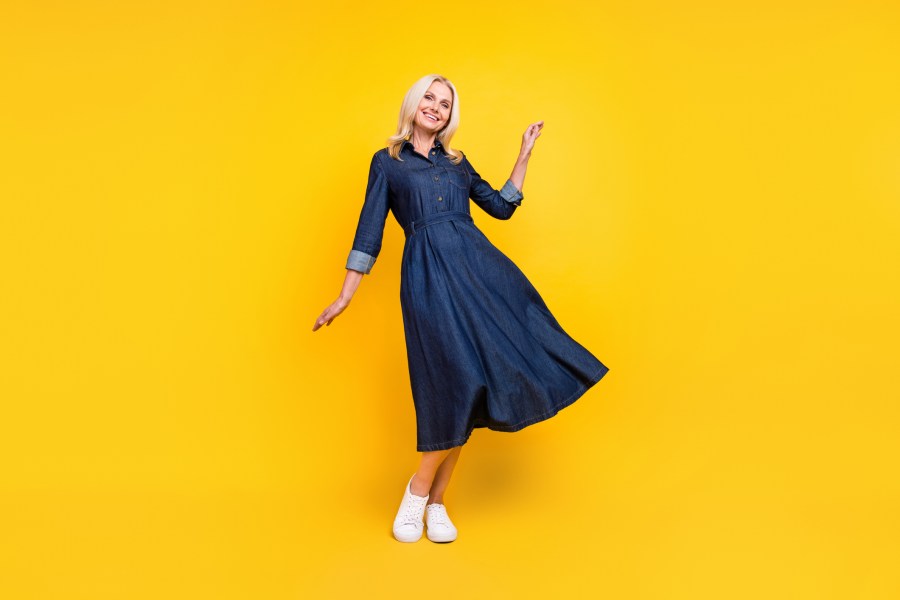
Your body shape can change during the menopause years, leading to an increase in belly fat and leaving you frustrated about what to wear. Fashion experts share their tips on the cuts, fabrics and styling tricks that will help flatter your changing shape.
If you are struggling with a changing waistline during menopause and beyond, you don’t have to compromise on style, but the right clothes can make all the difference. These expert fashion tips will help you dress your menopause belly and feel confident in what you put on.
Why does menopause cause your belly to change?
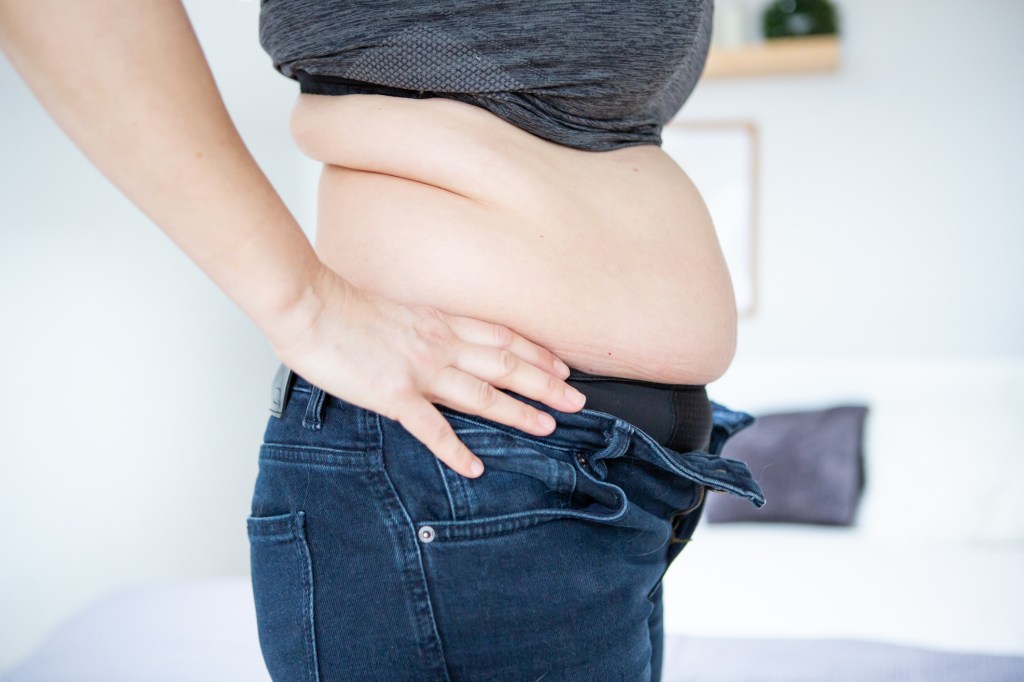
Menopause can cause changes in where women store fat. As oestrogen levels decline, women become more prone to storing fat around the tummy area, including deeper visceral fat. This can lead to a fuller, rounder stomach, often referred to as the menopause belly.
Even if you are slim all over, the perimenopause and menopausal years can see belly fat increase and it is often referred to as a ‘meno belly’. Yes, I am (un)fortunate to have it and the good news is, there are ways we can disguise it.
The mistakes women make when dressing a menopause belly
There are some common mistakes women make when trying to disguise their belly, with the main one being wearing oversized clothing. In the past, I have done this often, as bigger clothes made me feel less self-conscious, even though they swamped my frame.
As one of the world’s top fashion experts, Erin Hirsh, celebrity costume designer at NBC’s The Voice, says it is common for women to want to cover their stomach with big clothes, but points out it can make things worse.
“The instinct is to hide, so women reach for big, shapeless pieces, but volume everywhere just makes you look bigger everywhere,” she said. “The other mistake is trying to squeeze into your pre-meno-belly wardrobe. Those clothes may still fit, but they’re fighting against your body’s new proportions. Dressing well at this stage is about working with your shape, and the right fit does more for you than any size on a label.”
As well as oversized clothing, fashion designer Muriel Thompson says another common mistake is wearing clothes that are too tight.
“Many people make the mistake of wearing clothes that cling to the body such as stretchy tops and dresses – it can make them feel uncomfortable and probably self-conscious too.”
How to dress for a menopause belly: the golden rules
The secret to dressing a menopause belly isn’t about hiding your shape or squeezing into smaller sizes. Instead, it’s about choosing clothes that skim your middle, create definition and make you feel comfortable.
Here are some golden rules to follow:
Choose clothes that skim rather than cling to your stomach.
Look for waistbands that sit comfortably without digging in.
Use V-necks and open jackets to create a longer silhouette.
Choose fabrics with enough weight to drape rather than cling.
Don’t be afraid of colour, prints or experimenting with different styles.
Prioritise fit and comfort over the number on the clothing label.
The best jeans and trousers to flatter your middle
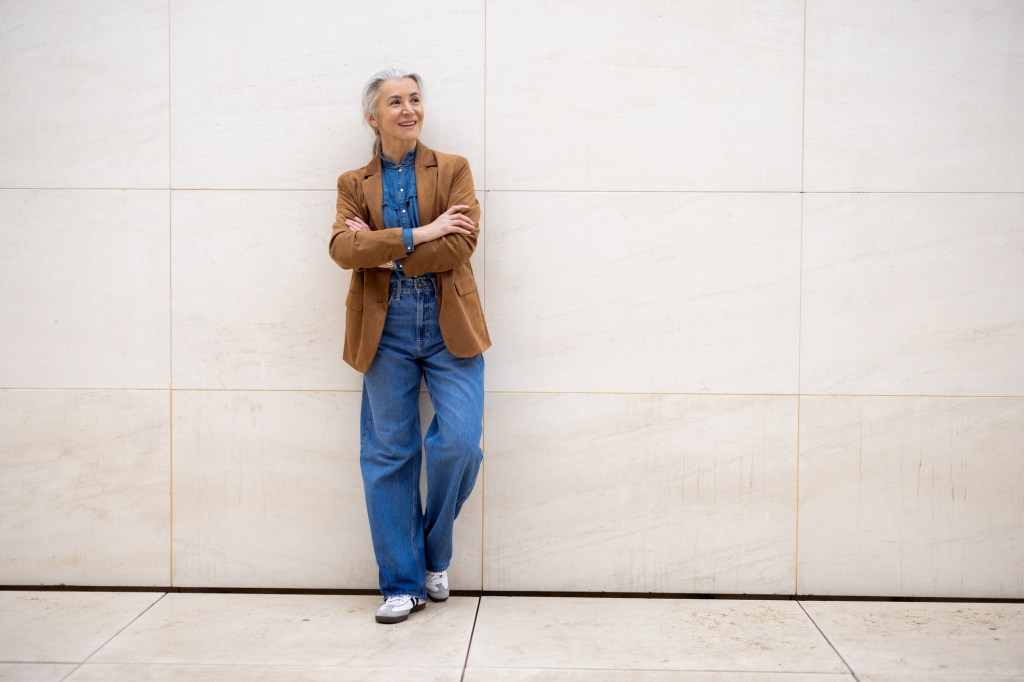
According to wardrobe and lifestyle consultant Sharon Warten, opt for a good straight-leg or wide-leg jean with a high waist.
“You want something that holds you in a little without cutting into your stomach,” she explained. “Ultimately every body is different so I would adjust the waist option considering your other proportions and the styles you like best. Comfort is key!”
In agreement, Muriel also suggests choosing a straight or slightly wide-leg pair of trousers and says a higher rise can be very flattering too. To help balance your body, she advises making sure the top of your trousers is long enough to touch your hip when you sit.
Avoid anything too tight if it feels restrictive or cuts into your middle. Skinny jeans aren’t necessarily off limits, but the wrong fit can emphasise your proportions rather than flatter them.
“You want to avoid the “squeezed” look or “muffin top” which can happen with low-rise trousers that dig in,” explained fashion entrepreneur Victoria Carina Victoria Carina.
“Specifically, look for a waistband that lies flat without digging into the stomach or creating a visible bulge above it.”
One tip from another style expert Kunal Madan, co-founder of Oh Pretty, is a good one to take on board.
“To see if your pants are the right size it’s worth doing the sit-down test,” he advised. “Pants can look great standing up, but the waistband can dig into your stomach and cause a muffin top when sitting down. Pants that are higher or in the middle with a straight leg or wider leg that isn’t too flared have better, cleaner lines.”
The dresses that work best for a menopause belly
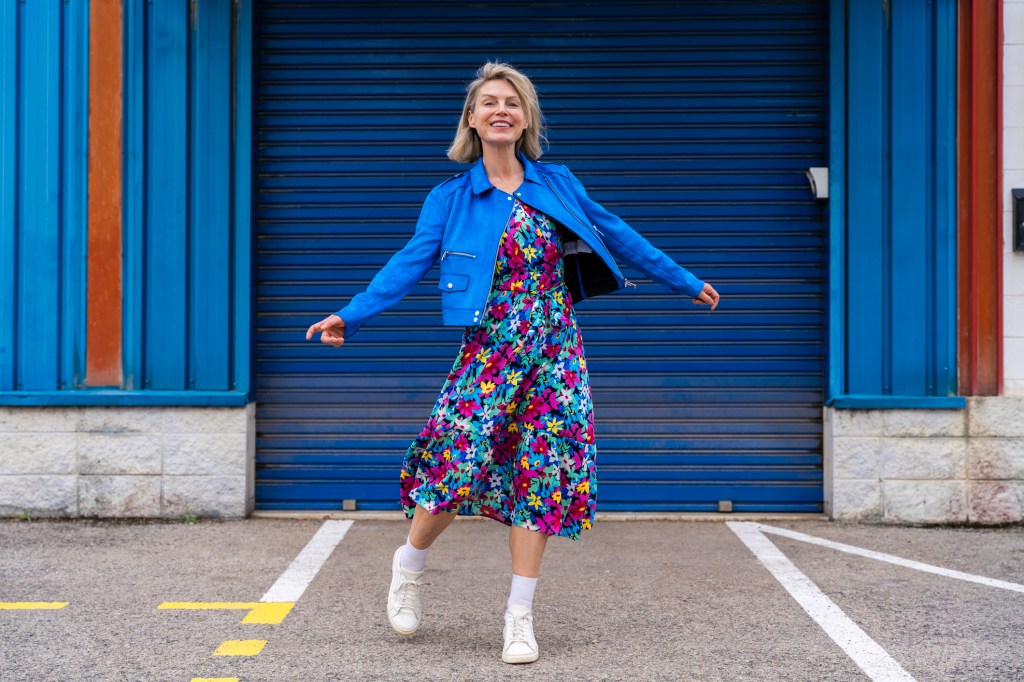
All the experts I spoke to said the A-line cut was one of the most flattering shapes to help disguise a menopause belly. This is because the design pulls in at the top and gently flares out over the middle, creating a more balanced silhouette.
As well as the A-line dress, Victoria said there are two other options that work well.
“Wrap dresses combine a number of features that help reduce midsection weight: they define the waist naturally and smoothly, the V-neck elongates and they create a diagonal line across the torso.
“Another option is to find a dress with ruching or gathering around the waist that also provides a flattering effect by hiding belly lines,” she explained.
In terms of patterns, don’t feel you have to avoid prints altogether. Instead, look for designs that draw the eye around the body. Fabric also comes into play, as diagonal draping can create a flattering effect and help skim the stomach.
“Dresses with side ruching and diagonal draping work really well,” added Kunal. “They create folds that minimize the appearance of midsection bulk.”
What tops can help flatter a menopause belly?
The most flattering tops for a menopause belly are those that skim over it and don’t cling. The key is to avoid adding unnecessary bulk around your middle while still choosing styles that give you shape.
Muriel suggests looking for tops that are relaxed and have a gently structured drape, adding: “V-necks and collared tops also help create a long and lean upper body.”
And avoid the fashion mistake of buying tops in extra-large sizes.
“Bigger clothes will hide your waist and create a boxy silhouette so my advice is to try a relaxed button-down, a good T-shirt that doesn’t cling, or throw an open jacket, blazer or cardigan over your top. It’s such an easy trick.”
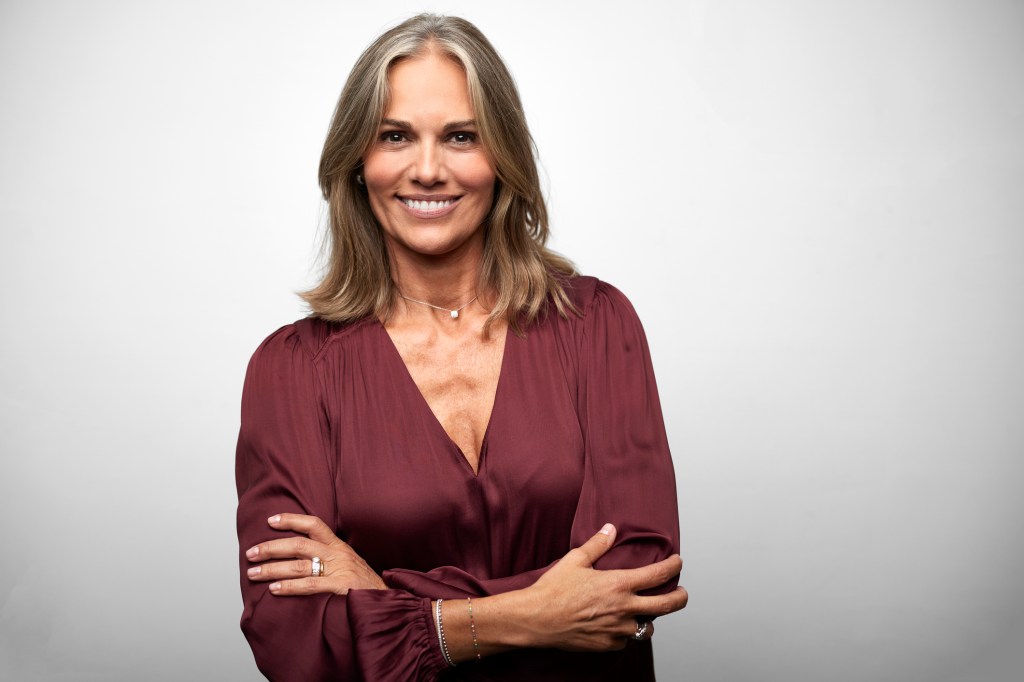
The fabrics and styling tricks that make a difference
Fabric makes a huge difference when dressing a menopause belly, and choosing the right material can work to your advantage.
According to Muriel, fabrics with weight and recovery, like ponte, crepe and denim with 1-2% spandex, will provide the most support.
“Comfort stretch denim in that 1-2% spandex will provide some flex; however, you should avoid spandex-dominant fabrics. If the spandex content gets too high the recovery of the fabric is reduced and will cause the style to sag out, stretch, and quickly wear out with regular washing,” she explained.
There are also some other options that Victoria recommends, including fabrics such as viscose or modal blends, fine knits and satin. As for what to avoid, she says certain fabrics like thin jersey that shows every contour should not be worn if you want a smoother silhouette.
The important thing is to choose fabrics that move with your body rather than cling to it. You want enough structure to skim your middle without feeling restricted.
Is shapewear worth investing in?
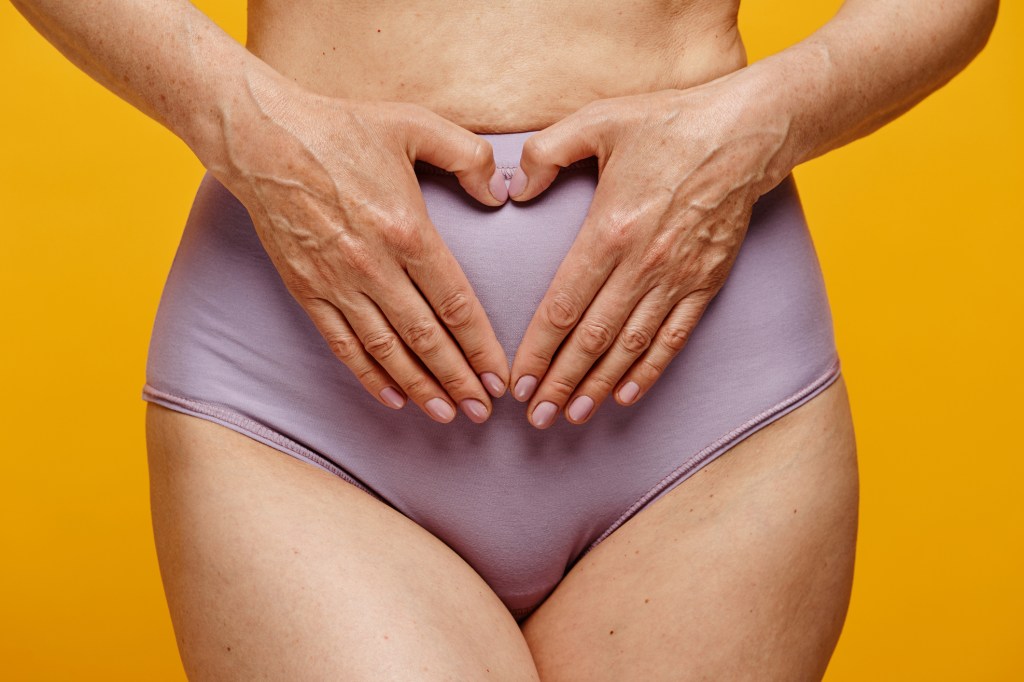
As someone who has tried all types of shapewear, the biggest problem I have found in dressing my menopause belly is that it may smooth the area but it pushes the fat up, so it doesn’t feel comfortable to wear.
However, Erin points out you need to try out a few pieces to see what sits best and helps smooth the tummy, rather than squeeze it, which is what has happened in my experience.
“Think of shapewear like makeup primer: invisible, but everything sits better on top. It’s about finding the right item that works well and comfort is of paramount importance.
“You don’t need a drawer full, but having the right pieces on hand when you need them makes getting dressed so much easier. I always tell my clients to invest in three essentials: a control thong, a high-waisted below-the-knee capri and a half slip. Their breathable fabric and raw-cut edges vanish under trousers and dresses – you may even forget you’re wearing them.”
Key takeaway: you don’t need to hide your menopause belly
Dressing a menopause belly isn’t about disguising your body or squeezing yourself into clothes that no longer feel comfortable. It’s about finding styles that work with your changing proportions.
Whether it’s a pair of well-fitting high-waisted jeans, a flattering wrap dress, a relaxed shirt or some comfortable shapewear, the secret is choosing clothes that skim rather than cling.
And remember, you don’t need to sacrifice your personal style just because your body has changed. Feeling good in what you wear is what matters most.