
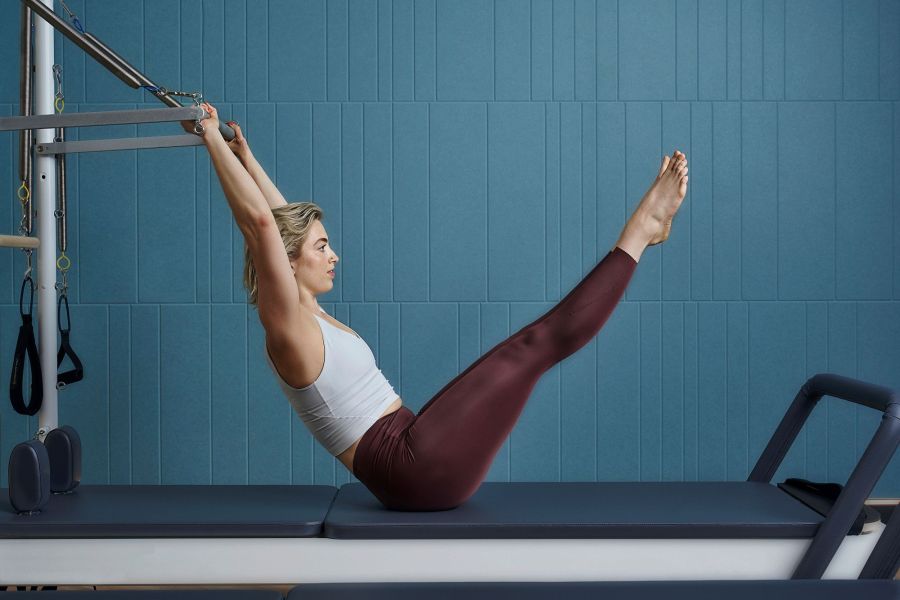
Reformer has dominated the Pilates scene for years – but now, it’s the Tower’s time to shine. Here’s everything you need to know about Tower Pilates, including the benefits, how hard it is and how it differs from Mat and Reformer.
Pilates began as a series of floor-based exercises before various apparatuses were introduced to help people develop their form and challenge their bodies. Reformer Pilates was the first apparatus-based style to grow in popularity. But now, the attention has shifted to a newer kid on the block: Tower Pilates.
‘It was invented after Mat and Reformer Pilates as a tool to help develop the repertoire learnt on the Mat and Reformer,’ explains Caroline Bragg, Master Pilates Trainer at Third Space. ‘Now that people are developing a better understanding of Pilates on the Reformer machine, Tower is gaining popularity, as people are looking for something to deepen their practice.’
What is a Pilates Tower?
Unlike the Reformer, which features a sliding carriage and horizontal resistance, the Tower is a fixed frame with vertical resistance. ‘There are four sets of springs, two of which are moveable – the arm and leg springs – and two bars that are fixed but can be loaded from the top or bottom – a roll down bar and a push through bar,’ Caroline explains.
While both types of apparatus have springs, they work in different ways. ‘The Tower springs are attached to one fixed point, and then into the body. This feeds the load in a different way to traditional Reformer, where the springs attach from each side below the carriage,’ Caroline adds. ‘On the Tower there is also a Mat rather than a moving carriage.’
With both a mat and springs present, it’s clear to see why many people think of Tower Pilates as a combination of Reformer and Mat – and according to Caroline, there is some truth to this. ‘Tower classes are essentially like Mat Pilates with the addition of spring tension to increase difficulty,’ she explains. ‘However, the angle of the pull of the springs is different to the Reformer. This means the Tower can help you to build stability, mobility and flexibility while challenging your body differently to the traditional Reformer.’
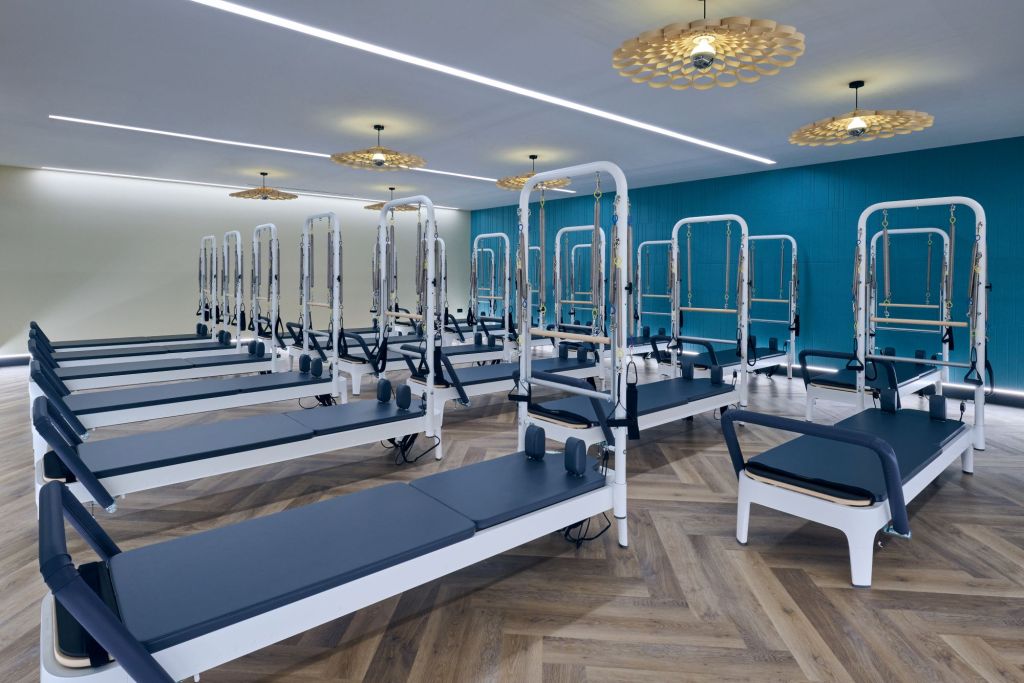
What does a typical Tower Pilates class looks like?
If you’re already a regular attendee at Mat or Reformer Pilates, the idea of trying out a different style might feel intimidating. But luckily, lots of the exercises in a Tower class will be ones you are already familiar with – and working through them on a different apparatus could help you refine your technique in new ways.
‘A Tower class combines Mat- and Reformer-based exercises using spring resistance to create a deeper connection with your body,’ explains Caroline. ‘The springs provide continuous feedback, helping you move with more control and awareness.’
‘With a Tower, many exercises can be loaded from either the top or the bottom, depending on the movement and the specific technique,’ she adds. ‘For example, you can perform a teaser on the Mat or the Reformer, but on the Tower the push through bar can be spring loaded from either above or below. This allows the springs to support or challenge different phases of the movement. Overall, this helps you refine technique, improve alignment, and build strength with greater precision.’
Unique benefits
All styles of Pilates help you to build strength, mobility and greater body awareness. But according to Caroline, Tower Pilates offers a few unique benefits that you won’t find on the Mat or Reformer.
‘The Tower doesn’t have an order like Mat or Reformer,’ she explains. ‘So, each exercise can be broken down with a slower pace and be more focused and controlled,’ she explains. ‘This allows the participant to work through some of the more detailed aspects of the repertoire and really finesse their practice. Plus, more support from the springs enables you to perfect your technique.’
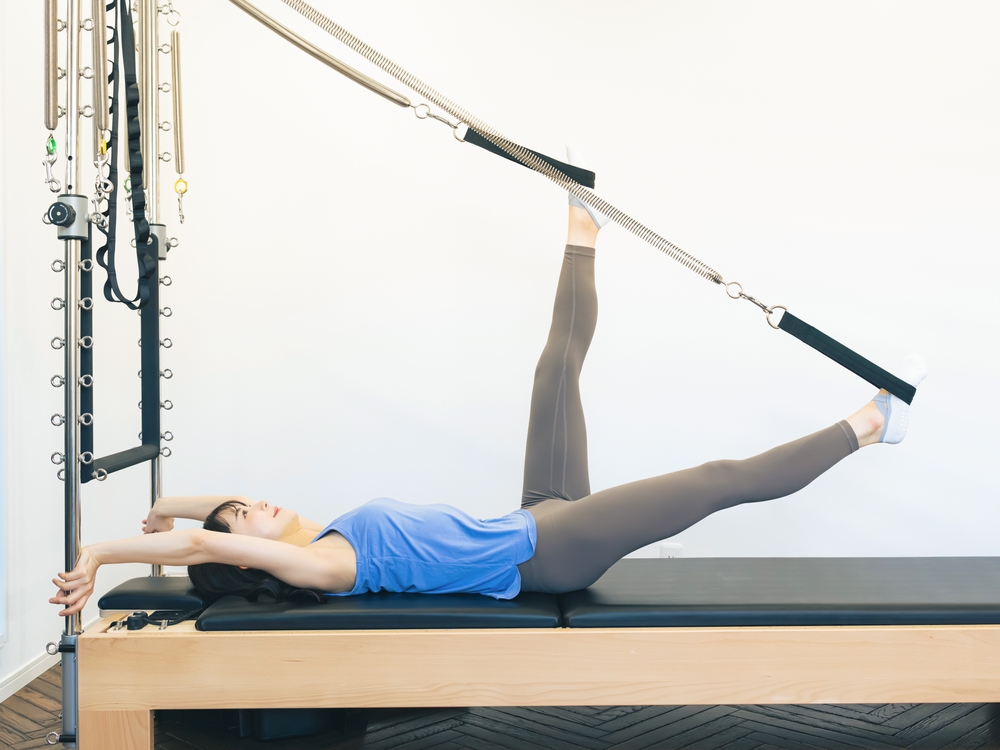
Is the Tower suitable for beginners?
While the Tower was originally invented to help people develop the repertoire they had already learnt on the Mat or Reformer, Caroline is quick to add that it can also be a great entry-point for beginners who are looking to take up Pilates.
‘Tower Pilates is absolutely suitable for beginners,’ she tells us. ‘Some of the more advanced exercises can be broken down into their fundamental components and taught on the Tower with greater precision and depth. The Tower is neither harder or easier than the Mat or Reformer – it’s designed to enhance both.’
While Tower might be one of many shiny new trends in the Pilates world (we’re looking at you, Hot Pilates), Caroline emphasises that it shouldn’t be seen as a replacement for Mat or Reformer. In fact, she believes combining the different styles could be the best way to refine your technique from all angles.
‘Usually, in a Pilates Studio, you would run the Mat or Reformer repertoire first. Then, you build on the parts that need improvement – or develop new skills – on the Tower, Cadillac, Wunder Chair or Barrels,’ she explains. ‘At Third Space this is how we approach Tower: to help make your Mat and Reformer practice better.’
Caroline Bragg is a Master Pilates Trainer at Third Space, a collection of luxury London-based health and wellbeing clubs.