

A higher number doesn’t automatically mean a better workout. Understanding the damper, drag factor and stroke rate can help you get more from your next rowing session.
Pics: Getty Images
The rowing machine looks straightforward. Sit down, secure your feet, move the lever towards 10 and start pulling.
But that numbered lever can be misleading. If you’ve been treating it like the resistance setting on an exercise bike, you may be making each stroke feel heavier without getting the workout you intended.
On a Concept2 air rower, the lever controls airflow into the flywheel housing. It changes how the stroke feels. Your effort determines how hard you work.
Other rowing machines use different systems, so check which model you’re using before applying the same advice.
Think about gearing
Concept2 compares its damper setting to bicycle gearing. A higher setting lets more air into the fan housing. The flywheel slows more between strokes, making the next acceleration feel heavier. A lower setting allows a lighter feel.
That doesn’t make the lower setting an easy option. You can work hard at either setting by applying more force effectively.
If your usual routine begins with pushing the lever to its maximum, try setting it lower and concentrating on a smooth stroke before judging the effort.
Start with a manageable setting

Concept2 commonly suggests a damper setting around three to five as a starting point, rather than automatically choosing 10. The most suitable setting also depends on your technique, body size and the session.
Ask an instructor to help if you’re new to the machine. You should be able to connect the movement through your legs, trunk and arms without wrenching the handle or feeling that you’re dragging a weight with every stroke.
Practise at a comfortable effort first. Getting out of breath quickly doesn’t tell you whether the movement is effective.
Know what drag factor tells you
The same damper number can feel different on two machines. Dust in the fan housing and other conditions affect airflow. Drag factor measures how quickly the flywheel slows, giving a more consistent indication of the machine’s feel than the lever position alone.
On a Concept2 monitor, you can view the drag factor through the relevant display menu while taking a few strokes.
This is most useful when you move between machines. You don’t need to copy an elite rower’s number or hunt for a universal setting that is supposedly right for every woman.
Separate stroke rate from speed
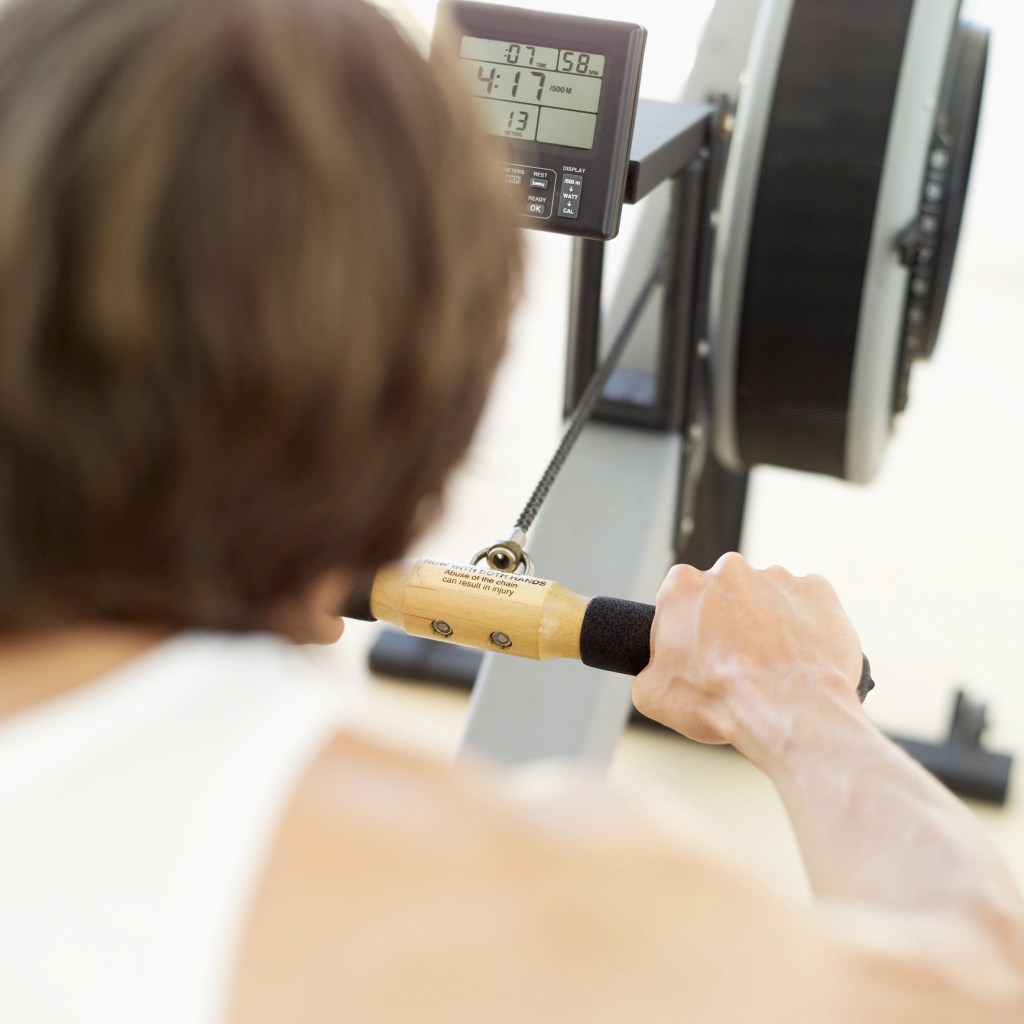
Stroke rate is how many strokes you take per minute. It isn’t a direct measure of how fast you’re rowing.
Rushing backwards and forwards can produce a high rate without much useful power. Look at your pace or watts alongside the rate, rather than treating the highest number as the goal.
For practice, try rowing around 20–24 strokes per minute at a comfortable effort. This gives you time to organise the movement instead of hurrying back towards the flywheel.
Concept2’s guidance explains that different stroke rates suit different sessions; technique and effective strokes remain important throughout.
Get the sequence working
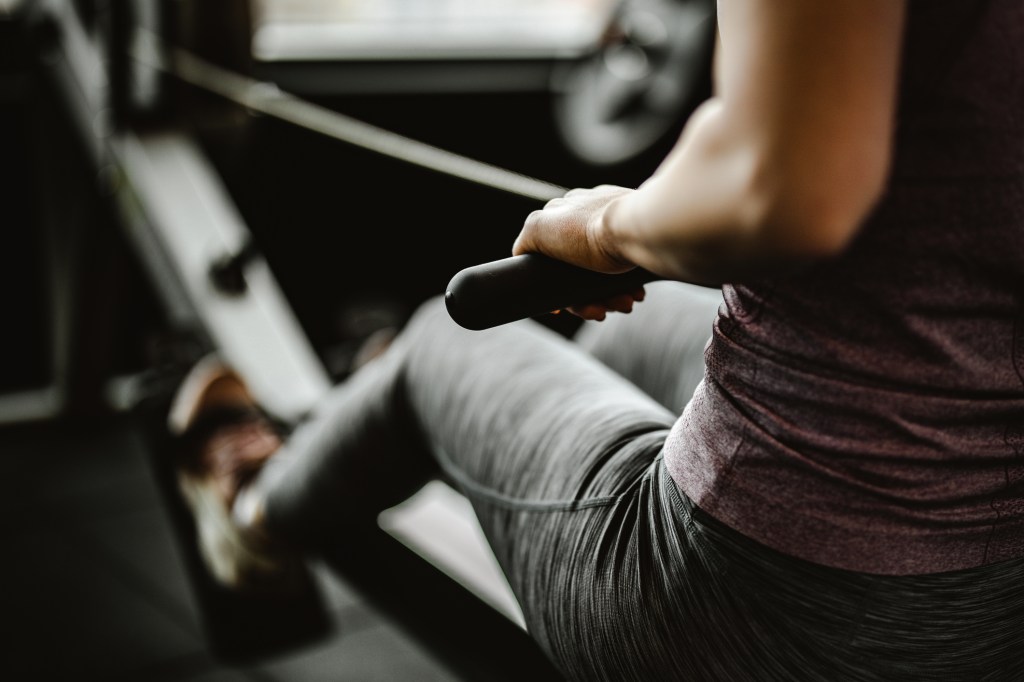
The drive begins with your legs. Your body then opens through the hips, followed by the arm pull.
On the return, reverse that sequence: arms move away, the body tips forwards from the hips, then the knees bend.
Keep your shoulders relaxed and avoid gripping the handle as though somebody is trying to take it away.
Concept2 recommends becoming comfortable with these fundamentals before pulling hard. A short technique check from an instructor can be more useful than repeatedly increasing the setting.
Change one thing at a time
At your next session, warm up gently, then spend a few minutes at a moderate damper setting.
Keep the stroke rate fairly steady and notice the effect of pushing more firmly with your legs while maintaining control. Does your pace improve without frantic movement?
Record the machine type, setting, duration and how the session felt. That gives you something useful to compare next time.
You can build intensity once the movement feels reliable. The lever doesn’t need to reach 10 for you to have worked hard.