

Want to work out like Jennifer Lawrence? Celebrity trainer and performance coach Dalton Wong – who has worked with Hollywood stars including Lawrence, Olivia Colman and Amanda Seyfried – shares his advice on building strength, improving fitness and reducing body fat
Pics: Getty Images
From the compound exercises worth adding to your gym routine to a time-saving 20-minute workout, Wong explains how women can get stronger, make the most of their training sessions and stay active, even when time is short. We asked him to share his top fitness and wellbeing tips, including how to approach stubborn areas such as the tummy and upper arms, what to eat to support your workouts and the simple habits he recommends to his clients.
The five exercises every woman should know
There are five key movements I recommend to my clients.
1. Compound movements
I suggest focusing on exercises that recruit multiple muscle groups. These can help build lean muscle mass and support improvements in body composition.
My favourite movements include:
Hip hinge (deadlift): Great for working the glutes and strengthening the muscles of the back.
Squat: An excellent functional movement that helps build lower-body strength. Aim for a depth that suits your mobility and ability, maintaining good technique throughout.
Push-ups: A compound exercise that works the chest, shoulders, triceps and core.
Rows (barbell, dumbbell or cable): Excellent for strengthening the back and supporting good posture.

2. Cardio
Tracking your heart rate can help you understand how hard you’re working and train at different intensities.
I encourage clients to work across different cardio zones, with a particular focus on zones 2-4 when targeting cardiovascular fitness.
Zone 2: A steady, sustainable intensity at which you can still hold a conversation. This is useful for longer cardio sessions.
Zone 3: A more challenging pace where conversation becomes harder, often suitable for higher-intensity circuits.
Zone 4: A hard effort that can be incorporated into appropriately planned interval training.
The right intensity will depend on your fitness level and individual heart-rate zones.
3. Flexibility and mobility
Focusing on two or three key mobility or stability exercises can support your overall fitness.
Identify the areas where you need the most improvement and work on them consistently. Better mobility and stability can help you move more effectively and support your training goals.
4. Diaphragmatic breathing
You can practise diaphragmatic breathing at any time of day. I recommend it to clients to help them focus, whether they’re dealing with a stressful situation, recovering after a workout or preparing for bed.
Slow, controlled breathing can help promote relaxation and support the body’s stress response.
5. Hit your daily step count
Your daily steps should complement your planned exercise routine rather than replace it.
Tracking how much you walk can help you become more aware of your daily activity levels. One of my top tips is to go for a walk after a meal. It’s an easy way to incorporate more movement into your day and may also help with post-meal blood sugar management.
How to reduce body fat around your tummy and arms
I’d focus on three things:
1: Prioritise strength training
Building and maintaining lean muscle mass is important for improving body composition and supporting joint function.
I recommend starting with the big compound lifts so you can make the most of your training session, then adding isolation exercises to target specific muscles.
For example:
Squats or deadlifts, followed by core exercises.
Rows or pushing movements, followed by arm exercises.
Squats or deadlifts, followed by leg extensions and hamstring curls.
Remember that you cannot choose exactly where your body loses fat. A combination of strength training, regular activity and appropriate nutrition can help reduce overall body fat while building muscle.

2: Hit your protein targets
Many women find it difficult to consume enough protein. Start by working out an appropriate daily target for your needs, then spread your intake across three or four meals. Protein helps support muscle repair and maintenance and can help you feel fuller after eating.
3: Include cardio
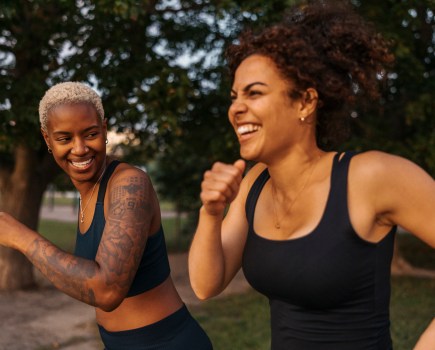
Cardio can be incorporated through steady-state sessions, such as running or cycling at a moderate intensity, or through higher-intensity interval training. Choose an approach that suits your current fitness level, goals and recovery needs.
Can a 20-minute workout make a difference?
Weighted circuits can be an effective way to fit strength and cardiovascular exercise into a shorter session. Choose weights you can control while maintaining good form, then move through a series of exercises with limited rest, adjusting the pace to suit your fitness level.
The 20-minute full-body workout
Perform each exercise for one minute, then move to the next. Complete four rounds, adjusting the pace and taking breaks whenever needed.
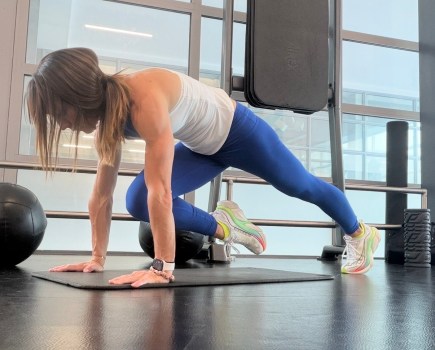
Alternating lunges – 1 minute
Push-ups – 1 minute
Squats – 1 minute
Dumbbell rows – 1 minute
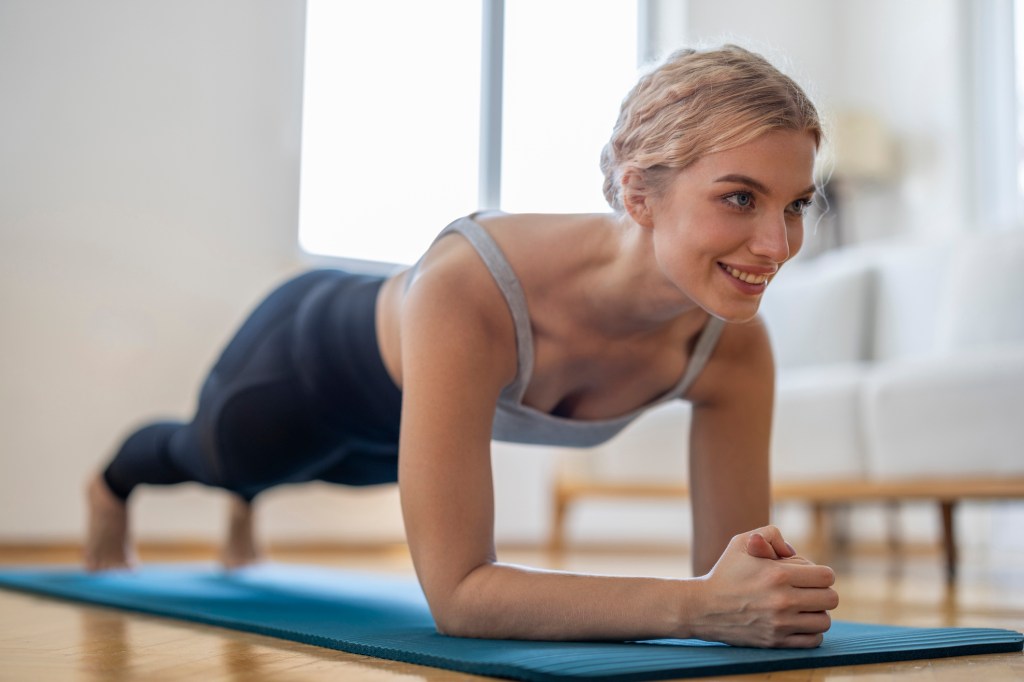
Plank – 1 minute
Total: 5 minutes per round, repeated four times to make 20 minutes.
Choose appropriate variations for your ability. If you’re new to exercise, start with fewer rounds and build up gradually. Allow extra time for warming up before you begin.
How to exercise at home without dumbbells
There are plenty of ways to exercise at home using everyday surroundings.
Use the stairs: Climbing stairs is a great way to get your heart rate up and work your lower-body muscles. Start with a manageable number of flights and increase gradually as your fitness improves.
Use your sofa: The back of a sturdy sofa can provide support for incline push-ups, making the exercise more accessible.
You can also use a stable, suitable surface for Bulgarian split squats, provided you can maintain your balance and perform the movement safely.
Try chair exercises: A sturdy chair can help you practise sit-to-stands, which are useful for building lower-body strength and improving functional fitness.
You can also use it for supported balance exercises. Choose movements appropriate to your ability and make sure the chair cannot slide.
Get outside: You don’t need a gym to get moving. Try walking lunges in the garden, go for a brisk walk or head out for a jog if that suits your fitness level.
The key is to find opportunities to move that fit into your everyday routine.
What should you eat to lose weight and build muscle?
I’d focus on the following nutritional principles.
1. Understand calorie balance
For most people, losing body fat requires consuming fewer calories than the body uses over time. Many people underestimate how much they eat. Keeping a food diary for a week or two can help you understand your habits and identify areas where you could make changes, if appropriate.
You don’t necessarily need to count every calorie. The aim is to find a sustainable eating pattern that supports your goals and provides enough energy and nutrients.
2. Prioritise protein
Protein helps maintain lean muscle mass and supports recovery after exercise. It can also help you feel satisfied after meals.
Include a variety of protein sources, such as fish, poultry, eggs, dairy products, beans, lentils and other plant-based alternatives. Protein supplements can be convenient for some people, but they aren’t essential if you’re meeting your needs through food.
3. Use carbohydrates to fuel your workouts
Carbohydrates provide energy for exercise and can help replenish your energy stores afterwards.
Consider having an easily digested carbohydrate source before training if you need extra fuel, and include carbohydrates in your post-workout meal to support recovery. Fruit before exercise and potatoes afterwards are two options, but choose foods and timings that suit your preferences and digestion.
4. Include healthy fats
Dietary fat is important for normal hormone production, cell function and the absorption of fat-soluble vitamins.
Include sources such as olive oil, nuts, seeds and oily fish. Because fat is energy-dense, portion sizes may be worth considering if you’re aiming to reduce your overall calorie intake.

Yoga and pilates
Both are great forms of exercise, and the best choice depends on what you want to improve. Yoga can help develop flexibility, balance, body awareness and relaxation. If you’re stiff from spending long periods sitting down, it may be a useful way to work on mobility and posture.
Pilates focuses on controlled movement, stability and core strength. If you’re looking to improve your control and stability, it can be a valuable addition to your routine.
Both can complement strength training and cardio. If your goal is to improve overall fitness, combining different forms of exercise can help you develop a broader range of physical abilities.
What is the hardest area of the body to lose fat from?
It depends on the individual. Women store fat in different areas, including the bottom, thighs, tummy and arms. Whatever your particular concern, I’d focus on improving overall body composition by building and maintaining lean muscle mass throughout the body.
The bottom: Make sure you’re able to engage your glutes effectively during lower-body exercises. Some people find it difficult to feel their glutes working during leg exercises, so it can help to focus on technique and choose movements that allow you to control the movement properly.
The thighs: Training through different movement patterns and directions can help develop strength in the muscles around the thighs.
However, exercises cannot selectively remove fat from this area. Overall changes in body fat depend on factors including genetics, hormones, nutrition and activity levels.
The tummy: Your abdominal muscles need to be challenged to become stronger, just like other muscles. Try progressively challenging core exercises as your strength improves. Adding resistance to certain ab exercises can be useful, provided you can maintain good technique.
Stronger abdominal muscles can improve core strength, but abdominal exercises alone won’t specifically burn tummy fat.
The arms: Think about the arms as three main areas to train: the biceps, triceps and shoulders. Working all three can help develop balanced upper-body strength and muscle definition. Combine this with an overall fitness and nutrition plan to support changes in body composition.
How to make exercise more enjoyable
Try playing a sport or taking part in an activity you genuinely enjoy.
Tennis, football and other sports can all provide opportunities to get moving without making exercise feel like a chore. I also recommend spin and dance classes because combining music and movement can make a session more enjoyable. The key is finding something you look forward to doing. You’re more likely to stick with an activity if it fits your lifestyle and you enjoy it.
Dalton Wong’s 10 non-negotiables for fitness and wellbeing
1. Move every day
Have a daily movement plan, whether that’s a gym session, a fitness class or another activity you enjoy. Aim to meet a realistic step-count goal that suits your lifestyle and ability.
2. Monitor your progress
If you don’t know your starting point, it can be difficult to see how far you’ve come. I encourage clients to monitor their exercise and review their progress with a trainer or coach at regular intervals. Tracking food intake can also help some people understand their habits, while body-composition measurements may be useful when appropriate.
3. Take your health seriously
I encourage my female clients to pay attention to their health, including hormonal health and bone health. Blood tests may be appropriate when there is a clinical reason to investigate symptoms or potential deficiencies. However, routine hormone testing twice a year isn’t necessary for every woman. Speak to your healthcare professional about the right approach for you.
4. Get enough sleep

Aim to go to bed and wake up at consistent times, including at weekends where possible. Sleep supports physical recovery, brain function and overall wellbeing. Poor sleep can make it harder to recover from exercise and maintain healthy routines.
5. Make time for breathing exercises or meditation
Try incorporating breathing exercises or meditation into your daily routine. I often recommend practising before bed to help clients unwind.
Slow breathing and relaxation techniques can help manage stress and may make it easier to settle down at night.
6. Eat a rainbow of colours
Include a variety of colourful fruit and vegetables in your diet. Different foods provide different vitamins, minerals, fibre and other beneficial nutrients.
7. Stay hydrated
Drink water regularly throughout the day, increasing your intake when exercise, heat or other factors mean you need more.
8. Vary your protein sources
Rotate your protein choices rather than relying on just one or two foods.
One of my favourite protein-rich meals is Greek yoghurt or Skyr mixed with a scoop of protein powder, berries, flaxseeds and cinnamon. It’s a simple option for breakfast or a snack, depending on your needs.
9. Pay attention to fullness
Try to eat mindfully and pay attention to your hunger and fullness cues.
Eating slowly can help you recognise when you’ve had enough. If you’re unsure whether you’re still hungry, pause for a little while and see how you feel before deciding whether to have more.
10. Book regular self-care
Make time for activities that help you look after yourself and manage stress. That could mean a massage, a relaxing bath, a walk outdoors, meditation or simply taking a break from a busy schedule.