
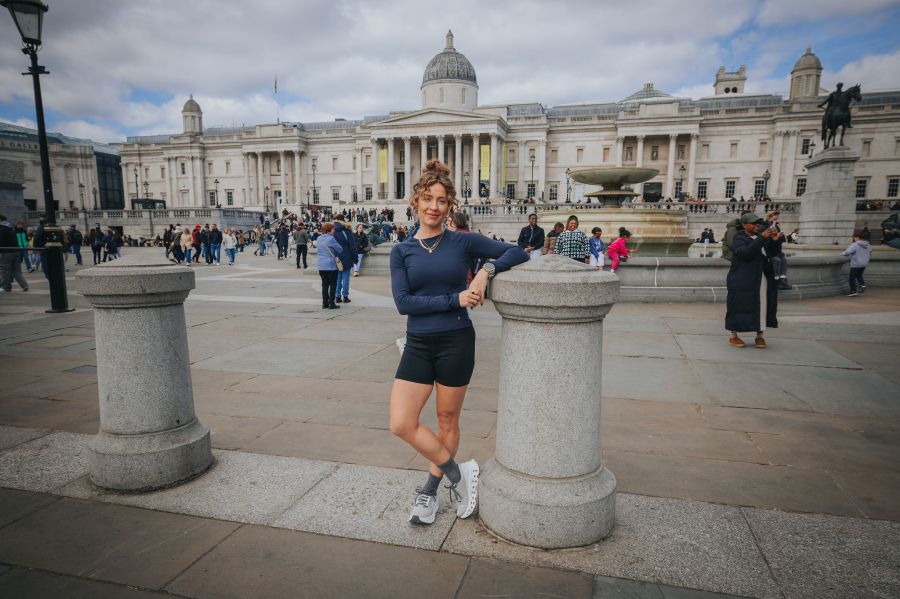
At the age of 18, endurance athlete Esmée Gummer was told she would never walk again. Now, she is running approximately 5,000km around the UK in a bid to get one million people moving this summer. Here, she tells Joanna Ebsworth all about her training regime for running endurance and tips for resilience
Words: Joanna Ebsworth | Images: Bright Stream Productions
In the July 2026 issue of Women’s Fitness, we spoke to endurance athlete and fitness coach Esmée Gummer, 34, about her biggest challenge yet: to get one million people across the UK walking, jogging or running an inclusive 5k. Set to run from 27th June to 3rd October 2026, The Nation’s 5k Challenge will see Esmée host a free community 5k event in all 76 cities across the UK – plus an additional 5k event in Dublin to take the total to 77 – in just 99 consecutive days, while helping to raise money for various charities along the way.
If that wasn’t enough, the founder of The Say Yes Club, is also running the entire distance between each city for a total commute of approximately 5,000km: a remarkable feat considering the former dancer became paralysed from the waist down at the age of 18 and was told she’d never walk again.
After speaking with Esmée about what inspired her to take on this extraordinary challenge, we quickly realised there wasn’t enough space to fully capture the dedication and determination behind her fundraising journey. Read on to learn how she gradually upped her mileage in 2026, what she learnt about nutrition at the Red Bull Athlete Performance Centre in Austria, and how she’s feeling about going through four menstrual cycles during the event – or head to the end of this article to discover her practical advice for building resilience and overcoming adversity.
Putting in the miles
“Even though I’m a PT, a Strength & Conditioning (S&C) Coach, and an experienced endurance runner, I’ve had to do a huge amount of training to prepare to run 5,000km around the UK, and I want to normalise that fact because people don’t just run that kind of distance all the time.
“I spent all of 2025 running and keeping conditioned in the gym in preparation, but I always knew I’d have to move into a full running plan at some point. From January 2026, I began working with the running coach and expedition leader Chris Taylor, who is an expert in pulling off these crazy challenges. He devised my training plan with lots of mini goals and it’s been pretty brutal. I’ve done many 100k+ weeks, and I did an ultra every month, including a 50k in January, a 55k in February, a 60k in March, a 65k in April (in addition to the London Marathon), a 70k in May, and a 75k in June”.
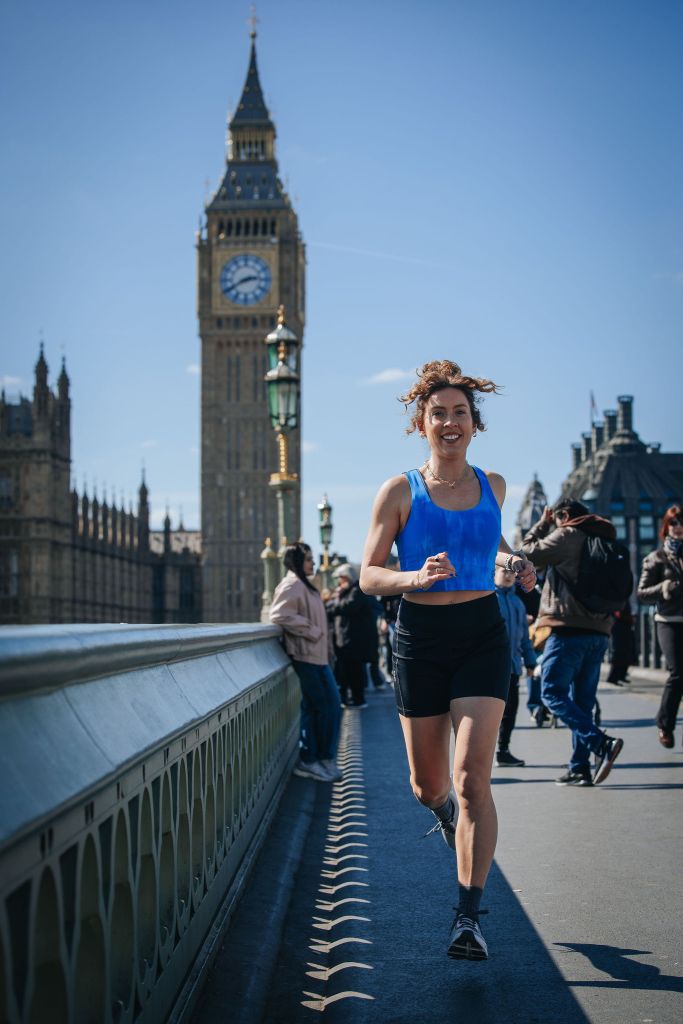
How to stay motivated: Olympian Aimee Fuller’s top hacks for beating excuses
A deeper understanding
“I was also incredibly grateful to have the opportunity to go to the Red Bull Athlete Performance Centre in Austria. Only athletes are usually allowed to go there, so it was a bit of a ‘money can’t buy’ experience, and the stuff I found out was incredible, because you can’t just Google, ‘How do you run 5,000km kilometres and host 77 run clubs at the same time’, right?
“I did strength testing and VO2 max testing, which really helped me to understand what my body is capable of and how I am going to do it. I think my biggest takeaway was learning about the nutrition side of things, especially as a female, because our bodies work so differently to men’s bodies due to our menstrual cycles.
“I’ve always eaten well but learning how to eat for this kind of challenge has been a whole new world. Thankfully, the experts tested everything and figured out exactly how many calories and carbs I’d need to fulfil the challenge (around 5,000 calories a day). I can’t tell you how invaluable that information is to me”.
Going with the flow
“The last thing I want to do is damage my body while completing the challenge, but that could happen if I were to undereat. That’s my biggest fear, because not taking on enough fuel could lead to RED-S (Relative Energy Deficiency in Sport), and that in turn could cause me to lose my period.
“It’s quite weird to think about my menstrual cycle in relation to this challenge, because I’m going to go through four full cycles while I do it. If I’m honest, I’m that girl who only gets one good week [in her cycle], so part of me is thinking I don’t really want to have any periods. But obviously, the other part of me wants to eat enough to keep my periods and stay healthy. I guess it’s just another thing that women have to think about in comparison to men when they take on an endurance challenge”.
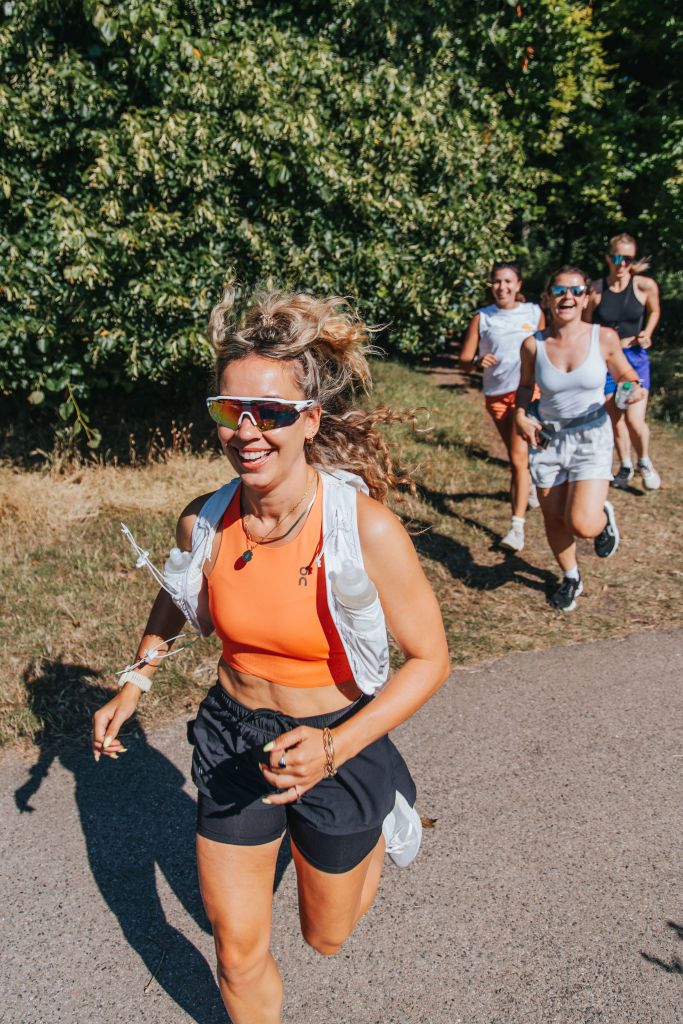
Esmée Gummer’s top tips on how to build resilience
Say ‘yes’
“Something I live and breathe by – and I think a lot of people can use this, too – is the idea that I’ll have to say no to moving my body one day in the future. Obviously this stems from being paralysed and learning to walk again, and I’m probably more aware than most people that we will all have to say no to movement one day, whether that’s due to injury or old age or a medical reason. It’s just that that moment is going to hit some earlier than others.
“In a way, I feel lucky to have had that experience and realisation, because I already know what it feels like to say no to movement. So, when I’m laying bed thinking about the fact that I need to go for a run (but I don’t feel like it), or I’m thinking about giving up during a training session, I remind myself that I won’t be able to choose to move one day, and that will get me going”.
Find the joy
“I think people need to change the way they look at resilience. Before I was paralysed, I was a very determined dancer, and I would push myself in training until I felt sick – not just because that was the culture of dancing, but because I was so determined and I knew what I wanted.
“Back then, I think I associated resilience with words like fight, grit, determination, anger or dig deep, and I worked incredibly hard to get into dance collage – until complications during a routine hernia repair operation left me paralysed from the waist down six weeks before I was meant to go.
“However, my experience of not being able to move has changed me a lot. Now, I’m nice to myself. I give myself a break. If I’m struggling in training, I go, ‘It’s alright. You’ve done enough, darling.’ Instead of associating resilience with something dark and scary, I flip it on its head tell myself that resilience can be gratitude and joy and softness and optimism. When I’m running a marathon and I hit a wall, I don’t get angry or shout at myself. I remember to look up, be in the moment and enjoy the whole experience – and I also tell myself, ‘You can do this!’ That’s what keeps me going”.
Settle down
“I always say that having the resilience to keep going no matter what comes from having a settled nervous system. To that end, I suggest you find your special person or thing or moment or memory that helps to keep you calm, as opposed to angry or stressed.
“My resilience definitely comes from the people in my life that mean a lot to me. My brother has got special needs, and he ended up getting heart failure really young, but he believes in me and he backs me and he loves me. When I’m on my own and I find myself thinking, ‘I can’t’, or I want to quit because I can’t remember the point or purpose or reason for doing something, I really visualise my brother and imagine him talking to me, because he settles me, gives me my ‘why’, and reminds me what I’m fighting for”.
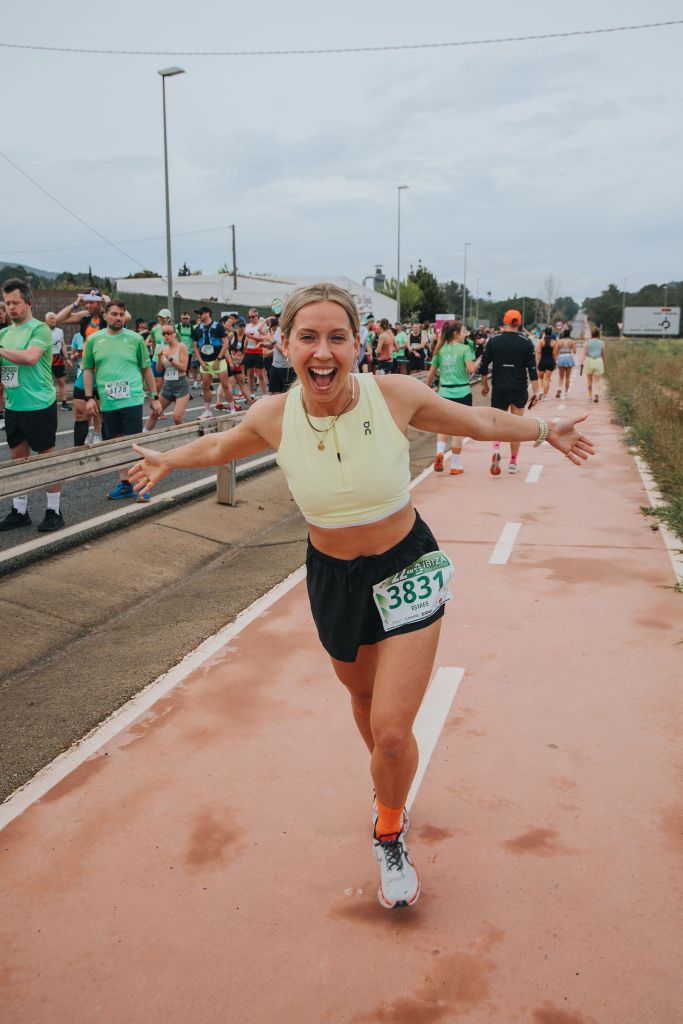
How to join The Nation’s 5K
To join any of the free 5K events, and vote for additional charity partners, sign up via realbuzz. Proceedings will kick off in Inverness, then continue around Scotland before heading to Northern Ireland and then England.
You can also support Esmée’s fundraising efforts via her GoFundMe page.