
Hormones are only part of the story. Orthopaedic surgeons and physiotherapists explain why women are at greater risk of this devastating knee injury – and the strength exercises that can dramatically reduce your chances
It’s a common injury associated with sport but the statistics show women tear their ACL at much higher rates than men. Here’s the reason why and how you can protect yourself
Living in a household of four football-mad boys, the ACL (anterior cruciate ligament) injury has reared its ugly head – or knee – more times than I can remember. Stretched, sprained and torn; sadly I’ve seen it all and it is not a pretty sight. And neither is the recovery! In fact, as anyone who has injured their ACL will know, it takes a lot of time and patience to heal.
Fortunately I don’t sit in that category but as someone who runs and plays padel, discovering that more women than men tear their ACL in sport has got me concerned. And curious obviously. Do hormones play a part or is it the differences in how our bodies are built? – as it happens both tick the box, alongside other factors.
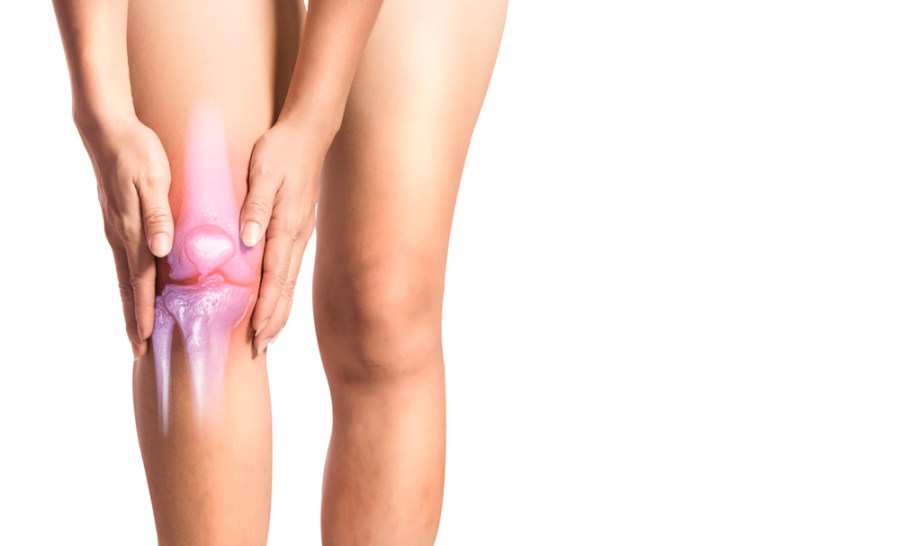
With sports like football, padel and running – that require you to do sudden stops or changes in direction, jumping and landing – an ACL injury is more common. For the ACL is one of the ligaments inside your knee – it joins your thigh bone (femur) to the front of your shin bone (tibia), which means sharp movements can trigger the ligaments as you overextend as such your knee joint.
Whilst it’s super common to hear of professional footballers like Virgil Van Dijk and Alan Shearer hurting their ACL, I wasn’t aware of the higher rate amongst women – probably because when the celebrities do it, they make headline news.
According to orthopaedic surgeon Roshan Melvani – who specialises in knee reconstruction and replacement, the risk of ACL injury can be up to eight-fold in females compared to males.
“Female athletes experience ACL injuries more often than males due to a number of reasons. While the data is clear there is a difference in rupture rates, hormones are not solely responsible. In fact, there are multiple factors. One major one is lower extremity biomechanics. Due to the female pelvis being anatomically different for purposes of childbearing, there is a predisposition for the knees to collapse inward – known as dynamic valgus – during pivoting and cutting.
“Due to anatomical differences, the biomechanics of the female pelvis also result in landing with less knee and hip motion affecting control of the trunk and delayed activation of the hamstrings compared to the quadriceps. These biomechanical factors increase strain on the ACL in females.”
The effect of hormones
When it comes to our hormones, he adds they can also “contribute to ACL tears as estrogen tends to predispose to ligamentous laxity at higher levels, likely for childbearing purposes.
“Though the data is limited, some studies have even cited ACL injuries being more common during certain phases of the menstrual cycle when estrogen peaks — though this can be debated as the evidence is not level one evidence! It is important to note that there are no guidelines supporting any activity modification based on this knowledge. Hormones are only one factor in this process and not the primary explanation.”
As for the mechanics of the body and why the ACL is such a common injury, physical therapist Andrew Gorecki, of https://ourhealthnetwork.com/doctor/andrew-gorecki-pt-1902137920 breaks it down.
“The ACL is a passive stabilizer. It doesn’t fail because it’s weak. It fails because the active stabilizers around it, the whole chain from foot to trunk, couldn’t control the forces at the moment of injury. “Every non-contact ACL tear is fundamentally a chain reaction failure. The ACL was the last thing to give, not the first thing that failed.
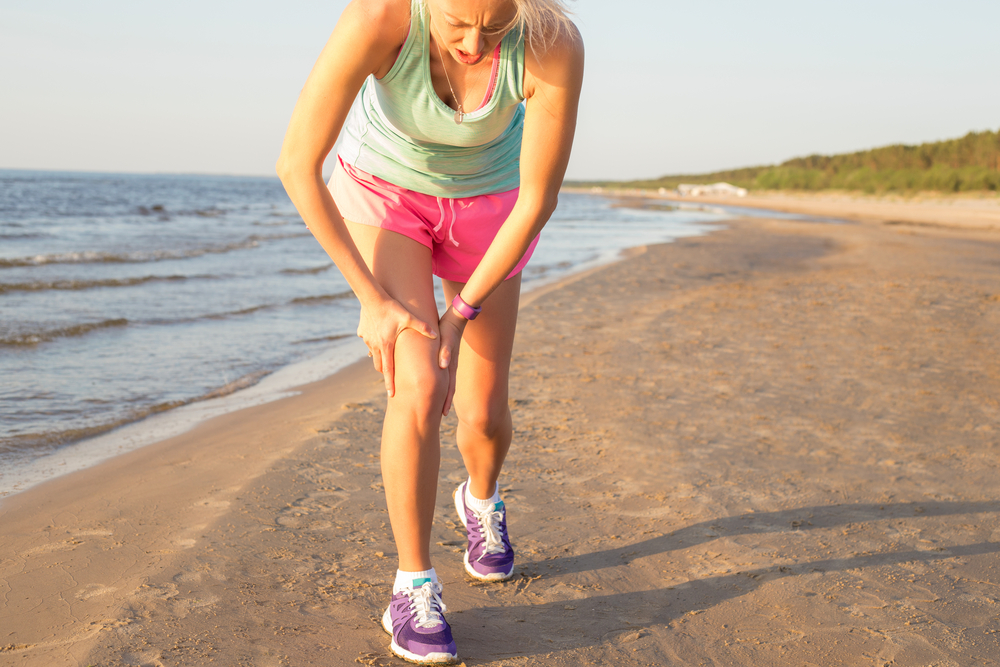
“For women specifically, the chain reaction failure has a characteristic pattern. Foot pronates. Tibia rotates internally. Knee collapses inward (valgus). Hip drops on the swing side. Trunk shifts. All of that happens in a fraction of a second, and the ACL takes the load because everything upstream couldn’t stop it. The hormonal and anatomic factors set the stage. The chain reaction is what actually pulls the trigger.”
More than men
As an orthopedic surgeon, sports medicine specialist and a team physician for the Tennessee Titans and USA Basketball – Dr Ethan Kellum has seen it all when it comes to ACL injuries amongst women.
“On the rate itself….well, the number you’ll see most often is that female athletes tear their ACLs somewhere between two and eight times more often than male athletes…depending on the sport and the study. In cutting and pivoting sports like soccer and basketball the gap is real and it is large (probably more than most think).
“On whether hormones are to blame? Well, this is the part where I’d push back gently on the framing because…while hormones are probably part of the picture, they are not the whole answer, and the science is genuinely unsettled, from my viewpoint,” he explained.
“There is decent evidence that injury risk shifts across the menstrual cycle, with more injuries clustering in the days before ovulation when estrogen is rising. If we get into the science…in the lab, estrogen changes how the ligament’s collagen behaves, which gives that a plausible mechanism. There is even some data that oral contraceptives may modestly lower the risk.
“But there is also newer work suggesting the real driver may be the tissue itself, that the female ACL simply repairs everyday fatigue damage less efficiently, independent of hormones….so my honest answer is that hormones are a contributing factor but NOT a proven cause.
“So what actually explains the gap? As I see it…it’s several things stacked together including anatomy which plays a role. As we know…on average, women have a wider pelvis and a different angle from hip to knee, a narrower notch where the ligament sits, and a smaller ligament to begin with. But the piece I care about most as a surgeon is neuromuscular control, meaning how the knee is trained to absorb force when a person lands, cuts, and decelerates.
“That is the part we can actually change especially when female athletes go through targeted neuromuscular and strength training, jump landing, deceleration, hip and core control, the injury rates drop meaningfully.”
Prevention
It’s no surprise that with a severe ACL injury (when it is torn or ruptured for example) and the recovery process can be up to one year to return to sport, the experts point to prevention as the main way to protect yourself. This can include ankle mobility and stability exercises, explains Andrew Gorecki.
“Restricted ankle dorsiflexion forces the knee into valgus during landing. Fix the ankle and the knee position improves.”
As someone with a passion for preventing ACL injuries having seen so many amongst his clients, Dr Ashley Katzenback, physical therapist and founder of https://www.capeconciergept.com/ is keen to point out that strength training is the way forward.
“We know early implementation of strength and power training, alongside landing mechanics drills, can cut ACL rates by 50–80% in female athletes. That is what we need to be focusing on.”
In agreement is sports physical therapy specialist Rena Eleazar https://www.matchfitperformance.com/ who adds:
“Strength training is a key component of preventing ACL injuries. Female athletes tend to be discouraged from lifting heavy weights and building strength, unlike their male counterparts, who are encouraged to do so very early on in their sporting careers. Consistent, progressive strength training over time is very protective for all athletes, as well as power training, working on both acceleration and deceleration.”