
That sharp pain under your heel doesn’t have to become your new normal. Experts explain what causes plantar fasciitis, why menopause may increase your risk and the best ways to recover
Plantar fasciitis is a very common cause of heel pain, particularly in women aged 45 and over. It can range from a mild ache to intense pain, making walking and daily activities quite uncomfortable. Below, we look at what causes plantar fasciitis and offer up advice on the best way to treat it.
If you’ve never had plantar fasciitis before, you can be forgiven for not appreciating what the pain actually feels like. For me, I suffered so badly, that I can still recall the intensity of it even two years on. The only way I can describe it is like a feeling of a deep bruise in my heel that varied between a manageable pain to one that brought me to tears, and caused me to limp.
Whilst anyone can get plantar fasciitis, it is more prominent in people aged 45 to 64, with women nearly twice as likely to develop it as men, particularly those going through menopause. Since I tick both those boxes – along with someone that used to wear bad shoe wear (another cause of it), it was no surprise I had it.
In fact, according Dr Anne Sharkey, a podiatrist at www.solelypodiatry.com – there is new and emerging evidence on the musculoskeletal syndrome of menopause in which women experience musculoskeletal pain, bone density loss, loss of muscle mass as estrogen decreases. Plantar fasciitis certainly falls within this category.
“There was a 2026 study that reviewed 93,021 women and found that 57% of perimenopausal and 59% of postmenopausal women experience muscle/joint pain compared to 40% of pre-menopausal women. I truly believe we will see many more studies on this in the future and that the reason many older women get plantar fasciitis is because of this,” she explained.
So what exactly is plantar fasciitis?
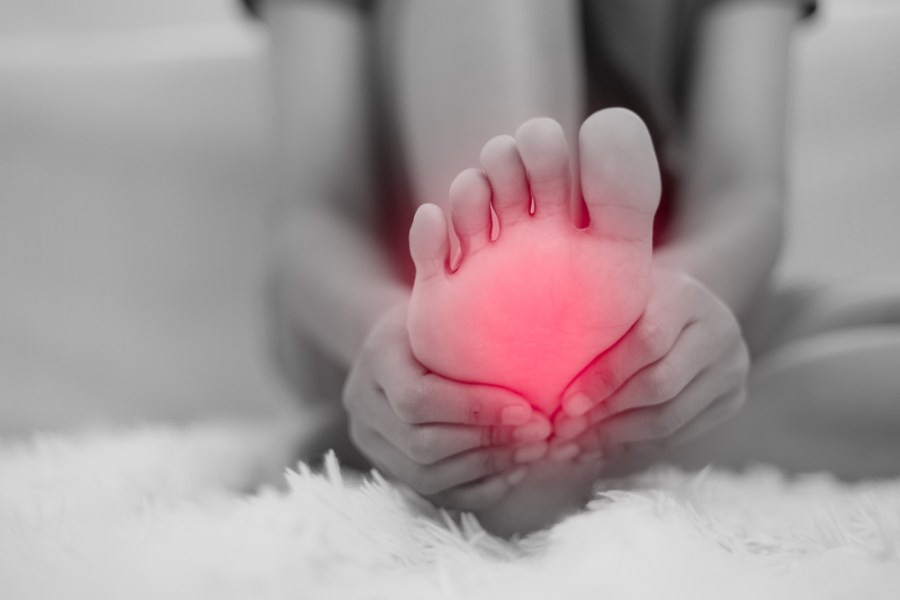
Plantar fasciitis is the most common cause of plantar heel pain and as we get older, the plantar fascia (which is the thick band of tissue supporting the arch of the foot) becomes less flexible.
It is an inflammation of the plantar fascia which is a strong ligament that runs from the heel to the ball of the foot. This condition revolves around injury to the elastic plantar fascia ligament that bridges the arch of your foot from heel to ball. In this condition, small tissue tears and inflammation commonly develop
The primary symptom is pain at the heel, especially with first steps out of bed in the morning as well as after rest. In many cases, like mine, the pain can come on suddenly and flare up when you are least expecting it. The good news is most cases typically last between six to 12 months (with many people requiring no treatment).
How can you treat plantar fasciitis?
You can usually treat plantar fasciitis at home with over-the-counter painkillers, icing, rest and stretching. Many people with the condition also see a physiotherapist which, in my case, has helped me enormously. I religiously took on board the stretching exercises my physio recommended, along with her advice on wearing the best footwear for plantar fasciitis.
As for medication, physiotherapist Nell Mead http://www.nellmead.com/ advises: “it’s worth knowing what’s available if you speak to your GP or pharmacist. Over-the-counter NSAIDs like ibuprofen, whether tablets or a topical gel rubbed directly over the heel, are the most commonly used option and can take the edge off pain enough to keep up with exercises, though they don’t treat the underlying cause. If pain is more stubborn, a doctor might consider a corticosteroid injection, which can be very effective short-term, but it’s not something I’d want repeated too often, as it can weaken the fascia over time and increase rupture risk with repeated use.
“For women whose plantar fasciitis seems to have appeared alongside other menopause symptoms, it’s also worth raising HRT with your GP. It’s not a treatment for plantar fasciitis specifically, but several of my patients have found their overall joint and tendon pain, plantar fasciitis included, improved once their hormone levels were better managed.”
Other options include using ice as a vehicle for reducing inflammation and providing relief. And chronic heel pain from plantar fasciitis can be reduced with massage with a spikey massage ball, by simply rolling your foot over the ball with applied pressure.
How to recover from plantar fasciitis
There are many ways you can help yourself, with one being a change of footwear.
“The best recovery is to get your get out of your tight shoes and flip flops and strengthen the intrinsic muscles in your feet,” explained physical therapist Dr Ashley Katzenback, of https://www.capeconciergept.com/
“The job of the plantar fascia is to stabilize the arch in your foot. If the muscles are weak, the plantar fascia pulls tighter to stabilize. When you are in flip flops or narrow fitting shoes, your toes have to grip the ground and they can’t splay which weakens the muscles. Make sure you are walking correctly and pushing off through your big toe. Bottom line, see a Physical Therapist as soon as possible, so this doesn’t become a chronic condition.”
From a personal point of view, I found wearing shoes around the house instead of bare feet really helped me mange the pain. Walking with bare feet can put more pressure on the inflamed area so finding a good pair of trainers with support and cushioning is important.
What should you look for when choosing footwear to help prevent foot pain from occurring?
Here are key factors to consider when selecting shoes to help prevent foot pain; arch support to provide the foot with more support when walking, a good cushioned shoe to help with shock absorption which reduces the stress of the foot and finally a spacious toe box so your toes and feet have room to stretch as scrunched up feet can contribute more to foot pain.