

From hot flushes to fatigue, there are many symptoms that come with perimenopause, but what you eat could help manage them
Words: Rob Hobson | Images: Shutterstock
Centre meals on protein
As oestrogen levels fall, maintaining muscle becomes more challenging, making protein even more important. Protein helps preserve lean muscle, supports strength and keeps you fuller for longer, which can be helpful if weight starts creeping up during perimenopause. Aim for around 1.2g of protein per kilogram of body weight each day, spread across your meals, with 20-30g per meal from foods such as Greek yoghurt, eggs, fish, poultry, tofu or beans. Resistance exercise alongside a protein-rich diet is one of the most effective ways to support healthy ageing. Try The Organic Protein Company Unflavoured Whey Protein (£24.70 for 400g; theorganicproteincompany.co.uk).
Eat for bone health
Bone loss begins to accelerate during the menopause transition, so it’s worth paying closer attention to calcium intake before menopause is over. Dairy foods such as milk, yoghurt and cheese are among the richest sources, while almonds, dark leafy greens, fortified plant milks and canned sardines with
the bones also count. Pair these with adequate vitamin D, either from sensible sun exposure or a supplement during autumn and winter, and regular weight-bearing exercise to help support bone health.
Get friendly with soy
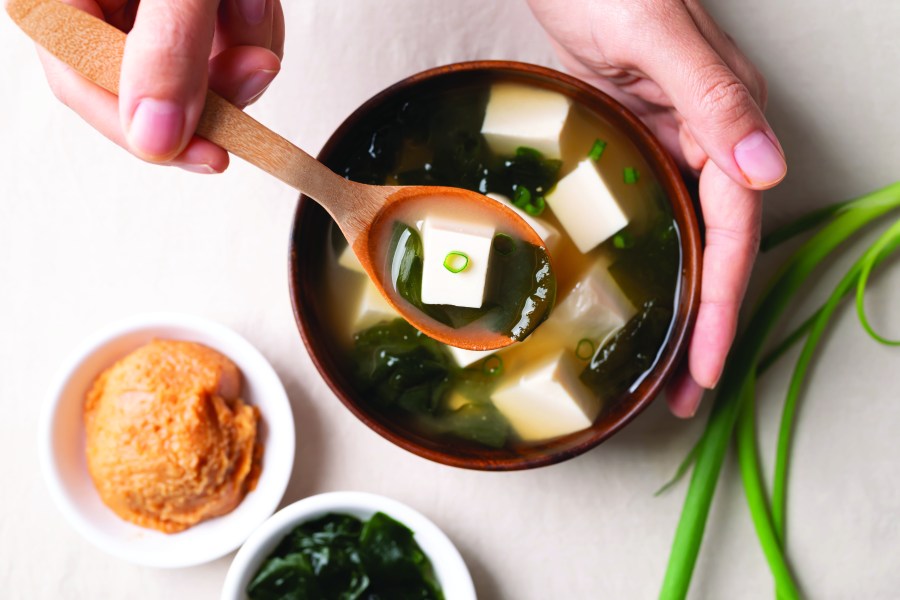
Soy foods naturally contain isoflavones, plant compounds that have a weak oestrogen-like effect in the body. While they won’t work for everyone, research suggests they may help reduce hot flushes in some women, particularly when eaten regularly as part of the diet. Choose minimally processed options such as tofu, tempeh, edamame and fortified soya milk. Edamame beans are the most versatile and can be added to many different dishes from salads to stir-fries. You may also want to explore a supplement such as Healthspan Soy Isoflavones Hormonal Balance (£21.99 for 120 tablets; healthspan.co.uk).
Pack in plants
Fruit, vegetables, wholegrains, beans, nuts and seeds provide fibre that helps feed your gut microbes and supports heart health. Emerging research also suggests that diet quality and the gut microbiome may partly influence the metabolic changes that occur after menopause, reinforcing the value of
eating a varied, plant-rich diet rather than focusing on individual ‘superfoods’. Aim for around 30 different plant foods each week, including herbs and spices, as variety appears to be just as important as quantity.
Scale back on sugar
As hormone levels change during perimenopause, the body becomes less efficient at handling blood sugar, increasing the risk of insulin resistance and type 2 diabetes over time. Rather than cutting out carbohydrates, focus on reducing foods high in added sugars, such as sugary drinks, pastries and sweets, and choose wholegrain carbohydrates more often. Pairing carbohydrates with protein, healthy fats and fibre can also help support steadier blood sugar levels. It’s a simple change that benefits your energy levels, metabolic health and heart health in the long term.