

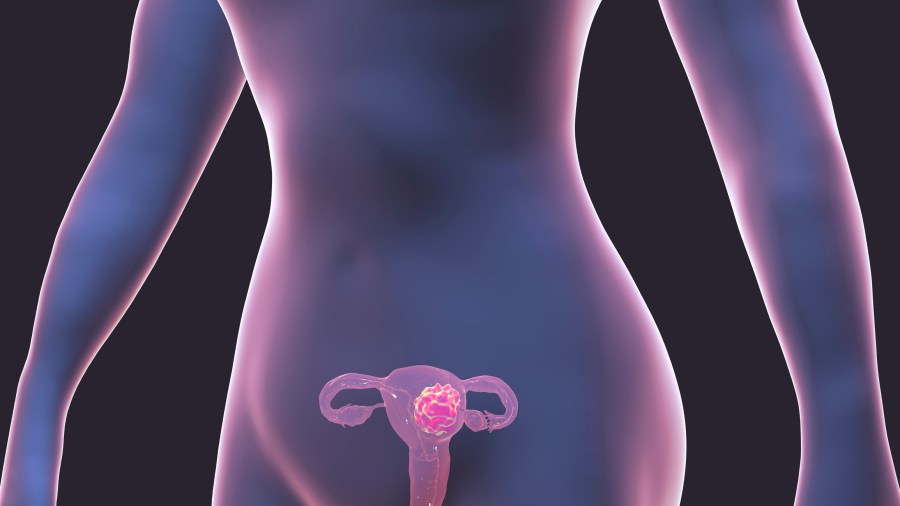
Cervical and ovarian cancer may be more widely recognised, but vulval and vaginal cancers are less talked about. Experts explain the symptoms to look out for, who is most at risk and why knowing what’s normal for your body could help you spot changes early.
Pics: Getty images
Whilst most people would have heard of cervical and ovarian cancer due to public awareness campaigns and the invitation to undergo medical screenings, there are other gynaecological cancers worth having on your radar. They include vulval and vagina cancer, which are a lot rarer and therefore less spoken about, but women should still be aware of them.
When it comes to these cancers, Dr Lucy Hooper, a private GP and co-founder of Coyne Medical believes it is even more paramount we highlight them, due to the fact very few women, myself included, really know the signs and symptoms of vulval and vaginal cancer.
“Women being informed about these cancers is particularly important because there is no routine screening programme for vulval or vaginal cancer. So we really do rely on women knowing the symptoms and noticing when something has changed, to enable them to get diagnosed as quickly as possible,” she explained.
“There is also still a misconception that I hear all the time in clinic: women think that if they have been good at keeping up to date with their cervical screening, they have somehow been screened more generally for gynaecological cancer. It’s really important to understand that they haven’t.”
Whilst she points out that cervical screening is specifically designed primarily to detect high-risk HPV, or human papillomavirus (persistent high-risk HPV causes almost all cervical cancers), what it doesn’t do is screen for cancers of the vulva or vagina.
Vulval cancer
“Vulval cancer affects the external female genitalia. That includes the labia, the skin around the clitoris and the entrance to the vagina,” adds Dr Hooper.
“It’s not a very common cancer, but it’s also not actually terribly rare. There are around 1,500 new cases every year in the UK. It is predominantly a cancer that women experience as they get older, and more than 40% of cases occur in women aged 75 or over.”
According to Dr Hooper, there are two groups of women who should be particularly aware of the risk of vulval cancer.
“One group is women who have persistent high-risk HPV infection. And please note that I said persistent high-risk HPV infection. Most sexually active people will be exposed to HPV at some point in their lives and may test positive for it. The majority will clear the virus themselves and will not develop a persistent infection,” she explained.
“It is persistent infection that carries the greater risk of causing changes to cells which, over time, can potentially lead to cancer.”
The other group at increased risk is women with lichen sclerosus. This is a chronic inflammatory skin condition that affects the vulva. “It is relatively common and we often see it around times of hormonal change, including in young girls and around and after the menopause.

Symptoms of vulval cancer
“It can cause pain, discomfort, itching and soreness, and sometimes quite significant changes to the appearance of the skin,” said Dr Hooper. “And that is why I think it is really important to know what your own vulva looks like.
“If every person reading this went and got a mirror, had a look and became familiar with what is normal for them, I think that would be an amazing thing.”
Some of the things women should look out for with vulval cancer are a new lump or thickened patch of skin, an ulcer or sore that does not heal, bleeding from an area of skin, or a persistent change in the colour or texture of the skin.
For women being treated for lichen sclerosus, Dr Hooper advises they should get checked if their usual treatments, often steroid creams used to control the inflammation, suddenly aren’t working in the way they normally do.
Vagina cancer
As for vagina cancer, the good news is it is very rare. According to Cancer Research UK, there is around 300 new cases a year but in the USA, it is harder to put a figure on it as the American Cancer Society’s latest figures group vagina cancer alongside others gyney ones. That said, it’s still good to be informed of what symptoms it presents.
“Vaginal cancer is much rarer than vulval cancer, but again it predominantly affects older women. In fact, the highest incidence is seen in women aged 85 to 89,” added Dr Hooper.
“HPV is again one risk factor, although not all vaginal cancers are related to HPV.
Symptoms of vagina cancer
“Some of the symptoms overlap with vulval cancer, but with vaginal cancer abnormal bleeding is particularly important. That could be bleeding after sex, bleeding between periods or any vaginal bleeding after the menopause,” pointed out Dr Hooper.
“Women may also experience blood-stained or unusual discharge, pain during sex, itching, or a lump or growth inside the vagina.”
Reiterating what symptoms to look out for, Radhika Gogoi, a gynecologic oncologist at the Barbara Ann Karmanos Cancer Institute adds:
“Vulvar cancers often present with itching, which is often one of the most frequent symptoms. Patients may also notice a lesion, area of skin change, bleeding, discomfort or pain, including discomfort while sitting. These findings may be identified by the patient or during a gynaecological exam.”
And vaginal cancers, she adds, often present with abnormal bleeding.
“A clinician or the patient themselves may also notice a mass in the vagina during a pelvic exam. Other symptoms can include pain, bleeding with intercourse, pelvic pain or rectal pain. Occasionally a pap smear may pick up abnormal cells in the vagina.”
Due to the fact symptoms can be subtle, it is important for patients to seek evaluation if they notice persistent vulvar itching, bleeding, pain, a new lesion or other concerning changes. Regular gynaecological care can help, but it does not guarantee that these cancers will always be found early, particularly if symptoms are subtle.
“Detection often begins when a patient reports symptoms or when a clinician identifies a lesion, mass or other abnormal finding during a pelvic exam,” added Dr Gogoi. “This is often followed by a biopsy and pathologic confirmation. Because the symptoms can be subtle, patients should regularly see a gynaecologist and advocate for evaluation if they have persistent or concerning symptoms.”
Treatment
Treatment then depends very much on the results of those tests, where the cancer is and how far it has spread, it can include surgery, radiotherapy and sometimes chemotherapy.
The good news
On a more positive note, both doctors I spoke to are quick to point out that vulvar and vagina cancers are overall uncommon and women shouldn’t immediately jump to the conclusion they have it, if they notice any unusual changes to their body.
“The vast majority of these symptoms I’ve mentioned will either get better on their own or have a completely benign explanation,” explained Dr Hooper. “But knowing your normal is incredibly important, and we shouldn’t be embarrassed about asking for an examination when something has changed.”
And Dr Gogoi points out that women should understand that vulvar and vaginal cancers are extremely rare, with vaginal cancer generally being the least common. “Very roughly, and based on clinical experience, vaginal cancer may represent 1 in 100 gynecologic cancer cases, while vulvar cancer may represent approximately 3 to 5 in 100 cases.”