

Your forties and fifties may be the most important years for protecting your brain. Experts explain why exercise is one of the most powerful ways to lower dementia risk – and the workouts that offer the biggest benefits
Exercise is hugely beneficial for so many reasons but when it comes to dementia, it can play a huge part in reducing our risk of getting it.
Unlike other health conditions where exercise can play a small role in protecting you, scientific studies have proven that when it comes to dementia, working out can be a huge protection barrier from getting the brain disease.
As an expert in dementia prevention and treatment, John Showalter – chief operating officer of Linus explains why women are effected more than men.
“Evidence shows that between 45% and 50% of women will develop dementia,” he explained. “A recent study from Johns Hopkins/NYU that looked at over 15,000 adults showed about 48% of women develop dementia after age 55, versus 35% of men
“Living longer explains some but not all of the gender difference and researchers continue to look at other potential factors such as menopause-related brain changes, sex differences in a cholesterol-transport gene (called APOE ε4) linked to Alzheimer’s risk, and social factors such as historically lower education access among older women
“Exercise can decrease dementia risk in at least two ways: by protecting the brain’s blood vessels and by triggering BDNF, a protein that helps neurons grow and connect. Even small amounts of moderate exercise can create meaningful dementia risk reduction in older women.”
When it comes to menopause-related brain changes as mentioned above, psychologist Dr Jessica McCarthy points to an interesting study that is the most recent with regards to exercise and dementia in women, specifically with women in the perimenopausal years:
“Fourteen studies of peri- and menopausal women were reviewed and found that perimenopause may represent a critical window for intervention, making exercise particularly important during this stage of life. Women who were more physically active during midlife had a significantly lower risk of developing dementia later in life.
“Importantly, the protective effect remained even in studies with 20+ years of follow-up, suggesting that exercise truly minimizes risk rather than simply reflecting early disease-related inactivity.”
The study she is referring to here is The Prospective Population Study of Women in Gothenburg, Sweden, – one of the longest running studies of women’s brain health, following 800 women over 44 years.
The results found that women with high cardiovascular fitness in midlife had: significantly lower dementia risk, substantially delayed onset of dementia among those who eventually developed it and one of the most important findings was that women with high fitness developed dementia years later than women with lower fitness levels.

How does exercise help prevent you from getting dementia?
To answer this, we spoke to Dr Rab Nawaz Khan, a neurologist and physician at https://www.mymigraineteam.com
“Exercise helps look after the brain because it protects the blood vessels, metabolism, sleep, mood, and inflammation systems that support brain health over decades.
“For women over 40, this matters because midlife is when blood pressure, cholesterol, insulin resistance, sleep disruption, menopause-related body composition changes, and stress can begin to affect long-term brain risk. Exercise is not a guarantee against dementia, but it is one of the most practical ways to build a healthier brain environment.
“The brain depends on steady blood flow, oxygen delivery, and healthy blood vessels. Regular movement improves cardiovascular fitness, lowers blood pressure, supports glucose control, improves sleep quality, and may reduce chronic inflammation. Exercise also appears to support neuroplasticity, which is the brain’s ability to adapt and strengthen connections. In simple terms, movement helps the brain stay better supplied, better regulated, and more resilient.”
From speaking to numerous dementia experts, one thing that they all repeated was that our forties and fifties were a good time to try to incorporate exercise into our lives, if we had not already done so. According to neuroscience and sleep science expert Dr Laura Bojarskaitė https://laurabojarskaite.com/ this is because it is a time when our bodies are going through hormonal changes.
“The forties and fifties appear to be a critical window for dementia prevention because many of the biological processes that eventually contribute to cognitive decline—vascular changes, insulin resistance, inflammation, and hormonal shifts around menopause—begin accelerating during this period.
“Research suggests that physical activity during midlife may reduce dementia risk by around 40–45%, and some studies have reported even larger benefits among women with high cardiovascular fitness,” she explained.
“Your forties are not too early to think about dementia prevention—in many ways, they’re exactly the right time. The habits you build in midlife can shape your brain health decades later.”
What exercise do the experts suggest to help you ward off dementia?
John Showalter
Aim for 150 minutes a week of moderate activity, including a combination of cardio, strength, and something like tai chi (which builds cognitive reserve by combining movement, balance and focused attention). Variety is a good thing because the brain responds to novelty — learning new movement patterns forces it to build new connections.
Dr Laura Bojarskaitė
If I had to choose one exercise prescription for brain health, it would be a combination of aerobic activity and strength training. Cardio challenges the cardiovascular system and increases blood flow to the brain, while resistance training supports metabolic health, mobility, and healthy aging.”
On walking you do not need to become a marathon runner to benefit your brain. Even brisk walking appears to meaningfully lower dementia risk, and moving from completely inactive to moderately active may provide the biggest gains.
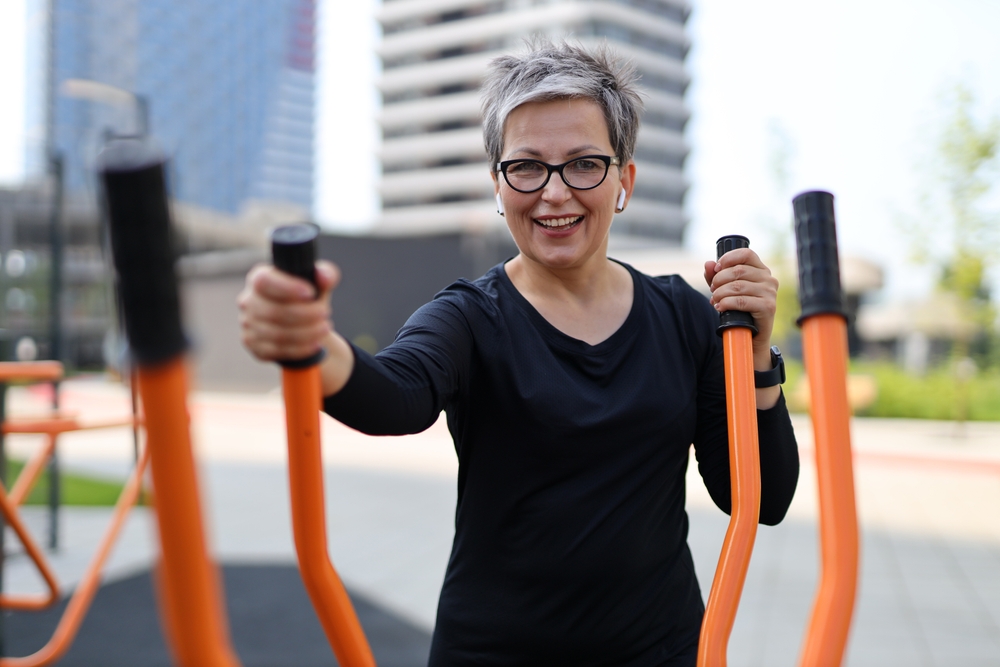
Personal trainer Anwen Davies https://www.networldsports.co.uk/author/anwen-davies
Cardio like brisk walking, swimming or cycling gets blood flowing while strength training and maintaining muscle is also more important than many people realise as you get older. Even a daily walk is a great starting point and for many is a habit people can stick to.
The time needed to train is actually less than most women think and I think that is half the battle. Many assume that you need an hour in the gym every day which puts a lot of people off before they’ve started.
Some recent research found benefits from around 35 minutes a week of moderate activity which could be a couple of short walks. With my clients I’d recommend they should aim to do more than that but that may not always be possible for everyone and I always try to work with them to figure out a training plan that suits what is realistic for them.
Personal Trainer Denise Chakoian Owner of www.corefitprov.com
Strength training, 2 to 3 days per week
This is essential after 40. Muscle is metabolic protection. The more muscle a woman preserves, the better her body handles glucose, balance, bone density and independence. Strength training should include squats or leg presses, hip hinges, rows, presses, carries and core work.
Aerobic exercise, 150 minutes per week
Brisk walking, cycling, swimming, hiking, boxing, dance or intervals can improve blood flow to the brain and cardiovascular health. WHO recommends 150 to 300 minutes of moderate aerobic activity weekly, or 75 to 150 minutes vigorous activity.
Balance and coordination work
This is underrated for brain health. Tennis, boxing, dance, agility drills, yoga and single-leg work challenge reaction time, coordination and the nervous system.
Higher-intensity work, when appropriate
For healthy women who are cleared for it, short intervals can be useful because they challenge cardiovascular fitness efficiently. But intensity should be built gradually.
Finally, now we have the knowledge that exercise can in fact help ward off dementia, it’s never too late to start getting fit.
In the words of Denise Chakoian: “Think of exercise like a multi-tool for your brain. Regular exercise improves circulation, protects your muscle mass, stabilizes blood sugar levels, decreases inflammation, and helps your brain stay sharper and more adaptable as you age. While no one can say exercise definitively prevents dementia, we do know that it improves many of the biological factors that support brain health.”