
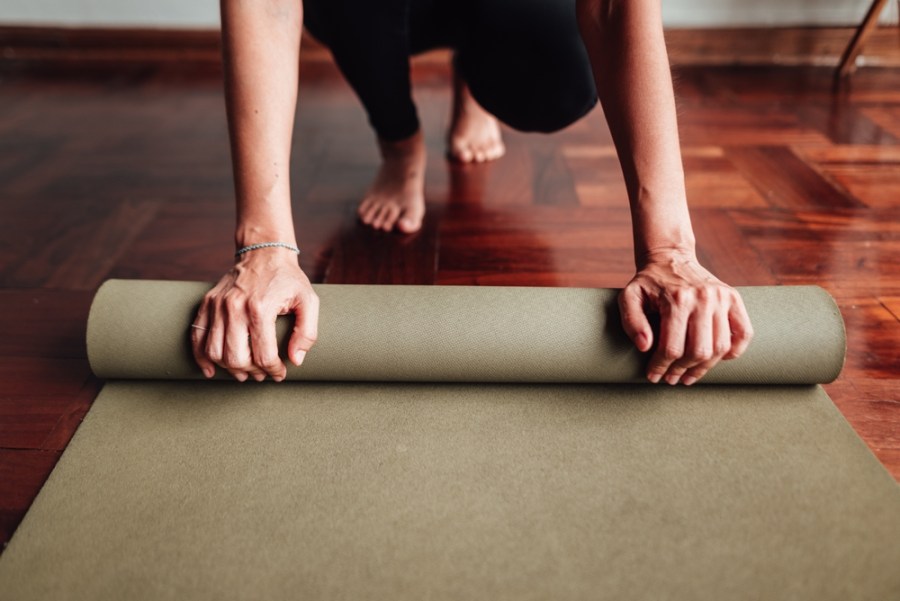
For those busy mornings when chaos reigns supreme, carving out just 10-minutes for a quick morning yoga practice can help you start your day on the right note.
Sometimes, mornings get busy. And even though the saying goes: ‘if you don’t have time for yoga, you need yoga’, trying to find a whole hour to attend a yoga class can sometimes be unrealistic.
That’s where quick, morning yoga practices – especially ones you can learn by heart and practise with ease – can work wonders to help you to build a regular practice, even when you’re short on time.
Just because a workout or yoga practice is short, it doesn’t mean it’s not effective. Just look at the rising trend of exercise snacking, which champions quick bursts of movement throughout the day over longer, but more infrequent, workout sessions.
The best way to build a regular yoga or workout habit is to make movement a natural part of your daily life – something that seamlessly fits within your schedule, rather than something that feels like a chore or an inconvenience that gets dropped as soon as things get busy.
My go-to yoga flow for a quick morning practice
My main aims with a quick morning yoga practice are to get my whole body moving, to explore the six directions of my spine (flexion, extension, rotation left and right, and lateral movement left and right) and to help myself feel more grounded in my body and in the present moment.
How to complete this yoga flow:
The below practice can be completed in as little as 10 minutes. Aim to spend 3-5 deep breaths in each pose before moving onto the next.
If you have longer, hold each pose for a few more breaths, add in some more rounds of sun salutation A, spend some time practising your favourite pose, or indulge in some extra time to chill during shavasana.
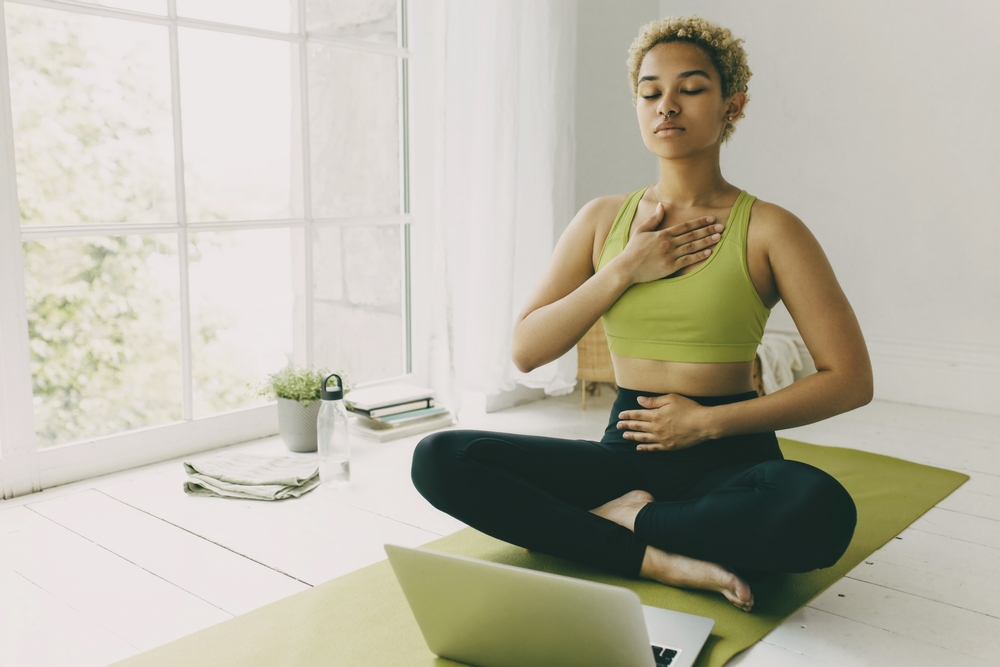
Full Yogic Breath (Dirga Pranayama):
- Start in a comfortable seated position, legs crossed or extended in front.
- Lengthen your spine and bring one hand to your chest, one hand to your belly. Close your eyes and take a deep breath in, filling your belly first, then your side ribs, chest and back, then finally up to your collarbones and shoulders. Now, exhale and reverse the order, releasing the air from your collarbones and shoulders, then your chest and ribs, then finally from your belly.
- Repeat this 3-5 times, inhaling from belly to chest, exhaling from chest to belly.
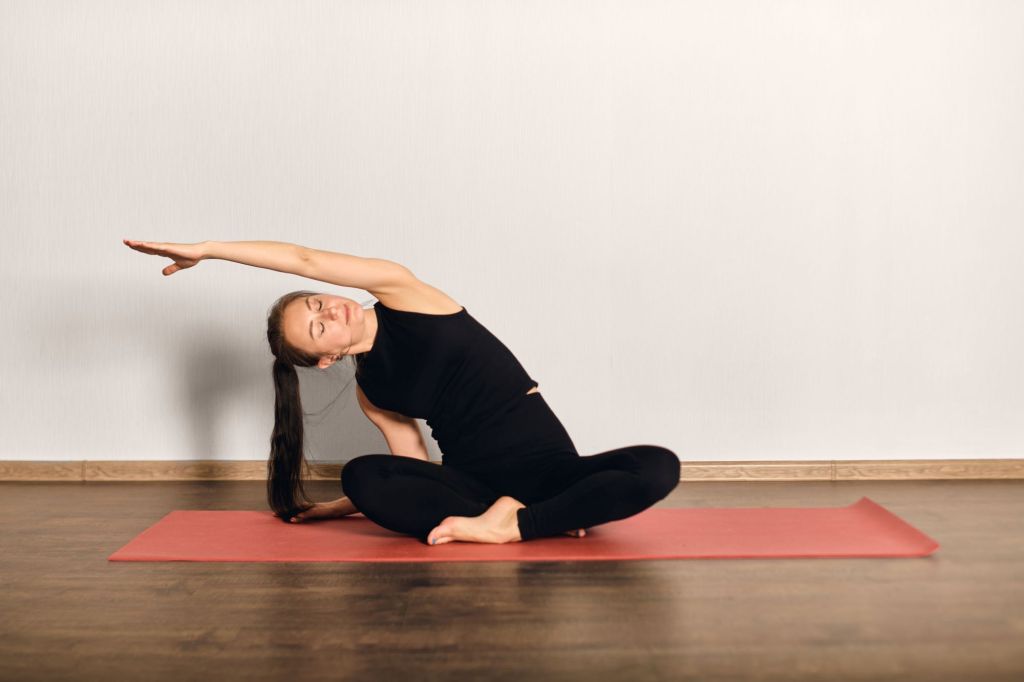
Side Stretches with Arm Circles (Parsva Sukhasana):
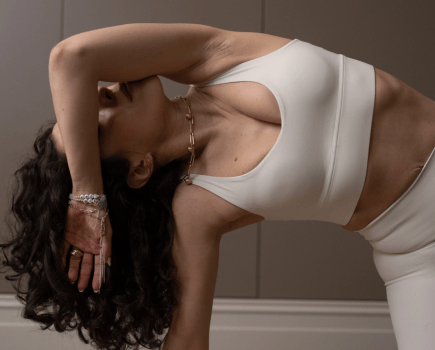
- Inhale to reach both arms overhead, then exhale to curve your body to the right, bringing your right hand to the floor and extending your left arm overhead. Look up towards your top hand and breathe into your left side ribs.
- Hold for a breath in stillness, then begin creating big circles with your left arm to begin mobilising the shoulder joint. Allow your gaze to follow to warm up the neck.
- Inhale to return to centre, then exhale to curve to the left, bringing your left hand to the floor and extending your right arm overhead.
- Take a deep breath into your right side ribs, then begin circling your right arm, letting the gaze follow. Take your time to explore this movement, then inhale to return to centre.
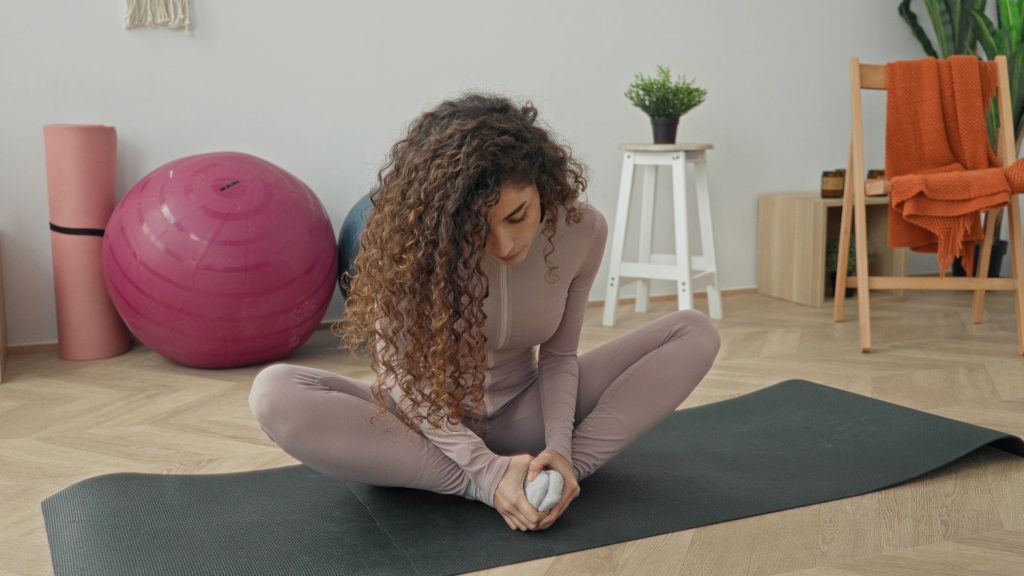
Butterfly Pose with Torso Circles (Baddha Konasana):
- Bring the soles of your feet together and hold onto your feet or ankles.
- Begin circling your entire torso round in one direction. Try moving with your breath: inhaling to circle forwards, exhaling to circle round to the back.
- Allow yourself to explore within the movement: see what it feels like to arch, round and laterally curve your spine as you continue circling, or try bringing your shoulders into the movement.
- Change directions, circling your torso the other way. Try to make the circles as big as you can, stretching all the way down to the hips and leaning into any spaces that feel tight.
- Finish the exercise by slowly making the circles smaller, spiralling your way to centre.
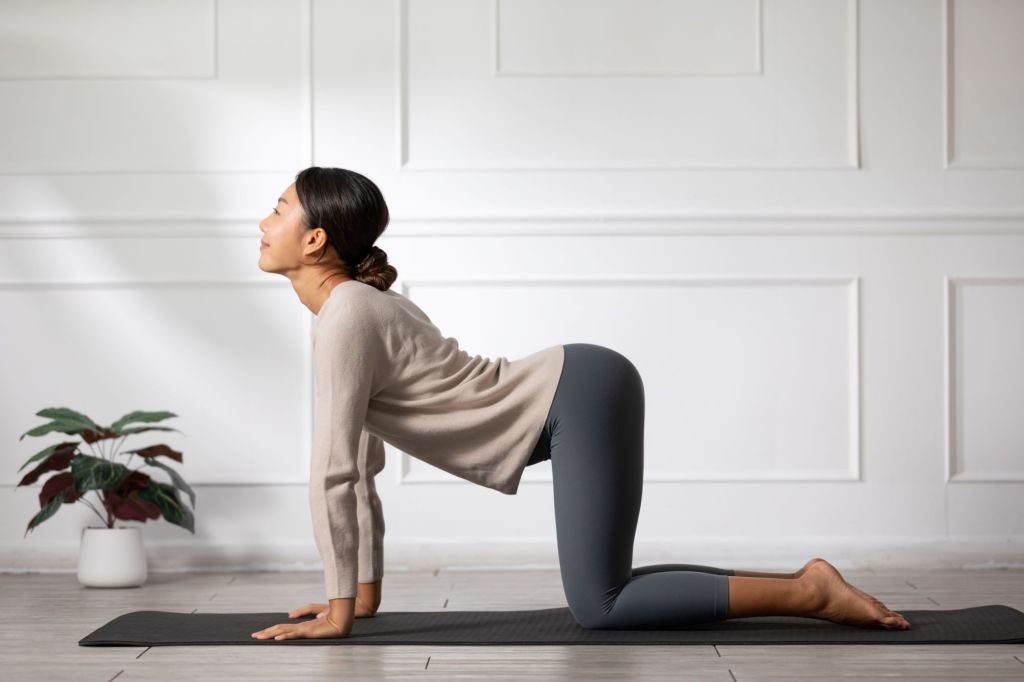
Cat-Cow Pose (Marjaryasana-Bitilasana):
- Come onto all fours, hands and knees. Spread your fingers widely and press into the mat with all your fingers to reduce the strain on the wrists.
- Inhale to gently arch the spine, tilting your hips up and looking up. Exhale to round through the spine, tucking your tailbone under and looking down towards your legs.
- Continue moving between these two positions with your breath. Aim to complete 3-5 breaths before returning to a neutral spine.
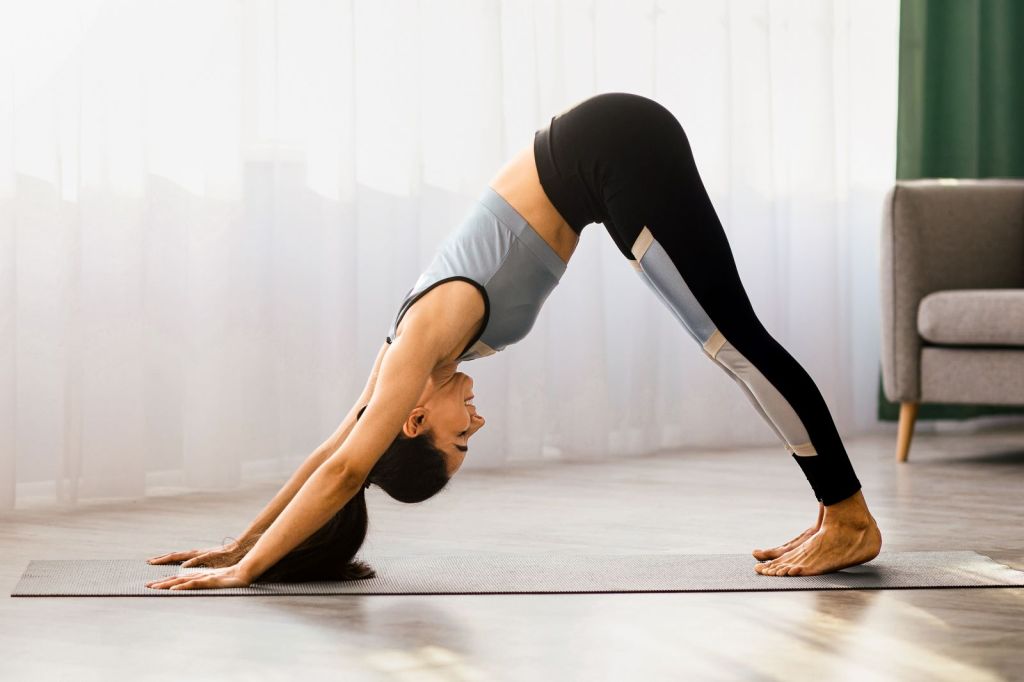
Downward-Facing Dog (Adho Mukha Svanasana):
- From all fours, tuck your toes under and lift your hips up and back to create an inverted ‘V’ shape. Allow your knees to bend generously if your hamstrings feel tight.
- Stretch your legs by pedalling out the heels one by one. Breathe deeply into the belly and relax your neck so your head hangs freely.
- Once your legs feel looser, try holding in stillness for a few deep breaths. Encourage your heels to relax down towards the floor.
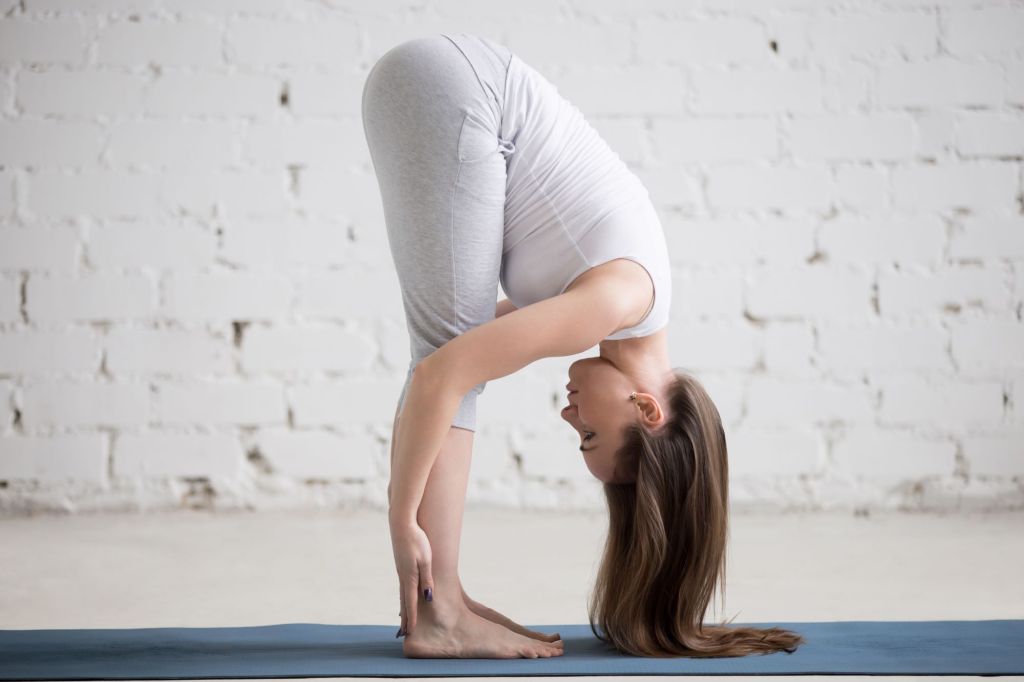
Standing Forward Fold (Uttanasana):
- From downward-facing dog, begin walking your feet towards your hands.
- Bring the weight into your feet and allow your upper body to relax forwards. Let your knees to bend generously if your hamstrings feel tight. Release any tension in your neck, shoulders and arms.
- Hold here, breathing deeply and sending your breath to the back of your body.
- Inhale to slowly roll up to standing, stacking one vertebrae at a time.
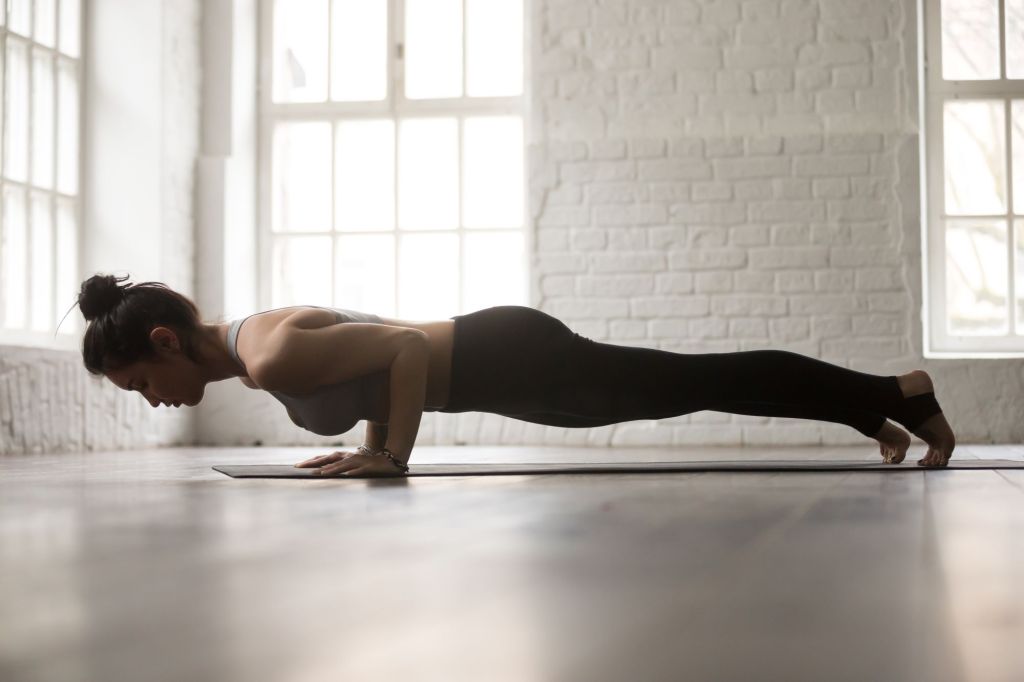
Sun Salutation A (Surya Namaskar A):
- From standing, inhale to raise both arms overhead.
- Exhale to fold forwards, relaxing your body.
- Inhale to find a flat back: try bringing your hands to your shins, so you can lift halfway and lengthen the spine forwards.
- Exhale to place your hands on the floor and step both feet back to a plank position. Take another inhale here if you need to, then exhale to bring your weight forwards and lower your body to the floor (‘chaturanga’ – pictured above), aiming to keep your elbows close to the body. You can lower your knees first if you need to.
- Inhale to lift your chest into cobra pose, keeping the shoulders away from the ears. You can keep the elbows bent here for a lower intensity backbend.
- Exhale to shift your weight back into downward-facing dog, holding here for five deep breaths. You can alternatively opt for child’s pose here – see instructions below.
- Once you’ve completed your fifth round of breath, inhale to walk your feet to your hands, returning to the forward fold with the flat back (see step 3).
- Exhale to relax fully into your forward fold, letting your upper body hang forwards. Feel free to hold here for an extra breath.
- Inhale to rise all the way up to standing, raising both arms overhead. Join your palms and exhale to lower them to your chest.
If you have time, repeat this sequence a couple more times for some added strength and mobility.
Top tip! If you’re really short on time, even just starting your day with a few rounds of sun salutation A for a super quick morning yoga practice can make all the difference.
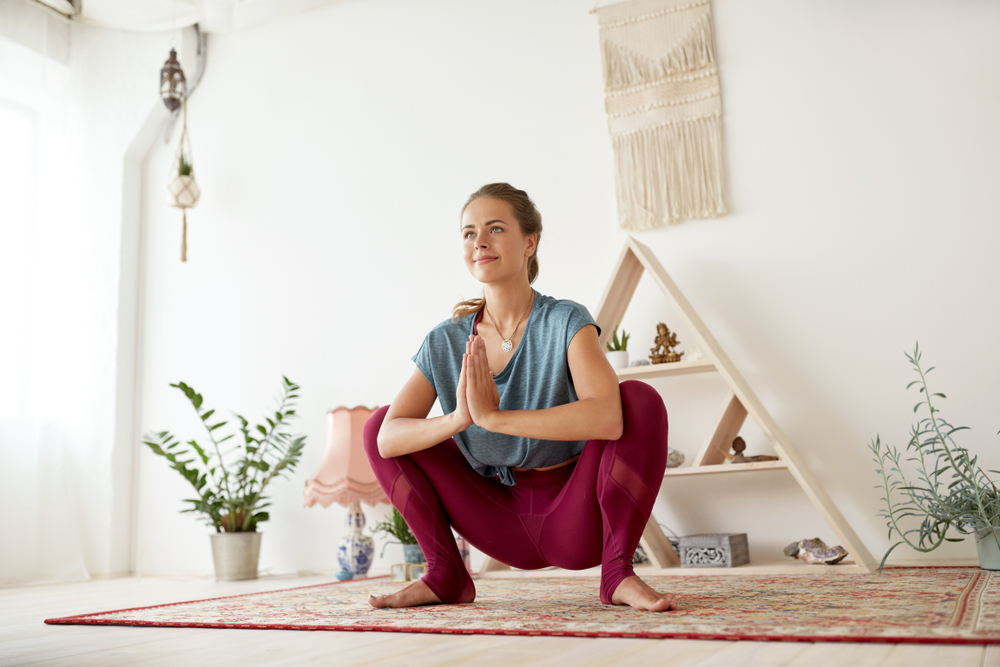
Garland Pose to Forward Fold (Malasana to Uttanasana):
- From standing, bring your feet a little wider than hip-distance and turn your feet out. Bend your knees to lower into a deep squat position. Only go as deep as you feel comfortable going – the mobility will come with time.
- Hold here for a few deep breaths, either bringing your palms together at the centre of your chest or keeping your hands on the floor or a block for extra stability.
- With your next exhale, lift your hips high and relax your body forwards into a forward fold position, stretching out the legs.
- Inhale to lower your hips, pivoting back into the deep squat position.
- Continue flowing between these movements with your breath a few more times, moving with control and aiming to keep your spine long. This flow is great for firing up your legs and hip flexors!
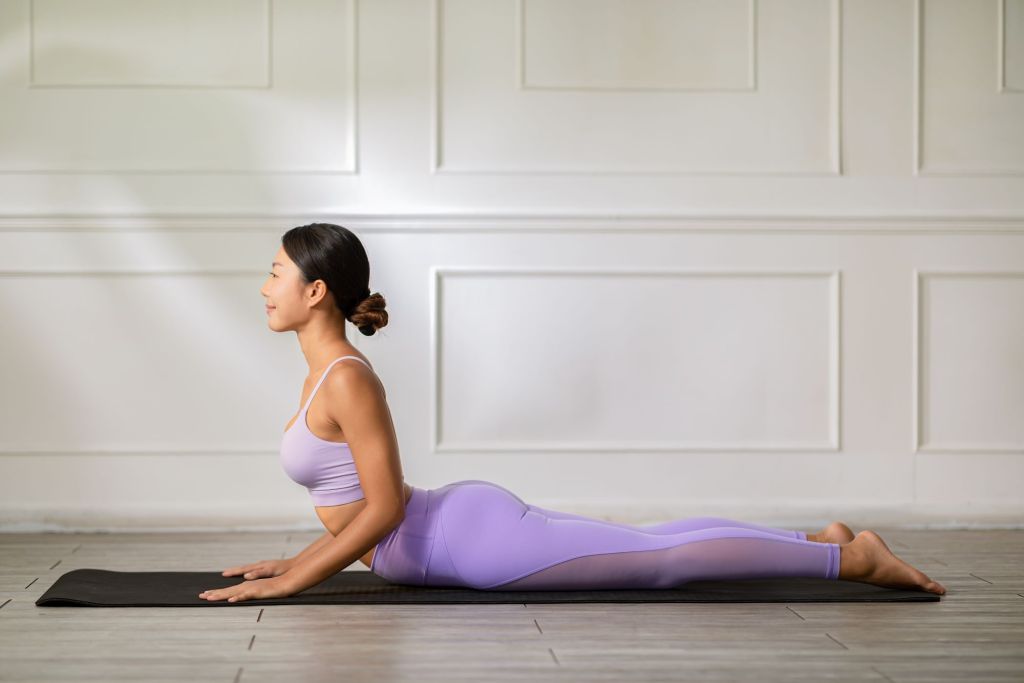
Cobra Pose (Bhujangasana):
- From a forward fold position, step both feet back to plank and lower to the floor with control.
- Bring both hands beneath the shoulders, palms pressing down, then lift your chest into cobra pose. Try to use the muscles in your back here, as well as your arms. Keep your shoulders down and your elbows close to the body.
- Take a few deep breaths here, enjoying the stretch through the front of your body and the hip flexors.
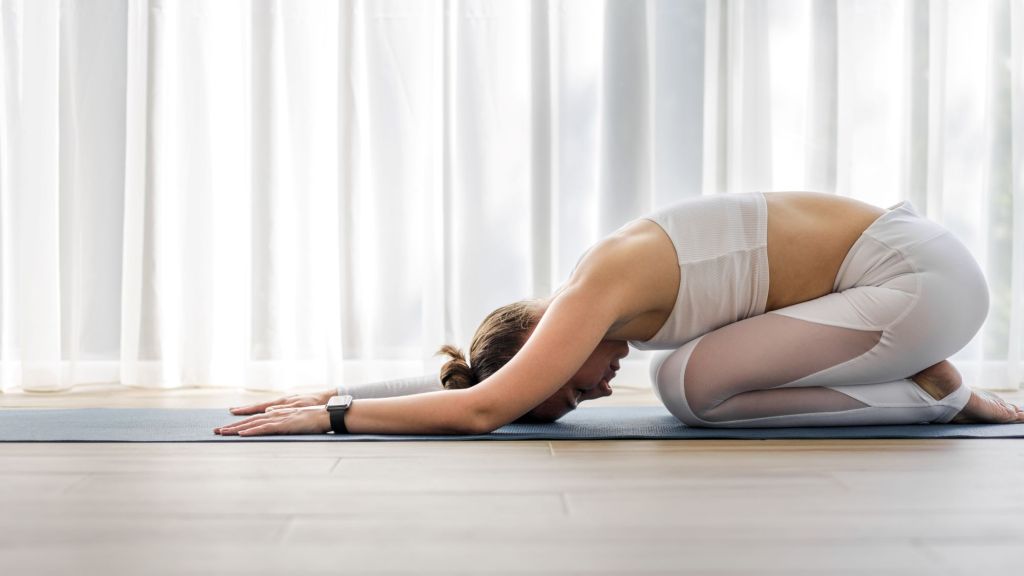
Child’s Pose (Balasana):
- From cobra pose, rise onto all fours, then shift your weight back and relax your bottom down towards your heels. Your knees can be together or apart, feet are together. Relax your head and chest down and either stretch both arms in front, or make a pillow with your hands for the head to rest on.
- Hold here for a few deep breaths, sending each inhale to the back of the body.
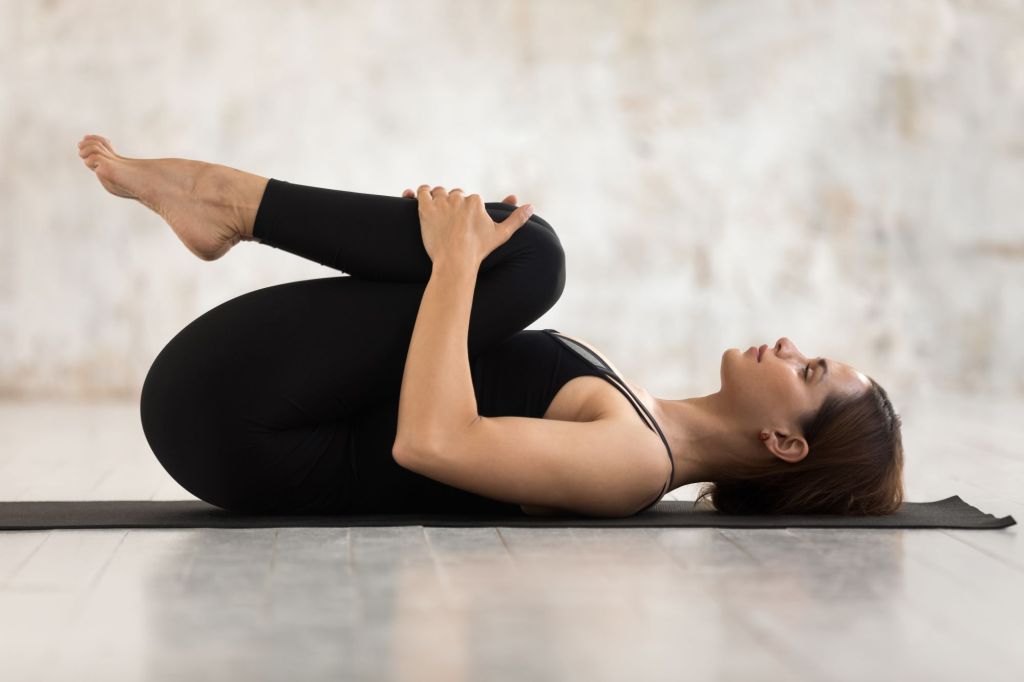
Knees to Chest Pose (Apanasana):
- Lie down on your back and hug both knees into your chest, either wrapping your arms over the knees or behind the thighs.
- Breathe deeply into your side ribs and relax. Try to keep your head and shoulders relaxed on the floor.
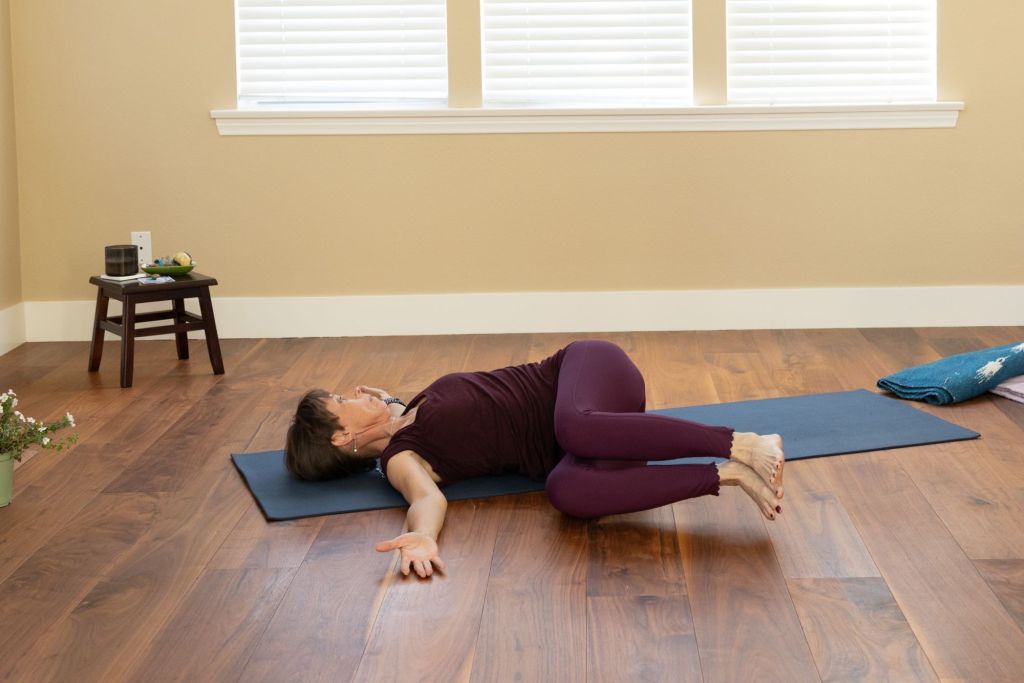
Supine Spinal Twist (Supta Matsyendrasana):
- Slowly guide both knees over to the right. You can place a block or pillow beneath the knees if they don’t reach the floor.
- Outstretch both arms and turn your head to look down the left arm. Try to keep your shoulders and upper back relaxed against the floor.
- Hold here for a few deep breaths, inhaling deeply and sending your breath down to your belly.
- Inhale to return to centre, then repeat on the other side, guiding both knees to the left, outstretching both arms and turning your head to the right. Hold for a few deep breaths before returning to centre.
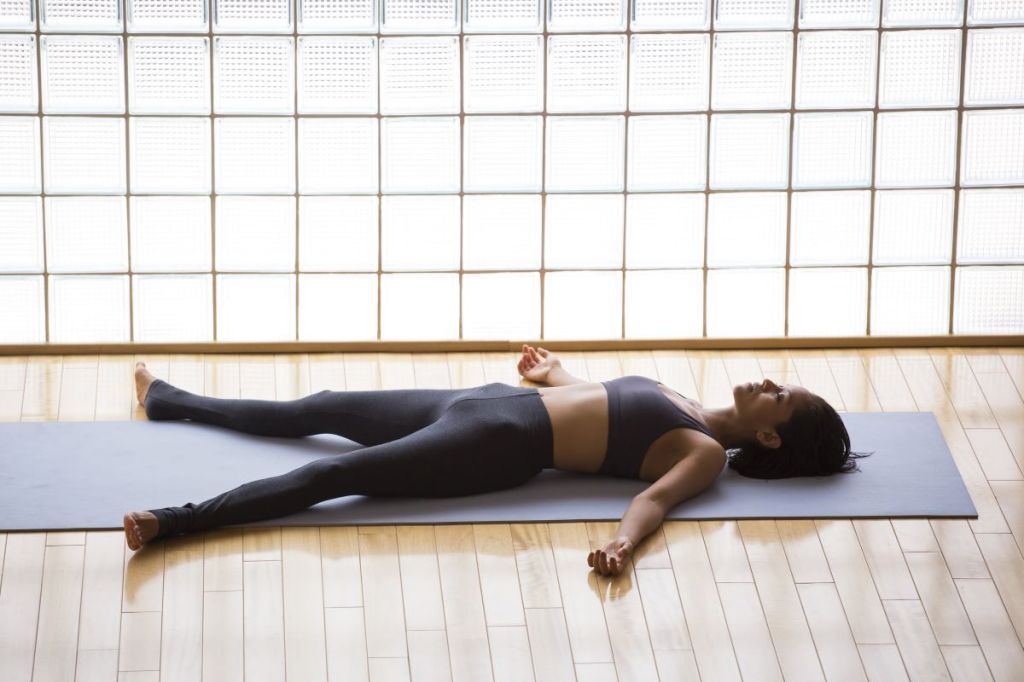
Corpse Pose (Shavasana):
- Lie on your back and release all effort and control. Allow your feet to flop outwards and your arms to relax by your sides, palms facing up.
- Close your eyes and rest here for as long as you can. Even if you can just allow yourself one minute of rest, take it! Try setting a timer or playing a song to gently bring yourself back.
- At the end of your shavasana, wake the body with some deep breaths and gentle movements. Take a big stretch, then roll to one side before returning to seated.
At the end of your practice, give yourself some time to reflect on how you are feeling and to feel gratitude towards yourself and your yoga journey. You could even set an intention to take into the rest of your day.
Try learning this quick morning yoga practice by heart (or jotting the sequence down on a post-it note) so you can roll out your mat and effortlessly start each day with some full-body mobility!