
Genetics, hormones, fitness and even menopause can all affect how much you perspire. Experts explain why sweating is your body’s natural cooling system
Sweating is a normal and natural process that helps regulate our body temperature and cool us down. Whilst some people break into a sweat more than others, it depends on numerous factors including our genes, fitness level, age, body size and how much water we have drunk.
Whilst it can be an inconvenience, sweating in fact is a positive indicator that your body is working well. We asked four medical experts about why some of us sweat more than others, what causes it, do hormones play a part and how getting your drip on can be hugely beneficial.
Dr. Paul Gross, a primary care physician with more than 20 years of experience in metabolic health.
What is sweat?
Sweat is primarily made up of water (with minor levels of electrolytes such as sodium and potassium), and it has one major purpose that has nothing to do with flushing toxins from your system. The liver and kidneys are two other organs that work together to detoxify your body. The body will use sweat as an intelligent way to maintain its safe operating temperature when it needs to.
Why do some women perspire during exercise and others don’t break into a sweat?
The most common misconception is that if you are sweating a lot in your workouts, then it means you worked out harder than someone else. That simply isn’t true. Every woman has their own individual way of responding to physical activity, which includes many factors such as genetics, the weather (temperature) where they are working out, and how used to exercising they may or may not be. In other words, two female friends could do the same workout at the same time, and one will perspire a lot while the other will perspire very little. And both would still be perfectly normal.
What can we do to prevent it?
It is normal for most people to have some level of perspiration with their workouts; this is one way that your body is protecting itself from heat stress. The best thing you can do to reduce excessive sweating is stay well-hydrated by drinking plenty of water before and after your workout, choose breathable clothing (like moisture-wicking fabric), and work out in an environment where the air feels cool and comfortable.
Dr. Louis Lerebours, family medicine physician at Freeman Recovery Center.
What exactly happens to our body when we sweat?
Sweating occurs because of rising body temperature. When that happens, your brain sends signals to your sweat glands to allow them to release liquid (sweat), and as the liquid on your skin evaporates, it cools your body. Effort does not determine how much you will perspire. Two people can be working out with the same level of intensity, but one will have more sweating than the other.
Sweating is an important function that keeps our body temperature at a safe level, and we should never try to suppress it.
Do hormones play a part in making us sweat more?
Hormone changes play a role also. Many women experience hormonal fluctuations with menopause or perimenopause, which cause them to feel warmer than usual and may produce excessive perspiration while doing minimal activity.
Dr. Daniel Careaga, a US double board-certified plastic surgeon and founder of Careaga Plastic Surgery with expertise in skin anatomy, sweat glands, and thermoregulation.
For women going through the menopause, can this transition in our lives cause us to sweat more?
Hot flashes and increased sweating in perimenopause and menopause are often triggered by fluctuating estrogen levels. However, I do not suggest that you avoid standard sweating. Instead, remain well-hydrated, wear breathable clothing that removes moisture away from the skin, and gradually adapt to exercising in hot conditions. If you suddenly sweat less although you are overheating or if your sweating pattern completely changes, then it’s important to talk about it with the doctor who may identify an underlying condition.
Natalie Rouse, Registered Nutritionist and Head of Nutrition at Free Soul
What part do genetics play when it comes to how much we sweat?
One of the questions I’m asked most often is why two women can complete exactly the same workout, in the same room, yet one is dripping with sweat while the other is just has a slightly glimmering forehead. The answer is that sweating is highly individual. Research consistently shows that sweat rate varies enormously between people, and much of this appears to be genetically determined. Genetics are thought to influence not only the number of active sweat glands we have but also how sensitive those glands are to increases in body temperature. Some people are simply ‘high sweaters’, while others naturally perspire less.
However, genetics are only one part of the picture. Body size, muscle mass, exercise intensity, fitness level, environmental temperature, humidity and heat acclimation all influence how much we sweat. Larger individuals generally generate more metabolic heat because they have more tissue producing energy, meaning they often need to dissipate more heat through sweating.
Likewise, someone working at a higher absolute workload/intensity/duration will typically sweat more because they’re producing more heat. It’s also important to remember that while two people may be attending the same exercise class, they may not be exercising at the same relative intensity and even if they are they will have individual differences in sweat rate/ sweat responses.
Do we ever need to be concerned if we sweat a lot?
Sweating is evidence that your body’s cooling system is functioning exactly as it should. Without it, our core temperature would continue rising during exercise, increasing the risk of heat exhaustion and, in extreme cases, heat stroke. While excessive sweating can sometimes indicate an underlying medical condition or be influenced by medications, for most healthy individuals sweating during exercise is a completely normal and beneficial response.
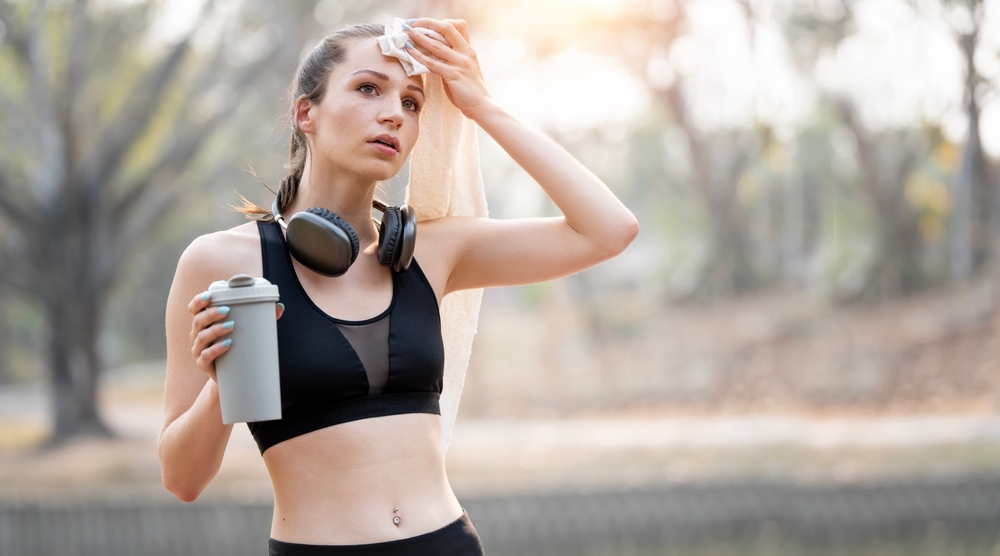
It’s also important to recognise that while sweating during exercise is normal, excessive sweating during the day can sometimes be a medical condition known as hyperhidrosis. Hyperhidrosis causes sweating that goes beyond what’s needed to regulate body temperature and can affect daily life, occurring even when you’re not exercising or in a warm environment.
Certain medical conditions, medications and hormonal changes can also increase sweating. If you notice a sudden change in how much you sweat, you’re sweating excessively compared with your usual pattern, or it’s interfering with your daily activities or quality of life, it’s worth speaking to your GP to rule out any underlying causes and discuss appropriate treatment options.
Any myths about sweating?
One of the biggest myths I see is that sweating is something to avoid or that it’s a sign you’re unfit. Neither is true. Sweat rate is not a measure of calorie burn, exercise quality or how ‘hard’ you’ve worked, and despite the common joke that ‘sweat is fat crying’, sweating does not reflect fat loss.
Any weight lost during a sweaty workout is almost entirely water and electrolyte loss, which returns once you rehydrate. Fat loss occurs when the body oxidises stored fat over time as part of an overall energy deficit, it doesn’t leave the body through sweat! Equally, someone who hardly sweats hasn’t necessarily had an easier workout; their body simply regulates temperature differently.
How should we embrace sweating if it is something that makes us feel unconfident?
Culturally, we’ve become increasingly sweat-averse. Social media, beauty standards and decades of marketing have often portrayed sweating (particularly for women) as something embarrassing, unhygienic or something to disguise. Yet from a physiological perspective, it’s one of the most remarkable adaptations the human body possesses.
Every bead of sweat represents your body working intelligently to maintain a safe internal temperature and allow you to continue moving. Rather than seeing sweat as something ‘gross’, we should recognise it as evidence that our body’s cooling system is doing exactly what evolution designed it to do.
As a society, we’ve almost come to see sweat as something to apologise for, when in reality it’s one of the smartest things our body does. It’s not a sign of being unhealthy or out of shape, it’s a sign that your body is working hard to protect you. Instead of fearing sweat, we should be celebrating what it allows us to do.