
If hours at a desk or scrolling on your phone have left you with rounded shoulders, this simple resistance band move can help you stand taller and feel stronger
Pause for a moment, look in the mirror, and check your posture. Are you naturally standing tall with your shoulders back, or have they started to round forward, leaving you with a slight hunch or an ache across your upper back? It happens – and often we don’t even notice until someone points it out. In fact, as you read this, we bet you’re sitting up straighter already – we are!
The truth is, many of us spend hours sitting at desks, looking down at our phones, carrying heavy bags, or lifting children, all of which encourage our shoulders to roll forward. The good news? Once you’re aware of your posture, you can start doing something about it.
The Standing Resistance Band Reverse Fly
According to yoga instructor and strength and conditioning coach Melissa Leach from Yoga-Go, there’s one simple exercise that can make a huge difference: the standing resistance band reverse fly.
“The reverse fly is a strength and mobility exercise that opens up the chest, promotes healthy shoulder range of motion, strengthens the upper back, and contributes to better overall posture,” says Leach. Doing reverse flies regularly can help protect you from pain, injury, and muscle imbalances, and best of all, you only need a resistance band, like the Mirafit resistance tube and accessory set or Myprotein multi use 11 piece resistance band set to do them.
“Resistance bands are particularly useful for this movement because the tension increases as the band stretches, which encourages controlled movement throughout the full range of motion, challenging the muscles that keep your shoulders and upper back stable throughout the day.”
Do them consistently and Leach says you’ll soon notice yourself sitting taller, carrying less tension through your neck and shoulders and feeling stronger during upper-body workouts and everyday tasks.
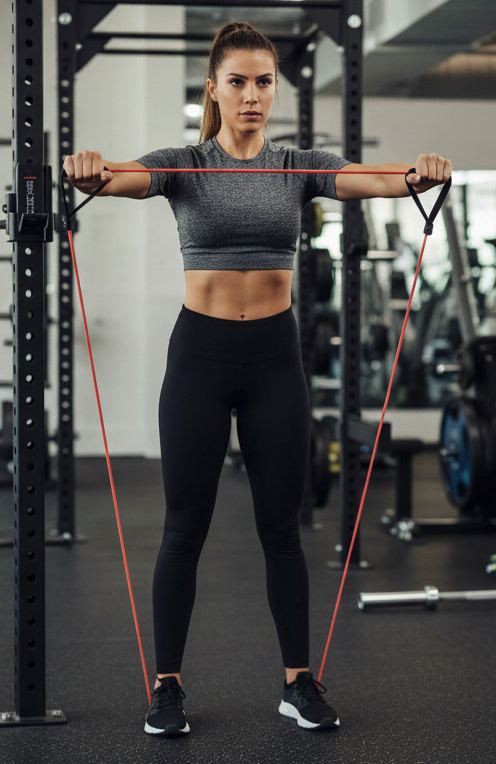
How To Do The Standing Resistance Band Reverse Fly
Reps: 10-15
Sets: 2-5
How to do it:
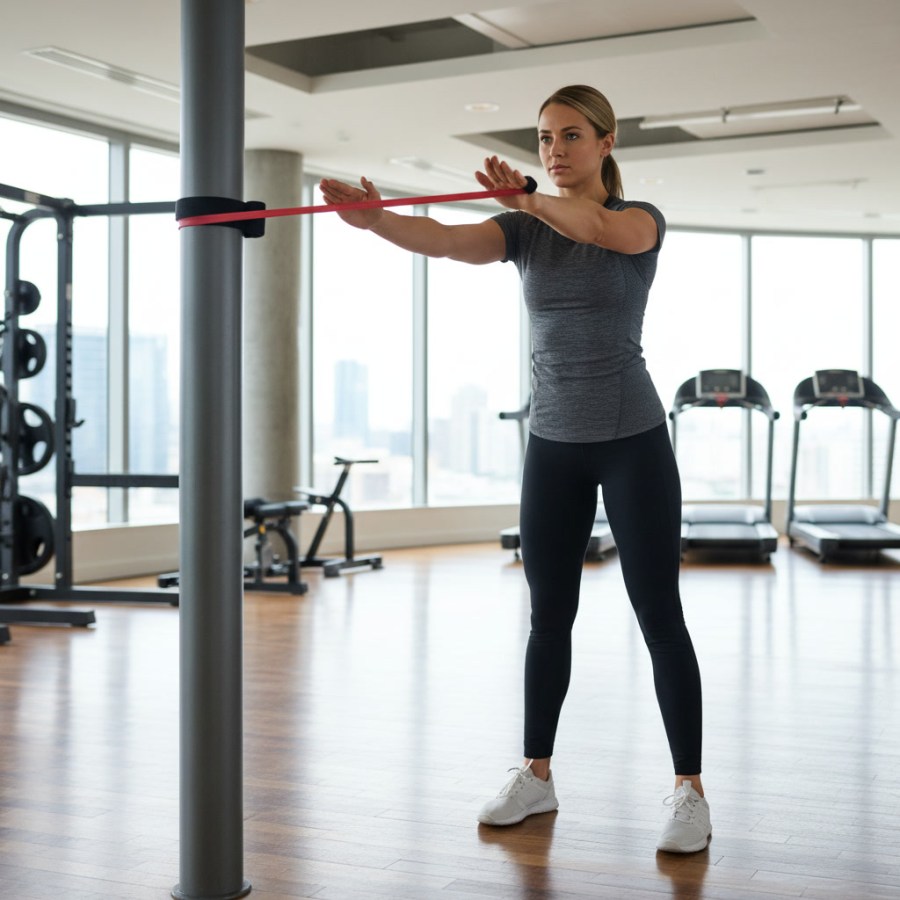
- Secure a resistance band around a stable surface at chest height in front of you
- Stand tall and hold the ends with your hands extended in front of your chest
- Keeping a slight bend in your elbows, open your arms out to the sides
- Squeeze your shoulder blades together as your arms form a ‘T’ shape
- Slowly return to the starting position
Trainer tip:
“Avoid shrugging your shoulders as you open your arms. Focus on keeping your shoulders relaxed and away from your ears while squeezing between your shoulder blades to fully engage the upper-back muscles,” says Leach. “And remember, the goal isn’t speed, it’s precision. Slow, controlled repetitions activate the muscles that help keep your shoulders and upper spine in a healthier position.”
The standing resistance band reverse fly works well on its own or as part of your warm-up. They’re a great way to prime your shoulders, chest, and back muscles for upper body exercises like bench presses, overhead presses, pull-ups, or rows.
What Are The Benefits Of The Standing Resistance Band Reverse Fly?
“Much of modern life happens in front of us,” explains Leach. “Whether we’re working at a computer, scrolling on our phones or driving, the muscles at the front of the body become tight while the muscles across the upper back weaken. The standing resistance band reverse fly targets the rear deltoids, rhomboids, and the middle and lower trapezius muscles helping improve posture, shoulder health and upper-body stability. Because it moves your shoulders through their full range of motion, it can also improve strength, coordination and flexibility.”
Good posture isn’t just about standing up straight; it also depends on having a strong upper back. Strengthening these muscles helps support the spine, improve alignment and reduce unnecessary strain on the neck and shoulders.
How Often Should I Do The Standing Resistance Band Reverse Fly
Aim to include reverse flies three to four times a week, either as part of your strength workout or during your warm-up. This move also feels incredibly good first thing in the morning or after a long day at your desk when you want to wake up the backs of your shoulders (your posterior deltoids) and activate the upper and mid back.
Another simple habit is to do regular posture checks throughout the day. Walking to the office? Waiting at the school gates? Standing in the supermarket queue? Draw your core in, gently roll your shoulders back and lift your gaze around 15 feet ahead. You’ll naturally lift your chest, improve your shoulder position and stand taller.
Combined with regular posture checks throughout the day, this simple exercise can help counteract hours spent sitting, leaving you standing taller, moving better and feeling stronger. Little (good) habits really do add up.