
Strength training can feel intimidating when you’re new to exercise, but it doesn’t need to be complicated. Personal trainer Abby McLachlan explains how to begin safely, choose the right weights and build confidence with six simple exercises.
Words: Abby McLachlan, personal trainer and founder of East of Eden
Pics: Getty Images
There is so much noise around the importance of exercising regularly and including resistance training to build strong bones and support healthy ageing. But if you’ve never exercised before – or you’re returning after a long break – knowing where to start lifting weights can feel overwhelming.
The thought of walking into a gym or exercise studio for the first time can be intimidating. The equipment looks unfamiliar, everyone else seems to know exactly what they’re doing and it’s easy to worry that you’ll get in someone’s way, perform an exercise incorrectly, feel silly or injure yourself.
However, strength training really is one of the most powerful things you can do for your long-term health – and you don’t need confidence or experience to get started. Everyone begins somewhere.
Why strength training matters
Strength training supports muscle mass, bone density, joint stability, metabolic health, posture and balance. We naturally lose muscle as we age, and the decline in oestrogen during menopause can accelerate this process, but resistance training can help to preserve and rebuild it.
It can also improve your energy and confidence, helping you feel stronger and more capable in everyday life.
Beginners often notice practical benefits surprisingly quickly. Once you start lifting weights, you may find it easier to carry shopping, bend down, climb stairs, get up from the floor and move through life more comfortably.
You don’t need to lift heavy weights or follow a complicated routine to achieve results. What matters is practising simple movements with good technique and remaining consistent.
Start with the basic movement patterns
The best place to begin is with the fundamental movement patterns that form the basis of strength training. These include squatting, hinging at the hips, pushing, pulling, lunging and carrying.
Practising these movements using your body weight will help you understand alignment, balance and control. Once they feel comfortable, adding resistance should feel far less intimidating.
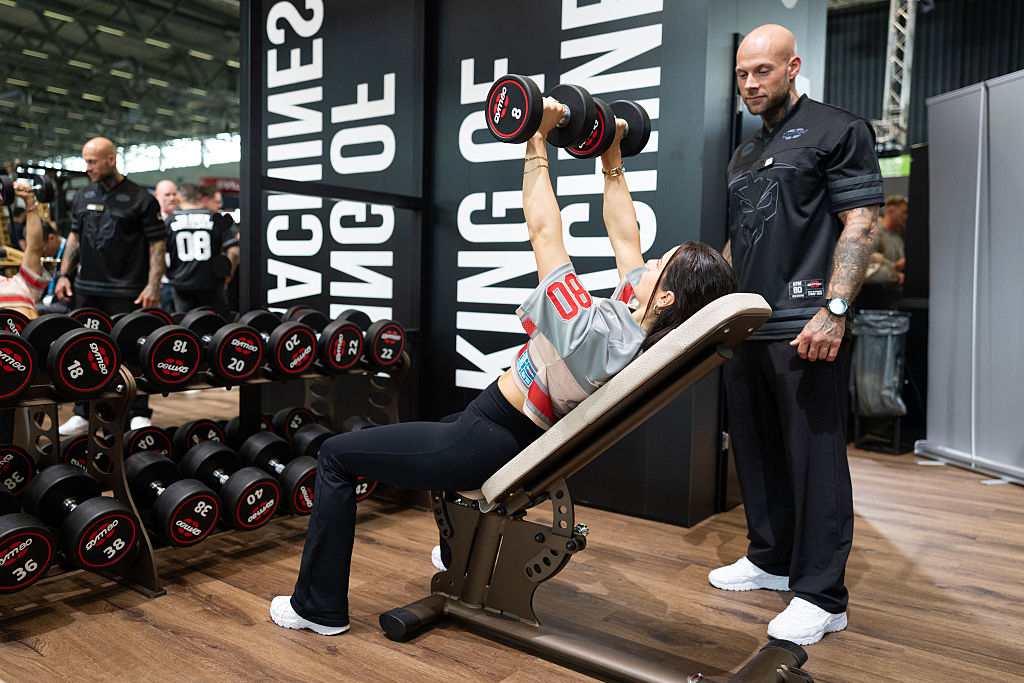
Most gyms offer an induction and can show you the areas that may feel more approachable for beginners, such as a functional training space with mats and light dumbbells or a quiet corner where you can practise.
The instructor leading your induction will usually take you through a basic workout and explain how to use the equipment safely.
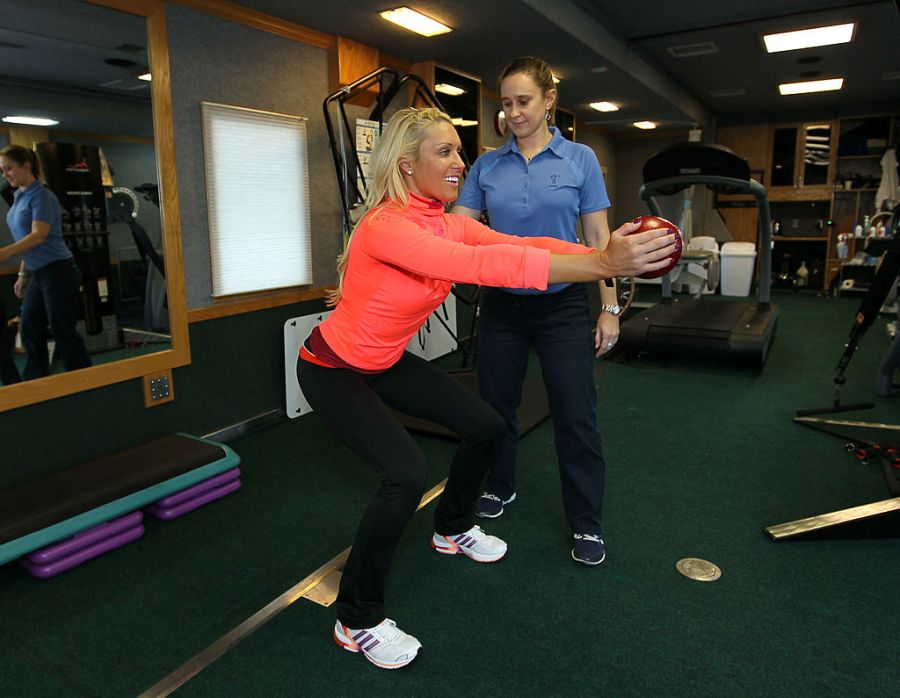
If your budget allows, you could work with a personal trainer who can create a programme for you, check your technique and help you increase the weights safely. Alternatively, many gyms and boutique studios offer small-group personal training. This is often more affordable than one-to-one training while still providing guidance and reassurance.
Training with other people can also be more enjoyable – and if you enjoy it, you’re far more likely to keep going.
How heavy should your weights be?
Whether you’re training alone, with a personal trainer or in a small group, begin with a light weight that allows you to complete 10 to 12 repetitions with good form, while still making the final few repetitions feel challenging.
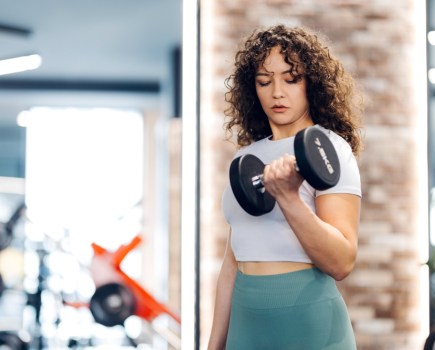
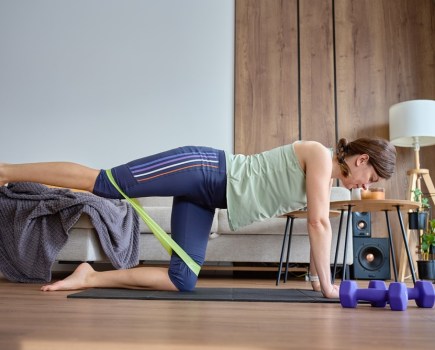
This could mean using a pair of light dumbbells, a kettlebell, a resistance band or a machine set to its lightest weight.
Progress gradually. When you can complete your chosen number of repetitions comfortably for two sessions in a row, increase the resistance slightly. Small, steady increases will help you build strength safely and reduce your risk of injury.
Keep your first routine simple
A beginner’s routine should be straightforward and repeatable. Two or three full-body sessions each week are enough to begin building strength and confidence.
A balanced workout might include a squat, incline push-up, glute bridge, Romanian deadlift, dead bug and standing row. Perform 10 to 12 repetitions of each exercise for two or three sets, resting between sets.
Together, these exercises train the whole body, support joint health and replicate movements used in everyday life.
Focus on technique before adding weight
Don’t worry too much about how heavy your weights are at first. It’s better to begin with bodyweight exercises and learn the movements properly. Once your technique feels secure, you can add resistance and progress more confidently.
Move slowly and with control, keep your core gently engaged and avoid locking your joints at the top of a movement. Stop if you experience any sharp pain.
Breathing matters, too. As a general guide, breathe out during the most challenging part of an exercise and breathe in as you return to the starting position.
Confidence develops through practice and repetition. The more frequently you perform the same movements, the more familiar and comfortable they will feel.
Wear clothes you feel comfortable moving in and, if you’re training alone and feeling nervous, listen to music to create a sense of personal space. Take a written routine with you so you always know which exercise comes next.
Remember to celebrate the small wins, whether that’s completing your first squat, performing your first dumbbell row or finishing a full workout. Every step counts.
Consistency is more important than perfection
Getting started is often the hardest part. Once you’ve begun, aim for two or three sessions each week, even if each workout lasts only 30 minutes.
What matters most is turning strength training into a habit and gradually increasing the challenge as you become stronger.
Over time, you may notice better posture, increased energy, greater confidence, stronger muscles and easier everyday movement. Strength training is one of the most empowering habits you can develop – and starting small is the best way to begin.
Six strength exercises for beginners
The following six-move workout can be performed at home or in the gym. You’ll also find many of these exercises in beginner-friendly strength classes.
1. Squat
Repetitions and sets: Eight to 12 repetitions, three sets
Weight: Begin with your body weight, then add dumbbells as you become stronger.
Benefits: Strengthens the legs, hips and core while supporting balance and everyday lifting.
How to do it: Stand with your feet hip-width apart. Push your hips back and bend your knees as though you’re lowering yourself into a chair. Keep your chest lifted and your knees tracking in line with your toes.
Drive through your feet to return to standing, maintaining control throughout the movement. Lower yourself only as far as you can while keeping your spine tall and your pelvis stable.
When you can comfortably complete 12 repetitions, increase the weight slightly and reduce the number of repetitions if necessary. Gradually work your way back up to 12 before increasing the weight again.
2. Incline push-up
Repetitions and sets: Eight to 10 repetitions, three sets
Benefits: Builds upper-body strength and supports shoulder stability.
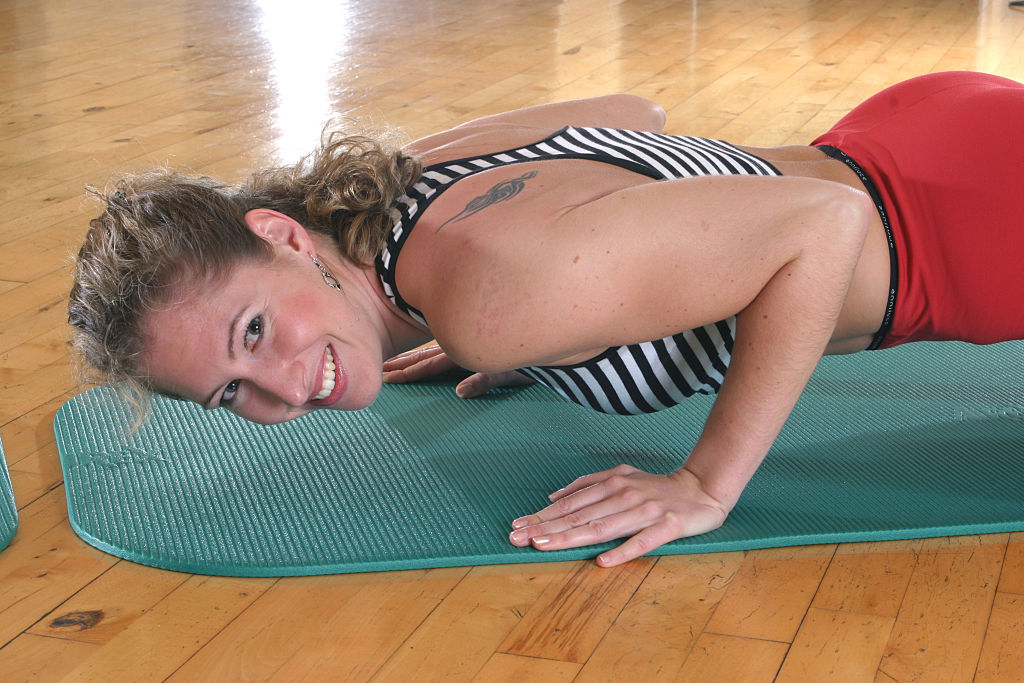
How to do it: Place your hands on a bench or worktop and walk your feet backwards until your body forms a straight line. If you’re a complete beginner, you can start by placing your hands against a wall.
Keeping your core engaged, bend your elbows and lower your chest towards the surface with control. Push through your hands to return to the starting position.
As you become stronger, use a lower surface. You can eventually progress to performing push-ups with your hands on the floor.
3. Glute bridge
Repetitions and sets: 12 to 15 repetitions, three sets
Benefits: Strengthens the glutes and lower back while supporting hip stability and posture.
How to do it: Lie on your back with your knees bent and your feet flat on the floor. Press through your feet and squeeze your glutes to lift your hips until your body forms a straight line from your shoulders to your knees.
Pause briefly at the top, then lower your hips slowly and with control. As you become stronger, you can carefully place a weight across your pelvis to add resistance.
4. Romanian deadlift
Repetitions and sets: Eight to 12 repetitions, three sets
Benefits: Strengthens the hamstrings, glutes and back muscles, helping to develop the posterior chain.
How to do it: Stand with your feet hip-width apart and hold a weight in each hand. Start with very light weights or practise the movement without weights.
Keep a slight bend in your knees, push your hips backwards and hinge forwards while maintaining a long, neutral spine. Allow the dumbbells to travel close to your legs until they reach just below your knees, or as far as your flexibility allows without rounding your back.
Press through your feet and drive your hips forwards to return to standing. Increase the weight gradually as the movement becomes more familiar.
5. Dead bug
Repetitions and sets: Eight to 10 repetitions on each side, three sets
Benefits: Strengthens the deep core muscles and improves spinal stability.
How to do it: Lie on your back with your arms extended towards the ceiling and your knees bent at 90 degrees.
Slowly lower one arm and the opposite leg towards the floor while keeping your lower back gently pressed down. Return to the starting position and repeat on the other side, focusing on slow and controlled movement.
6. Standing row
Repetitions and sets: 12 to 15 repetitions, three sets
Equipment: A resistance band or light dumbbells
Benefits: Strengthens the upper back and helps to improve posture.
How to do it: Stand with your feet hip-width apart and a slight bend in your knees. Hinge forwards from your hips while keeping your spine long.
If you’re using a resistance band, secure it beneath your feet and hold one end in each hand. Alternatively, hold a dumbbell in each hand.
Begin with your arms extended, then draw your elbows backwards towards your hips while squeezing your shoulder blades together. Slowly extend your arms to return to the starting position.