
Learn how to progress your practice with themed moves from expert Rachel Lawrence
Images: Shutterstock
Pilates isn’t just exercise; it is a lifestyle choice. Whatever your age or stage of life, Pilates can help you feel better and more joyful. It’s about embracing who you are, doing the best that you can with what you have and befriending your body to create an enjoyable movement practice that will last you a lifetime.
A complete mind-body method, Pilates combines strength and flexibility throughout the entire body. It emphasises that all movement begins with the breath, the activation of the core and a stable spine.
But Pilates is as much about the power of your mind as it is about the body. Alongside training your body, you also train your mind to think in a healthier, kinder way. In doing so, a sense of inner power begins to develop through self-knowledge and self-care. This is what brings Pilates lovers together. Furthermore, when you live the Pilates lifestyle, you become part of an incredible global community – a supportive, like-minded group
of people who care about your wellbeing as much as their own.
Here we’ve chosen two themes from Rachel’s new publication The Little Book for Pilates Lovers, and followed them through from beginner to advanced. Make sure you are confident with each level before progressing on to the next.
The six principles of Pilates
While Joseph Pilates developed the exercises and was passionate about the aims of his method, the principles were later refined by his students to teach the theory behind the movement. These six principles are the foundation of the Pilates method and are essential for proper practice.
- Breath: Lateral breathing to deepen the breath. Engaging the core muscles promotes calm, prepares the body for movement and facilitates a healthier cardiovascular system.
- Concentration: Using the mind to stay focused and present with every movement. This helps your practice become more meditative and mindful, which will transfer over into your life.
- Centre: Developing core strength and stability. Recognise that every movement starts from your centre. This will create a solid foundation for progressing your practice.
- Control: Learning to perform Pilates movements with effort, ease and consistency. This principle is about moving deliberately and with intention.
- Precision: Paying attention to the detail of each exercise. This will ensure the body develops in a balanced way, with good form and technique. This will also help reduce injury risk.
- Flow: Learning to move with grace in a continuous motion to increase strength, concentration and energy. Over time you will learn to recognise this state and its impact.
Core control
Beginner: Roll up
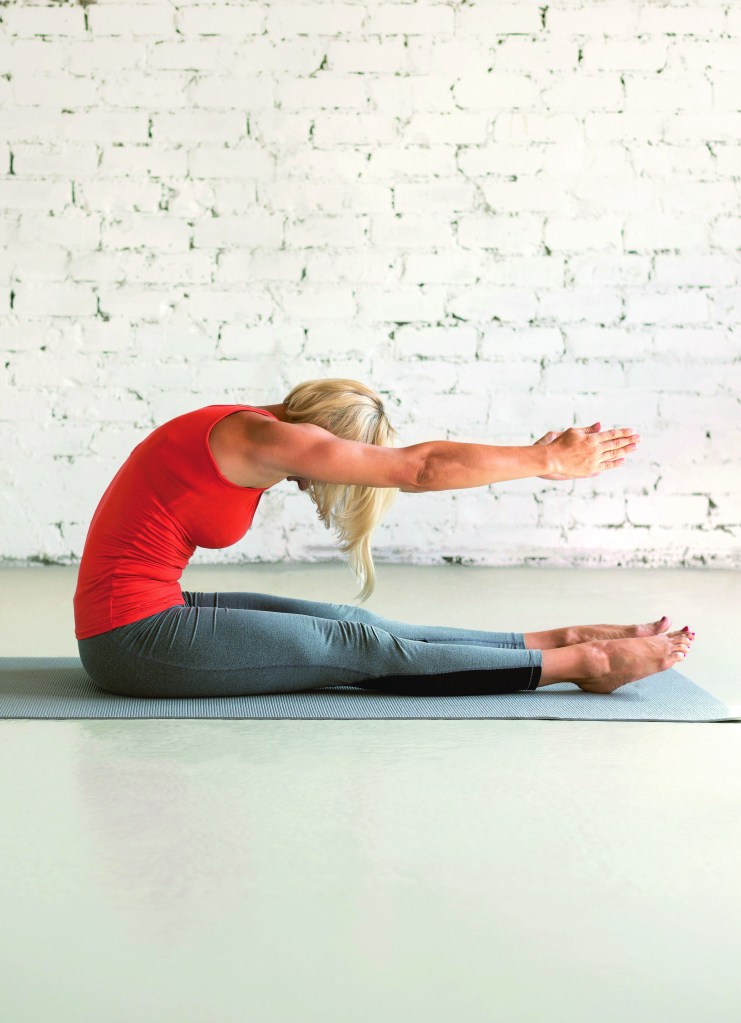
The awareness and control you develop in this exercise will set the foundation for more complex exercises. It challenges the abdominals and improves spinal articulation. If needed, you can modify it by bending the knees and holding on to your legs in one or both phases of the movement.
- Lie on the mat, with legs straight and gently pressing together, and toes pointed. Raise your arms over your head with your palms facing each other, keeping your ribs down and core engaged.
- Inhale slowly as you bring your arms forward, lifting your head and chest while keeping your chin down and eyeline forward.
- Exhale slowly as you draw your abdominals in and roll your spine up off the mat, as if curling your body over an imaginary ball. Finish in a seated position, reaching towards your toes.
- Inhale and hold the position.
- Exhale slowly as you roll back down and return to the start position.
- Repeat five-to-10 times.
Intermediate: Roll over with legs spread
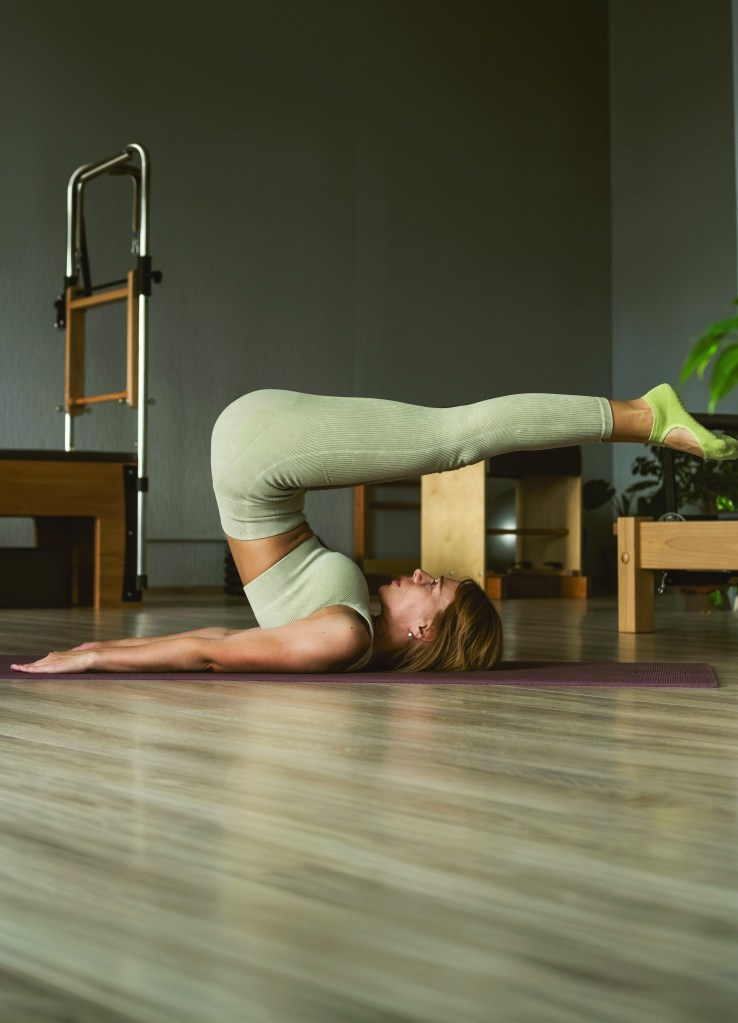
Think of this movement as the reverse of the Roll up. It teaches spinal articulation of the lower back, and develops core strength by deeply activating the lower abdominals to tilt and lift the pelvis off the mat.
- Lie on your back, with your arms by your sides, legs straight and lifted to about 60 degrees.
- Inhale, bringing your legs towards you.
- Exhale and take your legs overhead, allowing your pelvis and spine to peel off the mat (the Roll over), finishing with your legs parallel to the floor.
- Inhale, keeping your torso still, separate your legs and lower your toes towards the mat.
- Exhale to unroll your spine. Once your pelvis reconnects to the mat, return to the start position.
- Repeat three times.
- Next, repeat the sequence starting with your legs apart for the roll over, bringing them together when overhead and rolling down.
- Repeat three times.
Advanced: Jack knife
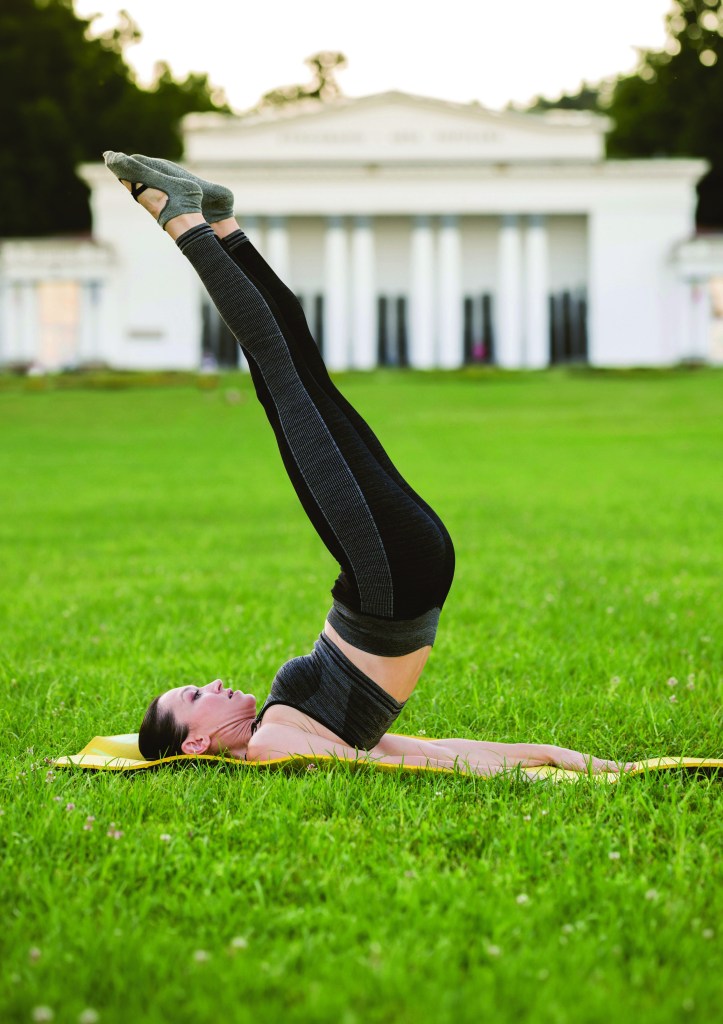
Building on experience gained from lifting the legs overhead in Roll over with legs spread, this movement uses the lower-back extensors to lift your pelvis higher, then challenges the core as you lower from an almost vertical position. Avoid this exercise if you have neck or shoulder issues.
- Lie on your back, arms by your sides, palms down. Lift your legs straight at a 60-degree angle to the mat (higher if you feel your back arching), with your toes pointed.
- Inhale slowly as you bring your legs to 90 degrees.
- Exhale as you roll your hips off the mat, bringing your legs parallel to the floor overhead.
- Inhale slowly as you extend your spine, reaching your toes towards the ceiling in a vertical line. You can use your hands for support if needed.
- Exhale as you slowly roll your torso down as smoothly as possible. Once your pelvis touches the mat, return your legs to the start position.
- Repeat five times.
Building balance
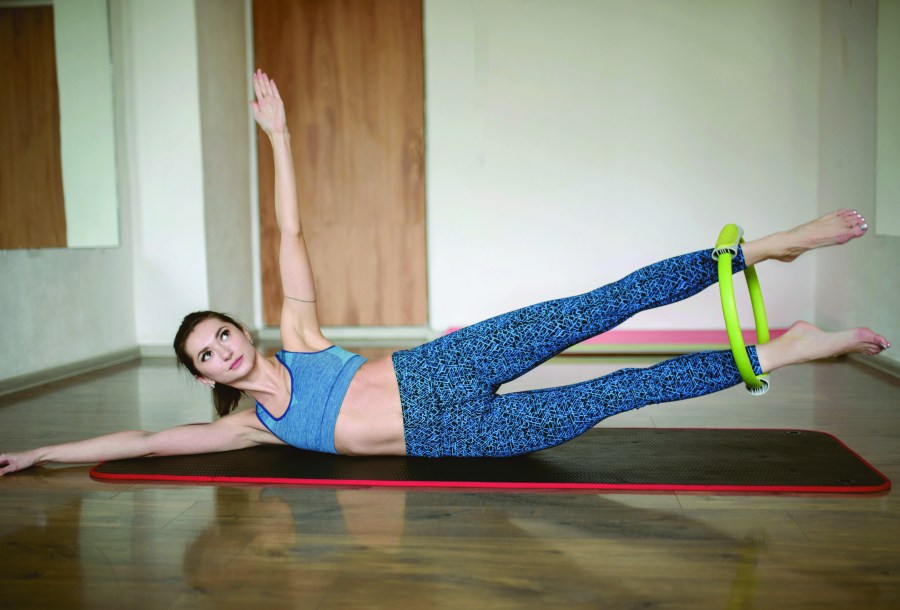
Beginner: Side leg lift
Great for sculpting the waistline, this exercise requires the coordination of muscles on the front, side and back of the core to stabilise the body. If you feel it in your lower back, bring your feet forward. Use a small ball or Pilates ring for added resistance.
- Lie on your side, with your head resting on your bottom arm and both legs extending away from you in a straight line. Place your top arm, palm down, in front of your chest – or hold this arm along your side to make the exercise more challenging. To help your alignment, try visualising that you are lying between two panes of glass.
- Exhale slowly and raise both legs off the mat, keeping the thighs pressed together and maintaining a straight line through your body.
- Inhale slowly as you lower your legs to the start position.
- Repeat five-to-10 times.
- Change to the other side and repeat.
Intermediate: Side kick
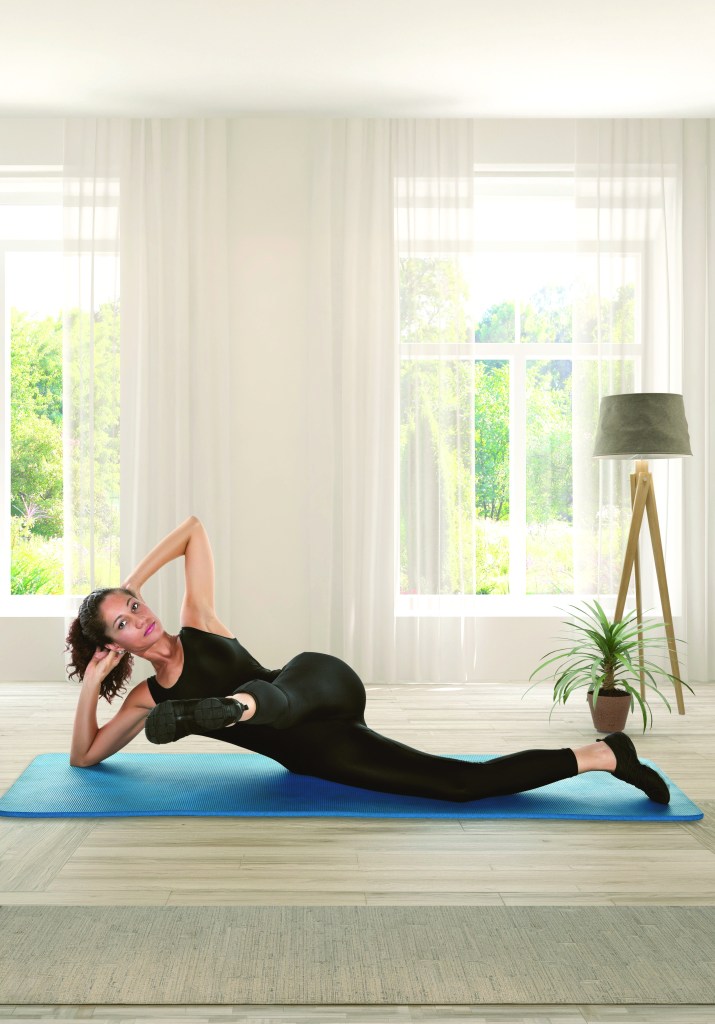
This exercise challenges your balance and control in a whole new way. The goal, once the torso is in position, is not to move anything but the working leg, leading to strong core training that strengthens the thighs and glutes.
- Lie on your side, propped up on one elbow, with both hands behind your head. Keep both of your legs straight, one on top of the other and slightly forward of your hips, with your toes pointed. Raise your top leg to align with your hip and maintain this height throughout the movement.
- Inhale slowly and swing your top leg forward, then further forward.
- Exhale slowly and swing the leg back in the same way, with the second movement going further than the first.
- Repeat five-to-10 times.
- Change sides and do the same with the other leg.
Advanced: Kneeling side kick
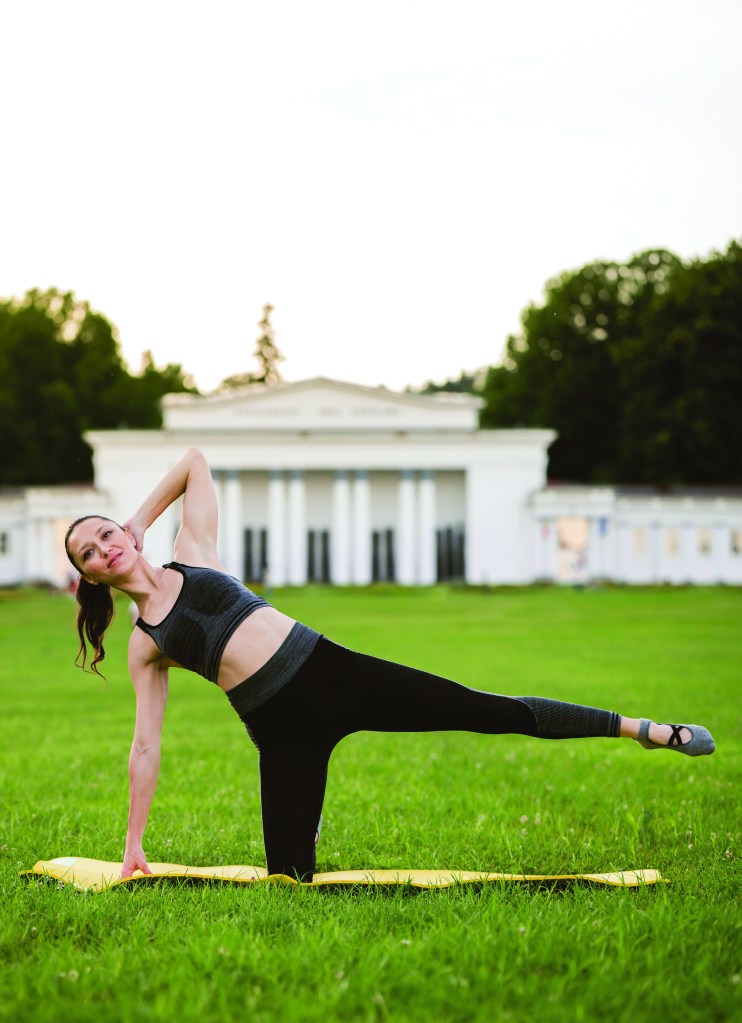
This is an advanced version of Side kick. The stability challenge increases as you support yourself solely on one knee and one arm. This provides valuable practice in shoulder stability, alongside increased core challenge in maintaining a side-arched position.
- Kneel on your mat. Bend sideways, placing your left hand on the mat, directly underneath your left shoulder, with your right hand behind your head. Extend your right leg and lift it until it is at the same height as your hip. Maintain this height throughout.
- Inhale slowly and swing the top leg forwards, then further forwards. Think about it as two gentle pulses of the leg, with the second movement going further than the first.
- Exhale slowly and swing the leg backwards in the same way, with the second movement going further than the first. Avoid any movement in your spine and repeat five times.
- Change to the other side and repeat
With more than 350K YouTube subscribers, Rachel Lawrence – widely known as ‘The Girl with the Pilates Mat’ – is a trusted voice in online Pilates. She has inspired a worldwide audience to move more, feel better and embrace daily wellness. Rachel brings together years of Pilates experience, a passion for healthy living and a desire to help others thrive. Her most recent book is The Little Book for Pilates Lovers (Summersdale, £9.99).