
Balance isn’t simply about standing on one leg. Under Armour coach Tom Bliss explains why strength, coordination and stability are essential for staying active as you age – and reveals the exercises that can help.
Pics: Getty Images
When people think about improving their balance, they often picture standing on one leg or wobbling on a balance board. But balance is far more complex than that.
It relies on strength, coordination, mobility and the nervous system working together to keep you upright and moving efficiently.
While balance can change as we get older, a significant decline isn’t inevitable. Like strength and cardiovascular fitness, balance is a skill that can be trained – and doing so can help you perform better, move more confidently and remain independent for longer.
Why balance is the foundation of movement
For anyone following a strength or hybrid training programme, balance forms the foundation of efficient movement.
Every step you take while running challenges your ability to stabilise your body. The same is true of exercises such as lunges, split squats and single-leg deadlifts.
Even heavy compound lifts rely on balance, allowing you to transfer force effectively and maintain good technique.
When your stability improves, your movements become more efficient. You waste less energy, produce force more effectively and are better able to maintain control when fatigue starts to build during training or competition.
Put simply, you can’t fully express your strength if you can’t control it.
Better balance can help you stay independent
Outside the gym, balance becomes increasingly important as we age.
Falls are a leading cause of injury and loss of independence among older adults, with the risk increasing as muscle mass, reaction speed and coordination begin to decline.
However, losing your balance isn’t simply an unavoidable part of ageing. It can also reflect reduced strength, confidence and physical activity.
Maintaining good balance can help you climb stairs without hesitation, step confidently off a kerb, carry shopping, play with your grandchildren or recover quickly if you stumble.
Feeling physically stable can also build confidence, encouraging you to remain active instead of avoiding movement because you’re worried about falling.
Why strength training can improve balance
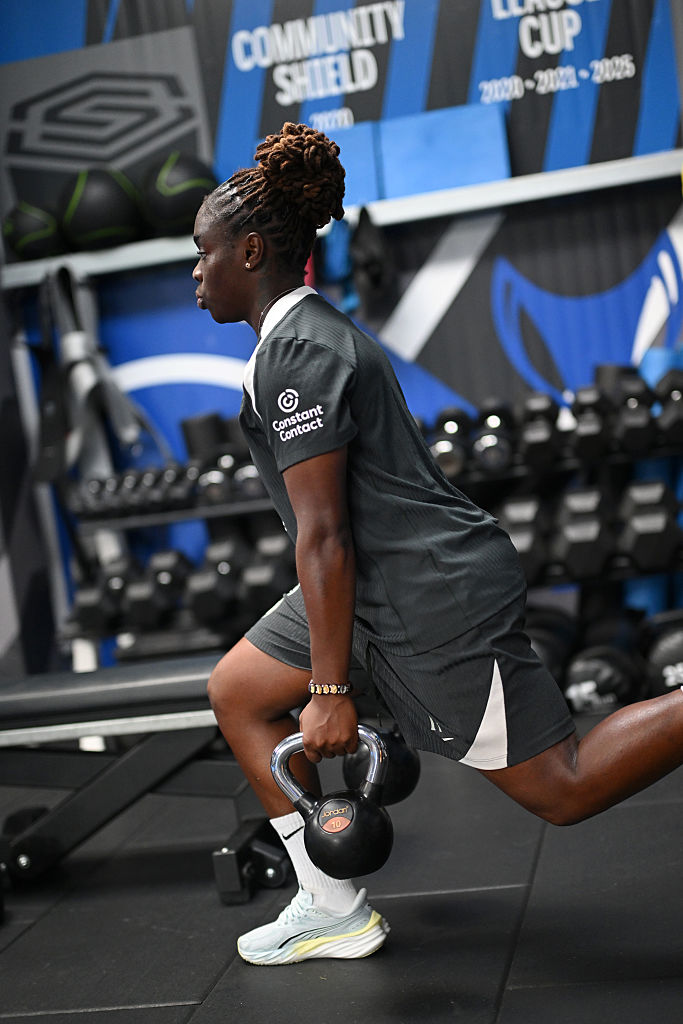
One of the biggest misconceptions is that balance can only be developed through dedicated balance drills. In reality, it is the result of several different systems working together.
Strong muscles provide the force you need to move and react, while stability allows you to control that force. Your hips and core help keep your body aligned, while your ankles constantly make small adjustments to maintain your centre of gravity.
Your proprioceptive system – your body’s awareness of its position and movement in space – also provides continuous feedback to your brain.
This is why resistance training can be so effective for improving balance and reducing the risk of falls. Becoming stronger gives your body a greater reserve, helping you react quickly and confidently when challenged by uneven ground, an unexpected movement or a momentary loss of footing.
Think of it this way: strength gives you the horsepower, while stability gives you the steering.
The five best exercises for improving balance
The most effective approach is to combine exercises that develop both strength and stability. These five movements can help:
1. Single-leg Romanian deadlifts
Single-leg Romanian deadlifts strengthen the posterior chain – the muscles running down the back of your body – while challenging hip stability, coordination and control.
Because you are balancing on one leg while hinging from the hips, the movement teaches your body to remain stable as your centre of gravity shifts.
2. Split squats
Split squats improve single-leg strength, knee control and balance in a functional position.
They can also help address strength differences between the two sides of your body, as each leg is required to work independently.
3. Step-ups
Step-ups replicate movements we perform in everyday life, such as climbing stairs or stepping onto a raised surface.
They develop single-leg strength through a full range of motion while requiring your hips, knees and ankles to work together to keep you stable.
4. Farmer’s carries
Farmer’s carries strengthen your grip, core and postural muscles while teaching your body to remain stable as you move.
Although the exercise may appear simple, walking while carrying weights requires your entire body to work together to maintain good posture and control.
5. Single-leg balance drills
Simple single-leg balance exercises are still valuable, particularly when they are progressed gradually.
Begin by balancing on one leg with your eyes open. As your confidence improves, increase the challenge by closing your eyes, reaching your arms or free leg in different directions, or standing on a slightly softer surface.
These progressions encourage your body to adapt and improve its awareness without requiring complicated equipment.
How to keep challenging your balance
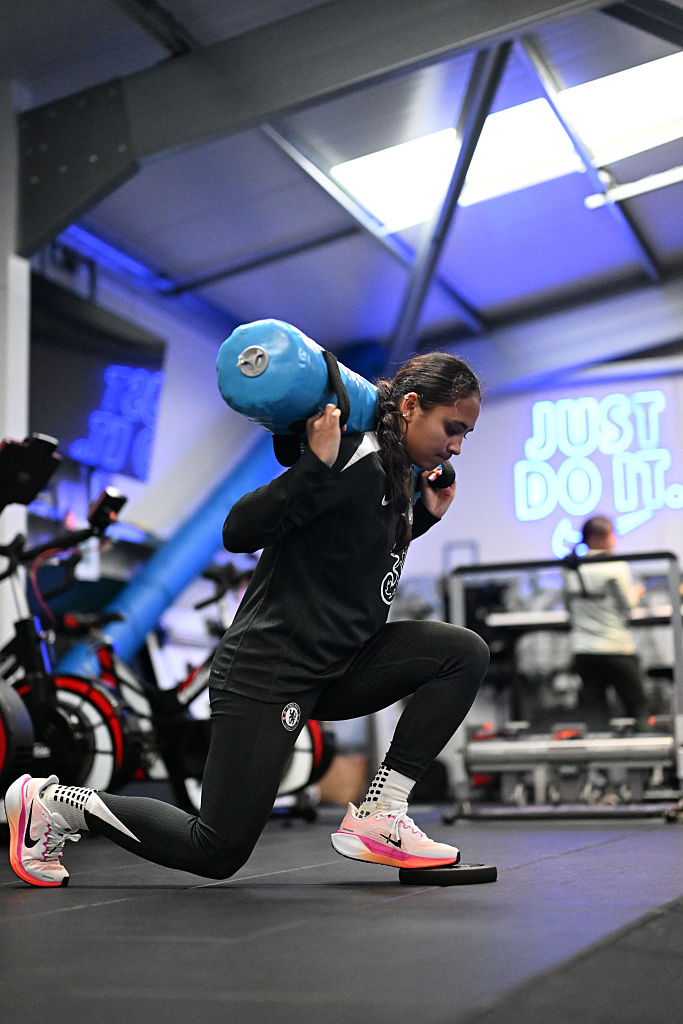
Balance exercises should become gradually more challenging as your strength and confidence improve.
Rather than immediately attempting advanced drills, begin with movements you can perform safely and with good control. You can then progress by increasing the range of motion, adding resistance, slowing the exercise down or reducing the amount of support available.
Consistency is more important than complexity. Regularly including single-leg and stability-focused exercises in your training will give your body repeated opportunities to practise controlling movement.
y consistently developing all three, you can move with greater confidence, perform better during training and maintain the independence to keep enjoying the activities you love for years to come.
Tom Bliss is an Under Armour coach. Find out more at underarmour.co.uk