

Feeling all seized up after a long day at your desk? Rather than heading straight to the gym, try these exercises after sitting all day to restore your mobility before training.
When it comes to desk working, many of us have good intentions when it comes to protecting our posture. But even with all the lumbar support chairs, standing desks and raised screens in the world, you can’t get around the fact that sitting for eight to ten hours a day will have an impact on your body.
Even if you’re active outside of the 9-5, it’s likely that you’ll still be feeling the effects of desk working when it’s time to clock off. And this can become an issue when you want to immediately head to the gym for a hardcore workout.
‘For active people, the challenge is not usually a lack of fitness,’ explains physiotherapist David Pilbury. ‘Rather it’s that the body has spent eight to 10 hours adapting to a seated position, and is then expected to perform immediately at a high level.’
The impact of prolonged sitting
‘Prolonged sitting can temporarily reduce hip mobility, encourage a rounded upper back posture, and alter how key muscles contribute to movement,’ David explains. ‘There is a common mantra of “motion is lotion” – we really aren’t designed to be still for long periods of time. The natural lubrication of the joints, blood flow to tendons and muscles as well as our soft tissues are all key factors in moving freely and comfortably.’
Hips: ‘When sitting, the hip flexors remain in a shortened position for long periods,’ says David. ‘Over time, this can create a feeling of tightness at the front of the hips and reduce hip extension when standing, walking, running or squatting.’
Upper back and shoulders: ‘Desk work often encourages a rounded upper back, forward head posture and internally rotated shoulders,’ David explains. ‘This can make overhead movements, lifting, rowing and running mechanics feel restricted.’
Movement quality: ‘The body becomes efficient at the position it spends the most time in,’ David shares. ‘After hours of sitting, the nervous system is effectively ‘practised’ at being flexed and stationary rather than mobile and athletic. As a result, movement can feel less fluid, less coordinated and less powerful when exercise begins.’

Why you shouldn’t go straight from the desk to training
‘When people go straight from a desk to training, we commonly see several movement compensations,’ explains David. ‘A common overall pattern is tight hip flexors combined with underactive gluteal muscles, sometimes referred to as “gluteal inhibition” or “gluteal amnesia”.’
‘During squats and lunges, you may have reduced depth due to hip stiffness, an excessive forward lean, or increased movement through the lower back to compensate for limited hip mobility,’ he continues. ‘During running, we often see a reduced stride length and poorer hip extension, with greater reliance on the quads rather than the glutes – this can also place greater stress through the lower back and knees.’
‘When it comes to strength training, you may struggle to maintain a neutral spine or achieve the overhead mobility needed for pressing movements,’ he adds. ‘I also commonly see shoulder elevation and increased neck tension during lifts. In gym classes, movement quality can deteriorate as fatigue develops. There may also be reduced rotational mobility, with the lower back compensating for limited movement through the hips and thoracic spine.’
Try these exercises to restore mobility after sitting all day
Before heading to the gym, spending a few minutes to stretch and reset can help you to make the most of your workout. ‘A movement reset acts as a transition between desk posture and athletic performance,’ David explains. ‘It can also help reset the nervous system, providing a natural divide between tasks and helping to manage stress.’
‘A short routine helps to restore mobility where prolonged sitting has created stiffness, while also activating muscles that have been relatively inactive, particularly the glutes,’ he continues. ‘It can improve joint movement and coordination, enhance body awareness and ultimately help the body feel more prepared for exercise.’
After a long day of sitting at your desk, David recommends trying the following exercises and stretches to restore your body’s mobility. ‘I’d focus on the areas most affected by prolonged sitting: the hips, thoracic spine (upper back), shoulders, chest and glutes,’ he explains.
‘Focusing on these four areas provide some of the greatest return on investment when you only have a short period of time to prepare the body for exercise,’ he adds.
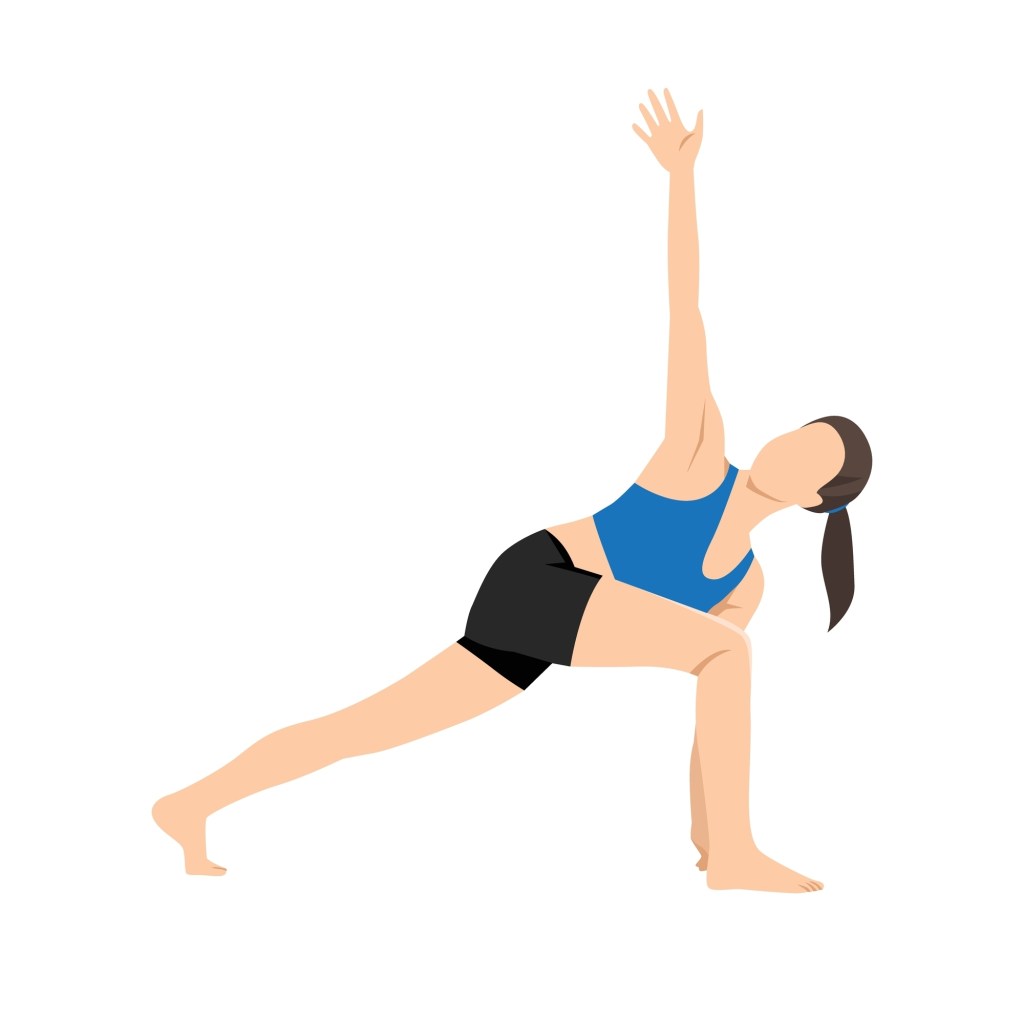
Hips
Stretches: Try the World’s Greatest Stretch and lunging hip openers
‘The hips are particularly important because they are central to walking, running, lifting and almost every form of athletic movement,’ says David.
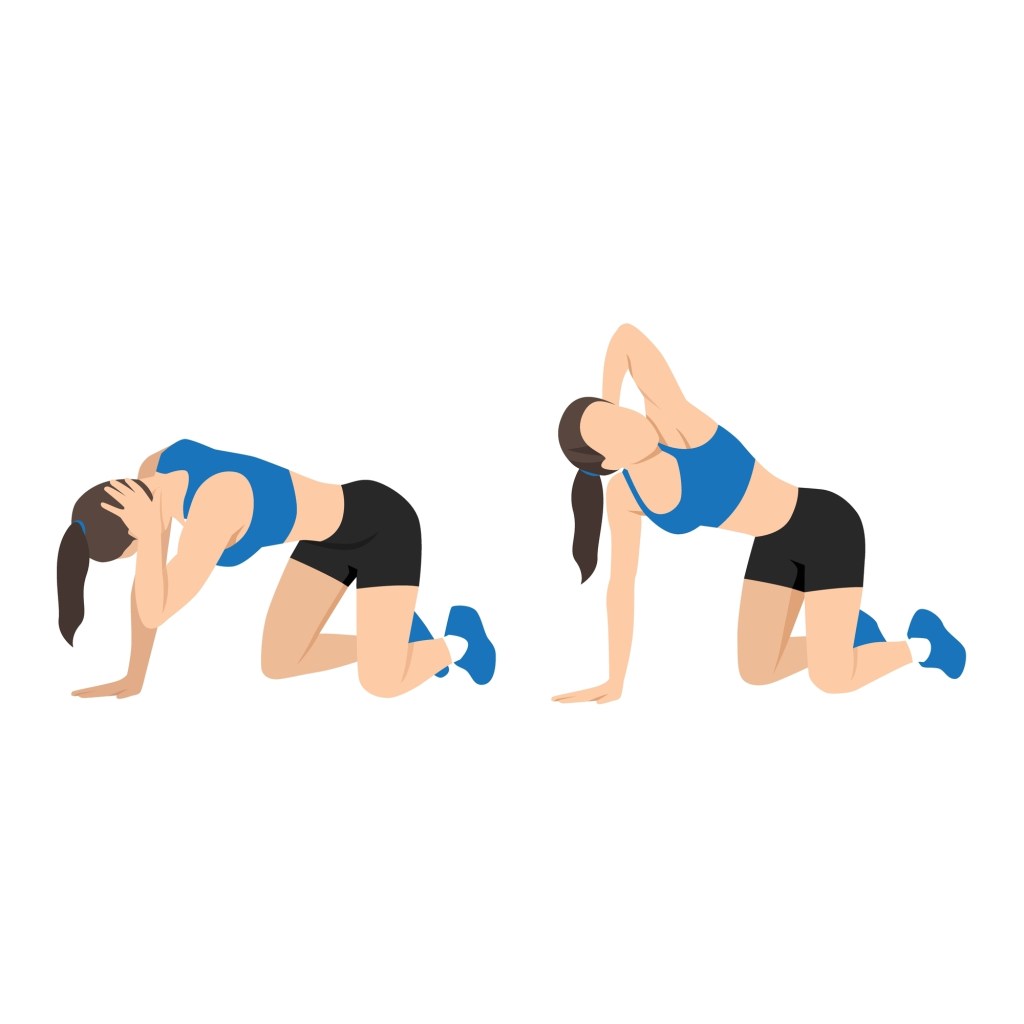
Upper back
Stretches: Try thoracic rotations, open-book stretches and cat-cow movements.
‘The thoracic spine, or upper back, is another key area,’ says David. ‘Improving extension and rotation through the thoracic spine can support better posture, breathing and shoulder function.’
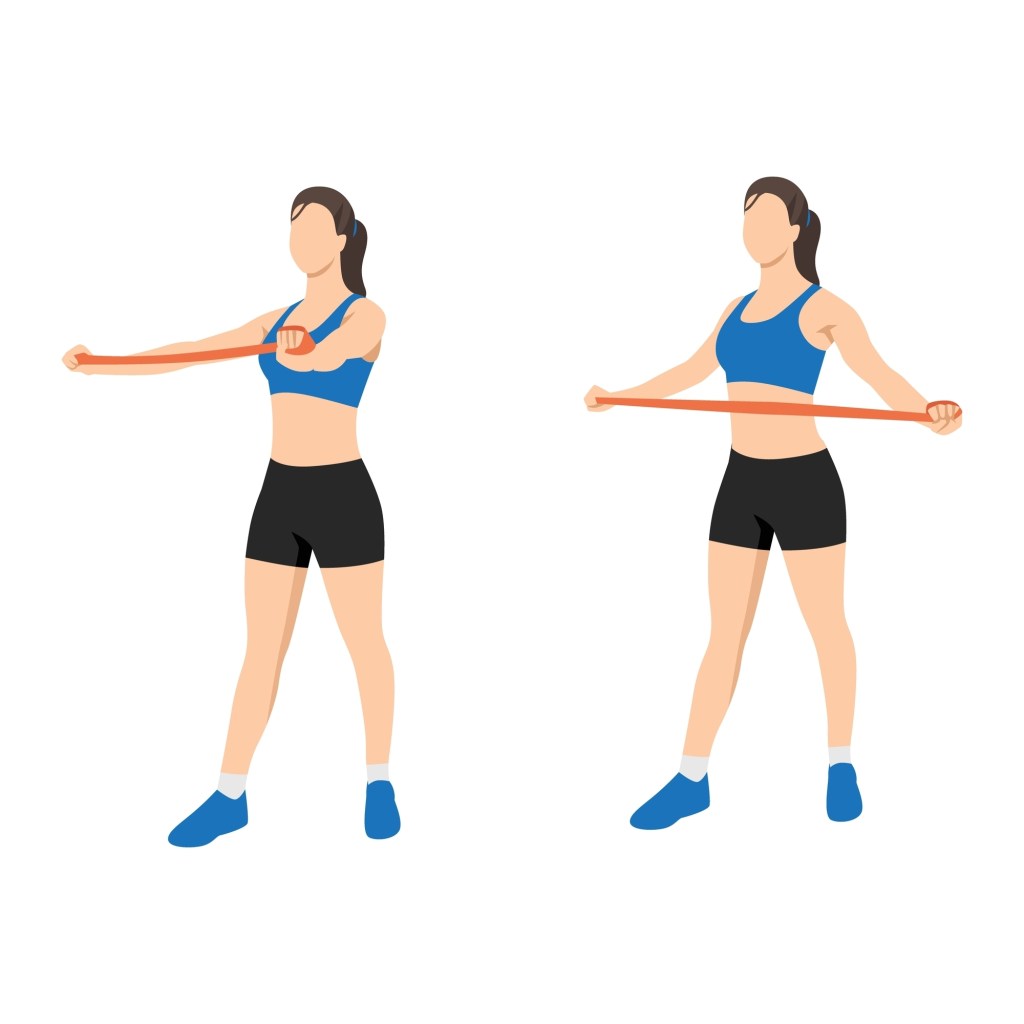
Shoulders and chest
Stretches: Try band pull-aparts, wall slides and chest-opening stretches
‘Focusing on the shoulders and chest can help to offset the rounded posture that can develop from spending long periods at a computer,’ says David.
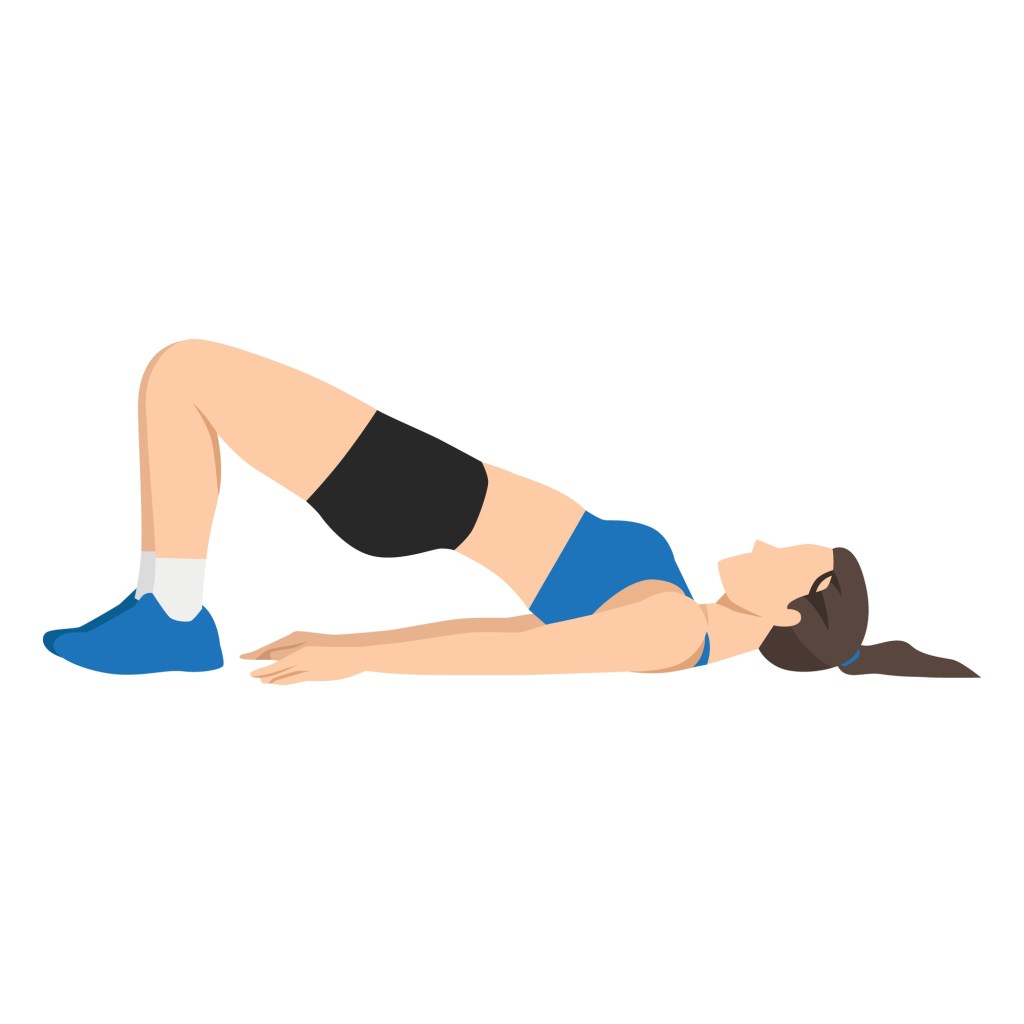
Glutes
Exercises: Try glute bridges, squat holds and lateral band walks.
‘I recommend including some glute activation exercises to help remind the body to use the hips properly before exercise,’ David shares.
How to do this mobility routine:
‘You don’t need to complete every exercise listed,’ explains David. ‘The aim is to choose a movement for each of the key areas and spend 30-45 seconds on each, or roughly 5-8 controlled reps.’
‘For example, you might choose a hip flexor stretch, a thoracic rotation, some wall slides and a set of glute bridges,’ he adds. ‘This aim is not to put pressure on completing as many exercises as possible, but to gradually ease the body out of its prolonged sitting position and ready for some more intense activity.’
Daily habits to prevent pain and stiffness as a desk worker
‘Over the long term, the biggest gains usually come from consistency rather than doing longer routines,’ shares David. ‘I’d recommend standing up every 30 to 60 minutes, taking short movement breaks throughout the working day, maintaining regular hip mobility work, strengthening the glutes and upper back, and walking daily. Exercise should complement regular movement rather than replace it, and a five-minute movement reset before training sessions can be a really useful habit to build.’
‘The people who stay pain-free and perform at their best are usually not necessarily those who stretch the most, but those who move regularly throughout the day and avoid remaining in one position for hours at a time,’ he adds. ‘Sitting doesn’t make active you unfit, but it can temporarily reduce mobility, alter muscle activation and affect movement quality. A simple five-minute reset focused on the hips, thoracic spine, shoulders and glutes can help restore more efficient movement and improve the quality of the workout that follows.’
David Pilbury is a physiotherapist and rheumatology specialist with more than 23 years of clinical experience in musculoskeletal (MSK) health, rheumatology and pain management. He is also the National Clinical Director for MSK Services at Vita Health Group, Chair of the Clinical Care Excellence Committee at Arthritis Action, and a member of the British Society for Rheumatology’s Digital Learning Board.