
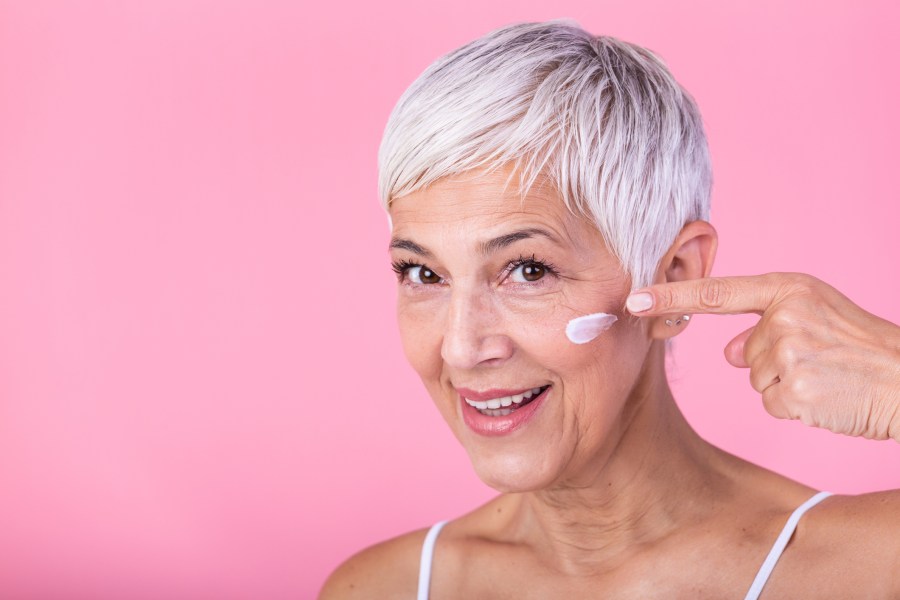
Forget retinol and expensive anti-ageing creams. Some women are turning to testosterone gel in the hope of firmer, younger-looking skin. But does this latest beauty trend really work, or could it leave you with acne, unwanted facial hair and other side effects? Two experts reveal the truth.
Just when you thought you’d heard of every anti-ageing beauty trick going, along comes another one that makes you wonder just how far women are prepared to go in the pursuit of younger-looking skin.
I’ve written plenty of articles on collagen supplements, salmon sperm facials and expensive serums, but this topic has left me somewhat baffled.
Why I’m not convinced by this latest anti-ageing trend
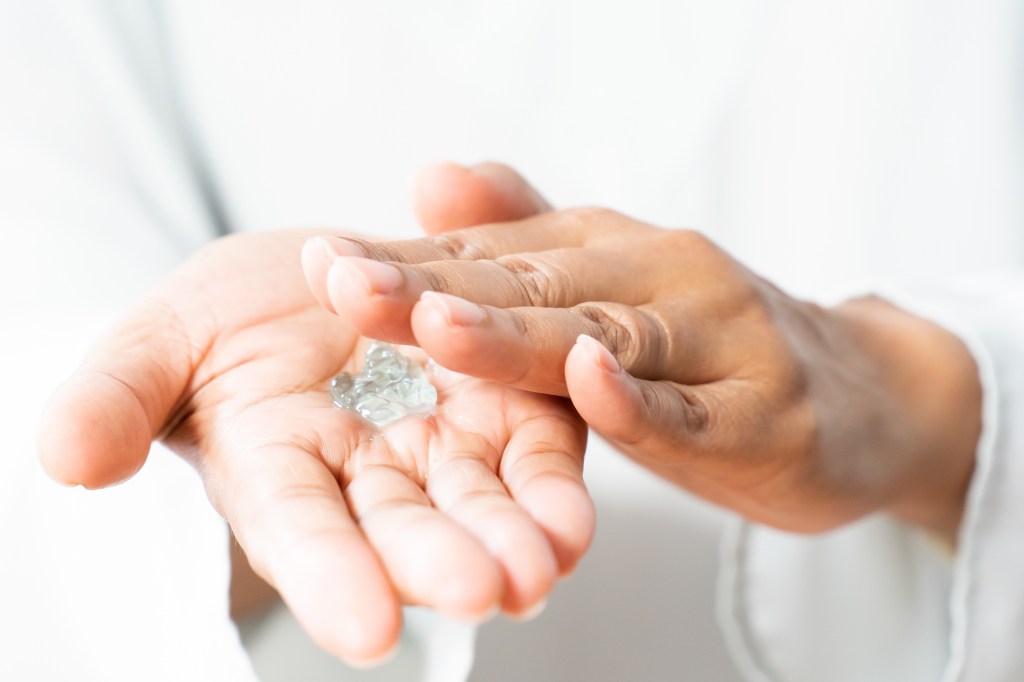
As someone who takes testosterone gel – well, I rub it into my thigh as part of my HRT treatment – I would never dream of applying it to my face. However, it seems some women are.
Yes, you read that correctly. Testosterone. On your face.
And as a beauty journalist who has spent more than 20 years writing about skincare, I’ve come across some pretty unusual treatments, but this one really doesn’t sit well with me.
Whilst I completely understand the desire to keep skin looking firm and youthful, particularly when menopause brings a whole host of changes we never signed up for, is this really a beauty trend worth trying?
According to the experts, the answer is a fairly firm no. Phew!
We spoke to consultant plastic and reconstructive surgeon Dr Riaz Agha and Dr Janis Kosma-Covey, a Doctor of Pharmacy, to find out whether testosterone can really turn back the clock.
Why are women putting testosterone gel on their faces?
If you’ve noticed your skin becoming drier, thinner or less firm since hitting menopause, you’re certainly not alone. Trust me, I get it!
As oestrogen levels decline, skin can lose hydration and elasticity, making wrinkles more noticeable. And whilst there’s no shortage of creams promising to help, some women are looking towards hormones for a solution.
Dr Agha explains: “It would appear that some women are applying testosterone gel directly to their faces because they hope that it will rebuild collagen and make their skin firmer.”
And whilst I wouldn’t dream of trying it myself, I can just about understand why some women might find the idea appealing.
After all, hormones play an important role in how our skin looks and feels, so I can kind of get it (a tiny bit) why women might think applying testosterone could help restore that youthful glow.
Unfortunately, it’s not quite that simple.
“Hormones do affect the skin, and therefore the concept can sound convincing to consumers. But just because it sounds convincing, it doesn’t mean that testosterone gel has been shown to work as an anti-ageing face treatment,” says Dr Agha.
What’s behind this latest beauty trend?
Dr Kosma-Covey believes the growing conversation around menopause and hormones has helped fuel interest.
“I think this trend comes from the growing conversation about hormones, menopause, and skin aging,” she explains.
“Because testosterone is also involved in skin physiology by regulating sebum and collagen production, some people are assuming that applying it directly to the face might help increase production of both by stimulating the pathways directly.”
But there’s a rather important difference between understanding how a hormone works in the body and deciding to use it as a face cream.
“The problem is that a hormone’s role in the body doesn’t automatically mean applying more of it directly to the skin will trigger pathways and produce an anti-aging benefit.”
Can testosterone really get rid of wrinkles?
I’m no medical expert, but I had a sneaking suspicion the answer would be no. And it turns out I wasn’t far wrong.
Dr Agha says: “In terms of scientific evidence concerning testosterone, there’s not enough reliable clinical evidence presently to recommend testosterone gel to treat facial wrinkles or a loss of firmness.”
Neither an effective dose nor the long-term safety of using testosterone gel for cosmetic purposes has been established.
And whilst some research suggests testosterone may influence collagen levels, that doesn’t mean rubbing it onto your face will suddenly give you the complexion you had in your thirties.
“There is some human research that has linked testosterone treatment with higher skin collagen levels,” explains Dr Agha.
“However, we need to be very careful about what that means. Older menopause studies often used testosterone and oestrogen together. Therefore, they could not single out testosterone’s unique contribution.”
Dr Kosma-Covey agrees: “We do not have strong clinical evidence supporting facial testosterone application as an anti-aging treatment.”
Could testosterone gel actually make your skin look worse?
Here’s where ladies who are applying it to their skin need to take stock!
Whilst women may be hoping for smoother, firmer skin, they could end up with a few unwanted surprises instead.
Think spots, oily skin and facial hair. Hardly the glowing complexion most of us are hoping for.
And don’t get me started on those pesky chin hairs. Most of us have enough trouble keeping them under control without potentially encouraging a few more to join the party!
Dr Kosma-Covey explains: “Testosterone stimulates sebaceous gland activity, which can increase oil production and contribute to acne. It can also promote unwanted facial hair growth.”
For women already struggling with menopausal skin changes, that’s probably the last thing they need.
Dr Agha adds: “Applying testosterone to the face can worsen the appearance of the skin as a consequence of acne, oiliness or unwanted hair growth.”
Some gels can also cause dryness or irritation, although there’s no scientific evidence that testosterone itself accelerates skin ageing.
It’s not just your face you need to worry about
If the thought of spots or facial hair isn’t enough to make you think twice, there’s another reason to be cautious.
Testosterone gel isn’t an ordinary skincare product. It’s a medication designed to deliver a hormone into the bloodstream. That’s why we need a prescription to get it!
“Testosterone gels are specifically formulated to deliver testosterone through the skin into systemic circulation. That’s how these medications work,” explains Dr Kosma-Covey.
“Applying testosterone to the face does not mean the hormone will remain confined to facial skin. It may be absorbed into the bloodstream and affect hormone levels throughout the body.”
The side effects that should make you think twice
Excessive testosterone exposure can cause acne, increased facial or body hair and thinning hair on the scalp.
More seriously, it can cause a deeper voice or enlargement of the clitoris, and some changes may not fully reverse once treatment stops. If this doesn’t make you stop….nothing will!
Dr Agha highlights another concern: “There is also a risk that the gel can transfer to someone else through close skin-to-skin contact, including to children.”
So this isn’t simply about whether testosterone might improve your wrinkles. It’s about potentially exposing yourself, and others, to a prescription hormone unnecessarily.
Are women confusing testosterone with oestrogen?
Whilst testosterone is attracting attention as an anti-ageing treatment, it’s actually oestrogen that has a better-established relationship with skin hydration, collagen and elasticity.
Dr Agha explains that testosterone doesn’t usually fall sharply during natural menopause in the same way oestrogen does.
“Many women notice dryness, thinning and loss of elasticity in their skin. However, these changes are more clearly linked to falling levels of oestrogen rather than testosterone.”
Dr Kosma-Covey agrees that some women may be confusing the skin benefits of the two hormones.
She also explains that testosterone can be converted into oestrogen through an enzyme called aromatase, which is present in the skin.
But that doesn’t mean applying testosterone to your cheeks will replace declining oestrogen or reverse wrinkles.
And whilst HRT can be hugely beneficial for menopausal symptoms, Dr Agha stresses it shouldn’t be started solely to treat facial ageing.
But what if you’re already prescribed testosterone for menopause?
Some women are prescribed testosterone as part of menopause treatment, particularly when they continue experiencing low sexual desire despite appropriate HRT.
But using testosterone for a medical reason is very different from applying it to your face in the hope of looking younger.
Dr Agha explains: “Anyone already prescribed testosterone must follow the prescriber’s precise instructions about the dose, where it is applied and how its use is monitored. Do not move the gel to your face or use it as an anti-ageing treatment.”
Dr Kosma-Covey agrees: “As a pharmacist, I would strongly discourage anyone from experimenting with prescription testosterone products based on social media recommendations.”
The amount absorbed can vary depending on the formulation, skin condition and application site. Facial use has no established safe cosmetic dose.
So what actually works for wrinkles and firmer skin after 50?
The good news is that you don’t need to experiment with hormones to give your skin a helping hand.
In fact, some of the most effective treatments are probably already sitting in your bathroom cabinet.
1. Don’t underestimate your SPF
If there’s one product both experts agree women should use, it’s sunscreen. And yes, I bang on about SPF all the time.
Dr Agha recommends broad-spectrum SPF 30 or higher to help prevent further sun damage.
2. Give retinoids a chance
Prescription tretinoin has evidence for improving sun-related fine lines and wrinkles.
Dr Kosma-Covey explains that topical retinoids support collagen remodelling and skin cell turnover.
But don’t expect an overnight transformation. Results take months, tretinoin can irritate skin and it requires appropriate medical advice. It must not be used during pregnancy or when planning pregnancy.
3. Moisturise, moisturise, moisturise
It might sound obvious, but keeping skin hydrated becomes particularly important during menopause. A moisturiser is the one product I swear by!
Dr Kosma-Covey recommends ingredients such as glycerin, ceramides and plant oils to support the skin barrier.
Whilst moisturiser won’t erase deep wrinkles, it can ease dryness and temporarily soften fine lines.
4. Consider professional treatments
For more noticeable improvements, Dr Agha suggests laser resurfacing may help with wrinkles, texture and some loss of firmness.
However, a consultation is essential to discuss suitability, recovery and risks, including pigmentation changes and scarring.
The takeaway: Leave testosterone out of your skincare routine
I completely understand the temptation to try something new, particularly when another wrinkle seems to have appeared overnight.
But just because a treatment sounds scientific doesn’t mean it’s safe or effective.
As Dr Kosma-Covey puts it: “My biggest concern with this trend is that women are treating testosterone like another anti-aging serum when it’s actually a hormone with serious and sometimes irreversible effects throughout the body.”
“Just because something can be absorbed through the skin doesn’t mean it belongs in your skincare routine.”
It’s not often I find myself begging women to steer clear of a beauty trend, but ladies, please, PLEASE don’t try this one!