
It sounds bizarre, but the viral ‘salmon sperm facial’ doesn’t actually contain sperm. Dermatologists explain the science behind the polynucleotide treatment, what happens during the procedure, who it’s suitable for and whether it really can improve skin texture, hydration and collagen production
As a beauty editor, I’ve tried most treatments going and facials are up there as one of my favourites. However, I’m sure I can be forgiven for turning my nose up at the salmon sperm facial, and I’m not even talking about the smell of it!
If ever there was an off-putting name for a treatment, this is it but having gone face-to-face, literally, with some of the world’s top aestheticians and beauticians, I’ve now garnered a better understanding of what it is, how it is applied and the benefits it has.
I’ll start off by saying – phew! – that despite the name, it does not have any salmon sperm in it. In fact, my own aesthetician Dr Maryam Zamani www.Zamaniplasticsurgery.com was quick to reassure me what it actually is made of:
“The facial uses highly purified DNA fragments, known as polynucleotides or PDRN, derived from salmon DNA. These molecules are thought to support the skin’s natural repair processes by reducing inflammation, stimulating collagen production, and improving hydration, texture, and overall skin quality.”
So what has fuelled the popularity of the salmon sperm facial?
It’s no surprise here to note that it’s been trending on social media for months, fuelled by the likes of Kim Kardashian and Jennifer Aniston who rave about its incredible healing properties and tight skin effects.
And according to New York based dermatology nurse Michelle McFarland, founder of https://www.bareconcierge.com/ the salmon sperm facial is one of those treatments where the headline is far more unusual than the science.
“Its popularity has grown thanks to social media, celebrity endorsements, and growing interest in regenerative aesthetics, particularly trends inspired by Asian beauty,” she explained.
“Patients today are looking for treatments that improve overall skin quality (not just wrinkles) and this facial aims to improve hydration, elasticity, and skin texture over time rather than creating immediate volume.”
What does it involve?
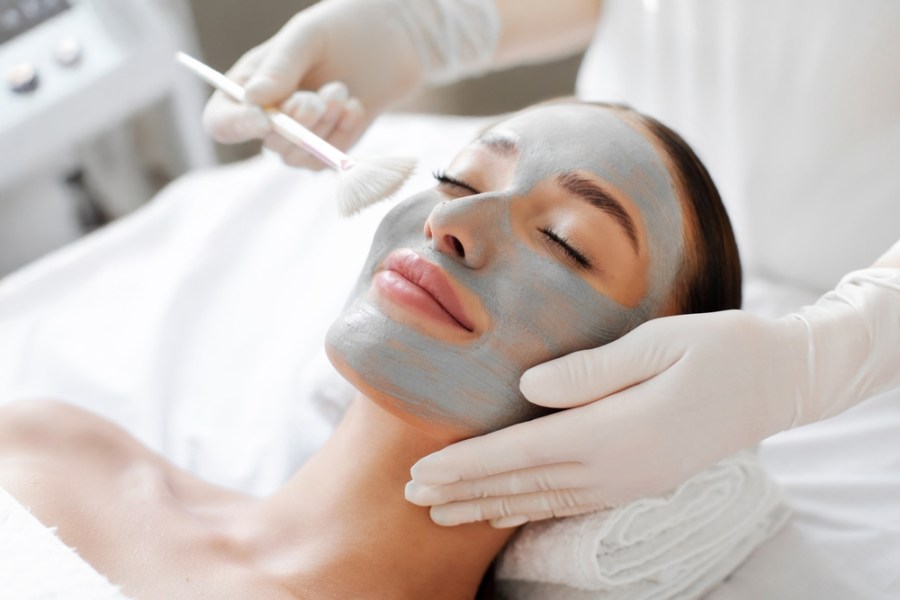
In most cases, the facial involves a two-step process that starts off with microneedling on the skin (a treatment that uses tiny needles to stimulate skin regeneration and improve texture, scars and cellulite) and then the salmon DNA is applied to the face. The microneedling process allows the treatment to penetrate further into the skin.
NOTE: Some users say it can be a little bit painful depending on size of needle. However, if you are used to microneedling it is the same sort of feeling.
“The treatment is generally very well tolerated. Mild redness or inflammation for a day or two is the most common downtime,” explained Dr Zamani.

“Much of the discomfort patients hear about online comes from treatments performed in countries such as South Korea, where the product is commonly injected directly into the skin. When these ingredients are applied after microneedling, the treatment is typically much more comfortable and well tolerated. It also offers the added benefit of combining two regenerative treatments in a single visit, allowing patients to benefit from both the collagen-stimulating effects of microneedling and the skin-repairing properties of polynucleotides. Sensitivity is uncommon but can occur, with temporary redness, swelling, or tenderness.
“As with any regenerative treatment, consistency is key. The best results come from a series of treatments, a good skincare routine, and daily sunscreen. Healthy, beautiful skin is built over time, and regenerative treatments work best as part of a long-term approach to skin health.”
What are the benefits?
The research is promising, but it’s still emerging. Some studies suggest improvements in skin quality and healing, particularly after procedures like microneedling or laser resurfacing. However, many of the available studies are small, and we still need larger, long-term clinical trials before drawing firm conclusions about its effectiveness.
Outlining the benefits, plastic surgeon Dr. Anil Shah, who works at www.shahfacialplastics.com explained that fish-derived ingredients are known for their health benefits already.
“Consumers are already familiar with eating fatty fish for omega-3s, collagen, and inflammation support, so marine collagen, salmon DNA/PDRN, and others like fish oils, and caviar extracts feel both exotic and biologically plausible. PDRN (Salmon) in particular has gained attention because it has wound-healing and tissue-repair associations, not just “glowy skin” marketing.
“What makes PDRN and other fish ingredients interesting is that many are biologically complex: marine collagen provides peptides; fish oils provide omega-3 fatty acids; caviar extracts contain lipids, amino acids, and nucleic-acid-related compounds; and PDRN is associated with repair signalling. Oral collagen has some clinical evidence for hydration, elasticity, and wrinkles, though study quality and industry funding matter.”
He acknowledges that whilst the salmon sperm facial language is undeniably social-media friendly, it should not, as in my case, turn you off.
“Omega-3 fatty acids have a rational role in skin barrier and inflammation biology, and PDRN has regenerative medicine/wound-healing roots. The important distinction is delivery: an injectable or medically guided treatment may not behave the same as a topical cream or sheet mask. Topical PDRN, for example, may have penetration and stability limitations.
“The novelty language will probably fade, but some marine-derived ingredients will stay. The products that survive will be the ones that can show real outcomes, good sourcing, low irritation risk, and smart formulation. I would view fish skincare as an interesting category, but not a replacement for the basics: sunscreen, retinoids, barrier repair, antioxidants, and evidence-based procedures.”