
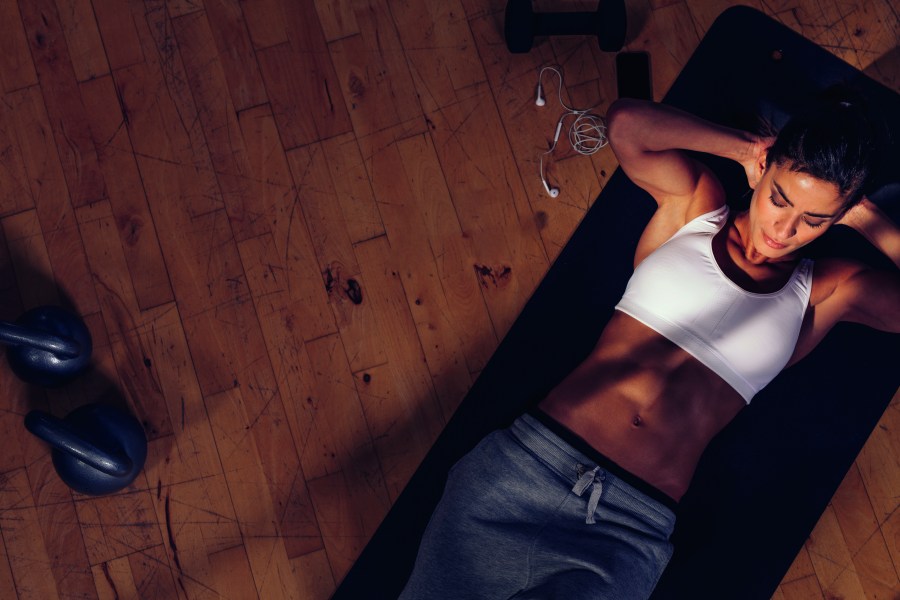
The key to improving tummy troubles could lie in your weekly workouts. Celebrity trainer and movement expert Louisa Drake explains the gut-boosting benefits of exercising before sharing her favourite moves
Words: Louisa Drake | Images: Shutterstock & Oly Barnsley
As well as improving fitness, toning muscles and boosting mood, exercise is crucial for keeping your gut in top form. On a physical level, moving your body helps to keep the digestive system and bowel movements regular by encouraging the intestines to contract and pass waste through your system.
Mobility-based exercises are great for stretching and lengthening the abdominal cavity to relieve discomfort from gastrointestinal symptoms, while rolling motions, deep flexions and rotational exercises can physically massage the internal organs to aid digestion and encourage peristalsis (a muscle contraction that moves solids and liquids along). The benefits can also be seen on a cellular level, with research demonstrating how regular exercise can promote a more diverse gut microbiome.
The power of breathing
When it comes to improving your gut health through movement, it’s not all about the physical motions. Anyone who has taken a yoga or Pilates class will know the breath greatly impacts how we move. By simply focusing on the breath, rather than the millions of things you need to do that day, you can enhance your mind-body connection, allowing you to feel what is going on in your body – including your gut – more clearly.
The breath is also integral to managing stress levels, which has a knock-on impact on the gut, thanks to the gut-brain axis. When we regulate our breathing, it relaxes the nervous system and, as the gut is linked to the vagus nerve, it can also soothe the digestive tract, improve blood flow, increase energy and reduce bloating.
Exercise for gut health
These are some of my favourite abdominal exercises and spinal stretches for nourishing the gut. As you work through each exercise, focus on your mind-muscle connection: move slowly and with control, letting the breath guide each motion.
Cat/Cow
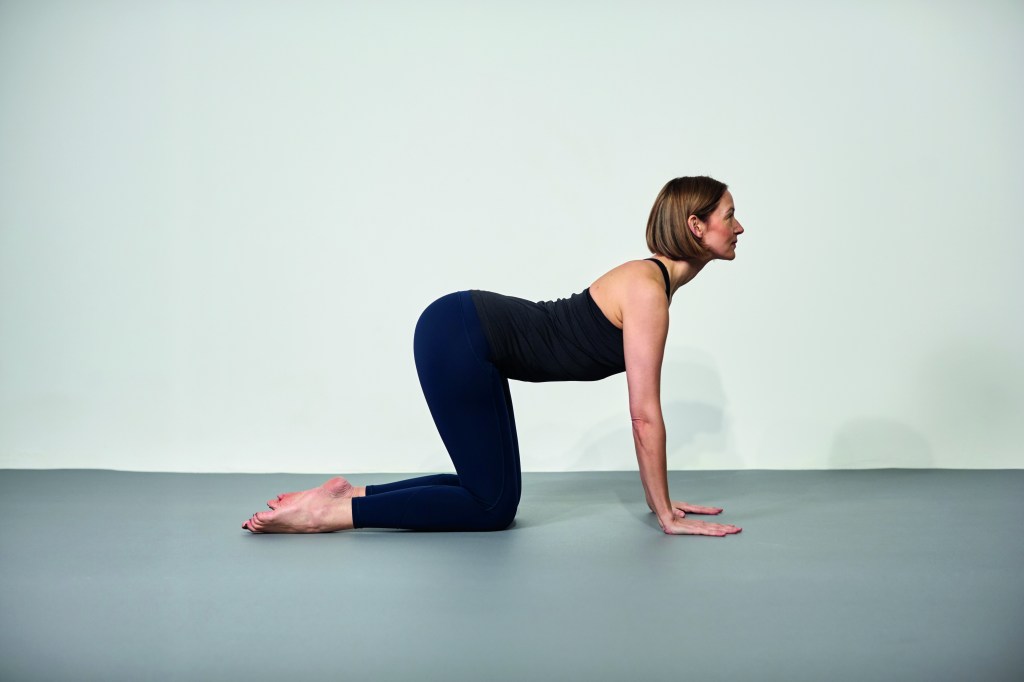
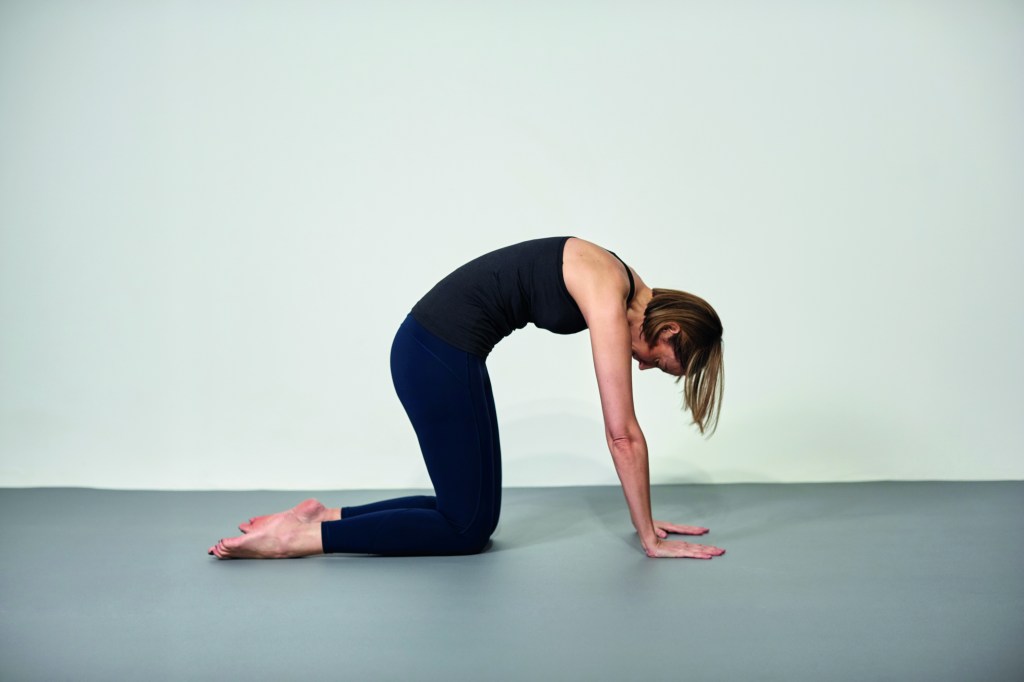
This feel-good spinal mobility exercise creates space in both the front and back of the body, and encourages the breath within this space to warm and relax the body.
Reps: 8-10
- Begin on all-fours with the shoulders above the wrists and the hips above the knees. Lengthen the spine and keep it neutral.
- As you inhale, move into cow pose.
- Drop your belly, press your chest forward, lift your head and relax your shoulders (A).
- As you exhale, come into cat pose, rounding your spine upward, tucking in your tailbone and drawing your pubic bone forward while releasing your head down (B).
Thread the needle
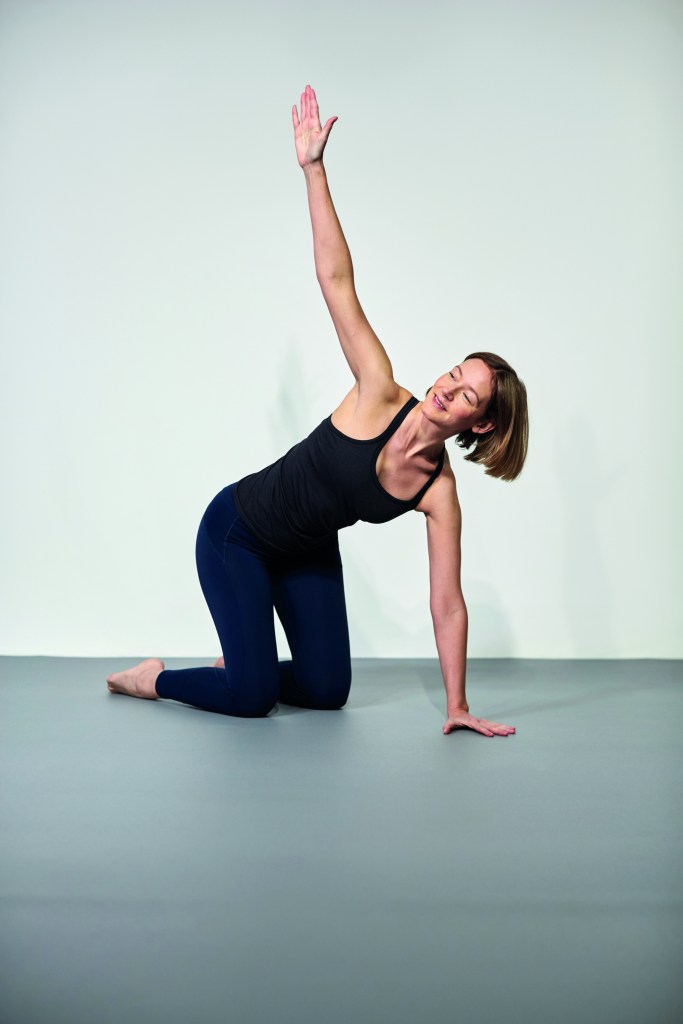
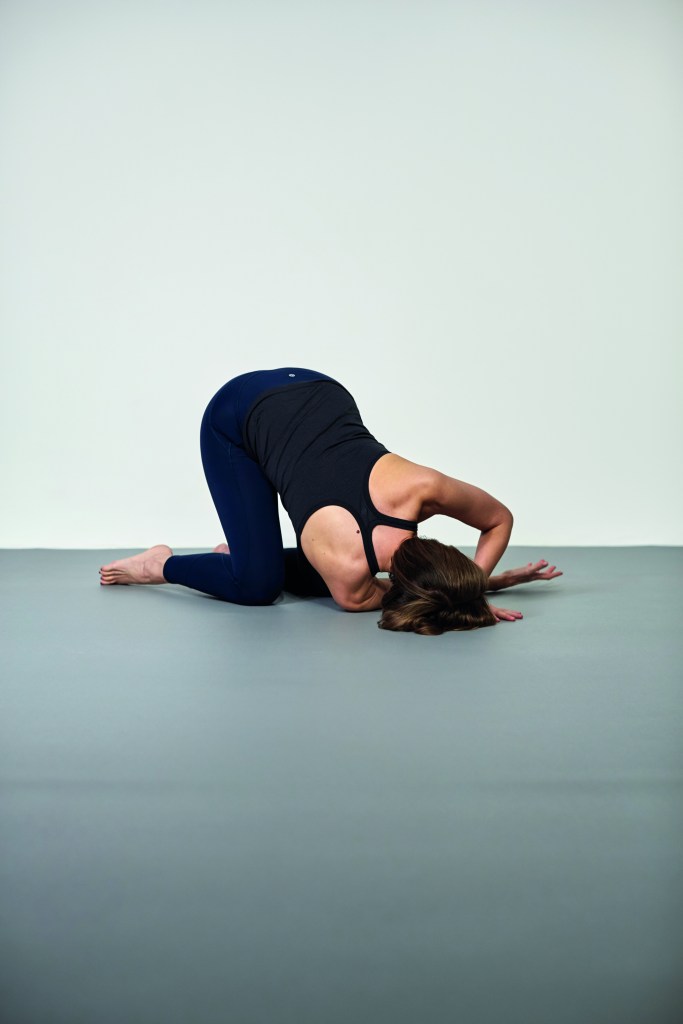
This is a simple, calming exercise to mobilise the spine, open up the chest and shoulders, and improve shoulder stability. The twisting element can also aid digestion by gently massaging the digestive organs.
Reps: 3-6 each side
- Start on all-fours with the shoulders above the wrists and the hips above the knees. Lengthen the spine and keep it neutral.
- Lift your right hand up, sending your gaze with it (A), then follow your right hand down as you thread it beneath your left arm. Sink into the stretch by keeping your hips high while allowing your shoulder and chest to rest on, or come close to, the ground (B). Keep some pressure in your left palm to avoid crunching your neck.
- Hold the position as long as you feel comfortable, up to 30 seconds, then switch sides.
Criss-cross
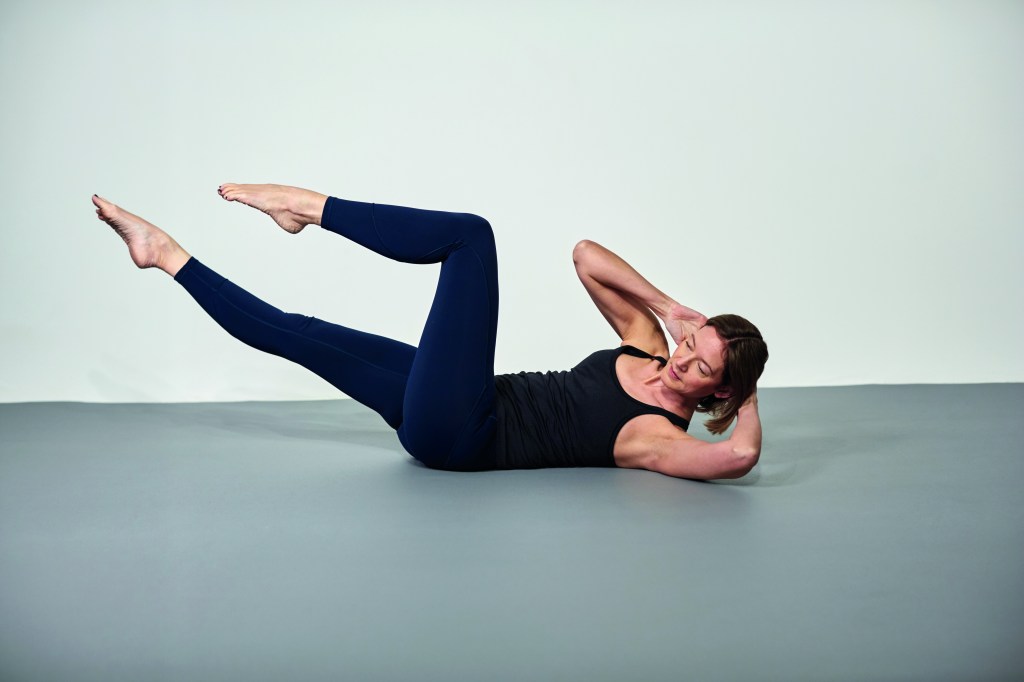
This move primarily targets the obliques, while also working the entire core.
Reps: 12-15
- Start in the tabletop position (A), then place your hands behind your head to support your neck, keeping shoulders down and elbows wide.
- Exhale as you curl your upper body off the mat. Inhale as you push your lower back into the mat or ‘imprint’ by drawing your belly to your spine.
- Exhale and extend your right leg, keeping your left knee bent. At the same time, twist and try to touch your right elbow to your left knee. Focus on twisting your upper body from your obliques.
- Hold for two seconds, then return to the starting position before repeating on the other side.
Top tip: Much of the exercise depends on how steady your pelvic joint is. Create a muscle-mind connection to keep it as steady as possible.
Toe taps
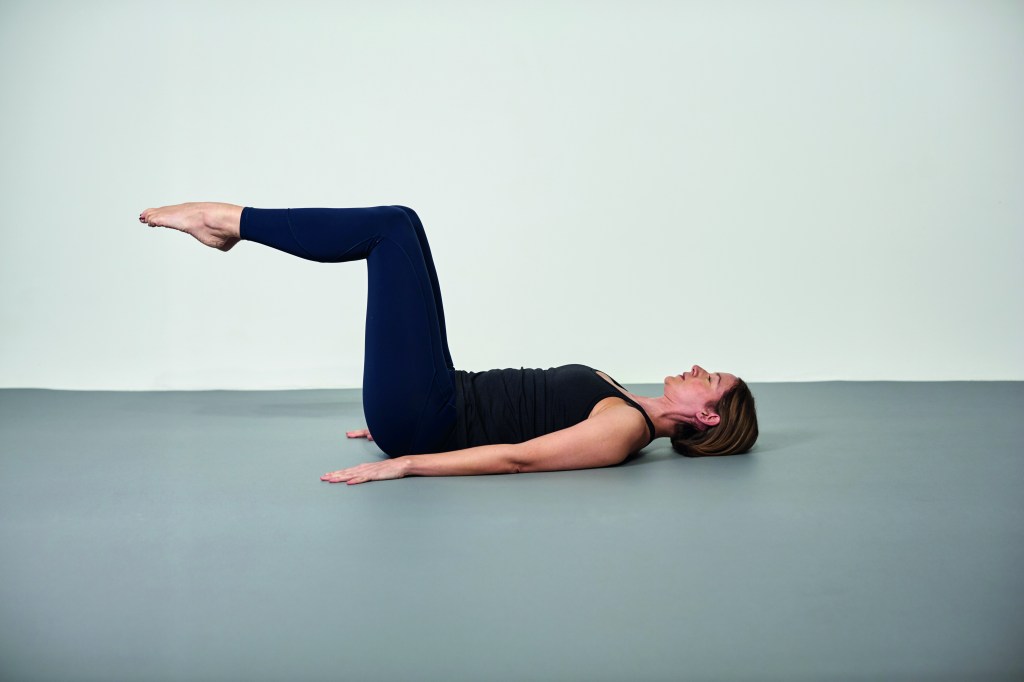
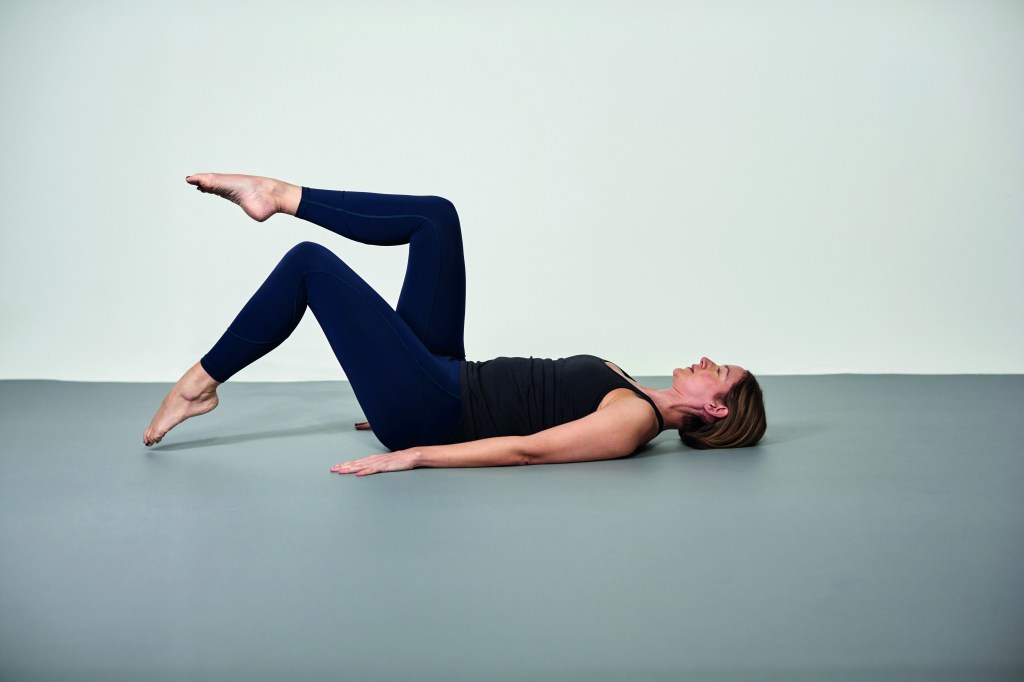
This is a great exercise to build core engagement and develop stability while protecting the lower back and strengthening the muscles around the hips.
Reps: 12-15
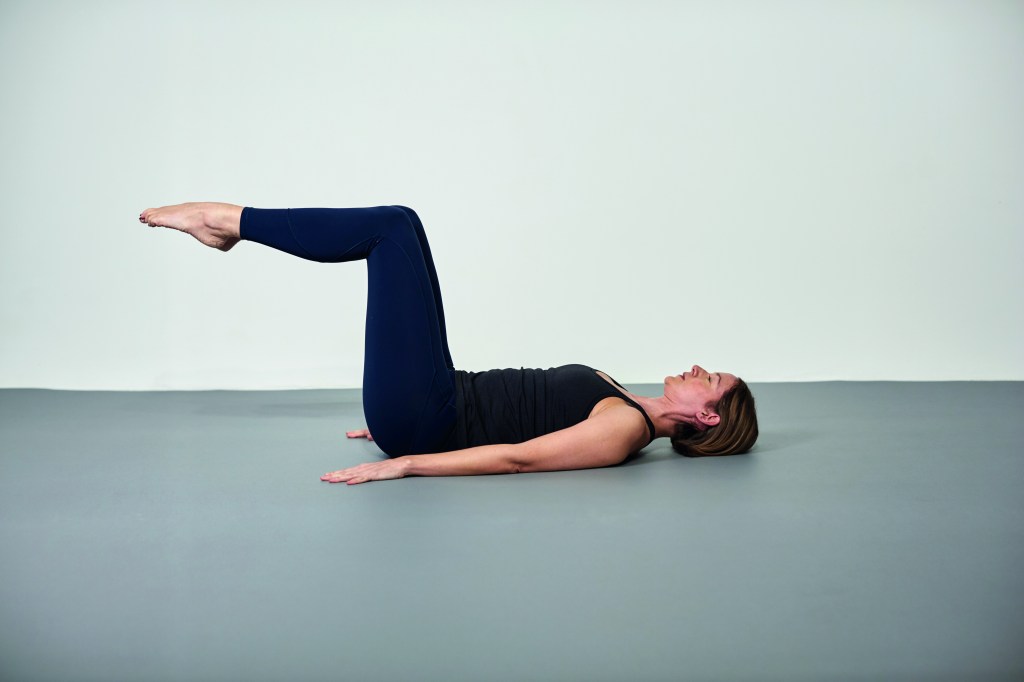
- Lie on your back with your arms at your sides, palms down. Come into the tabletop position by lifting your legs and bending the knees so they are positioned over the hips, with shins parallel to the floor (A).
- Maintaining this position, focus on pushing your lower back into the floor or ‘imprinting’ by drawing your belly to your spine.
- Take an inhale as you lower one foot towards the floor. Keep the 90-degree bend in the knee as you lower the foot (B).
- Return the leg to the start position as you exhale, then repeat with the other leg. Focus on using your breath to fuel the movement.
Top tip: You want to feel this in your core, not your back. Lower your legs only as far as you can without arching the back or changing the spinal position. You don’t have to touch the floor to experience the benefits.
Scissors
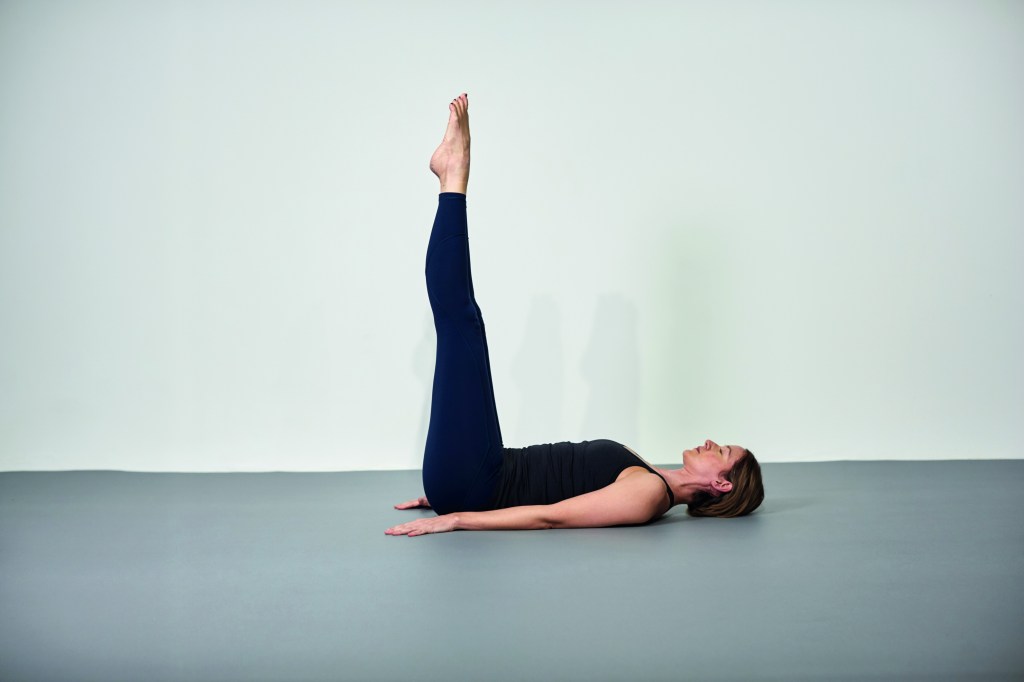
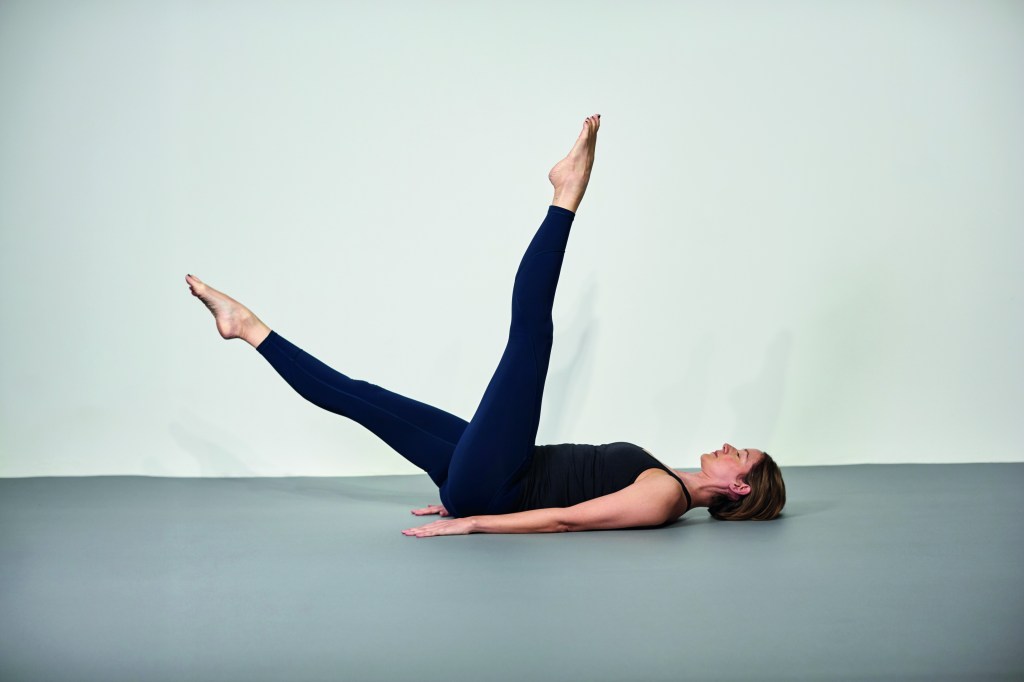
This core strength move is also a great stretch for your hamstrings and lower back.
Reps: 12-15
- Lie on your back with your arms by your sides and legs out straight. Inhale while slowly raising your legs until they are above the hips at a 90-degree angle, keeping them straight and together (A).
- As you exhale, press your lower back into the mat or ‘imprint’ by drawing your belly to your spine. At the same time, lower your right leg down towards the floor while you raise your left leg towards your chest (B). Continue switching the right and left legs, moving slowly and using your breath to guide the movement.
Top tip: Only lower your legs as much as you can while feeling stable. If you have tight hamstrings, bend your knees slightly.
Double leg drop
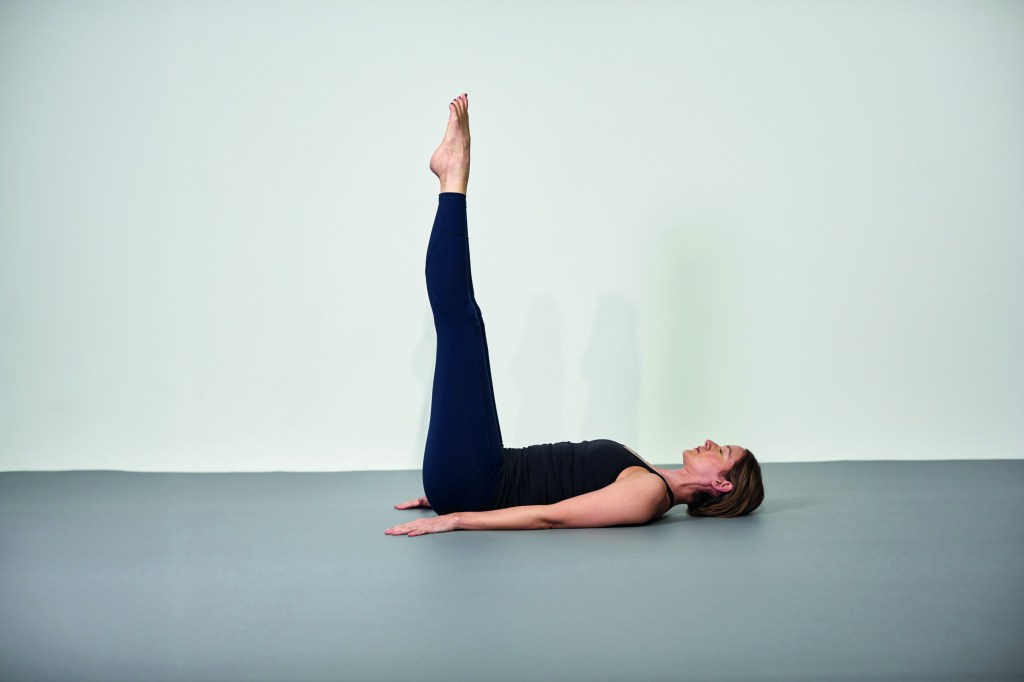
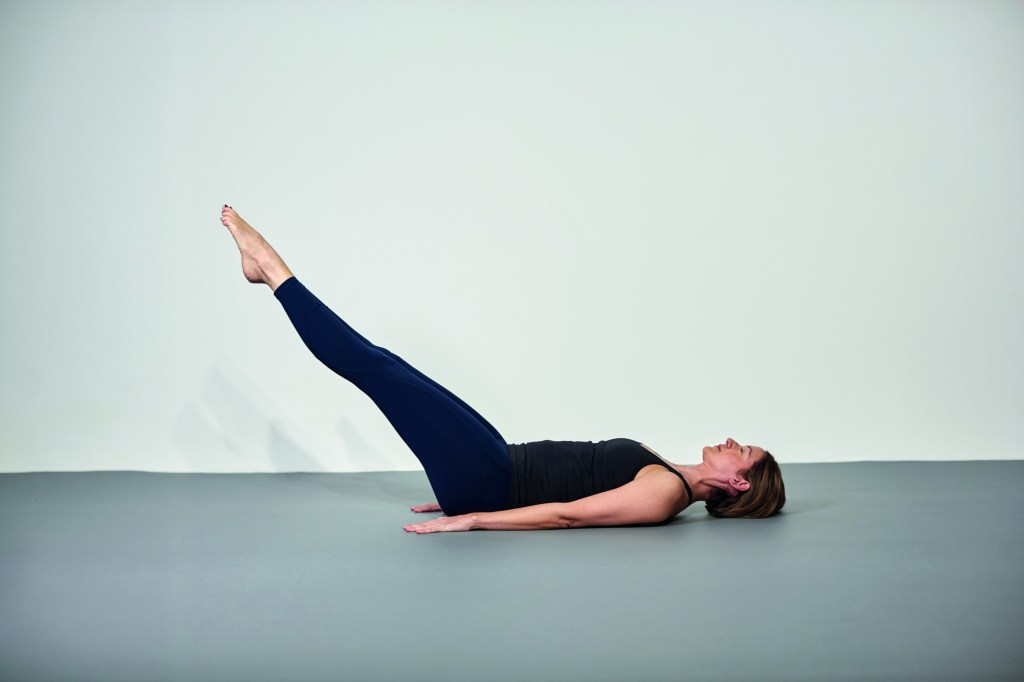
This challenging move works your lower and upper abdominals, as well as your lower back muscles, stabilisers and entire core.
Reps: 12-15
- Start lying on your back with arms next to your side (or place your hands under your hips for support). Inhale while slowly raising your legs until they are above the hips at a 90-degree angle, keeping them straight and together (A).
- Exhale while pressing your lower back into the mat and lowering your legs down to a 45-degree angle (or lower), without letting your back arch off the mat (B).
- Inhale while holding the legs at the lower position, then exhale to slowly lift your legs back to start position before repeating.
Top tip: It’s important to take things slowly and focus on proper form to prevent lower-back strain. Keep the lower back pressed into the floor and move in a slow, controlled way.
Supine spinal twist
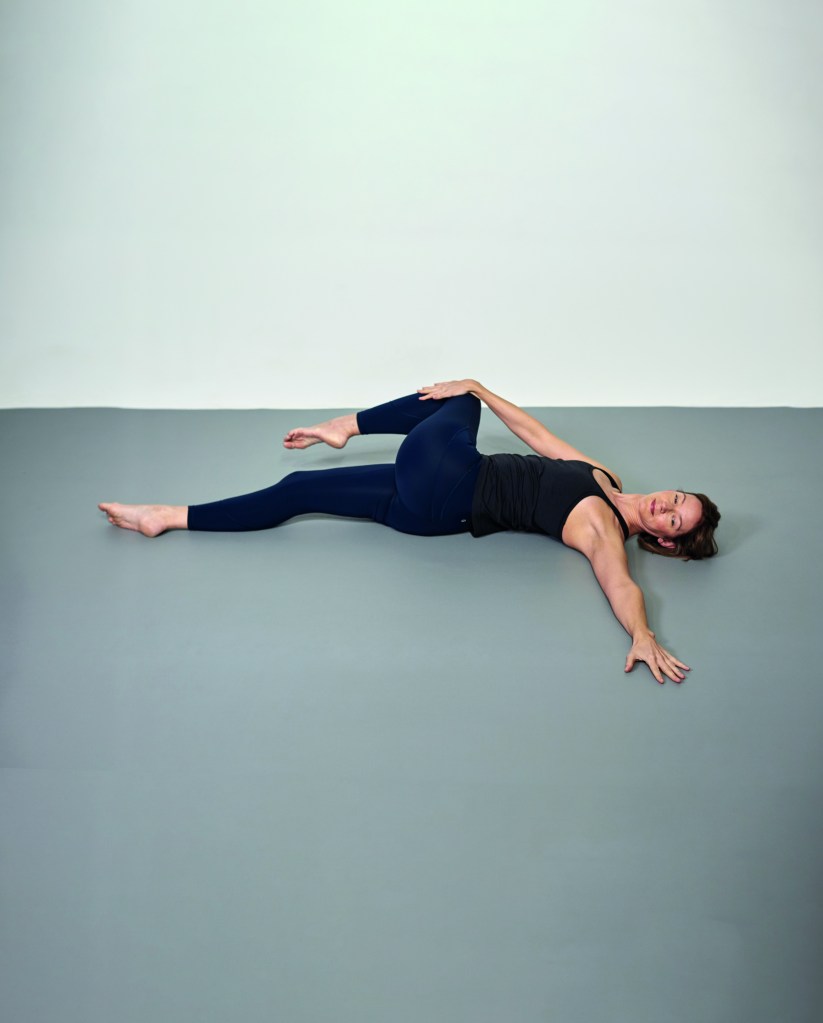
This popular yoga pose releases tension and improves flexibility in the back, shoulders and neck. It also stretches the abdominal muscles and stimulates the digestive system to alleviate gastrointestinal issues.
Reps: 8-10
- Lying on your back, bring your left knee up to your chest while the right leg remains straight.
- Drop your left knee to the right side, so it crosses over your right leg. Allow gravity to bring the leg towards the floor. Place your right hand on your left knee and lay your left arm out to your side, shoulder height. Gaze towards your left hand.
- Hold the pose for 5-10 breaths, then switch sides.
Top tip: You can use props such as blankets or blocks to support your body and make this pose more comfortable for your back, knees and hips.
Celebrity trainer and movement expert Louisa Drake is the brains behind the intelligent Louisa Drake Method. She offers 1-2-1 training and holistic health coaching. Find out more at louisadrake.com or Instagram.com/louisadrakemethod