
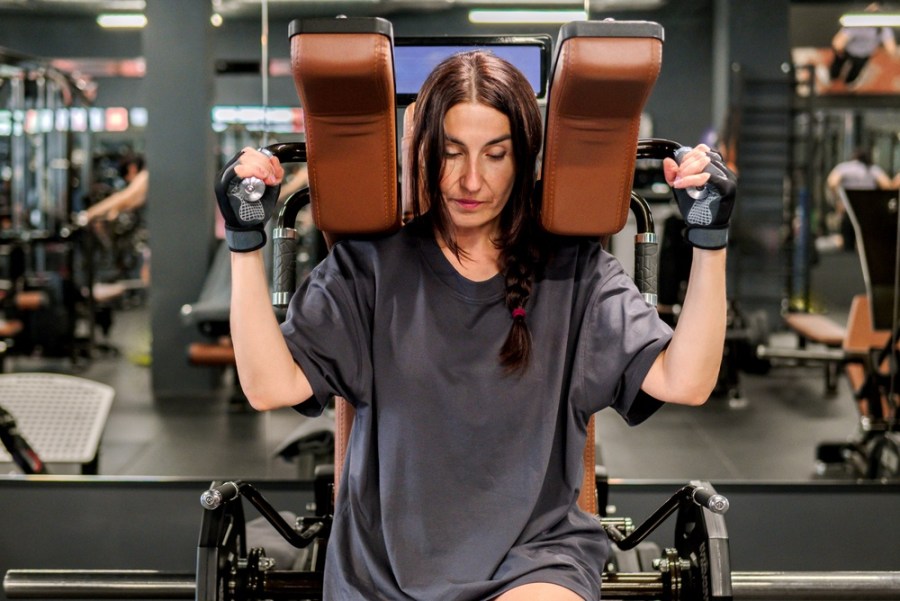
If you’ve hit perimenopause and you’re suddenly not seeing results anymore, it’s not your training – your muscles have changed. Discover why fat burning isn’t making you shed pounds anymore – and how you can adapt your training as you hit menopause to start seeing results
Words: Amy Dowrick | Images: Shutterstock
From hot flashes and night sweats to the ‘middle-aged-spread, women’s bodies go through a huge amount of physical change during midlife – but one of the earliest changes through perimenopause transition is actually the quality of our muscles.
As we age, there is an increased likelihood to lose muscle size – but research is now finding that there’s also a change in muscle quality.
“When we’re younger, our muscle might look more like a steak that’s very lean,” says expert in exercise physiology and sports nutrition, Dr Abbie Smith-Ryan. “As we age, particularly through perimenopause, it can take on more characteristics of a rib eye – more fatty infiltration, more connective infiltration within the muscle.”
And as this muscle quality changes, and we start to see leaner muscle shift to fattier tissue, training methods that were once effective in helping you shift a few pounds might not be able to have the same effect.
“Even if we maintain our training, a lot of times that muscle quality can still change with ageing,” Dr Abbie adds. “In that perimenopause age, so early 40s into 50s, there might be a slightly bigger loss of muscle quality and increase in connective tissue and fatty infiltration.”
“If we have more of that fatty infiltration and connective tissue, so we have less active muscle tissue, it can impact our metabolic health.”
And while Dr Abbie does stress that this change isn’t dramatic, and if you are consistently training you are still doing things to help with that muscle quality, it’s still worth adapting your training to focus more on muscle maintenance to get the best quality of muscle possible.
“It’s part of that conversation as we might want to start changing the stimulus or even some of the neurological aspects of power training that can help our muscle quality be maintained through that timeframe,” she says.
“If we can continue to stimulate those muscle fibers with those higher load, higher intensity, and higher power workouts, we can theoretically help maintain that quality of muscle for longer.”
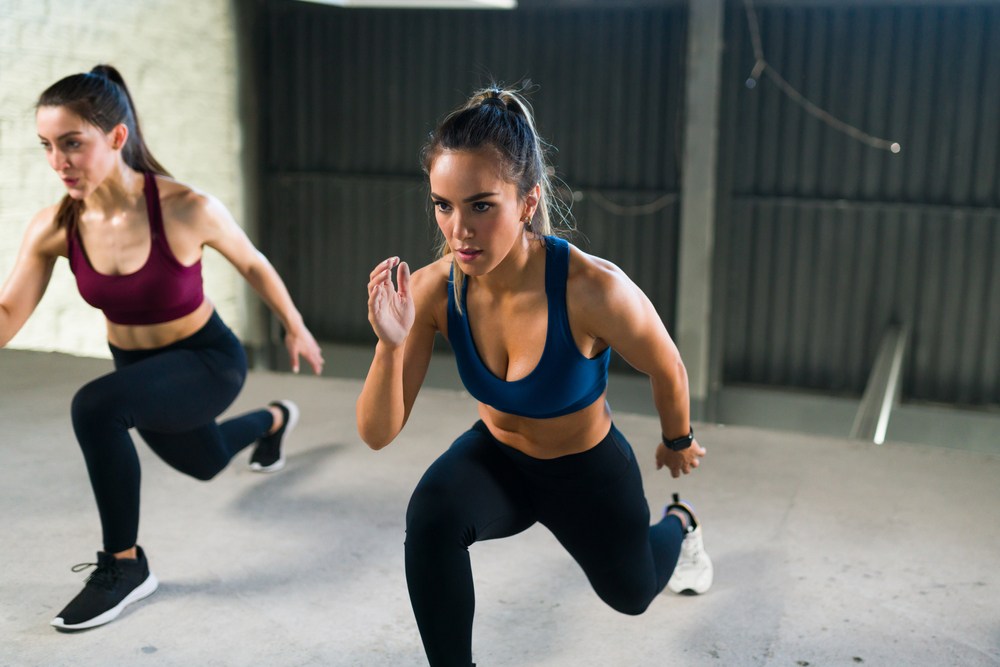
How to see results in perimenopause training
While the goal doesn’t have to be muscle building, Dr Abbie suggests that training should still aim to maintain those muscle fibres as we age – so aiming for higher load or power-based training is key.
“It doesn’t always have to be this massively heavy load or lots of plyometrics,” she says. “We need to start thinking about that added stimulus to be able to help maintain muscle quality.”
HIIT training
“HIIT training is really the primary method of training that helps reduce visceral fat,” says Dr Abbie. “Because of the metabolic demand of high intensity interval training, our group and others have shown a decrease in visceral fat in as short as three weeks, which can be really effective for midlife women.”
According to Dr Abbie, HIIT training allows for increased muscle size, while also increasing muscle quality and metabolic health very rapidly.
“Because of that metabolic demand, it’s really important.”
Dr Abbie suggests a one minute on, one minute off approach – a method that involves training hard for one minute, resting for the next minute, and repeating this up to 10 times.
“We know that you can get an effective metabolic load and stimulus in muscle protein synthesis in just one to two sessions a week, with effects in three weeks,” she adds. “Even if you only have time for five intervals in 10 minutes, you’ll still see a benefit.”
HIRT training
Slightly different to interval training, this exercise method involves more resistance training than cardio – using a weight that you can only do six to eight repetitions with.
Dr Abbie suggests doing three sets of a push exercise, such as leg press, a bench press, a lunge, shoulder press, a bicep curl and a triceps extension, with 30 seconds in between each set and two minutes in between each exercise – all done in about 30 minutes.
“That increases heart rate more than a traditional resistance training workout,” she says. “It’s this idea of load and minimal time.”
Nutrition
According to Dr Abbie, the aim is to optimize your fuel during training so that you can still maintain your body composition and health goals.
“Using a whey protein or an essential amino acid before exercise helps burn more fat during exercise and after to help with metabolic flexibility,” she says.
“A lot of the data that we’ve seen is fueling before helps increase muscle and improve muscle quality more so than after,” she adds. “If I want to get the most out of my training and my goal is body composition and muscle quality, then having something before is going to be helpful.”
“If the goal is optimizing, training fuel matters.”
Dr Abbie Smith-Ryan is a women’s health, nutrition, and female fitness expert dedicated to making science easy to understand. For her evidence-based insights on exercise physiology, metabolism, sports nutrition, and body composition, visit asmithryan.com.