
Participants exercise several times a day, follow tightly controlled meal plans and weigh themselves regularly at China’s so-called ‘fat prisons’. But what is life inside these controversial weight-loss camps really like — and can their results last?
A month of intensive exercise, regimented meals and strict rules about what you can eat might sound like an extreme fitness challenge. But for a growing number of people travelling to China, this is the reality of a residential weight-loss camp.
Often dubbed ‘fat prisons’ on social media, these facilities promise participants an opportunity to lose weight in a highly structured environment, with accommodation, meals and daily training sessions included in the price, which can be around $600.
China has established a network of commercial and government-affiliated weight-loss camps to address the country’s growing obesity problem. More than half of its adult population is classified as overweight or obese, according to reported figures.
There are said to be around 1,000 camps across China, many of which have attracted international attention after participants began documenting their experiences online. Videos show group workouts, weigh-ins and carefully portioned meals, prompting questions about whether this intensive approach can help people develop healthier habits — or whether the pursuit of rapid weight loss comes at a cost.
In January 2026, ABC News reported on Australian content creator TL Huang, 28, who spent 28 days at a military-style facility near Guangzhou. The facility is surrounded by tall concrete walls, steel gates and electric wiring, with security staff manning its entry and exit points. Unhealthy foods, including instant noodles, are banned and confiscated on arrival.
Huang described the experience as a ‘prison’, highlighting the strict rules and demanding exercise schedule.
So what actually happens inside them?
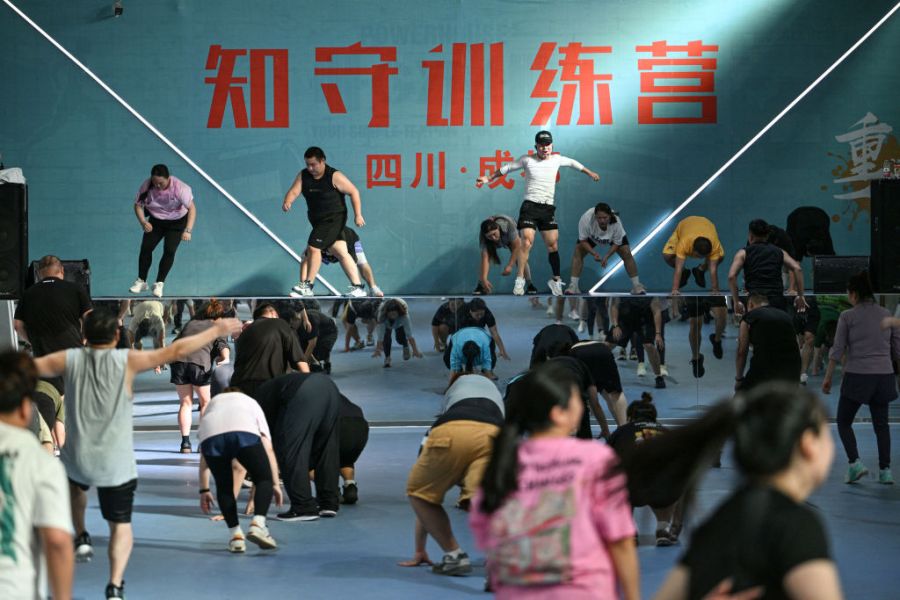
Five workouts a day: inside the daily routine
For participants, the day can begin early and leave little room for a lie-in.
In a July 2026 report for Channel NewsAsia (CNA), reporters visited a weight-loss camp in Beijing’s Miyun district, where participants followed a tightly structured schedule of exercise, meals and rest.
Coaches woke participants before breakfast, when they completed 40 minutes of cardio on treadmills. The day then continued with four further exercise sessions, including step aerobics, spinning, circuit training and strength workouts.
The programme ran from 7.45am until 8pm, with participants generally staying for at least 28 days, although some remained longer to reach their target weight.
At this particular facility, participants could also pay for individual coaching to tailor their workouts to their fitness levels and learn how to use strength-training equipment safely.
The routine is not identical at every camp. In a separate report published by The Straits Times in June 2026, Singaporean interior designer Alexis Tan described attending a two-week programme at Chasing Dreams Weight Loss Training Camp in Dongguan.
Her schedule included three hour-long workouts a day, featuring strength training, spinning, aerobic step exercises and high-intensity interval training (HIIT).
Tan had already been exercising regularly before enrolling, but the experience offered a more concentrated period of training than she could fit around her usual working life.
Strict rules about food and weigh-ins
Exercise is only one part of the experience. Meals and eating habits are also carefully controlled.
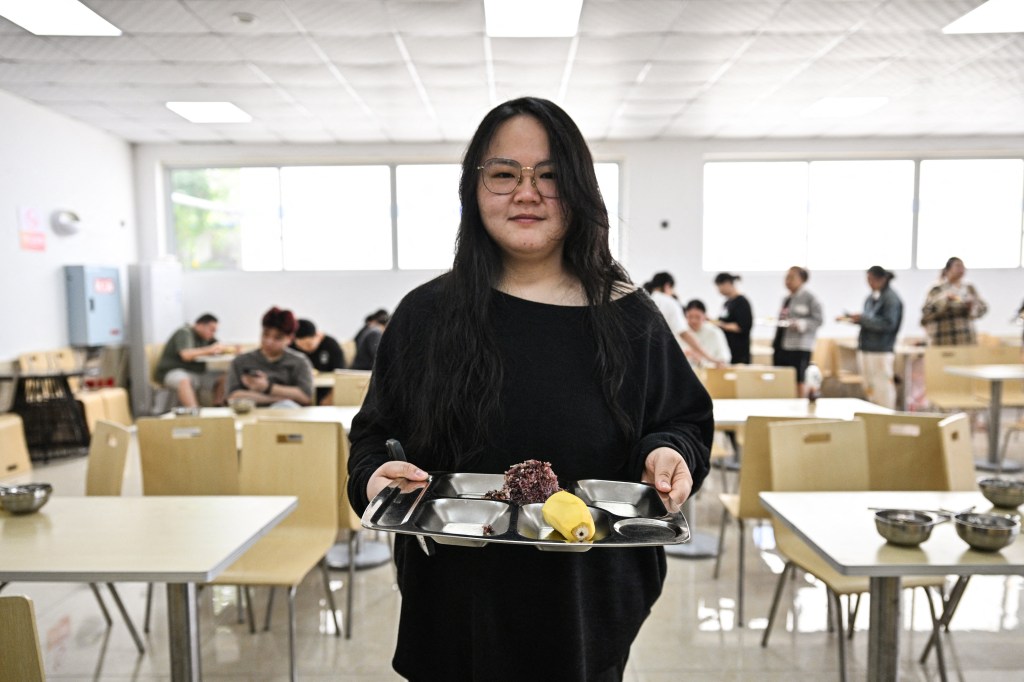
According to CNA’s report, food at the Beijing facility centred on lean protein, vegetables, fruit and whole grains. Sauces were largely excluded, with vinegar and black pepper among the few permitted condiments.
Outside food deliveries were banned, while coaches conducted surprise inspections of participants’ rooms to enforce the rules.
At the camp attended by Huang, the restrictions were similarly strict. ABC News reported that participants signed a contract agreeing not to bring in outside food, to attend all workout classes and not to leave without permission.
Huang said the programme involved 19 workouts a week and twice-daily weigh-ins.
“The trainers would be very, very strict if you gained weight. They’d kind of question you, asking, ‘What did you eat? Did you snack?'”
The frequent weighing and monitoring are intended to keep participants accountable, but they also raise questions about the pressure of having weight tracked so closely.
For people who have struggled to establish consistent exercise or eating routines, a timetable that removes many everyday decisions may feel helpful. However, a programme that relies on strict external rules also needs to teach participants how to maintain their habits when that supervision ends.
Why are people signing up?
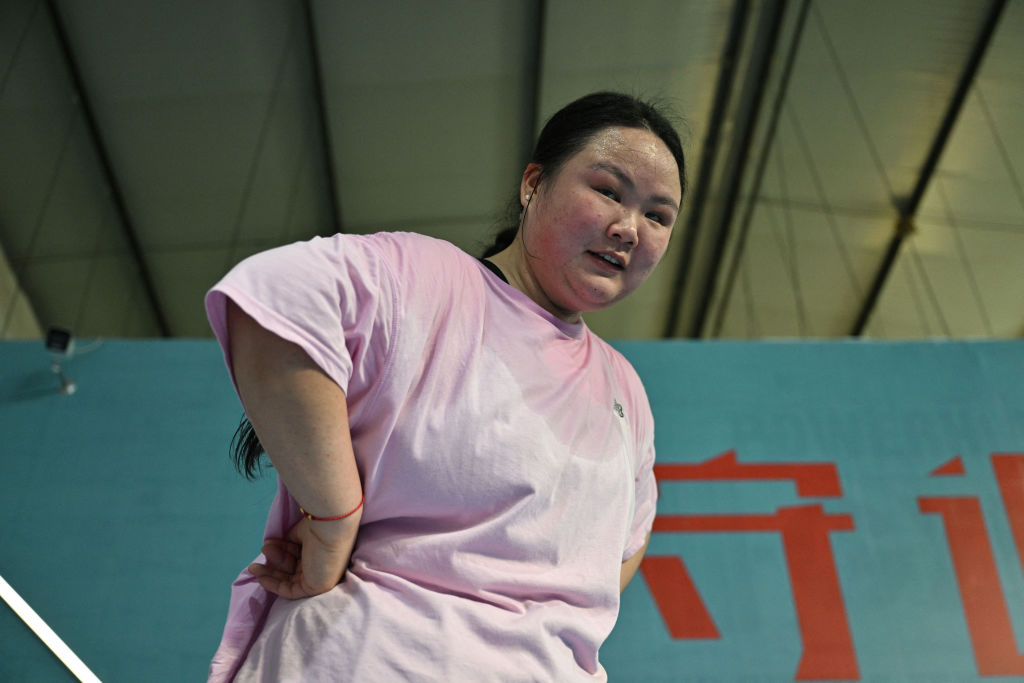
The camps’ growing visibility coincides with increasing concern about obesity in China, alongside the pressures people face around appearance and weight.
ABC News reported that changing lifestyles, more sedentary employment and the availability of takeaway food have contributed to the country’s changing health landscape. It also highlighted the role of appearance in people’s working lives, with some young people feeling pressure to manage their weight as part of presenting themselves professionally.
Social media has helped make residential weight-loss programmes more visible to people outside China, with participants sharing their experiences and results.
For Tan, the decision to attend was about more than losing a few kilograms. She had already lost around 12kg independently before enrolling in the camp and wanted to change her relationship with exercise and food.
“If I can have a change of mindset, have a healthier … control towards my weight, towards my well-being, and towards my eating and exercise habits, I think that would be my best takeaway,” she told CNA.
After two weeks, she had lost a further 4kg.
Tan’s experience illustrates why some people are drawn to these programmes: they offer a break from everyday routines, a defined goal and a community of people working towards similar outcomes.
In an interview with The Straits Times, she also described how comments about her size had affected her over the years.
“The comments hurt, but I just laughed them off because I was so used to them.”
Her account suggests that the motivation behind joining a camp can be complex, combining health concerns, personal goals and the desire to feel more in control of everyday habits.
How much weight can you lose?
The results reported by participants can be striking.
Huang told ABC News she lost about 6kg during her 28-day stay. CNA reported that Tan lost a further 4kg over two weeks, while two participants at the Beijing camp had each lost between 2kg and 5kg after around a fortnight.
But a drop on the scales does not necessarily tell the whole story.
Some initial weight loss can reflect changes in the body’s water and glycogen stores, particularly when someone significantly reduces their carbohydrate intake. It should not automatically be interpreted as an equivalent amount of body fat lost.
In The Straits Times, doctor Tan Kok Kuan, who specialises in obesity management, explained why weight can fall quickly when carbohydrate intake changes.
“Carbohydrates draw water to themselves. So, once your carbohydrate intake drops, the water level in your body also drops and you can see a significant reduction in weight.”
How much fat a person loses will depend on several factors, including their starting weight, calorie intake, activity levels and individual physiology.
It is also important to consider whether a programme allows participants to preserve muscle while losing fat, particularly when the exercise schedule is demanding.
Are the camps safe?
The intensity of the programmes makes safety an important consideration, particularly for people who are new to exercise or have existing health conditions.
Huang described the experience of being in an unfamiliar environment with strict rules as daunting.
“For me as a foreigner, it was quite daunting. It was a bit of a scary experience because I wasn’t sure if I was going to a real camp,” she told ABC News.
She also described the emotional pressure some participants experienced when their weight did not fall as expected.
“For one of my roommates, I guess she just wasn’t losing weight, and for her it was a mental challenge because she was getting really stressed about it,” she said.
There are also broader concerns about how rapidly some participants lose weight. ABC News reported that an influencer died while attending a weight-loss facility in northern China in 2023, citing local media reports. That case highlights the importance of examining the medical supervision and safety standards at individual facilities rather than assuming all camps operate in the same way.
In CNA’s report, Charles Poon, medical director of Raffles Clinics China and Raffles Hospital Beijing, warned that intensive programmes need appropriate safeguards.
“All these things can actually be good as perhaps a catalyst in the initial stage … but it has to be done carefully and with proper supervision, otherwise a camp that runs too aggressively can cause harm.”
He advised older adults and people with conditions such as heart disease, high blood pressure or diabetes to undergo a medical assessment before participating. Children also need particular care because they are still growing and require adequate nutrition.
A programme’s safety depends on more than the number of workouts. Adequate food, rest, hydration, appropriate training intensity and access to medical help are all important.
Do the results last?
Perhaps the biggest question is what happens after participants return home.
At camp, meals are planned, workouts are scheduled and coaches provide accountability. Back in everyday life, work, family commitments, social occasions and limited time can make it harder to follow the same routine.
The Straits Times reported that medical experts cautioned against assuming that rapid weight loss in a controlled environment would necessarily translate into lasting results.
Tan Kok Kuan explained that maintaining a lower weight can be challenging because everyday calorie intake and expenditure are difficult to balance, while the body’s biological responses to weight loss can encourage weight regain.
“In a very controlled environment, like a camp – where every calorie is accounted for and the patient really doesn’t have to live life in any other way – he or she can achieve this kind of lifestyle and lose weight,” he said.
“The problem is that a small imbalance in the calorie intake and output can lead to weight gain. Furthermore, our hormones naturally fight back against weight loss and push us to put the weight back on. It’s really an uphill battle. I’m not saying people can’t do it. I’m saying it’s going to be very difficult.”
Tan herself did not expect to replicate the camp’s full schedule once she returned to Singapore. Instead, she hoped to carry forward the habits she had learned.
“I think following the camp routine exactly is not possible because I don’t have as much time to work out in Singapore. But keeping this healthy mindset for a long time is possible.”
That distinction matters. A programme can provide structure and help someone learn about nutrition and exercise, but long-term progress depends on whether those habits can be adapted to real life.
What can we learn from China’s weight-loss camps?
The camps offer a striking example of what happens when exercise and eating are organised around a single goal. For some participants, the routine and shared experience provide motivation; for others, the intensity and restrictions may be difficult to sustain.
International coverage has also shown why it is important to look beyond dramatic before-and-after figures. A short-term change in weight cannot establish whether someone has improved their fitness, maintained muscle, developed a healthier relationship with food or achieved lasting health benefits.
For anyone considering an intensive weight-loss programme, the practical questions remain the same: Is the exercise appropriate for your current fitness level? Are you eating enough to support training and recovery? Is medical advice available when needed? And will you be able to maintain the habits when the programme ends?
The camps may offer a concentrated period of activity, but the ultimate measure of success is not simply how much weight someone loses in a few weeks. It is whether they can build a safe, balanced and sustainable approach to fitness that continues long after they leave.