
From creamy peanut butter porridge to savoury chickpea pancakes, give your morning routine a refresh with these easy breakfasts that deliver on flavour and protein
Words: Faye James Pics: Getty Images
Scrambled, poached, boiled… eggs are a useful breakfast staple, but even your favourite can lose its appeal when it appears on your plate every morning. And if you don’t eat eggs, finding an alternative can feel like an endless rotation of yoghurt pots and protein shakes.
Fortunately, there are plenty of ways to build a protein-rich breakfast using everyday ingredients. Protein helps your body build and repair muscle, while carbohydrates provide fuel for exercise. Including both at breakfast is a practical way to support your training, and spreading protein across your meals means you don’t have to leave most of it until dinner. Your overall intake still matters more than making one meal perfect.
These seven breakfasts combine a substantial protein source with oats, bread, fruit or vegetables. Each serves one; timings and protein totals are approximate.
For the yoghurt recipes, choose plain strained yoghurt or skyr providing around 9–11g protein per 100g. Check the label: a thick texture or “Greek-style” description doesn’t guarantee the same protein content.
1. Berry and almond yoghurt bowl
Ready in: 5 minutes | Protein: approximately 25–29g
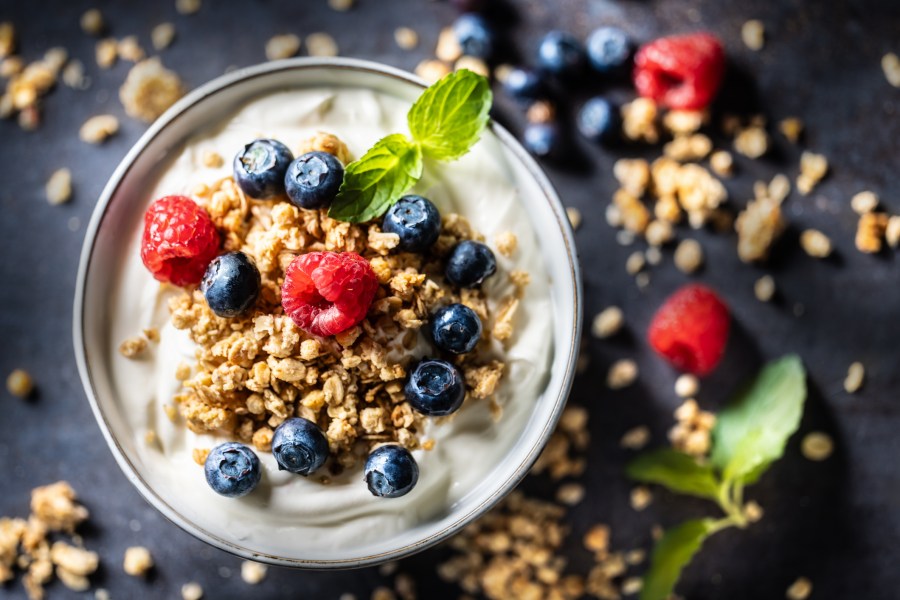
Spoon 200g strained yoghurt into a bowl and top with 40g rolled oats, a handful of berries and 15g chopped almonds. Add cinnamon and a little honey if you like.
The yoghurt provides most of the protein, while the oats and almonds contribute extra alongside texture. If raw oats feel too chewy, stir them into the yoghurt the night before, adding a splash of milk to loosen the mixture. Refrigerate overnight, then add the berries and almonds in the morning. Keep the crunchy topping separate until serving so it doesn’t soften.
2. Peanut butter and banana porridge
Ready in: 10 minutes | Protein: approximately 25–27g
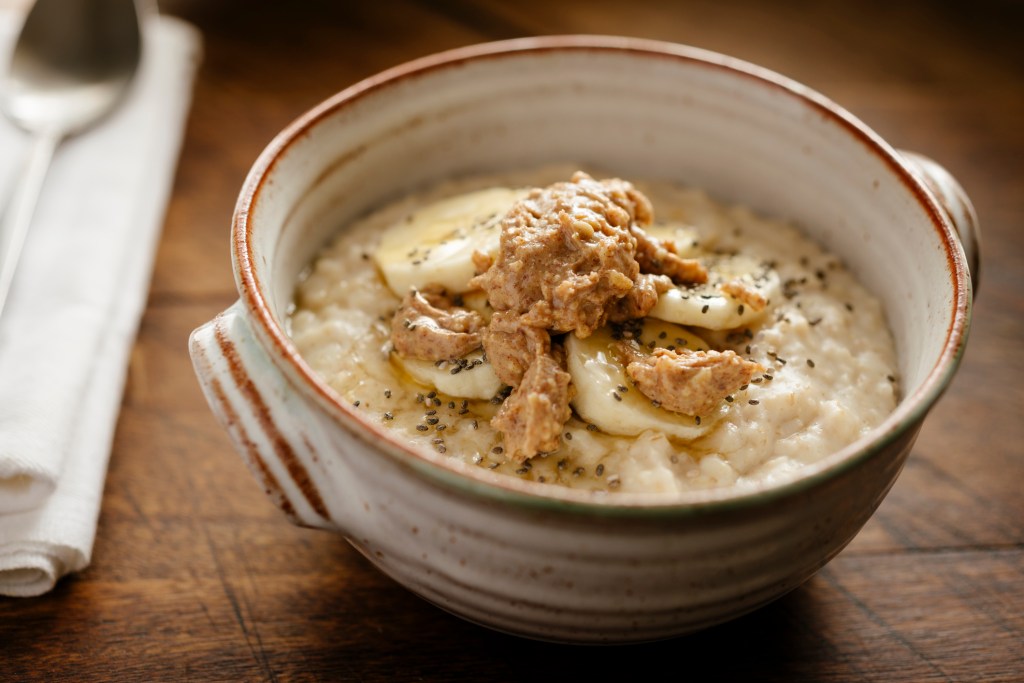
Combine 40g oats with 200ml semi-skimmed milk in a small saucepan. Simmer gently, stirring, until creamy, adding water if it becomes too thick.
Take off the heat and let it cool slightly before stirring through 100g strained yoghurt. Finish with 15g peanut butter, half a sliced banana and cinnamon.
The useful detail here is the combination: peanut butter adds flavour and some protein, but the milk and yoghurt do much of the work. A spoonful of peanut butter alone won’t turn water-based porridge into a particularly protein-rich breakfast.
For the smoothest finish, loosen the peanut butter with a spoonful of warm porridge before mixing it in.
3. Cottage cheese, tomato and chive toast
Ready in: 5 minutes | Protein: approximately 22–24g
Toast two medium slices of wholemeal bread. Spread with 150g cottage cheese, then add sliced tomatoes, chopped chives and black pepper.
Cottage cheese is a useful savoury alternative to yoghurt: a typical supermarket version supplies around 9–10g protein per 100g. The bread contributes too, so count the whole breakfast rather than just its topping.
If the curds put you off, briefly blend the cottage cheese until smooth. Pat particularly juicy tomatoes dry before adding them, especially if you’re taking breakfast to work. Pack the topping separately and assemble when you’re ready to eat.
4. Smoky tofu scramble
Ready in: 15 minutes | Protein: approximately 25–28g
Heat a teaspoon of oil in a frying pan and cook a handful of sliced mushrooms until softened. Crumble in 125g firm tofu, then add smoked paprika, a pinch of turmeric and black pepper.
Cook for about five minutes, stirring occasionally. Add a handful of spinach and a splash of water, allowing the leaves to wilt. Serve with one medium slice of wholemeal toast.
Choose a firm tofu supplying around 16g protein per 100g for this estimate; softer varieties can contain considerably less.
Leave some larger pieces when crumbling, and avoid cooking until completely dry. A little moisture gives a softer scramble.
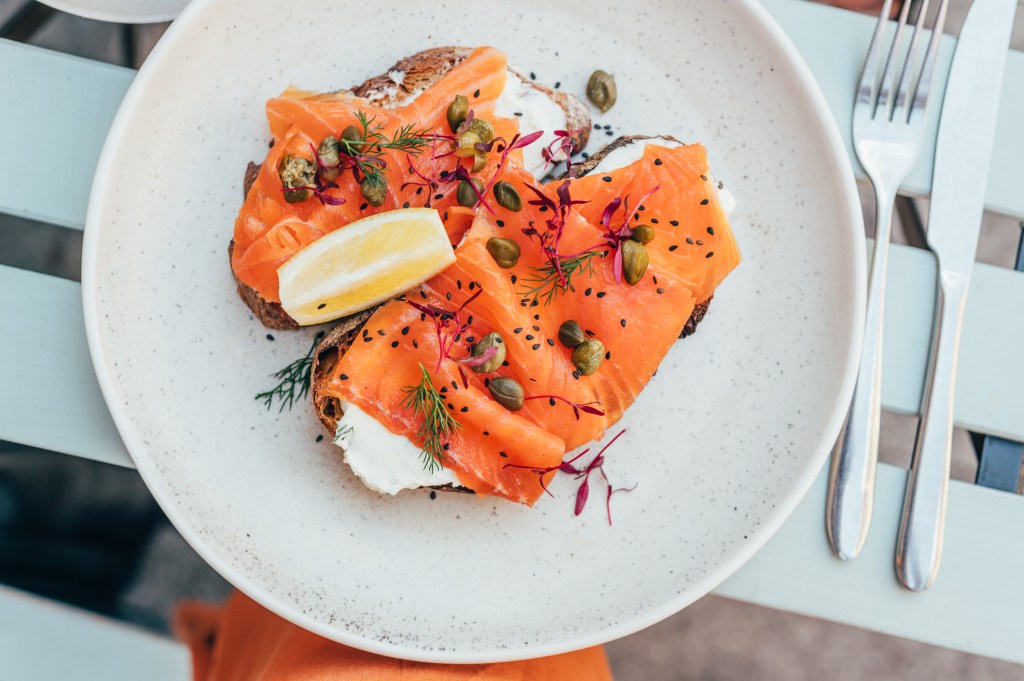
5. Smoked salmon and lemon yoghurt toast
Ready in: 5 minutes | Protein: approximately 26g
Mix 50g strained yoghurt with lemon zest, chopped dill and black pepper. Spread over two medium slices of wholemeal toast, then top with 60g smoked salmon and sliced cucumber.
The yoghurt creates a creamy base and adds protein alongside the fish. Smoked salmon typically provides around 13g protein in a 60g serving, with the bread contributing to the total.
Add lemon juice sparingly so the topping stays thick. For a breakfast you can transport, turn it into a sandwich and pack the cucumber separately to keep the bread from becoming soggy.
6. Cheesy beans on toast
Ready in: 10 minutes | Protein: approximately 24g
Warm 200g baked beans in a saucepan while you toast two medium slices of wholemeal bread. Spoon over the beans and finish with 25g grated cheddar.
For extra flavour, add smoked paprika or a little chilli to the beans. Stir in a handful of spinach towards the end of cooking if you have some to use up.
This familiar breakfast gets its protein from three ingredients: beans, bread and cheese. Measure the cheddar once to get a feel for the portion, then grate it finely so it spreads evenly and melts quickly into the hot beans.
7. Savoury chickpea pancakes
Ready in: 20 minutes | Protein: approximately 23–25g
Whisk 60g gram flour with roughly 90–110ml water to make a pourable batter. Stir in cumin, black pepper and a finely sliced spring onion. Let it stand for five minutes.
Heat a little oil in a non-stick pan and make two thin pancakes, cooking for two to three minutes per side until set and lightly golden. Serve with 100g strained yoghurt mixed with lemon juice, plus chopped tomatoes.
Gram flour, made from chickpeas or related pulses, contains around 22g protein per 100g in the product used for this estimate. Thin pancakes cook more evenly than thick ones; loosen the batter if it won’t spread easily.