

Pilates in 2026 looks stronger than ever. We talk to pioneering Pilates instructor Korin Nolan (@korinnolanpilates) about this trending workout – and how you can use Pilates to support your overall fitness…
Words: Joanna Ebsworth | Photography: Zak Walton
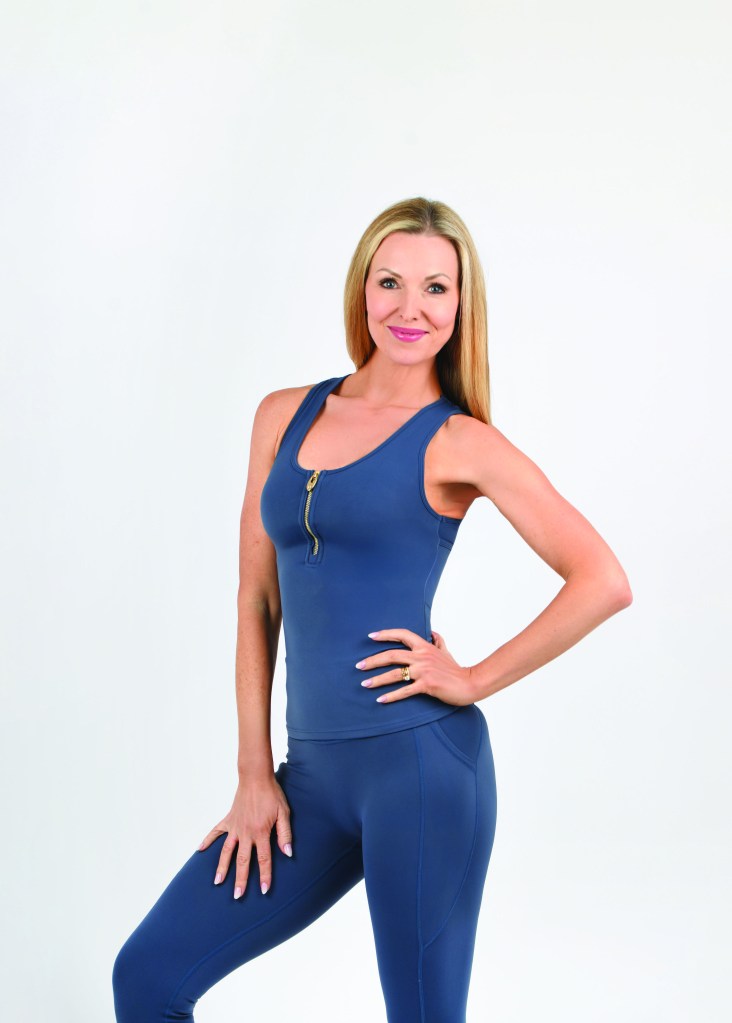
Korin Nolan knows all about the rise of Pilates. As one of the UK’s most experienced Pilates teachers, with more than 20 years in the industry and over one million women taught in person and via her platforms, the Sheffield-born mum of three became a Pilates pioneer when she opened South East London’s first dynamic reformer studio in 2014 – long before equipment-based Pilates had reached a peak in the UK.
A single parent back then, Korin risked it all when she purchased six reformer machines and quit her Pilates teaching job to launch her own studio, Power Pilates UK (powerpilatesuk.com), at a time when most people had never seen, let alone used, a reformer. Fast forward 12 years, however, and the 47-year-old’s gamble has paid off; classes at Korin’s dynamic reformer studio continue to sell out despite a move to larger premises with more reformers and more instructors. The on-demand Pilates platform she co-founded in 2018, Dynamic Pilates TV (dynamicpilatestv.com), has thousands of members from 70 countries, and her brand-new app, The Class Plan (theclassplan.com), is helping Pilates instructors build fun, effective workouts with inspiring educational and planning tools.
It’s impressive stuff from the former dancer and TV presenter who first discovered mat Pilates at the age of 19 while studying at the London College of Dance, although Korin is the first to admit she ‘just knew’ reformer Pilates would take off in the South-East London suburbs in the same way it already had in the city. Whether or not she expected the practice to transform from a niche fitness regime into the global wellness phenomenon it is today – fuelled by social media, celebrity and athlete endorsements, and a growing interest in low-impact workouts – is another matter entirely. But if new statistics are anything to go by, the Pilates bubble is a very long way off bursting.
Case in point? Back in 2021, there were 3,918 Pilates and yoga studios in the UK and the market was worth £800m; today, there are 5,000 businesses operating, with more on the way, and the market is set to reach £1bn this year. Furthermore, recent research from ClassPass shows Pilates ranked as the most popular workout of the year for the second year in a row, with data revealing bookings rose by 84 per cent from 2023 to 2024, and by another 66 per cent from 2024 to 2025.
Clearly, Pilates has serious staying power. But while its boom has helped the practice become widely available, its transition into the mainstream has sparked debate – from accusations of elitism to concerns around fast-track qualifications and slipping teacher standards. So, is Korin concerned Pilates is losing sight of its core values as its popularity continues to grow?
Providing purpose
‘Aside from the fact that people are becoming more aware of the importance of their core strength and posture, one of the upsides of Pilates’ growing popularity is that it has become more accessible, so people from all walks of life are able to do it,’ says Korin. ‘It’s even being introduced into gyms as part of people’s memberships, and that helps to make it cheaper. But at the same time, some of these gyms can have 20 reformer beds, and while that may sound like a positive thing to help increase availability and reduce costs, it’s actually not. Classes should be kept fairly small, between 10-12 people maximum, so that instructors can get around to everyone to correct clients’ bodies, provide cues and offer modifications where needed.
‘We mustn’t lose sight of the six core principles of Pilates – centering, concentration, control, precision, breath and flow – because they form the foundation of the method developed by Joseph Pilates during the 1910s and 1920s,’ adds Korin. ‘Each principle has to be encompassed within an exercise to make it a Pilates exercise in the first place, so you really do have to focus on a lot of different things to execute a movement properly, whether you’re an instructor or a client.’
A new practice
Korin initially fell in love with the transformative power of mat Pilates while completing her dance degree, so much so that she ditched her dreams of performing on a West End stage to train as a Pilates instructor with renowned course provider Body Control Pilates. Afterwards, she spent many years juggling motherhood with teaching Pilates while also working in television, where jobs included a presenting role on Channel 5’s The Wright Stuff from 2004 to 2008. But it was when she tried reformer Pilates for the very first time in her 30s that she fell in love with the practice again.
‘Reformer Pilates is a resistance-based form of training performed on a specialist bed-like machine called a reformer,’ explains Korin. ‘It features a sliding carriage, adjustable springs, straps and a footbar, and it’s all about working under tension with precision to improve your strength, stability, mobility and flexibility.
‘As I found out when I tried my first dynamic reformer class, it’s quite a step up from mat Pilates, which relies mostly on body weight. I remember going into it thinking, “I’ll be fine because I’m strong and I’ve done Pilates for years.” But I’d never experienced anything like it! When I came out, my body was shaking and sweating and uncontrollable, and I was like, “That’s a killer!”.’
After this, Korin began doing reformer classes regularly, which she says led to a transformation in her own body composition. ‘I think one of the reasons why reformer Pilates has become so popular is because it works and it gets results. Mat work isn’t easier than reformer – it’s just a different challenge. On the mat, you don’t have the support of the equipment, so you have to control your entire body yourself. Whereas reformer adds resistance and instability, so both can be as hard or as gentle as the teacher and class level make them. Reformer Pilates might be low impact, but it’s still really challenging, and I think people like to feel they’re getting something from their workout. It’s hard but incredibly effective and addictive, and that keeps people coming back for more. Very few people who try reformer Pilates hate it.’
Strong foundations
It’s easy to see how glowing testimonials from the likes of Korin and millions of others around the globe have helped reformer Pilates develop a reputation as the ‘best workout in the world’. But Korin is keen to stress that Pilates works best alongside other fitness modalities. ‘I know I probably sound like I’m contradicting everything I’ve just said about how amazing reformer Pilates is, but the truth is that while it is a great form of resistance training, reformer machines don’t allow you to keep adding load upon load like gym machines do. And that means they don’t provide you with enough resistance to facilitate progressive overload, which is what you need to build muscle mass.
‘Yes, you’ll be able to build some muscle mass if you’re a beginner to exercise, but there’s a limit to what you can achieve. And as we know in this day and age, building muscle mass is really, really important for women, especially those over 35. I strength train maybe three times a week, do Pilates at least twice and walk a lot as well,’ notes Korin, before adding: ‘I see Pilates as my foundational movement, where I work my deep intrinsic muscles. It’s where I get my core strength, and where I work the deep muscles in my shoulder girdle and my hips, knees and ankles, so I’m strong and I can do heavier work at the gym.
‘Equally, while some dynamic flow reformer classes can definitely get your heart rate up and help you build a bit of a sweat, they won’t work your cardiovascular system in the same way as doing a HIIT class or going for a run. My point is no one should rely on one form of exercise for overall fitness. It’s like only eating protein and expecting to get everything you need for a healthy diet, when you also need carbohydrates, healthy fats and fibre.’
Return to form
According to Korin, Joseph Pilates never intended reformer Pilates to be taught as a singular workout, which explains why he invented multiple pieces of large apparatus alongside the reformer, including the Cadillac, barrel, tower and chair (Wunda chair).
‘Joseph Pilates primarily taught his method in a one-on-one, hands-on manner in his New York studio, supervising high-profile clients – including famous dancers, athletes and actors – as they moved from one piece of equipment to the next and performed exercises with precision and control,’ explains Korin. ‘For this reason alone, I think Pilates has always been seen as a bit elitist.
‘Of course, as new variations of classical Pilates have developed, such as contemporary and dynamic, and group classes have become more widely available, Pilates has become more accessible to the masses,’ continues Korin. ‘But for many, reformer Pilates still remains inaccessible due to its costly nature. It’s a tough one because studios are expensive to run, training courses are a big investment, the equipment costs a fortune and instructors are limited to the number of people they can teach in one class (I have nine beds in my studio) so you need to charge more to make money.
‘On top of that, competition is constantly increasing and people are always on the lookout for the next big thing to post on Instagram,’ she adds. ‘That’s one of the reasons why I introduced chair equipment to my studio and launched Fusion classes, where people switch between the reformer and chair for a more varied class. It’s so popular that it’s become our signature class, and it almost feels like we’re seeing a return to the classical roots of Pilates.
‘The downside of this is that classes could become even more expensive as more equipment is introduced and class numbers are reduced to ensure instructors can monitor everyone effectively. But I do believe there are many ways to practise Pilates other than going to a studio. It’s available in NHS physiotherapy departments and community halls, or you can spend £25 a month on a membership online such as Dynamic Pilates TV. You can even do it for free by following classes on YouTube, so it’s not all elitist – you just have to look for it.’
The 6 Pilates Principles (in simple terms)
Centering
Everything starts from your centre: your deep core, glutes, inner thighs and back. In Pilates, movement comes from the centre first and everything works outwards from there.
Concentration
You have to think about what you’re doing. Pilates isn’t something you can do while mentally writing your shopping list. You’re focusing on how you move, where you feel it, and doing each exercise properly.
Control
Joseph Pilates originally called his method Contrology. It’s not about how many reps you do, it’s about controlling the movement and not letting it control you – slow, controlled and with good form.
Precision
It’s not just doing the exercise, it’s doing it well. Small adjustments make a big difference in Pilates: where your foot is, pelvis or shoulders are – it all matters.
Breath
Breathing properly helps the muscles work better, especially the deep core. It also helps with rhythm, control and not holding tension in your neck and shoulders. In Pilates, we use lateral breathing, which means we take the breath lower down and breathe laterally as opposed to up and down.
Flow
Pilates shouldn’t look stiff. The exercises flow into each other and the movement should look smooth and controlled rather than robotic. Think of it as strength with fluidity.
Korin’s 3 tips for Pilates success
Learn to spot a good teacher
‘Look for someone who explains how to do each movement in detail and what to do to get more out of it, who takes the time to give clear cues that aren’t rushed and who modifies and adapts each exercise for different bodies, injuries and stages of life. A good teacher should talk about the breath, core and pelvic floor engagement (and how those things fuse together), and they should also come around regularly to look at your technique and correct it.’
Schedule Pilates sessions wisely
‘It’s good to aim for two-to-four sessions a week, in combination with strength training, but even one mat class a week can be a gamechanger for your core strength and posture, because it reminds you about your form, technique and breath. Pilates can help you build a really strong foundation for all movement, improving the way you walk, stand, sit and lift, and it’s amazing for stress relief because it forces you to focus on many things at once.’
Mix up the intensities
‘Remember that Pilates doesn’t just support strength and endurance; it also supports mobility, flexibility and recovery while ironing out imbalances to reduce the risk of injury. Sessions don’t have to be intense – they can also be restorative, rehabilitative and relaxing. I’ve come to realise that rest is just as important as strength training, and that doing a nice, slow 30-minute mat class at home is just as valid as a dynamic reformer class.’