

Brisk walking for 30 minutes a day could help women preserve bone density as they age, with research suggesting it may offer particular benefits for the hips and spine. Here’s how to walk your way to stronger bones – and why you should combine it with strength training
Bone health might not be something you think about regularly in your 40s, but as you approach menopause, it deserves a place on your fitness agenda.
That’s because declining oestrogen levels can accelerate bone loss, leaving women more vulnerable to osteoporosis and fractures as they get older. In fact, bone density can fall by 10 to 20% in the first five years after menopause, making this an important time to think about how you protect your skeleton.
The good news?
You don’t necessarily need an expensive gym membership or complicated workout routine to start making a difference. A new analysis published in the BMJ suggests that brisk walking or jogging could help preserve bone density, particularly around the hip and spine.
But before you assume your usual leisurely lunchtime stroll is enough, there’s a little more to it.
We spoke to Dr Hugh Coyne, private GP and co-founder of Coyne Medical, about why bone health becomes increasingly important during menopause, how much walking you need to do and the other exercises that can help keep your bones strong.
Why does bone density decline during menopause?
Oestrogen plays an important role in maintaining healthy bones. One of its jobs is to help regulate the natural process of bone breakdown, preventing bone loss from happening too quickly.
As oestrogen levels fall during perimenopause and menopause, this protective effect diminishes.
“During menopause, due to the fall in oestrogen, osteoclasts increase in number and become more active, resulting in loss of bone density,” explains Dr Coyne.
Osteoclasts are specialised cells responsible for breaking down old or damaged bone, while osteoblasts help build new bone. Normally, these cells work together to repair and maintain the skeleton. However, when oestrogen declines, the balance shifts towards bone breakdown.
“Bone density can fall by 10 to 20% in the first five years after menopause,” says Dr Coyne.
The steepest decline in bone density in particularly vulnerable areas, including the hip and spine, typically occurs one to two years after a woman’s final period.
This matters because weaker bones are more susceptible to fractures. Hip fractures are particularly concerning, as they can lead to serious complications and, in some cases, become life-threatening.

The force created as your feet strike the ground, alongside the tension generated by your muscles, encourages bone cells to produce new bone tissue
Can brisk walking really improve bone density?
It seems so. A recent study published in the BMJ, which examined 124 trials involving more than 18,000 adults aged over 40, found that brisk walking or jogging improved bone density in the hip and spine compared with a control group.
Interestingly, this was the only type of activity that clearly improved total hip bone density in the analysis.
Combined aerobic and resistance exercise also benefited spinal bone density.
So, what’s happening inside your body when you pick up the pace?
Dr Coyne explains that the benefits come from a process called mechanotransduction. Essentially, the impact of your feet hitting the ground, combined with the pull of your muscles on your bones, stimulates bone cells to build new bone.
“For this to work, the load has to be more than the skeleton is ordinarily used to,” he says. “Indeed, it works best if it’s both dynamic and varied.”
In other words, your bones need to experience a stimulus that challenges them beyond what they’re accustomed to.
Why a leisurely stroll might not be enough
Before you count your usual daily steps as a bone-strengthening workout, it’s worth understanding the difference between casual and brisk walking.
While any walking is beneficial for general health, your skeleton can become accustomed to the relatively low impact of a leisurely stroll.
“The skeleton is already pretty well adapted to the relatively humdrum casual stroll. It needs a stronger stimulus,” says Dr Coyne.
This is why the intensity of your walk matters. Increasing your pace creates greater forces through your muscles and bones, potentially providing a more effective stimulus for maintaining bone density.
That doesn’t mean every walk needs to leave you breathless. Instead, aim for a purposeful pace that feels noticeably more challenging than your everyday walking speed.
How much walking do you need to protect your bones?
According to Dr Coyne, 30 minutes of brisk walking a day is a realistic target for women looking to support their bone health.
“Thirty minutes a day, which amounts to about three and a half hours a week, is, I think, a realistic goal, which comfortably reaches the estimated threshold for benefits that was established in the study,” he says.
It’s not necessarily about achieving a particular step count, either.
“The intensity and the total weekly dose seem to matter more than the daily step count.”
And if finding a continuous 30-minute window feels difficult, you may be able to split your walking into shorter sessions.
Although there hasn’t been a direct trial comparing continuous walking with shorter bouts of brisk walking for bone density, Dr Coyne says several 10- to 15-minute sessions could potentially offer benefits.
“It’s the total weekly dose of brisk intensity that matters the most,” he adds.

How fast should you walk?
You don’t need to be a power walker to get started, but you should be working at a moderate to vigorous intensity.
Dr Coyne recommends using the talk test to gauge your pace. You should be able to hold a conversation, but you shouldn’t be able to sing comfortably.
If you use a fitness watch, this would equate to approximately 5 to 6.5 kilometres per hour.
Alternatively, think about your perceived effort on a scale of one to 10, aiming for around five or six.
Want to make your walk more challenging? Try incorporating:
- Hills: Walking uphill increases the effort required from your muscles.
- Stairs: Adding stair climbs provides an extra challenge for your lower body.
- Jogging intervals: Brief periods of jogging increase the impact and loading on your bones.
- Varied terrain: Changing your walking surface and direction can introduce different movement patterns and challenges.
Build up gradually, particularly if you’re new to exercise or have any existing joint or bone concerns.
Can walking prevent osteoporosis?
While brisk walking can help support bone health, it’s important to understand its limitations.
“Walking certainly slows bone loss rather than reversing it,” explains Dr Coyne.
The improvements in bone density seen in the research were relatively small, at around 1 to 2%. For people who already have low bone density, walking had no effect on hip bone density and only a small beneficial effect on the spine.
There’s also another important factor to consider: falls.
“Falls are responsible for almost all hip fractures. So working on balance and strength is really important too,” he says.
This means that while walking can form an important part of your exercise routine, it shouldn’t be your only form of activity.
Women who are at particularly high risk of fractures may also need medication alongside lifestyle changes and exercise.
The other exercises women over 40 should be doing
If you want to build a well-rounded bone-strengthening routine, Dr Coyne recommends combining brisk walking with resistance, impact and balance exercises.
1. Progressive resistance training
Lifting weights two to three times a week is one of his key recommendations.
Progressive resistance training involves gradually increasing the challenge placed on your muscles, whether that’s through heavier weights, additional repetitions or more demanding exercises.
Dr Coyne points to the LIFTMOR trial, which found that structured, relatively high-intensity resistance training could be safe and effective for postmenopausal women with low bone mass.
If you’re new to lifting weights, consider working with a qualified personal trainer who can help you develop an appropriate programme.
2. Impact exercises
Exercises that involve landing or pushing off the ground can provide additional loading for your bones.
Dr Coyne recommends activities such as skipping, hopping and step drills.
These movements can be particularly useful when combined with resistance training, helping to improve bone mineral density at both the hip and spine.
However, impact exercises aren’t suitable for everyone. If you have osteoporosis, a previous fracture or concerns about your joints, seek professional guidance before introducing them.
3. Balance and mind-body exercises
Strengthening your muscles is important, but so is improving your stability.
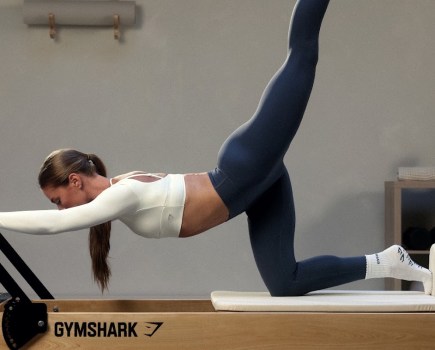
Activities such as tai chi and Pilates can help develop balance, coordination and body awareness, potentially reducing your risk of falls.
This is particularly important as you get older, when a fall can have serious consequences for bone health and independence.
What should you eat to support bone health?
Exercise is only one part of the picture. Your diet also plays an important role in maintaining healthy bones as you approach and go through menopause.
Dr Coyne highlights three nutritional priorities:
- Calcium: Getting enough calcium through your diet is essential for maintaining bone structure. Dairy products, fortified plant milks, leafy green vegetables and calcium-set tofu are useful sources.
- Vitamin D: This vitamin helps your gut absorb calcium, making it important for bone health. Some people may need a supplement, particularly if they have limited sun exposure.
- Protein: Adequate protein supports muscle and musculoskeletal health. Dr Coyne recommends around 1.2g per kilogram of body weight daily, with approximately 20 to 25g at each meal.
He also highlights vitamin K2 alongside vitamin D, although it’s worth noting that evidence for additional K2 supplementation to prevent fractures is less established than the importance of adequate calcium and vitamin D.
The bottom line
You don’t have to overhaul your entire fitness routine to start looking after your bones during menopause. Adding 30 minutes of brisk walking to your day is a manageable starting point, with research suggesting it could help maintain bone density in important areas such as the hip and spine.
However, the real benefit comes from taking a more rounded approach. Combine purposeful walking with progressive strength training, appropriate impact exercises and activities that improve your balance.
Your bones might not be something you think about when planning your next workout, but investing in their health now could help protect your strength, mobility and independence for years to come.
Dr Hugh Coyne is a private GP and co-founder of Coyne Medical