
From finding fitness during a difficult period in her own life to helping hundreds of women discover what they’re capable of, Anna Jarvis knows first-hand the power of believing in yourself
Words: Joanna Ebsworth | Photography: Marcel Grabowski | Hair and make-up: Jemima Chatfield
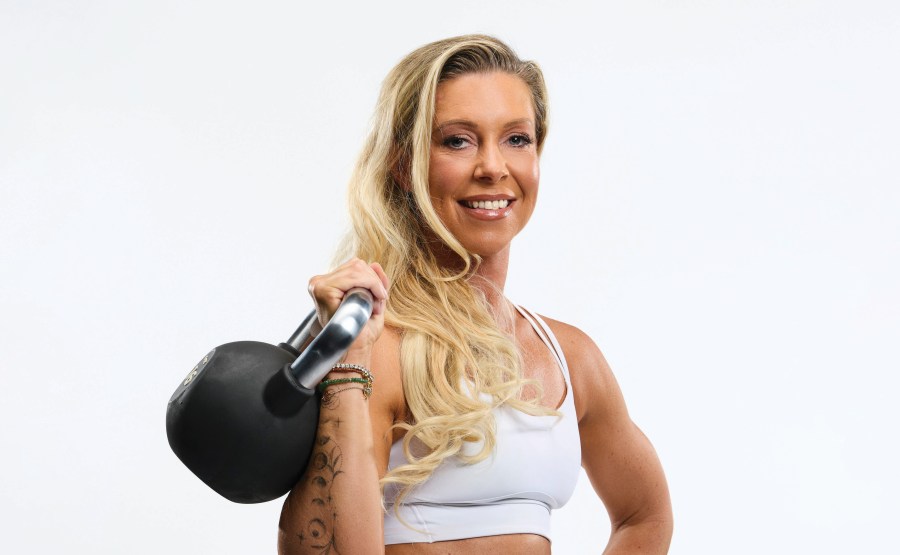
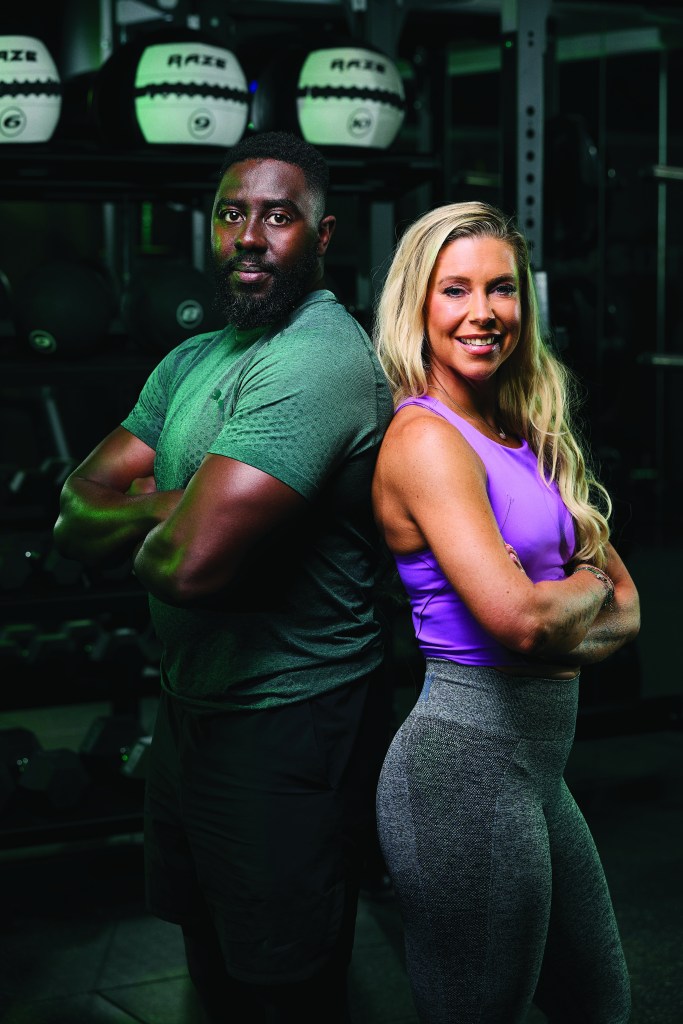
You, but more confident, strong and healthy. That’s the promise Bath-based personal trainer Anna Jarvis makes to every client – and judging by the loyal community she has built over the past 12 years, it’s a promise she delivers.
Taking a truly holistic approach, Anna believes fitness is about far more than physical results. Alongside helping women build strength, the 44-year-old uses her wealth of qualifications, coaching experience and first-hand insight from her own training journey – including becoming the reigning UKUP Pro Bikini Wellness British Champion – to support clients in developing self-belief, resilience and a healthier relationship with themselves.
It’s this powerful combination of expertise, empathy and lived experience that sets Anna apart – and has earned her the title of Women’s Fitness and YOUR Personal Training Personal Trainer of the Year 2026. Here, she shares the philosophy behind her success, the lessons she’s learned throughout her career, and why helping women feel capable, confident and comfortable in their own bodies is at the heart of everything she does.
When did you first develop an interest in fitness?
It wasn’t until my late 20s. After years of doing different jobs I didn’t like, I had pinned all my hopes for happiness on moving to Australia, getting a working holiday visa and living there forever in the sunshine. But it wasn’t everything I hoped it would be.
I returned to office work in London but seriously struggled with depression and started socialising a lot to escape. However, I later realised that if I focused on looking after myself, maybe the puzzle would fall into place.
I signed up to a gym but didn’t have a clue what to do, so I began training with a PT three times a week, stopped socialising so much and fell in love with exercise for the impact it had on my mental health first, and then my body.
What inspired you to become a PT?
I was really out of shape when I first joined the gym, and I remember seeing people doing press-ups and thinking, ‘I’ll never be able to do that’. But the great thing about being lucky enough to train consistently with a PT was that I started seeing physical changes very quickly. Suddenly, things that I had previously written off for myself began to seem possible.
I vividly remember the point when I managed my first seven push-ups: I was buzzing! I discovered that moments like that can open up the floodgates of possibility and potential, creating opportunities to lighten the load at times when we really need it. It’s magic, and I still see that all these years later – not only in everything I’ve achieved in fitness that I never thought I could, but in the people around me, when I see how fitness opens doors and helps them flourish.
“I began training with a PT three times a week, stopped socialising so much and fell in love with exercise for the impact it had on my mental health first, and then my body.”
When did you decide to make a career out of fitness?
As my training gained momentum, my PT told me he thought I had the right attitude to become a PT myself. I thought he’d lost his mind! He also ran bootcamp classes where I worked as an office manager and, over time, I developed the confidence to lead sessions when he couldn’t make it. That’s when I realised a career in fitness could be possible, so I started studying for my Level 2 fitness qualifications at college a couple of evenings a week.
I’d just turned 30, and learning about biology and all the things I’d switched off from at school felt crazy. But making new friends and putting myself out there felt like a huge deal. Once I overcame that fear of stepping outside my comfort zone and pushing myself to try something new, I decided to continue studying and gain my Level 3 qualifications, too.
How did you progress your career?
I worked as a fitness instructor to build up my confidence and attended every training course I could, including lots of Les Mills classes. Teaching classes like Body Pump showed me how powerful group exercise can be for motivating people, helping them find a community and making fitness feel accessible – and I still teach group exercise today because I know how valuable it is.
However, it’s very different to going on a personal, one-to-one journey with a PT client, where you can tailor exercises to the individual and really focus on their movement patterns and muscle engagement, rather than trying to get a whole group of people travelling in the same direction! Luckily for me, I was able to do gym inductions and part-time fitness instructor classes while I built up my PT business, because you don’t just get clients overnight.
What kind of PT did you want to be?
I worked in a gym in the City of London with lots of male PTs and gym-goers, and I remember thinking, ‘Where do I fit in all this?’ That’s when my manager said to me, ‘Anna, you don’t need to worry. Do you remember what it’s like to be new in a gym? You’re kind and supportive, and you will draw your crowd in.’ And that’s exactly what happened.
I had several male PTs tell me that I shouldn’t teach my clients too much because then they wouldn’t need to hire me if they already knew everything. But having been a beginner in that environment, I decided I wanted to do things differently. I wanted to share my knowledge freely and make people feel comfortable asking for help, rather than making them feel small for not knowing something.
I believe knowledge is power, so I educate my clients. If I’m good enough at what I do, they’ll put that knowledge into practice and come back to me when they’re ready to progress. They trust me because I don’t gatekeep anything – and that’s the foundation my business has always been built on.
What makes you unique as a trainer?
I’ve gained qualifications across lots of areas of fitness, including yoga, Pilates, nutrition and pre- and post-natal exercise, but I think my bodybuilding experience has given me a particularly valuable insight because the level of the biomechanics involved are so advanced. We focus on creating balance throughout the physique – not just for aesthetics, but to help prevent injury – and that’s given me a much deeper understanding of how to identify and correct imbalances and postural issues.
As a woman in her 40s, bodybuilding helps me prioritise strength training, which is so important as I get older, and I also think it’s amazing to see so many more women in their 40s and beyond wanting to learn about strength training for both physical and mental strength. We’re still living in a world that tells us to be smaller and eat less, so it’s a privilege to show women that healthier doesn’t have to mean smaller.
“I believe knowledge is power – so I educate my clients. If I’m good enough at what I do, they’ll put that knowledge into practice…”
What has competing taught you as a PT?
After taking five years away from competing, my amazing coaches, Charlie and Jade from Pro Physiques, helped me return to the stage, where I became a PURE ELITE Pro Athlete as well as the reigning UKUP Pro Bikini Wellness British Champion.
I think it’s great that my clients get to see me on my own training journey because, despite all my knowledge and experience, I still need expert guidance and support. Competing is an extreme version of what many of my clients experience, so having someone to give me structure, accountability and reassurance helps me understand exactly how they’re feeling – especially when I’m in a calorie deficit, because that can really have an effect on your emotional wellbeing.
Running a full-time business means it would be easy to let my own training slip whenever a client needs me. But Charlie and Jade keep me accountable, reminding me when I need to prioritise my sleep, nutrition and training. When I ask the same of my clients, they know I’m never asking them to do anything I wouldn’t do myself, and they know I understand how challenging it can be to balance training with work and family life.
Do you specialise in training women?
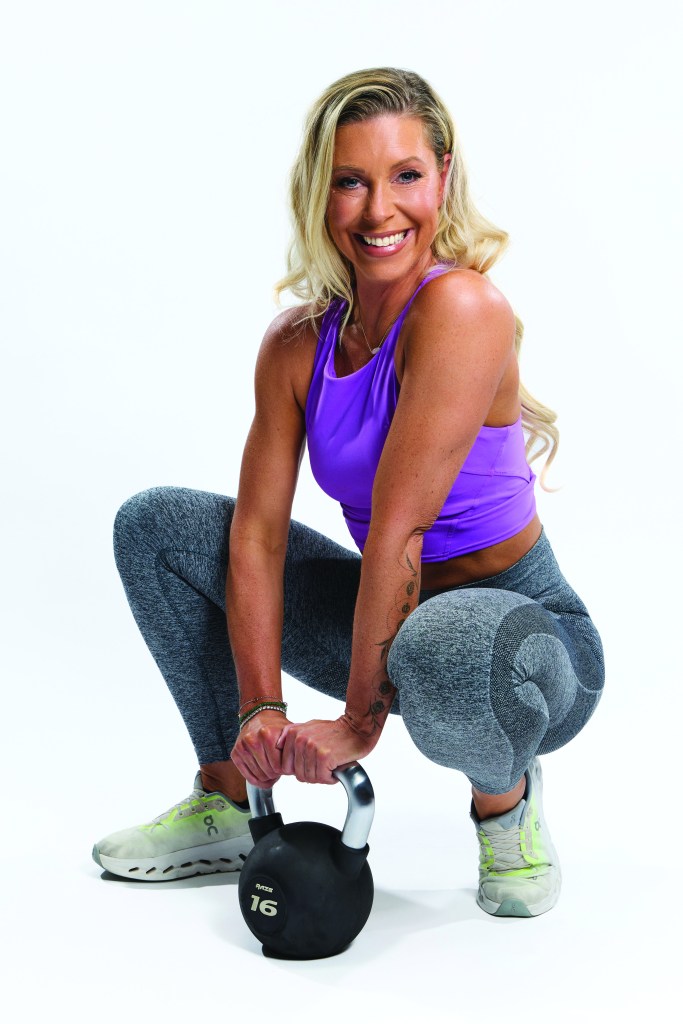
I work in a leisure centre in Bath where we have a really diverse mix of people of all ages and abilities, so I train men and even children too, but the majority of my clients are women. I’m passionate about helping women feel more confident in themselves and in the gym, which is why I created the Women’s Strength classes at the centre a few years ago.
They’re held on the gym floor and use fixed resistance machines and free weights to help women overcome the anxiety of training in that space and feel confident taking up room. We’ve built a wonderful community where women encourage one another and make lasting friendships. We now have around 150 women in a WhatsApp group who arrange to train together outside class because friends and family aren’t always supportive when you’re trying to change your habits.
The classes have been so successful they’ve now been rolled out across Better Gyms and Leisure Centres nationwide. Alongside this, I also offer free workshops and seminars on everything from nutrition and women’s health to perimenopause, as well as running private wellbeing retreats abroad. I firmly believe fitness should be accessible to everyone, so I try to provide opportunities for every budget.
“It’s not about ‘followers’ – it’s about the difference you make to people’s lives”
What’s the best part of your job?
I think it’s such a privilege that so many people trust me enough to open up to me and let me take them on a journey. Watching someone grow in confidence – not just in the gym, but in every area of their life – and become a version of themselves they never imagined possible is absolutely magical. It makes every early start and every late night worth it.
Sometimes it’s the little things that excite me most, like a client swapping a short-sleeved T-shirt for a vest or feeling confident enough to train on their own without a workout buddy, because those moments tell me the wheels of change are in motion. No real change happens in your body or your life until it starts happening in your mind.
I always tell my clients that confidence doesn’t magically appear when you reach a certain weight or fit into a particular dress size. It’s built through showing up, putting in the work and proving to yourself what you’re capable of.
How does it feel to win Personal Trainer of the Year 2026?
It’s mind-blowing. Last year I became a pro athlete in two bodybuilding federations, but this feels completely different because it recognises what I get up to do every single day. Being nominated by the people I train makes me feel incredibly emotional, but to then be chosen as the winner by a panel of industry peers, based on the impact I’ve had on others, is deeply humbling.
I’m so grateful to YOUR Personal Training for running this competition because it shines a light on the work so many unsung heroes are doing in gyms across the country. It’s not about social media followers; it’s about the difference you make to people’s lives. Even though we work with people all day, being a PT can sometimes be a lonely, exhausting job, so this recognition makes every sacrifice feel worthwhile.
The prizes are incredible too, including £10,000 worth of CPD courses over 10 years with YOUR Academy. Continuing my education has always been so important to me because what we know about women’s health and fitness is evolving all the time. The more I learn, the better I can support my clients, so this will be a real game-changer for my community. Honestly, this truly feels like the pinnacle of my career.
A special mention goes to runner-up, Federica Gianni, who impressed the judges with her passion, dedication and holistic approach to personal training, always going above and beyond to support her clients.
Short on time – big on results
Make your minutes count with this time-saving workout from Anna, featuring the go-to exercises she uses to sculpt her shape and build full-body strength.
How to do it: This workout involves doing four sets of six moves – two ‘warm-up sets’ using lighter weights to warm up your joints and muscles and prepare your body for what’s to come, followed by two ‘working sets’ using heavier weights to maximise strength and muscle gains. Start your first set using your lightest weight and aim to increase weight where possible as you progress through the sets. Do 10-15 reps for each exercise.
Barbell Romanian deadlifts
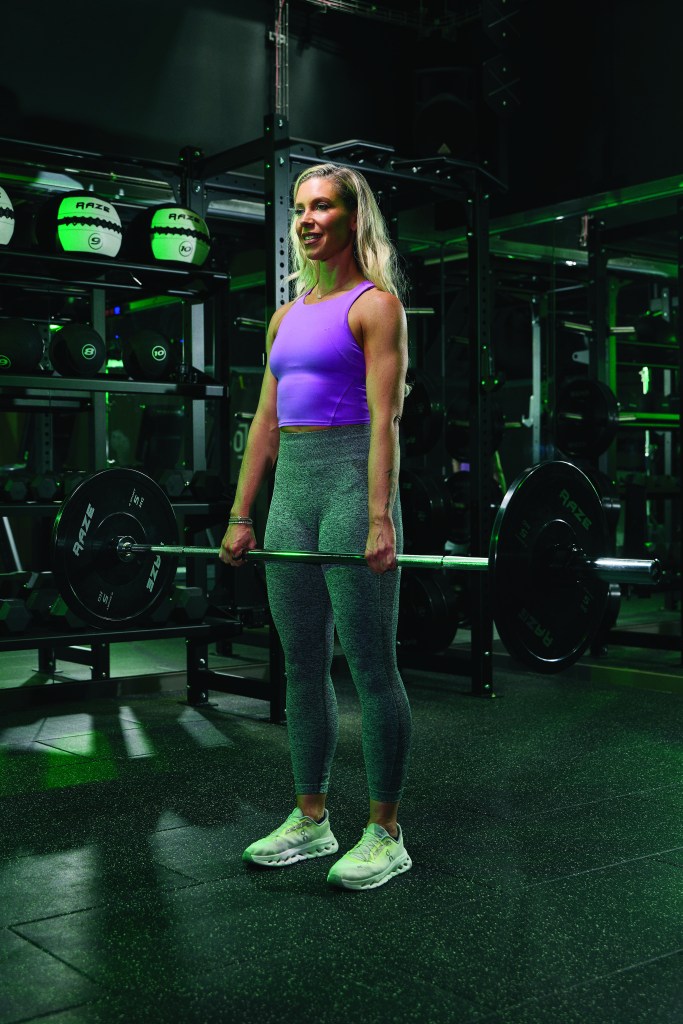
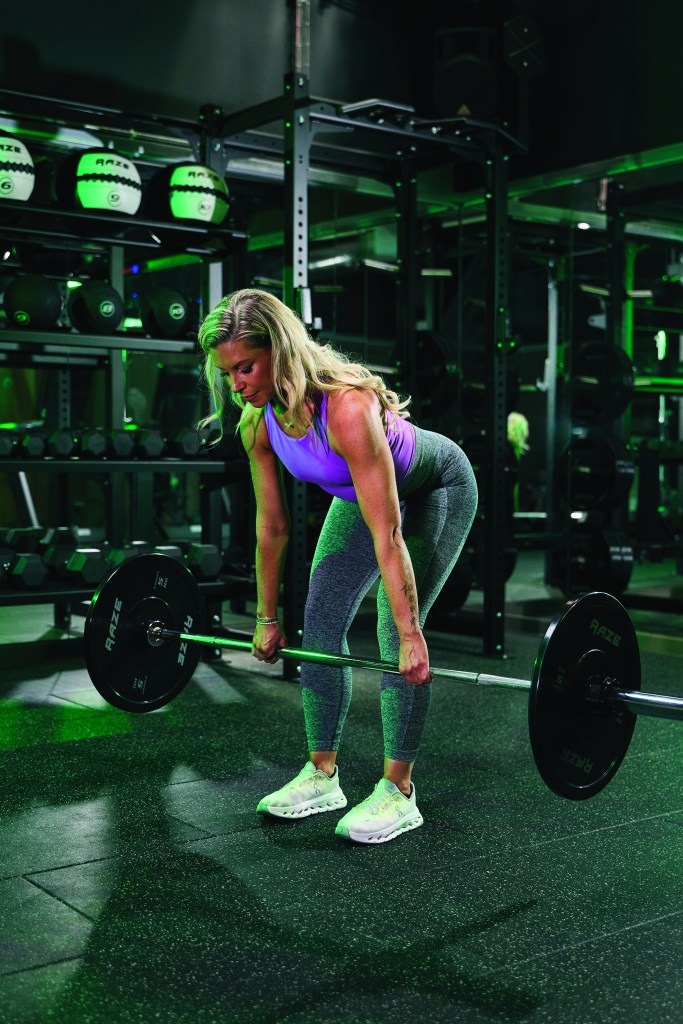
Perfect for strengthening the posterior chain, Barbell RDLs target the hamstrings and glutes by keeping them under constant tension. I love the way they work you hard through the lengthening phase.
- Stand with your feet slightly wider than hip-width apart with an overhand grip on the barbell – the bar should be in front of your thighs (A).
- With shoulders back, core engaged and knees slightly bent, inhale as you hinge at the hips. Send your bottom back while keeping the bar close to your legs as it lowers.
- Keep a neutral spine, lower the barbell down to about mid-shin, feeling a solid stretch in your hamstrings (B).
- Exhale as you squeeze your glutes, drive through your heels, and send your hips forward to return to standing. Repeat.
Barbell hip thrusts
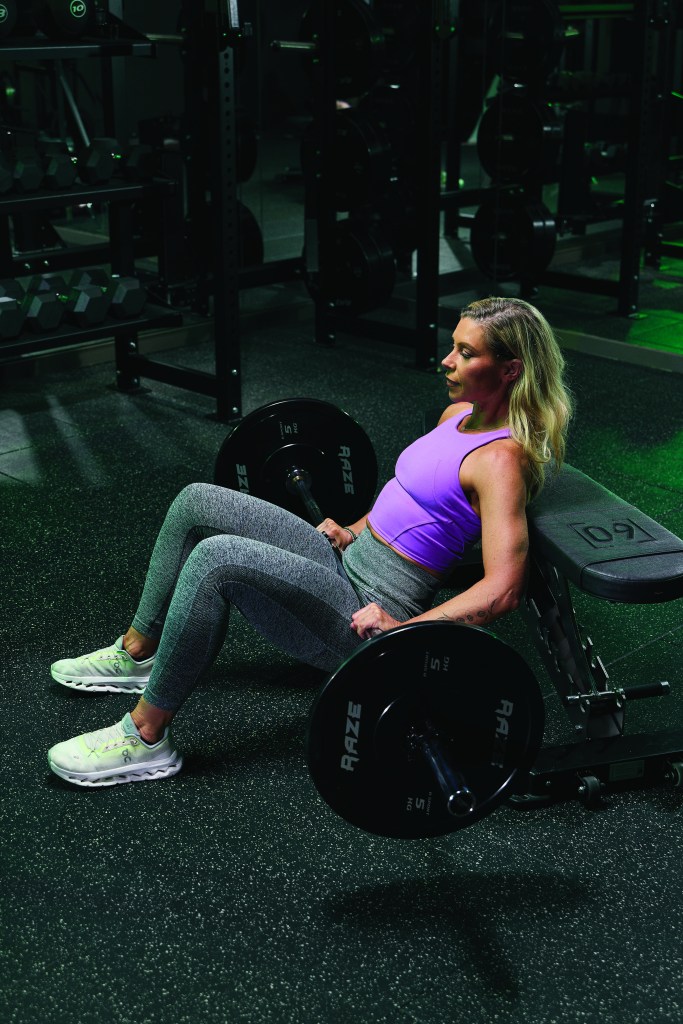
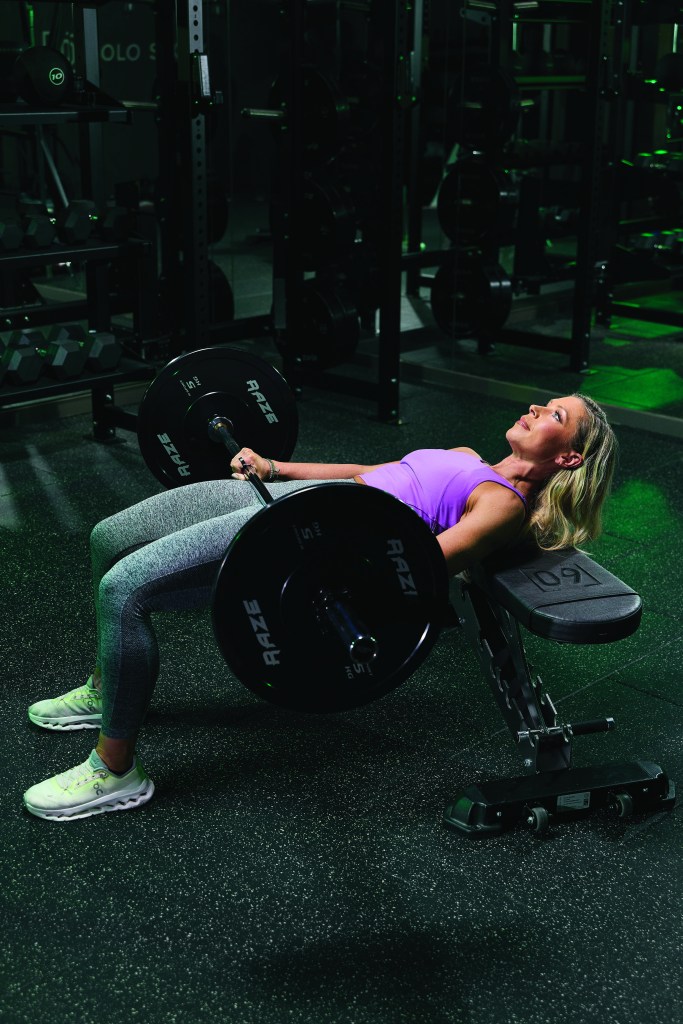
Hip thrusts are a great exercise when you want to add some heavy weight into your glute training. Executed well at a steady tempo, they’ll also help you strengthen your lower back and your abdominals.
- Position yourself against the long side of a bench. Roll the barbell up towards your waist so it sits around 2-3cm below your hip bone, then bend your knees.
- Press your upper back against the bench and grip the bar either side of your hips (A). Next, push through the heels and lift your hips upwards, making sure your shins are vertical at the top of the movement. Your body is in a straight line at the top, but not over-extended (B).
- Pause at the top with a big glute squeeze, then lower and repeat.
Single-arm rows
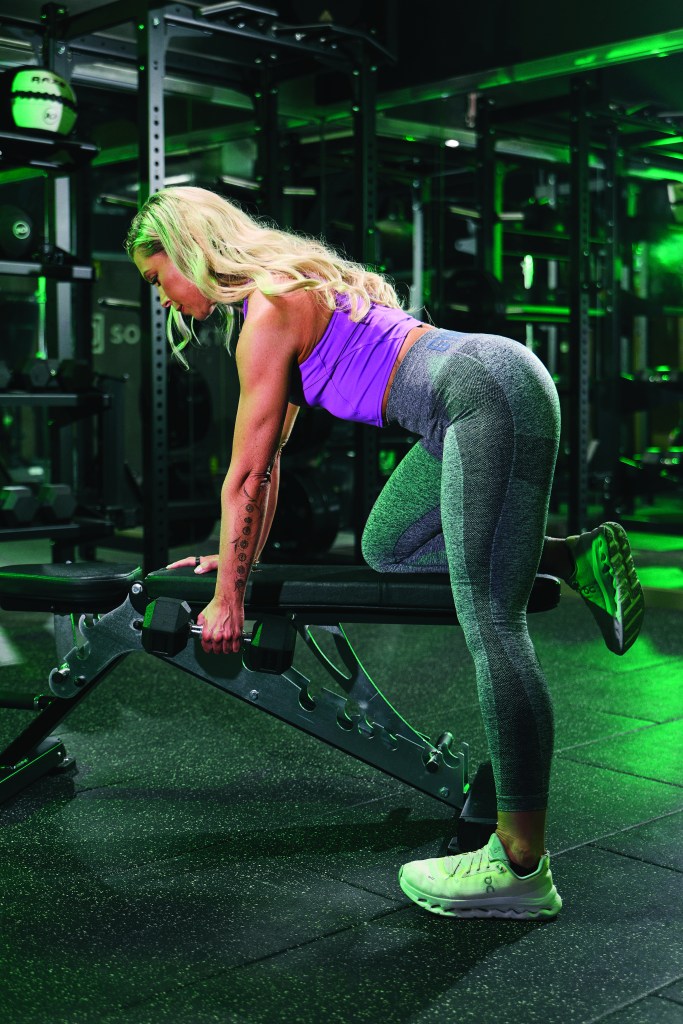
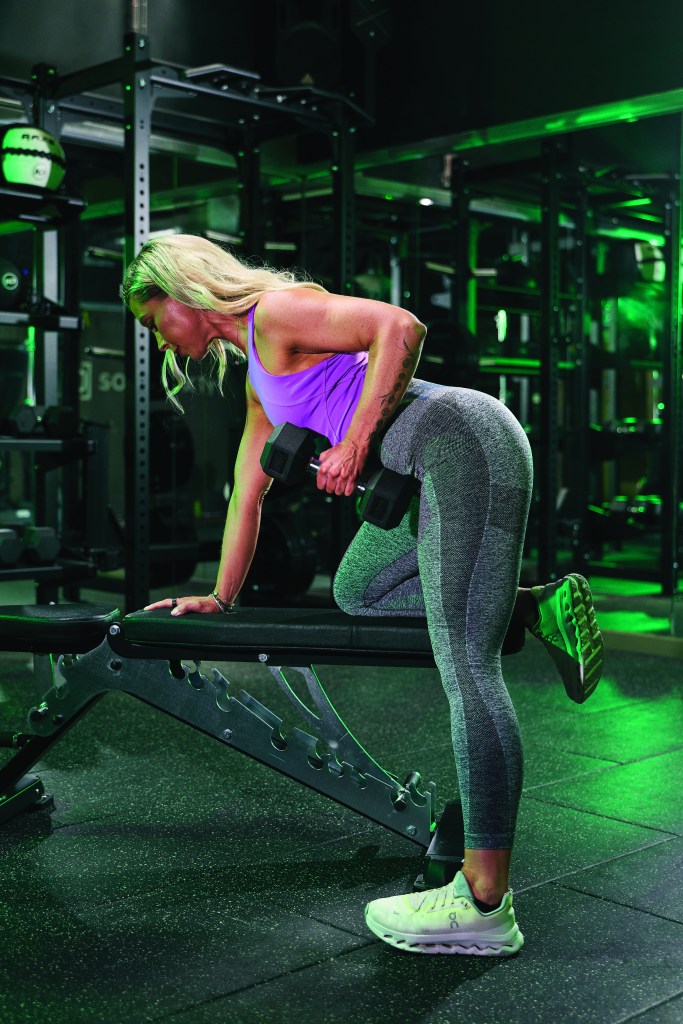
Single-arm rows are another great multi-tasker, helping you build strength through your back, core and arms. Pulling moves are also super important for your posture if you spend a lot of time at a desk.
- Hold a dumbbell in your left hand and place your right knee and right hand on a bench. Your hand is underneath your shoulder, and your spine and head in neutral.
- Engage your core, relax your shoulders, and extend your right arm towards the floor. Do not rotate your torso or let your shoulder lower towards the floor (A).
- On an exhale, pull the dumbbell up with control, driving your elbow towards the ceiling (B). Pause, then inhale, and lower the dumbbell back down to the starting position, before repeating.
Lateral raises
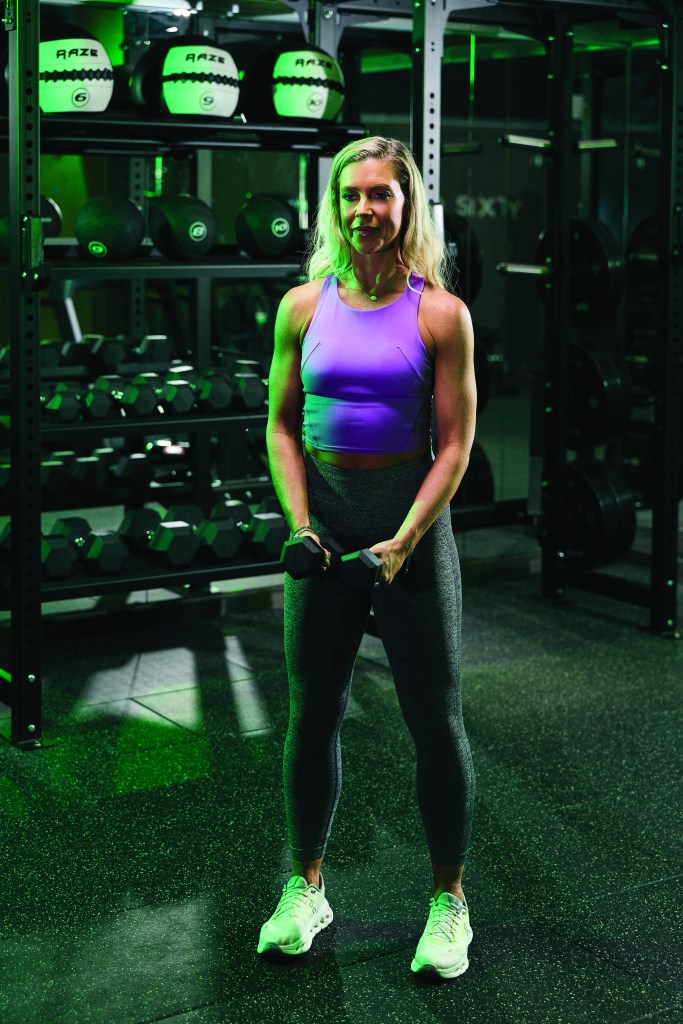
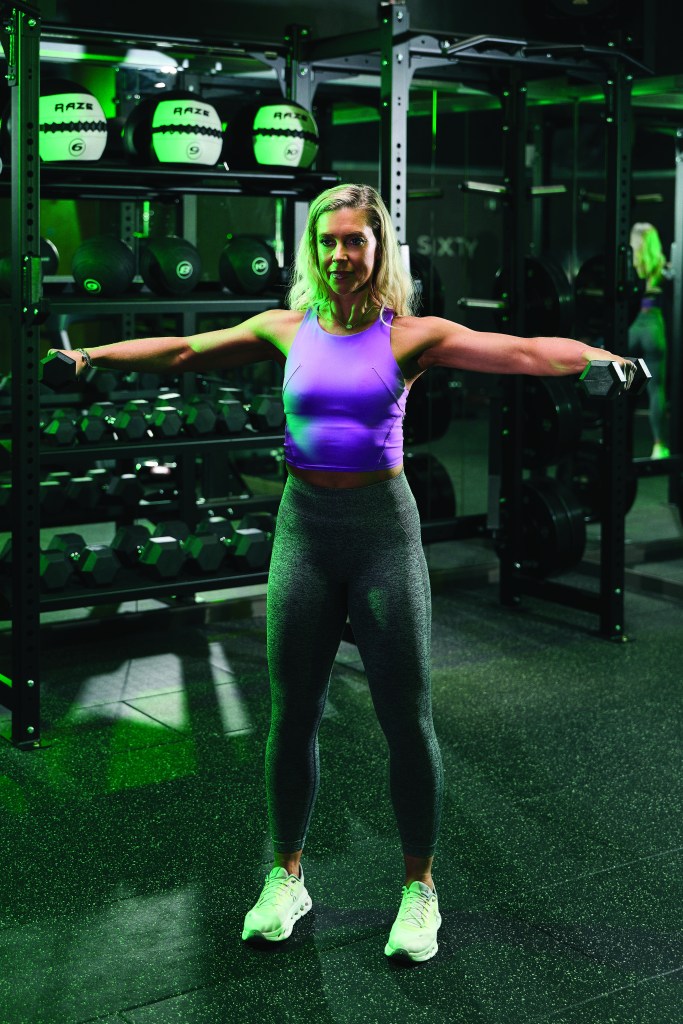
This is my favourite exercise! Nothing sculpts your arms and shoulders like lateral raises. They also build overall shoulder strength and stability to make other upper body exercises easier.
- Stand with a dumbbell in each hand, arms by your sides, palms facing inwards. Ensure your shoulders are relaxed, your abs are engaged, and you keep a slight bend in your knees (A).
- Maintaining this posture, lift the dumbbells out to the sides with straight arms and keep a gentle bend in each elbow, going no higher than shoulder height (B).
- Pause, then lower the dumbbells to the starting position and repeat.
Shoulder presses
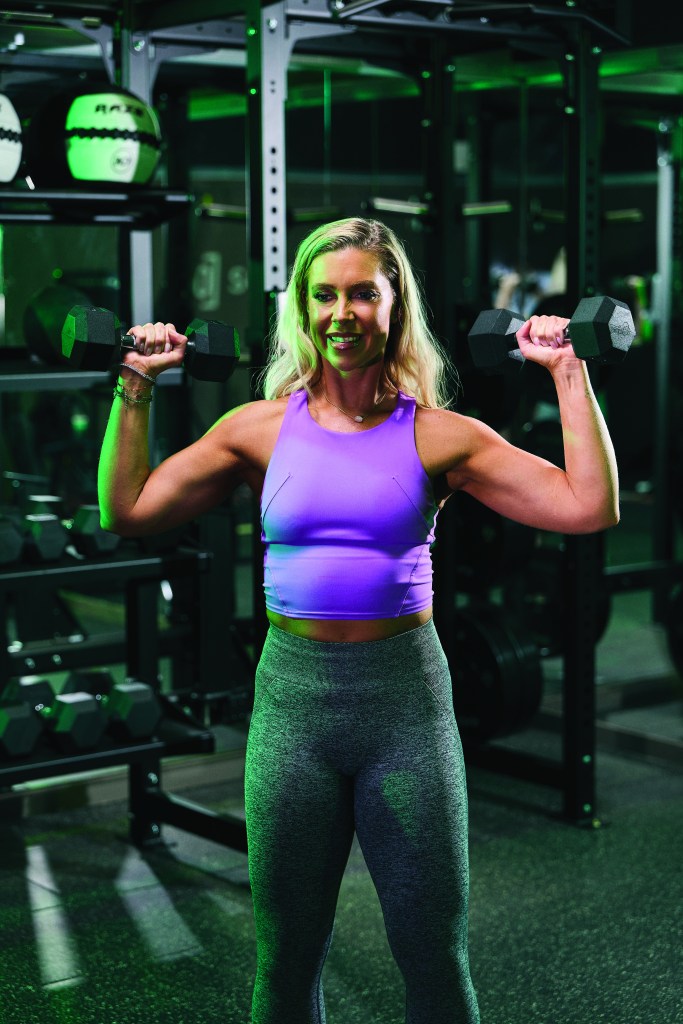
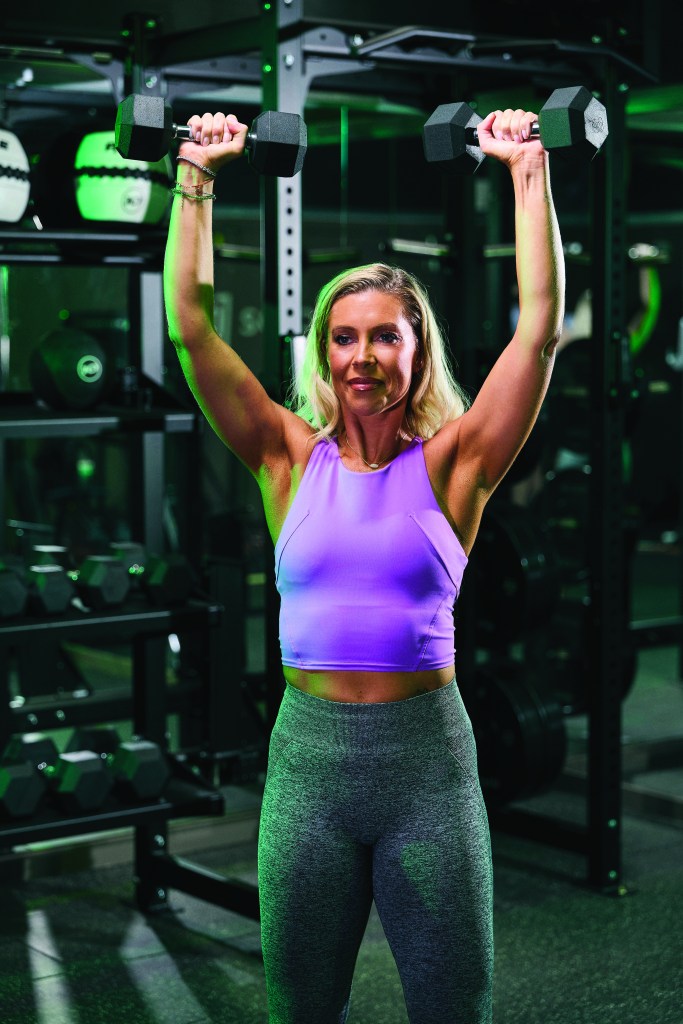
Challenging yourself with a weight when performing shoulder presses will help you make the most of its sculpting benefits on your shoulders, arms and core.
- Take a dumbbell in each hand, then stand shoulder-width apart with your hips and spine in neutral. Lift the dumbbells so they are between your shoulders and ears, palms facing forward with elbows bent (A).
- Engage your core and glutes, then exhale as you extend your arms to press the dumbbells directly overhead until your elbows lock out (B).
- Slowly lower the dumbbells back to the starting position, making sure to keep the torso stable throughout the move, then repeat.
Triceps dips
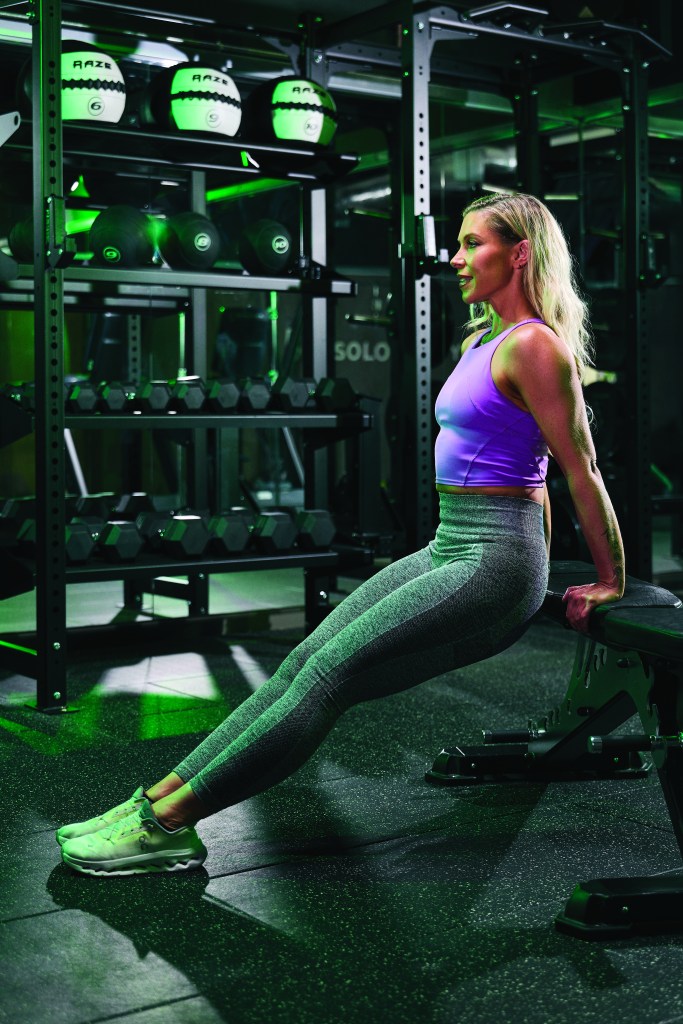
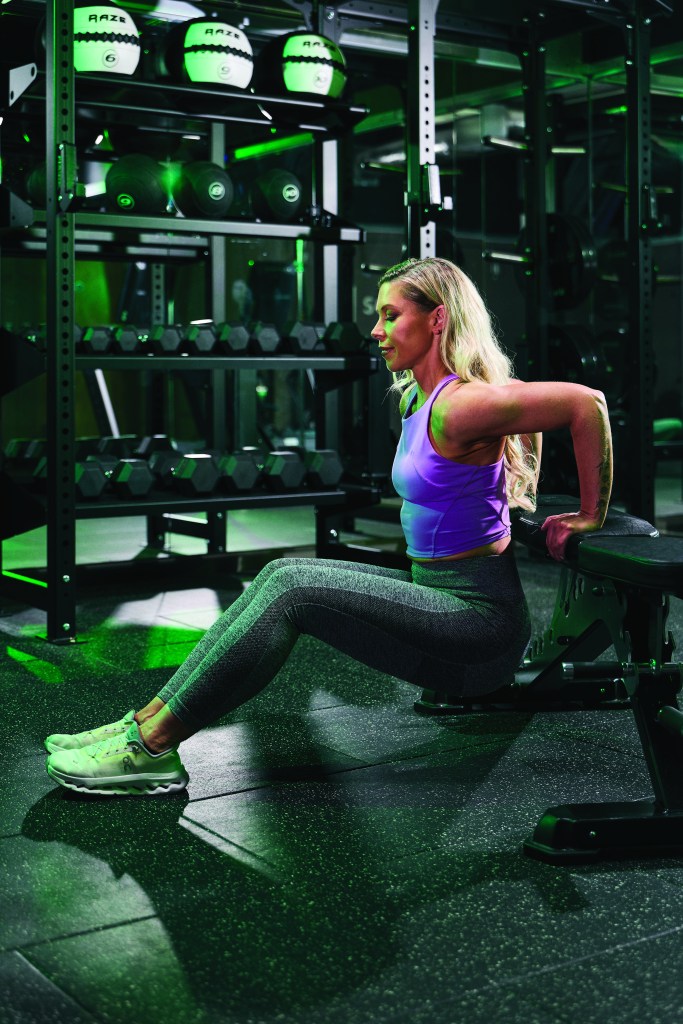
Finish off shaping the arms with triceps dips. This simple but tough exercise is brilliant for tackling the often problematic back of the arm and also hits the chest and shoulders.
- Sit on the edge of a bench and place your hands flat next to your hips, fingers gripping the edge.
- Slide your glutes forward off the edge, extending your arms, your legs extended and feet flat on the floor (A).
- Lower your torso by bending your elbows until they form a 90-degree angle (B).
- Press directly into your palms to extend your arms and return to the starting position. Repeat.
What makes a great PT?
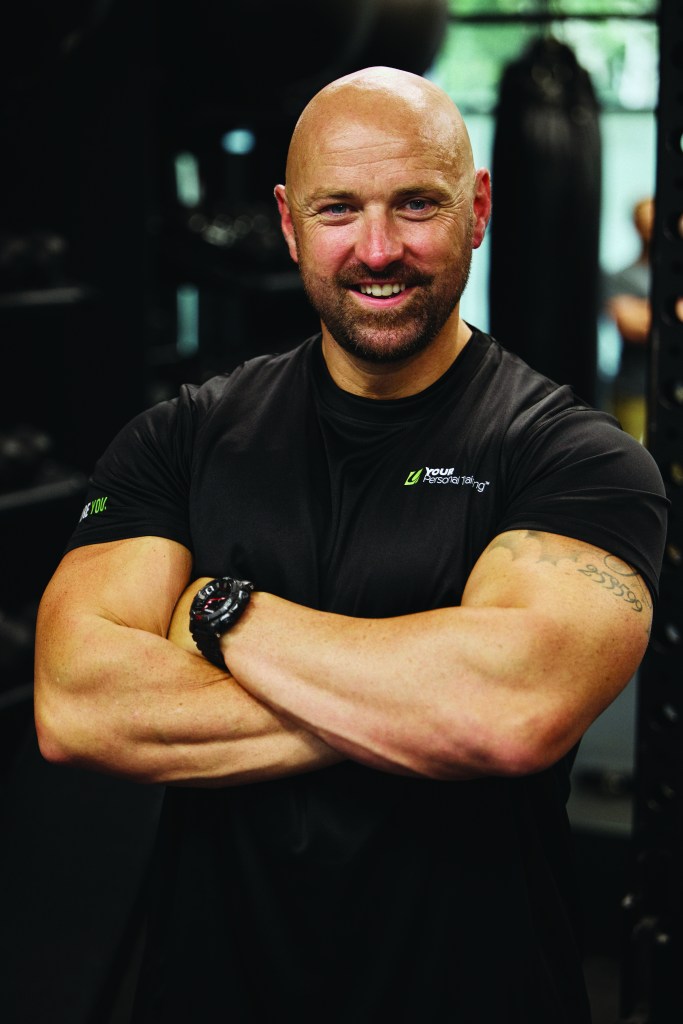
The fitness industry is evolving fast. We speak to James Lorey, co-owner and director of YOUR Personal Training, about what separates great coaches from good ones, why there’s never been a better time to become a PT, and where the profession is heading next.
Explain YOUR Personal Training to those who aren’t familiar with the brand
YOUR Personal Training exists to help great coaches build great careers. Since 2008, we’ve partnered with gyms and leisure operators across the UK, helping personal trainers not just qualify but build successful businesses they genuinely enjoy running. That means mentoring, business coaching, marketing support and ongoing education, because becoming a brilliant PT takes far more than simply passing a qualification. For us, success isn’t measured by how many trainers we recruit. It’s measured by how many are still thriving five or 10 years later, changing lives and building careers they’re proud of.
Why was collaborating on the Personal Trainer of the Year awards such a natural fit?
Because personal trainers rarely get the recognition they deserve. People often see the workouts, but they don’t see the conversations, the encouragement, the early mornings, the setbacks or the months, sometimes years, it takes to help someone completely transform their health and confidence. The awards gave us the chance to celebrate those stories. Not just trainers with impressive physiques or huge social media followings, but coaches making a genuine difference to people’s lives every single day. That’s what this profession is really about.
What qualities were you hoping to find in the finalists?
Above all else, authenticity. The best personal trainers don’t try to be someone they’re not. They’re approachable, they care deeply about their clients and they understand that every person walking through the gym doors has a different story. What really stood out from the finalists wasn’t simply their coaching knowledge, it was the impact they’d had on other people. Reading those client stories reminded us why personal training is such a rewarding career. Helping someone lose weight is fantastic but helping someone believe in themselves again is something even more powerful.
What are the biggest changes you’ve seen over the past few years?
The role of a personal trainer has become so much broader. Ten years ago, many clients expected their PT to write programmes and count reps. Today, they’re looking for someone who understands stress, sleep, recovery, nutrition, habits and behaviour change as well. PTs are no longer simply coaching exercise; they’re helping people navigate healthier lives. That’s why learning never stops.
The fitness industry moves quickly, and the coaches who continue investing in themselves are the ones who stay ahead. Through our Level Up events and the YOUR PT Hub, we’re constantly bringing trainers the latest thinking, research and practical ideas so they can continue delivering the very best experience for their clients.
What do successful trainers have in common?
Curiosity and empathy. The very best coaches are lifelong learners. They’re always asking questions, trying new ideas, refining how they coach and looking for better ways to help people succeed. Clients don’t remember every exercise you prescribe, but they always remember how you made them feel. The most successful trainers build trust, create confidence and make people feel capable of achieving things they never thought possible. Looking ahead, I think we’ll also see greater specialisation within the industry. Some coaches will become experts in longevity, women’s health, performance, rehabilitation or behaviour change. The opportunities within personal training are only becoming more diverse, and that’s incredibly exciting.
Which skills should PTs be investing in?
The obvious answer is AI, and yes, I think every coach should learn how to use it well. Used properly, AI can save huge amounts of time, helping with planning, content creation and administration, so trainers can spend more time doing what really matters – coaching people.
But technology won’t replace great coaches. The fundamentals remain the same as they’ve always been. Can you build relationships? Can you generate trust? Can you communicate well? Can you consistently attract new clients and deliver such a brilliant experience that they stay with you for years? Alongside that, I’d encourage every trainer to develop a broader understanding of wellbeing. Clients increasingly want someone who can help them improve not just their fitness, but their quality of life.
Coaches who understand movement, nutrition, recovery, mindset and healthy habits will be incredibly valuable in the years ahead. For anyone thinking about retraining as a personal trainer, that’s what makes this such an exciting profession. You’re not simply teaching people how to exercise, you’re helping them become healthier, happier and more confident versions of themselves – and there are very few careers where you get to say that at the end of every working day.
Scan for more info about YOUR Personal Training: