
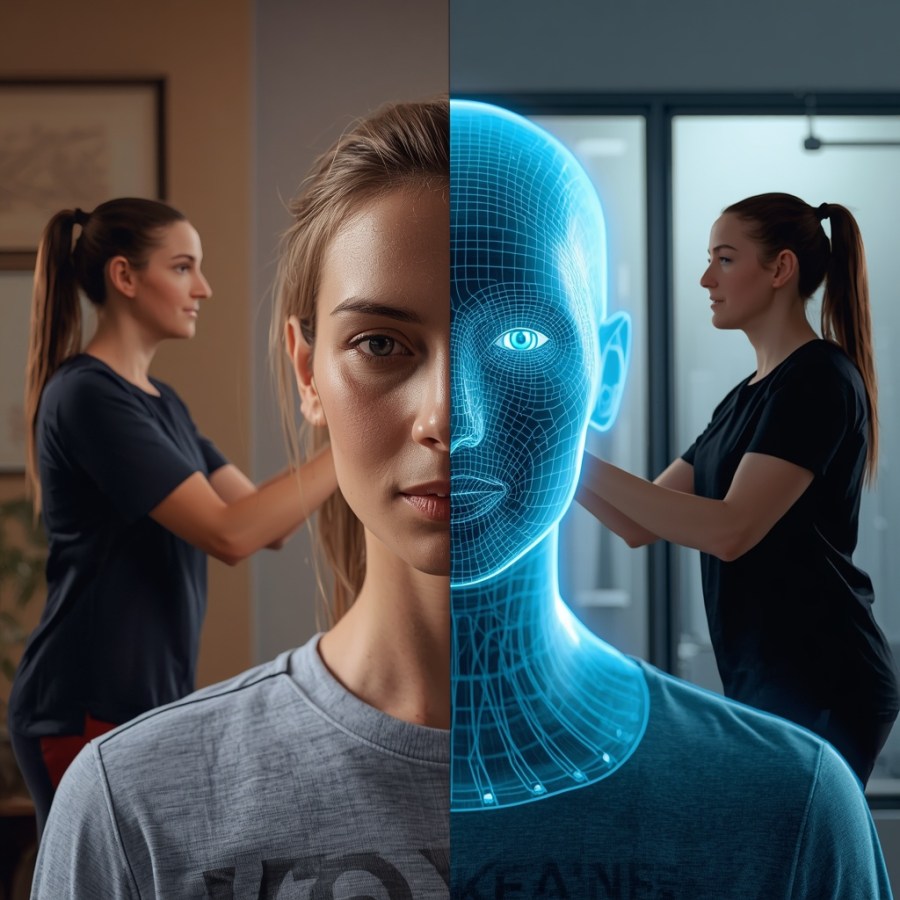
AI fitness apps can build workouts and track progress, but experts say motivation, empathy and personalised support remain uniquely human. Here’s where technology helps – and where it falls short
The growth and soaring popularity of AI-powered personal training apps indicates that many people feel more comfortable interacting with a computer, instead of a human. Whilst it is understandably a concern for some personal trainers, the good news is – according to the experts – they have nothing to worry about.
As someone who has had a personal trainer in the past and reviewed numerous fitness apps for work, I understand the benefits of both. Whilst the latter tends to be cheaper and worked well for me in the fact I got instant feedback and on-the-go advice, I – like all the experts I spoke too – wouldn’t put them on a par with a human coach.
Whilst AI did serve me up personalised plans and allowed me to track my progress, it didn’t provide the calm and steady reassurance I needed when I couldn’t face working out or was unable to meet my goals. In fact, on reflection, I realised that the five or six fitness apps I had trialled, had no idea of my life circumstances. Why would they? It’s not as if there was an option for me to say today I don’t feel like training because I didn’t sleep due to menopausal night sweats!
And that’s where the human touch is so handy; a personal trainer takes into account not just your personal fitness goals but your lifestyle factors too. And, most importantly, they know when someone needs encouragement instead of intensity, accountability instead of data, or a different approach altogether.
It’s no surprise though that, like a lot of industries, the advancement of AI has got personal trainers worried about their jobs. However, they should be reassured that – along with the experts I spoke too – the results of a recent survey by the National Academy of Sports Medicine revealed promising feedback. In fact, the American organizations ‘State of the Personal Trainer Report’ – concluded that the future of personal training is still in fact human!
The report states: “Despite economic and societal headwinds, there is optimism in the industry. Fitness professionals are confident in where it is headed. Why the confidence? Because the modern trainer has evolved into a holistic partner to their clients. While technology commoditizes the workout, the market now places an unprecedented premium on what trainers provide: human empathy, behaviour change, and expert guidance.”
Personal touch
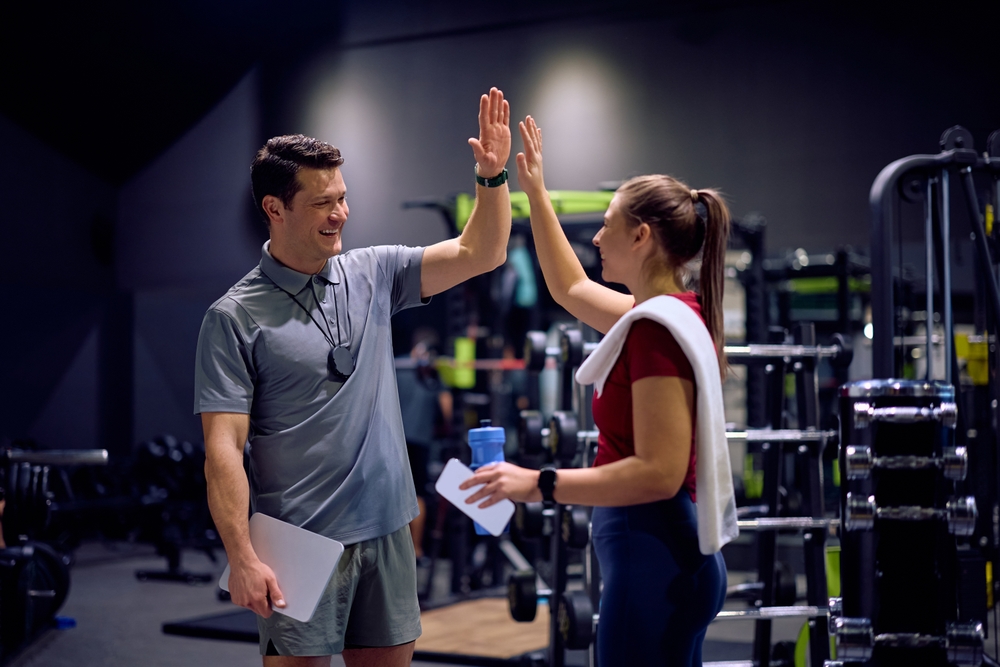
One of the biggest appeal factors for real-life coaches is undoubtedly the relationship you build up with them. According to psychologist Rod Mitchell, the clinical director at Emotions Therapy Calgary we need the “stability of another person to help us manage our own emotions.
“Most of the women I work with have fallen off their fitness plan at some point. What often happens is they hit a difficult time in life and the workout becomes just another thing they feel like they’re failing at,” he explained.
“The real obstacle here is almost always emotional, and that’s exactly the part an app can’t reach. A calm, steady presence from a fellow human being – what psychologists refer to as co-regulation – is what actually keeps you going during those hard weeks.
“I tell the women I work with that a good coach will be able to help them notice when discipline tips into self-punishment – when “I did it again so I must be doing well” turns into “If I don’t go the gym today I’m a failure.
“You can have an app provide you with a plan. Staying with that plan through the hard weeks requires a relationship, and a relationship with another human being is the one thing the app can’t do.”
For personal trainer Brian Abell, who works at Online Fitness Coach for Women | FitHappens PT it is the nutritional advice – or lack of it – that concerns him about AI fitness apps.
“Nutrition wise, most weight loss apps tend to recommend intermittent fasting (IF). While IF is a great way to maintain your food intake, it can only really work if you are the right candidate for it. For example, IF is generally less recommended for women, and especially discouraged if they are going through something like the menopause, due to the effect that fasting has on our bodies hormones.
“As a personal trainer, we assess all of our client’s nutritional intakes alongside their fitness programme and give them achievable and realistic goals that are actually catered to them and their health. AI cannot operate with this kind of balance and nuance.
“And it matters more for women. Their bodies are juggling things an app will never see. A menstrual cycle. Perimenopause. Postpartum recovery. Maybe she just started a GLP-1 medication and her appetite tanked overnight. Or a combination of these things. A real coach notices that shift and adjusts. The app keeps running the same fixed program like nothing happened.
“Clients don’t fail because they don’t know what to do or are “lazy.” They fail because life gets in the way. Flights get cancelled. Kids get sick. Weeks fall apart. A coach problem-solves around that mess in real time. AI logs your reps. It doesn’t notice when something’s off.”
Safety first
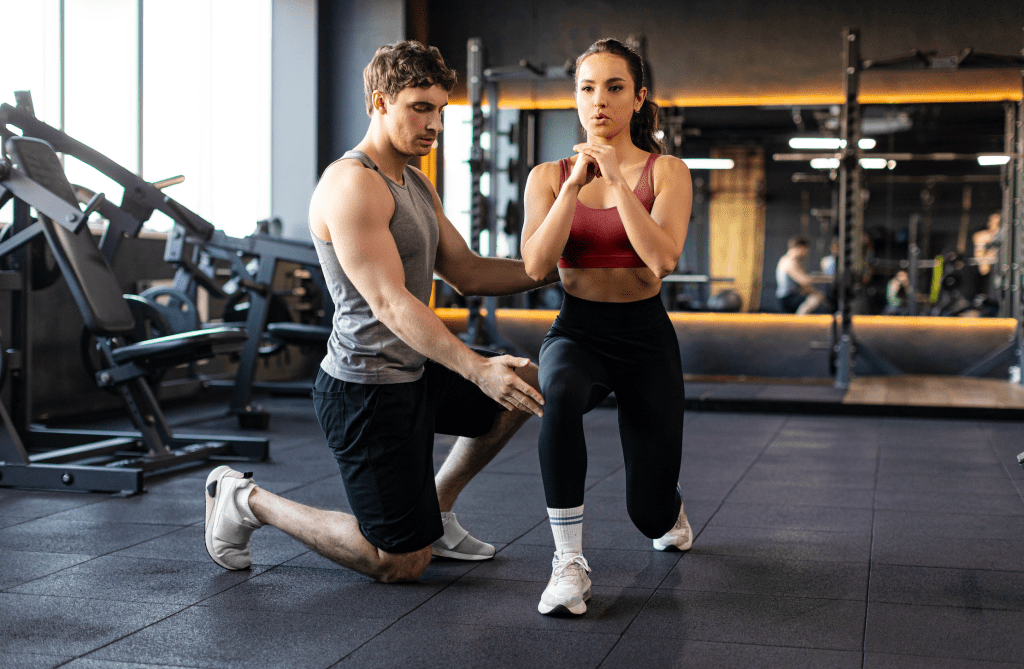
And then there is the safety issue of performing an exercise correctly, something physiotherapist Kurt Johnson insists no AI fitness app can properly oversee. The founder of the physio and performance clinic https://onebodyldn.com/ explained:
“The aspect of correction is something no algorithm is programmed to properly do as of yet. While apps are working logging on rep counts, and some do have computer vision, regardless of how the squat looks like, it logs it.
“What it can’t see is that someone might be compensating through their lower back because their glutes aren’t firing as they should, whereas a good coach can look at that same movement and know within seconds whether it’s tight hips, early signs of old injuries flaring up, a subtle knee cave that could become an issue, stress in the shoulders, or even something as simple as a rough night’s sleep.
“This comes from years of direct experience and assessments and no AI can quite replicate it because it only adapts a plan based on numbers you’ve logged into it. In most cases, AI can’t adapt based on what it sees, and it can’t correct your form in a way that would ultimately protect your joints and prevent you from hurting your body.
“Medical history is another sticking point, as many people have some form of injury that needs factoring in, and AI cannot do this well. This could include a previous surgery, chronic conditions, or even pregnancy, and while AI apps do ask questions on physical form and identity, they treat everything within a certain category the same.
“A workout plan must be adjusted according to your medical history and should be constantly cross-referenced with new information, helping prevent previous issues from becoming present problems.”
So whilst the evidence and expert advice certainly points to human coaches trumping AI apps, the two could go hand in hand if you are keen to combine them. You can use a fitness app for what it’s genuinely good at: structure, personal programming, consistency, data keeping and flexibility. And use your real-life coach for the emotional and personal support and advice.
“An ideal future will ultimately include utilizing AI technology in conjunction with trained human coaches,” explained psychologist Stephanie High, who works at https://kaizencatalyst.com/
“Technology can be used to assist us in maintaining reminders for our exercise programmes, tracking our own personal progress, and creating personalized advice based on our preferences, while human coaches can utilize their ability to empathize, hold individuals accountable, and make judgments based on each individual’s unique needs.
“This utilization of both technology and human coaching is more likely to provide the level of motivation necessary for women to establish lifelong fitness habits.”