
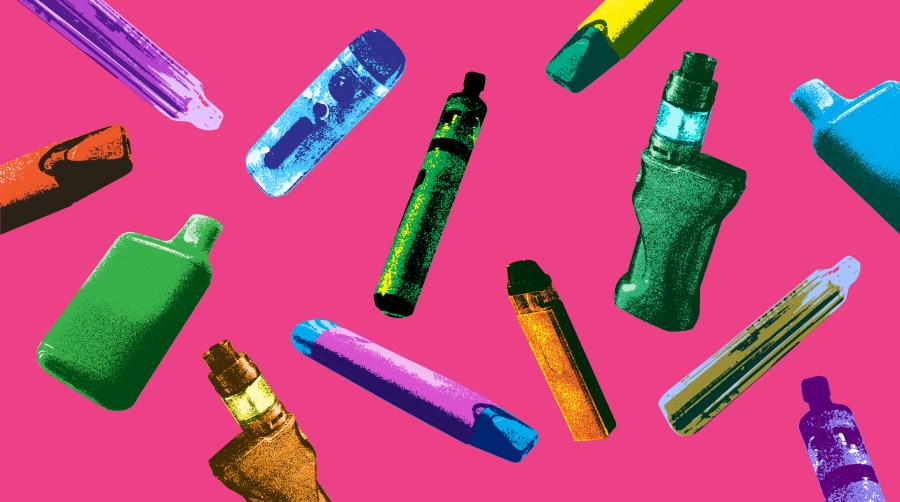
Vaping is no longer just a habit associated with younger generations. Increasing numbers of adults, including women in midlife, are using e-cigarettes – sometimes without ever having smoked.
What may have started out as an occasional puff can become a daily routine, with nicotine dependence making it harder to stop than expected. But why does vaping appeal to women in their 40s, 50s and beyond? Could stress and menopause play a part, and what do we know about the potential risks?
As someone who has never touched a cigarette, I am one of those midlife women who occasionally reaches for a vape. I understand the appeal, but I’m also aware that vaping can be addictive and is not risk-free. I spoke to experts about why women in midlife start, how occasional use can become a habit and what the evidence tells us about its effects on health.

The number of midlife women who vape
Both US and UK figures show a similar pattern of rising adult vaping.
According to Dr Deborah Lee UK statistics from Online Pharmacy UK, show that “around 9% of women aged 45 to 54 currently vape.”
With that number pointing to around 1 in 11 women aged 45 to 54 vaping, the figure suggests that vaping is not uncommon among women in this age group.
Why vaping can appeal in midlife
There are lots of reasons why midlife women choose to vape. Some reasons are similar to those among younger people. For example, vaping can help people stop smoking, which may explain why some older women do it.
“Other possible reasons include curiosity, friends using it, or the impression that it’s a harmless way to unwind,” suggested Dr Samila Asad, women’s health GP at the Female Health Doctor clinic.
“These are possible explanations, rather than proven reasons specific to women in their 50s. My concern is that something which starts quite casually can introduce nicotine dependence into someone’s life.”
The role of stress, menopause and nicotine
For some midlifers, stress and menopause can play a part as women turn to nicotine to cope with feelings of anxiety and being overwhelmed. Hormonal changes can be difficult for some women to navigate during menopause, and some may turn to vaping in the hope of finding relief.
“After 20 years of working with clients, I can tell you that for most women in their 50s, vaping isn’t part of some rebellion,” explained Michele LaFemina, Clinical Director at Pathways Treatment Center.
“They’re just tired and want the boost that nicotine provides as a vape is effectively a quick escape from things like anxiety, poor sleep and mood swings.
“However, you could end up vaping far more than you would if you were smoking cigarettes. There’s no smell and no ashtray, and I’ve had clients take puffs every few minutes without even realizing it.”
Dr Lee agrees that it is certainly a possibility that menopause stress could be one reason why so many women in midlife have turned to vaping.
“Undoubtedly, when women feel desperate during the menopausal transition, they may be keen to try anything they perceive might help them feel better. Unfortunately, I would not put vaping on this list as a good treatment for menopausal symptoms.
“Menopausal women may be tempted to vape if they are suffering from anxiety or depression, to help them lose weight, stop smoking cigarettes, if they experience peer pressure or if they are fearful of using HRT.”
How an occasional puff can become a habit
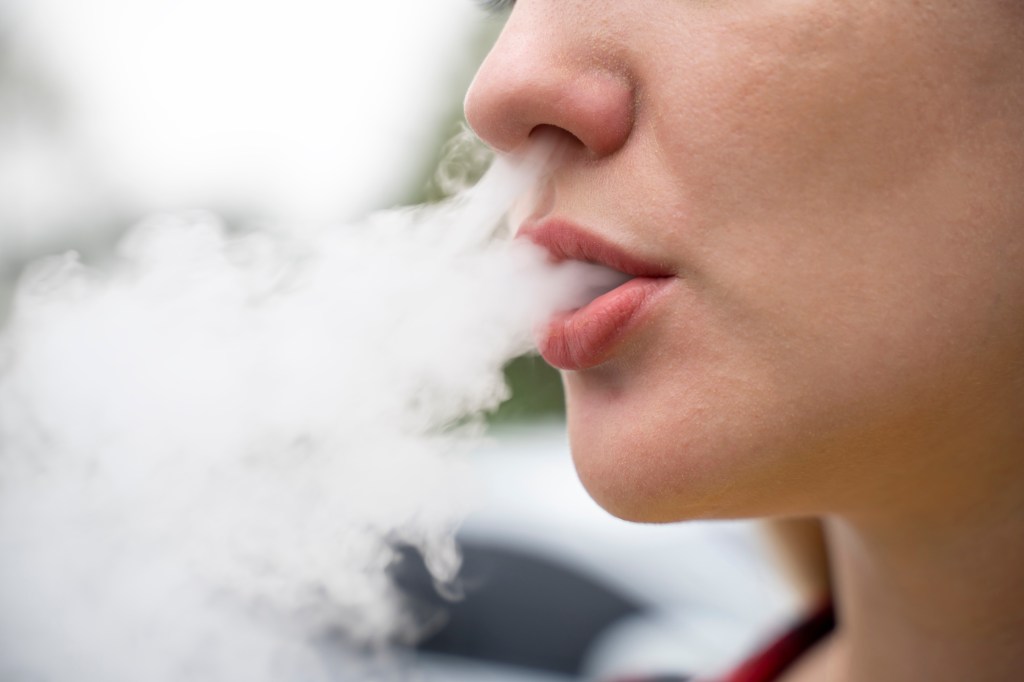
It can be very easy to become addicted to vaping, sometimes within days of starting. Many women who are vaping after 40 occasionally find they reach for it constantly throughout the day.
“Nicotine is a very effective anxiolytic. Inhaling nicotine vapour delivers a nicotine hit to the brain in 27 seconds – very similar to that of smoking a cigarette,” explained Dr Lee. “Nicotine binds to nicotinic acetylcholine receptors in the brain and causes the release of the happy hormone, dopamine.
“Immediately, the person vaping feels a rush of pleasure and relaxation. Nicotine also causes release of adrenaline, meaning people feel more alert and in control. But at the same time, there is a rise in endorphins giving relief from anxiety.”
Importantly for those of us that vape, Dr Lee suggests that nicotine can be as addictive as heroin and cocaine.
“As nicotine levels fall, within 30 minutes to 2 hours cravings set in for the need for another vape. In fact, cravings can start as soon as the most recent vape has ended.
“The craving to have another vape can be intense. Nicotine withdrawal causes restlessness, anxiety, chest tightness, brain fog, headache and insomnia. The body craves another nicotine hit – knowing another vape is the only way to properly satisfy the craving.
“The NHS states that just vaping on and off for a few days is enough to become addicted. Don’t be fooled that just a few won’t hurt you! The opposite is true.”
Vaping versus smoking: what does the evidence say?
Smoking is considerably more harmful than vaping but that’s not to say the latter is harmless – both can cause nicotine dependence. Although smoking cigarettes is strongly linked to many cancers, the long-term cancer risks of vaping are not yet fully understood.
As for lungs and heart health, while smoking can cause serious disease and risk of stroke, vaping can irritate airways and raise your heart rate and blood pressure. Long-term effects of vaping are still being researched.
For women like myself who have never touched a cigarette before vaping, it seems we are not alone. Dr Lee points out that about 1.1 million people who never smoked are now vaping, according to ONS statistics.
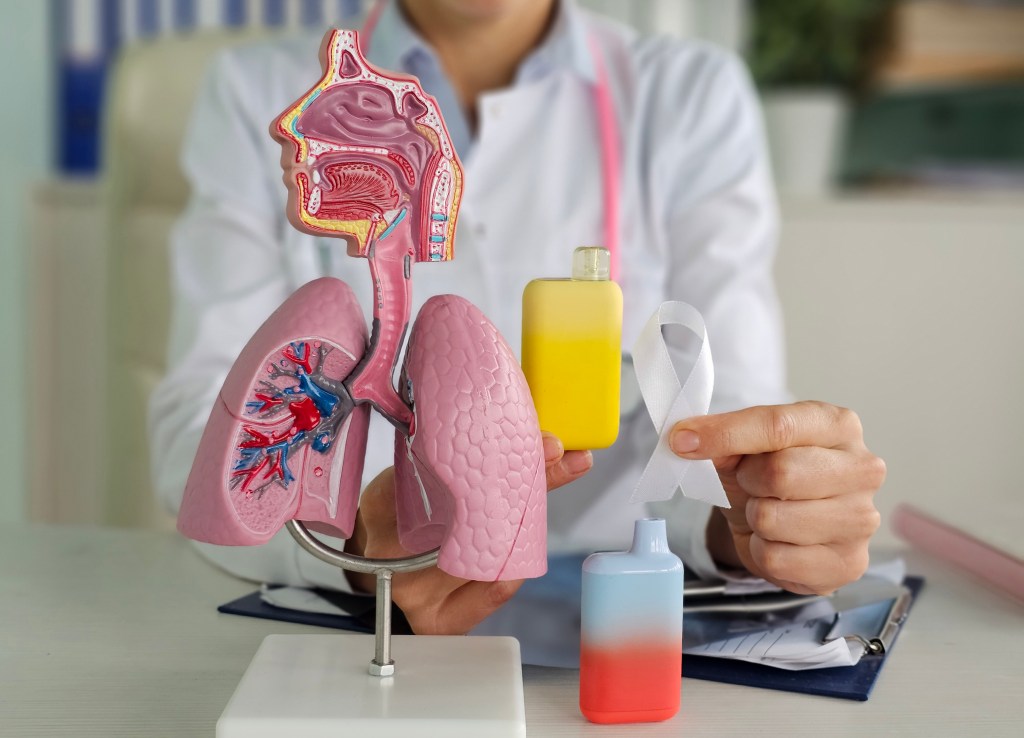
The health risks women need to understand
It’s important to fully understand the risks associated with vaping, as touched upon briefly above. Although many women after 40 may already be addicted, for those that puff only from time to time, it’s good to know the health risks before your occasional habit becomes a daily dependence.
In a recent 2025 review and meta-analysis, Dr Lee explains that non-smokers who vape were found to be at higher risk of many respiratory conditions including COPD (chronic obstructive pulmonary disease). She also points out that vaping liquids can contain cancer-causing chemicals.
“Vaping may cause cancer as vaping fluids contain substances such as acrolein, formaldehyde and other volatile organic compounds which have been shown to alter human DNA. Recent research has confirmed raised biomarkers of cancer risk in those who vape, but more research is needed.”
Dr Lee also adds that many of the chemicals in vapes damage the lung tissue causing inflammation, hypertrophy (enlargement) of smooth muscle, the accumulation of lung mucus and fibrotic scarring. “This can result in disruption of the alveolar fluid/capillary barrier, leading to breathlessness and pulmonary oedema. The respiratory immune system becomes weakened and more susceptible to infection.”
Other risks associated with vaping
And then there is the risk of vaping affecting your heart rate. According to Dr Hussain Ahmad, from click2pharmacy, there is evidence of the harm nicotine can cause in raising your heart rate and blood pressure.
“The risk of developing heart disease rises after the menopause, so it’s unwise for women vaping after 40 to start using nicotine,” he said, adding: “Other known health risks caused by vaping include irritation of the throat and airways, leading to coughing and wheezing.”
Dr Asad explains that vaping can interfere with sleep because nicotine is a stimulant, particularly when used close to bedtime.aping can also affect your sleep. Dr Asad explains because it is a stimulant, it can interfere with sleep, particularly if you’re using it close to bedtime.
“If you’re already lying awake or noticing a racing heart around menopause, nicotine may be adding to the problem.
“Vaping can also cause headaches and a dry mouth; although we still don’t know the full long-term effects, it is less harmful than smoking, which matters for someone using it to get off cigarettes, but that doesn’t make it harmless or something I’d recommend to a woman who has never smoked.”
How to cut down or quit vaping safely
Leaving longer gaps between vaping is a good starting point, suggests Dr Asad.
“You could gradually leave a bigger timeframe between vaping, introduce vape-free rooms or times, or reduce the nicotine strength. If lowering the strength means you’re puffing more often, you may be cutting down too quickly. A pharmacist or stop smoking adviser can help, including discussing nicotine replacement where appropriate.”
For more advice on how to stop vaping, Dr Lee recommends the NHS website as a good place to find out more information.
“It’s quite possible to quit vaping,” she added. “Decide why you want to quit vaping. Get informed. Follow advice on how to reduce vapes gradually. Enlist the support of friends and family.”