
Forget punishing workouts and chasing 10,000 steps. Walking could be one of the most powerful things women can do in midlife to support their health, manage menopause symptoms and stay stronger for longer
Pics: OMORPPHO
If you’re looking for a way to improve your health as you get older, you might not need an expensive gym membership, a gruelling workout or the latest fitness trend. In fact, one of the most effective things you can do is something you’ve probably been doing all your life: walking.
Often underestimated in favour of high-intensity workouts and sweat-inducing fitness classes, walking offers a surprising range of health benefits, particularly for women in their 40s and 50s.
From supporting cardiovascular health and regulating blood sugar to improving mood, maintaining mobility and protecting bone health, getting outside for a daily stroll could be an important investment in your long-term wellbeing.
And there’s a good reason to make it a priority during midlife.
‘Walking is hands down one of the most sustainable habits you can build for long-term health,’ says Ashley Patten, Pilates instructor, and OMORPHO ambassador.
‘You can do it anywhere and you don’t need gear or a gym membership, making it something you can consistently stick with for decades.’
Part of the problem, she believes, is that we’ve become conditioned to think exercise only counts if we’re left exhausted and sore.
But when sleep, stress levels and fluctuating hormones are already placing extra demands on the body, constantly pushing yourself through high-impact workouts might not always be the answer.
‘Daily walking provides a fantastic foundation of movement that benefits your heart, regulates blood sugar, lifts your mood and nourishes your joints, all without overtaxing your body,’ she explains.
Why walking becomes particularly important during menopause
The hormonal changes associated with perimenopause and menopause can have a significant impact on women’s bodies.
As oestrogen levels decline, women can experience a loss of muscle mass and bone density, increased abdominal fat and reduced insulin sensitivity. Blood pressure and cholesterol levels can also rise, while disrupted sleep, anxiety and fluctuating moods can make maintaining an exercise routine more challenging.
Walking offers a manageable way to support several aspects of health at once.
‘Walking addresses all of this in a low-impact, highly effective way,’ says Ashley.
Walking outside can also have benefits beyond the physical. Getting natural morning light helps support the body’s circadian rhythm, which regulates the sleep-wake cycle, while spending time outdoors can give your mood a welcome lift.
And on days when fatigue or hot flushes leave you feeling depleted, a gentle walk can be a more realistic option than forcing yourself through an intense workout.
‘Maintaining a fitness routine that is sustainable is how you will be successful,’ says Ashley. ‘I say it all the time, but consistency is key.’
The heart health benefits you shouldn’t overlook
Heart health deserves particular attention as women get older.
Walking is a form of aerobic exercise, meaning it gets the heart working and helps improve cardiovascular fitness. Regular brisk walking is associated with healthier blood pressure, improved cholesterol levels and a reduced risk of cardiovascular disease.
This is particularly relevant after menopause, when changes in oestrogen levels can affect cardiovascular risk.
‘Walking is aerobic exercise, so it trains the heart to pump more efficiently and helps keep blood vessels flexible,’ explains Ashley.
‘Over time, regular brisk walking is linked to lower blood pressure, better cholesterol and a lower risk of heart disease and stroke.’
Heart disease remains a major health concern for women, yet its symptoms and risks can sometimes be overlooked.
Making walking part of your everyday routine is a relatively simple way to incorporate more cardiovascular exercise without necessarily needing to run, cycle or spend hours in the gym.
You don’t even need to complete one long walk to benefit. Breaking movement into shorter sessions throughout the day can make it easier to build activity into a busy schedule.
Could a 15-minute walk after eating help regulate blood sugar?
One of walking’s lesser-known benefits is its effect on blood sugar.
When muscles contract during movement, they use glucose from the bloodstream for energy. This helps the body regulate blood sugar, including through mechanisms that don’t rely entirely on insulin.
This is particularly important during and after menopause, when declining oestrogen levels can contribute to reduced insulin sensitivity.
Ashley recommends incorporating short walks after meals as a simple way to increase daily movement.
‘One of my favourite tips is a 10 to 15-minute walk after meals,’ she says.
‘Studies show even a few minutes of light walking after eating blunts the blood sugar spike.’
It can also be a useful strategy if you’re struggling to reach your daily step target.
Rather than trying to squeeze an hour-long walk into an already busy day, two or three shorter walks can gradually add up.
And the benefits aren’t limited to blood sugar. Regular movement can also help reduce sedentary time, support weight management and improve overall fitness.
Walking could help tackle inflammation and abdominal fat
Chronic low-grade inflammation is another area of interest when it comes to healthy ageing.
Unlike the short-term inflammation that helps the body heal after an injury, chronic low-grade inflammation involves a persistent state of immune system activation. It has been associated with a number of long-term health conditions, including cardiovascular disease and type 2 diabetes.
Regular moderate exercise, including walking, is associated with improvements in inflammatory markers.
One possible reason is its effect on visceral fat: the fat stored deep inside the abdomen, surrounding organs such as the liver, pancreas and intestines.
This type of fat is particularly relevant during midlife, when hormonal changes can contribute to a shift towards storing more fat around the middle.
‘Walking burns calories steadily without spiking hunger the way intense workouts sometimes do, and is a great tool for reducing visceral fat around the organs,’ says Ashley.
She also highlights the importance of NEAT, which stands for non-exercise activity thermogenesis.
This refers to the energy we use through everyday movement outside formal exercise, such as walking to the shops, doing household chores or meeting a friend.
These small bursts of activity can make a meaningful contribution to overall daily energy expenditure.
However, walking shouldn’t be viewed as a replacement for strength training.
‘To truly change body composition, walking needs to be paired with strength training to maintain muscle, which is what keeps our metabolism up,’ she explains.
Are 10,000 steps a day really necessary?
The 10,000-step target has become something of a fitness obsession, but is it actually necessary to walk that far every day?
According to Ashley, the number originated as a marketing slogan in Japan rather than a scientifically established daily requirement.
The important thing is to avoid spending too much of the day sitting down and to find a level of movement you can maintain.
‘Being conscious of our step count is a great way to make sure we are getting up and moving enough every day,’ she says.
For some people, 10,000 steps might be relatively easy to achieve through their everyday routine. For others, particularly those who drive everywhere or spend much of the working day sitting at a desk, it can feel like an enormous challenge.
The good news is that you don’t need to hit 10,000 steps to benefit from walking.
Ashley suggests focusing on a realistic target and gradually increasing your activity.
For perspective, she estimates that the average person walks approximately 2,000 steps in 20 minutes.
That means even a short walk during your lunch break or after dinner can make a difference to your overall activity levels.
Does walking pace make a difference?
While gentle walking has plenty of benefits, increasing your pace or incorporating hills and inclines can make your sessions more challenging.
Brisk walking gets your heart rate up and can improve cardiovascular endurance without the higher impact associated with running.
‘Brisk walks with hills or inclines will definitely give you more of a workout,’ says Ashley.
However, not every walk needs to leave you breathless.
A gentler stroll can be particularly valuable on recovery days, helping you get outside, move your joints and take a break from everyday stress.
Shorter walks after meals can also be a practical way to support blood sugar regulation.
’60 minutes might seem unrealistic, but 20 minutes twice a day is possible,’ she says.
The key is to make walking fit around your life rather than feeling that you have to reorganise your entire day to accommodate it.
Is walking enough to keep you healthy as you get older?
Although walking is an excellent foundation for healthy ageing, it isn’t a complete fitness programme.
As women get older, maintaining muscle mass, bone density, balance and mobility becomes increasingly important.
This is where combining walking with other forms of exercise comes in.
Strength training helps preserve muscle and supports bone health, while Pilates can improve core strength, posture, balance and mobility.
‘No one workout does it all,’ says Ashley.
‘We don’t only eat one food group, so we shouldn’t only do one kind of exercise.’
She recommends building a varied weekly routine that combines different types of movement rather than focusing exclusively on walking.
Her suggested routine for women in their 40s and 50s includes:
- Walk most days: Aim for 30 to 45 minutes, incorporating at least two brisk walks or sessions involving hills.
- Strength train twice a week: Prioritise exercises that help maintain muscle and support bone health.
- Try Pilates twice a week: Focus on core strength, posture, balance, mobility and pelvic floor support.
- Include higher-intensity exercise: Add one or two short sessions of intervals, treadmill work, cycling or hill walking, depending on your fitness level.
- Make time for mobility: Incorporate 10 minutes of stretching, foam rolling or mobility work into your daily routine.
- Take a proper rest day: Allow your body time to recover.
Ashley also suggests finding opportunities to combine different types of exercise.
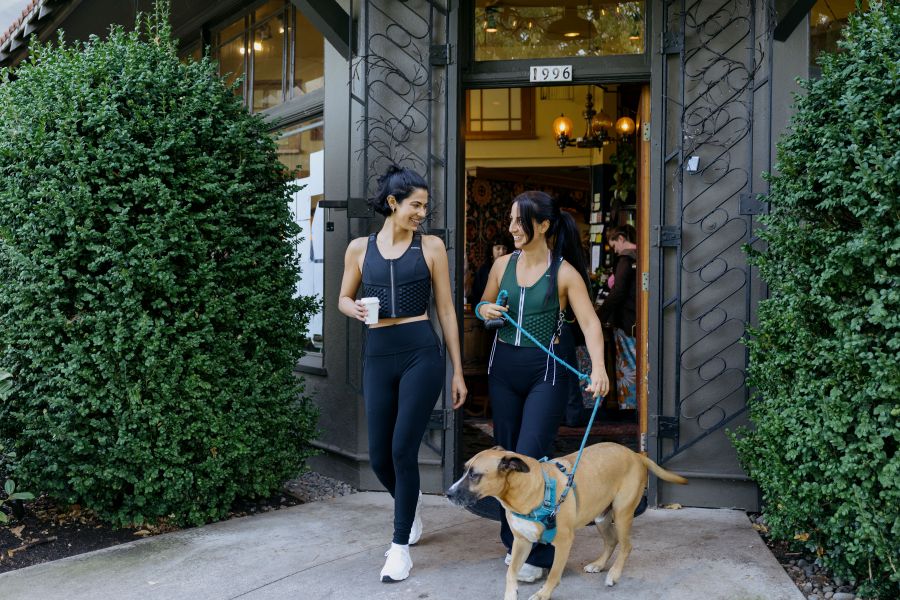
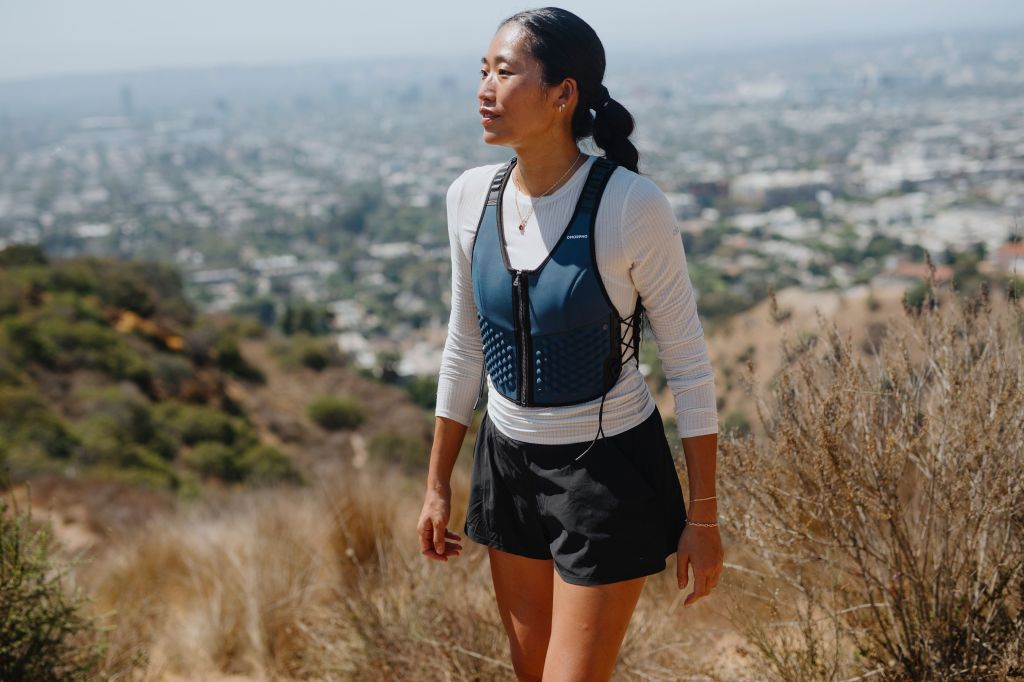
One of her favourite approaches is to wear her OMORPHO Icon vest for a brisk walk to Central Park, before using a park bench for a full-body workout involving squats, push-ups, step-ups and dips.
She then walks home, combining cardiovascular exercise, strength training and time outdoors in one session.
Ultimately, the secret to staying active in midlife isn’t necessarily doing more. It’s finding a routine that supports your changing body, fits into your lifestyle and is enjoyable enough to keep doing.
And sometimes, the simplest place to start is by putting on your trainers and heading out of the door.
Ashley Patten is a Pilates instructor, Wellness Professional, and OMORPHO ambassador