
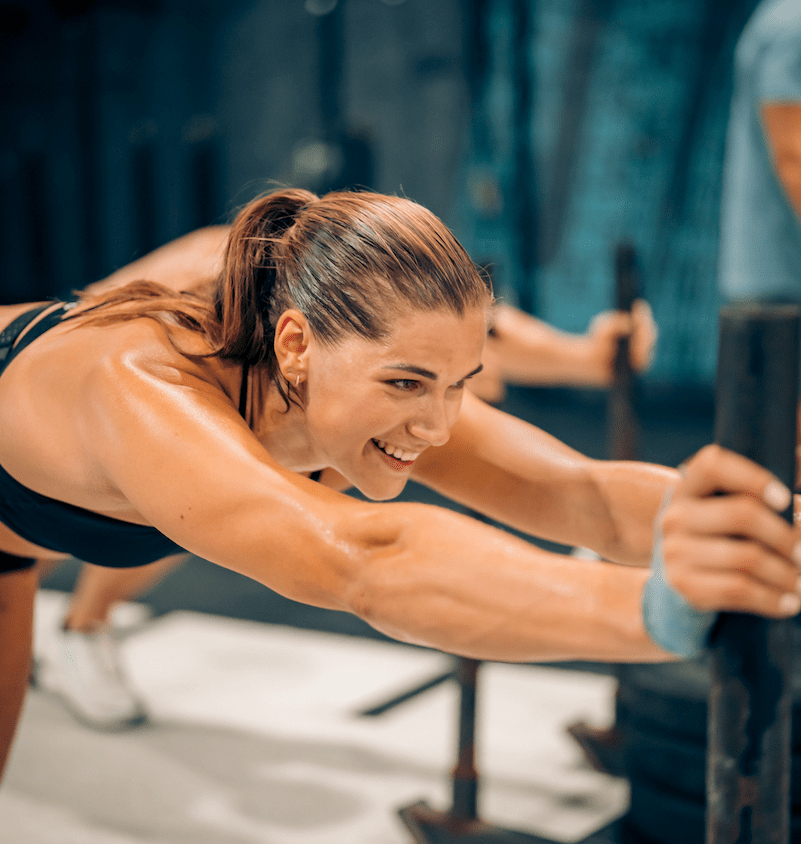
Three-time Functional Fitness world champion Matilde Garnes explains why eating more – not less – transformed her body, performance and relationship with food
PICS: Alex Trobough
Erling Haaland’s astonishing 6,000-calorie-a-day diet has made almost as many headlines as his goals. But the ‘Striking Viking’ isn’t the only Norwegian athlete with a huge appetite.
As a three-time CrossFit Games athlete and three-time World Champion in Functional Fitness, Matilde Garnes fuels herself with around 4,600 calories a day – and says eating enough, rather than eating less, is key to performing at her best.
Fresh from finishing an impressive 16th at the 2026 CrossFit Games in California, Garnes has cemented her place among the world’s fittest women. But her expertise extends beyond competition: she is also a qualified physiotherapist and nutritionist, giving her a unique perspective on the relationship between fuelling, recovery and performance
After years of fine-tuning the nutrition that underpins her training, the 30-year-old SALTE ambassador has discovered that eating a high-energy intake helps her train harder, recover better and ultimately become stronger. Now, she’s encouraging other women to stop fearing food and start fuelling their bodies for what they’re capable of.
From skinny to strong
The 4,600 calories Garnes eats today are a far cry from the way she once approached fuelling her body.
“I ate so much more than my friends, but I was still hungry and really skinny,” she says. “I would cry when people called me skinny because I didn’t want to be like that. But I realise now the issue wasn’t that I didn’t eat enough – it was that I wasn’t eating the right foods. Once I started eating more protein to build muscle, I started to gain a bit of weight, which was my goal”.
Garnes’ understanding of nutrition continued to evolve as she moved into CrossFit. Initially sceptical of the sport, she discovered CrossFit while studying personal training and nutrition in Australia at the age of 19 and quickly became hooked by its combination of strength training, endurance and gymnastics.
As she progressed, Garnes realised that being fast and fit was only part of the equation. She needed to build strength—and that meant giving her body the fuel it needed to adapt.
“When I started competing in CrossFit, I knew my biggest weakness was the strength work,” she says. “I could run fast, but my back squat was probably around 60 kilos. Now I’m eight kilos heavier and my back squat is around 140.”
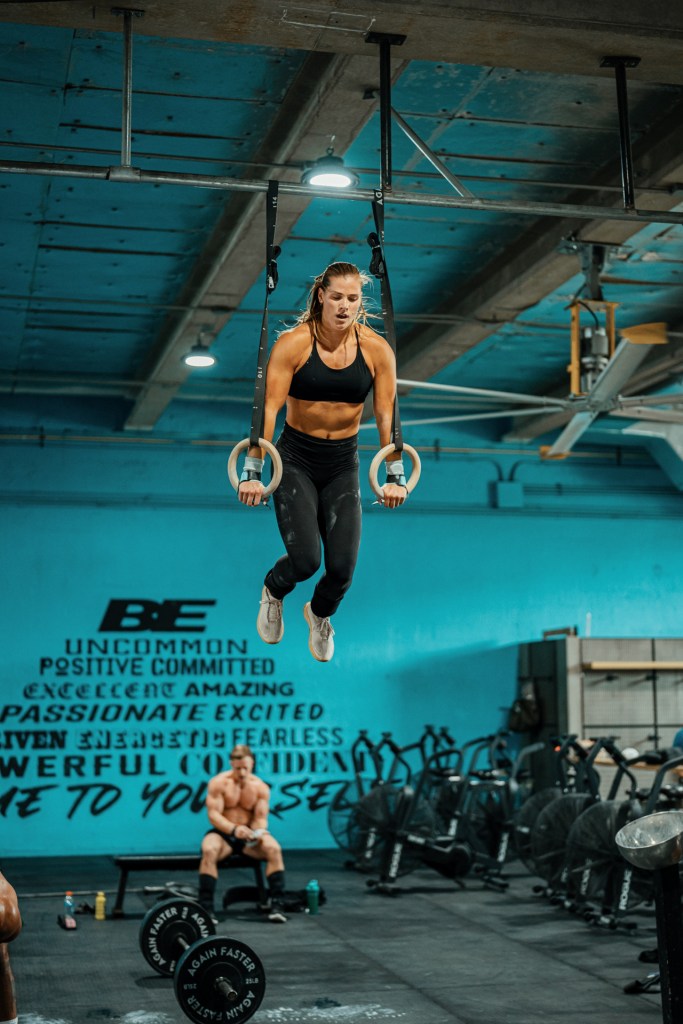
Finding her sweet spot
As her training increased, Garnes gradually raised her calorie intake from around 3,000 to 3,500 a day. Eventually, after experimenting with different amounts and finding her ideal competition weight, she settled on what she calls her “sweet spot”: around 4,600 calories.
But finding that number wasn’t simply about chasing a calorie target. Garnes says the biggest lesson was learning to listen to her body.
For years, she had struggled with sleep and would sometimes wake up during the night feeling hungry, despite not losing weight. But by paying attention to her energy, recovery and performance, she realised she needed more fuel.
“When you’re training, you’re slowly emptying the tank, especially the carbohydrates that you have in your body”, she says. “And I want my tank full, because I need the fuel for energy. I found the more I ate, the harder I could train. I could run faster, lift heavier, recover better between sessions and sleep better”.
The fuel female athletes need
For Garnes, years of competing at the highest level have taught her that performance starts with proper fuelling.
She believes many active women are still stuck in a mindset where eating less is seen as the path to a better body—even when it comes at the expense of performance.
“I think some women still think that carbs are unhealthy and that you shouldn’t eat them, but that’s what gives you the most energy,” she says. “I try to eat 700 to 850g of carbohydrates every day, with the rest made up of protein and good fats”.
Weighing around 72kg, Garnes aims for at least 72g of fat a day, although she often eats closer to 100g to support her health.
“It’s really important for women and female athletes to eat enough good fat,” she explains. “It’s especially important if you want to keep your hormones in balance, keep menstruating, and have kids when you’re older. A lot of women competing in clean endurance sports can lose their menstruation, and I don’t think that’s good for us”.
What your body can do matters more
Garnes says that fuelling her body is what allows her to do all the things she asks of it, but enjoying food is just as important for building a sustainable relationship with eating.
“I eat a cinnamon bun every rest day in my bed in the morning with a coffee, and I can still be at the CrossFit Games,” she says. “Eating a cinnamon bun or chocolate is also good for your mind, as is going out to dinner with your friends or enjoying an ice cream in the sun.
“Unfortunately, I think too many girls and women feel that if they do eat an ice cream, they have to eat less the next day and train more,” she continues. “But that’s the opposite of what you should do, otherwise you won’t perform or have energy to train”
Changing her mindset around food also changed the way Garnes viewed her body.
“I’ve been skinnier before, but I’m loving my body way more now because I can just do really cool stuff,” she says. “I can have energy to train, to perform, to be social and do everything I enjoy. I just think life looks and feel so much better when you can have balance with food. Ultimately, if you feel hungry, then you should eat. It’s really that simple”.
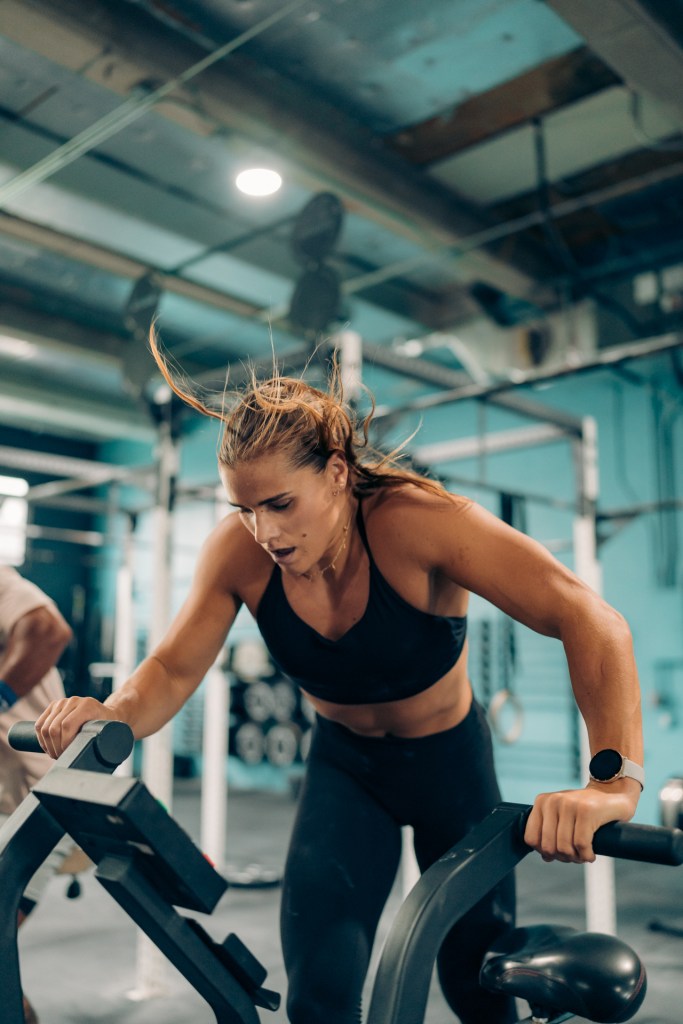
Recovery is where progress happens
Knowing what to eat is only part of the equation. Timing matters too, and with two or three training sessions most days, Garnes adjusts her intake to match the demands of training.
“I eat four main meals a day regardless of whether I’m training or resting, and the calorie intake of those meals always stays the same,” she says. “However, on training days, I consume another 800-1,000 calories during my workouts, bringing my total intake to around 4,600 calories a day.”
To avoid feeling depleted after a two to three hour workout, Garnes refuels between sets or endurance intervals by snacking on quick sources of carbohydrate, including apple purée pouches from the baby food aisle.
“People probably think I have 10 kids at home when I go shopping,” she jokes. “I eat 100g of carbs during my first training session, made up things like Haribo and dried peaches. I also drink Salte electrolytes mixed with carbohydrate powder to replace what I lose during training, and I always drink a full-sugar energy drink to maintain my energy levels”.
Garnes prioritises easily digestible carbohydrates before training, then refuels with carbohydrates and protein immediately afterwards to prepare for her next session, saving most of her fat intake until later in the day because it helps support sleep.
“I sleep up to nine hours a night, and I’ve figured out that eating close to bedtime is the best if I don’t want to wake up due to hunger,” she explains. “So, I eat my biggest meal straight after my last training session, so I have time to digest it, and then I’ll have an evening snack 15 to 30 minutes before I brush my teeth.”
That snack often consists of yoghurt, granola and fruit, including two kiwis, which Garnes says she adds because they can support sleep. But the reason she eats before bed is simple: “I just don’t want to go to bed with an empty stomach.”
Hydration was the missing piece
Garnes says proper hydration plays “a really big role” in her performance but admits it was the final piece of the puzzle despite her background in nutrition.
“I sweat a lot in training, even during the winter in Norway,” she says. “So I usually have around one and a half packets of SALTE electrolytes spread throughout the day to replenish lost salts. But since arriving in California for the CrossFit Games, I’ve upped that to two or three because it’s so hot here.”
Garnes says she was so thirsty during her first few days in the US she woke up two or three times a night because she was drinking so much. She’s since come up with her own heatwave hydration hack to beat disruptive nighttime trips to the loo.
“A pro tip of mine is to mix half a packet of electrolytes into a shot glass of water”, she says. “That way, I wake up feeling hydrated and rested rather than thirsty and tired.”
Having experienced the California heat first-hand, Garnes also believes FIFA’s decision to make hydration breaks mandatory during the 2026 World Cup was about far more than commercial interests— they were essential for protecting players in extreme conditions.
“Of course the hydration breaks are a great marketing ploy,” she says. “But I lived in Miami for a year, so I know how hot and humid it can get. When I watched Norway play England in Miami, I couldn’t help but feel for the players, so I’m very happy they got to have breaks. Hydration isn’t just for performance. It’s for safety.”
Matilde Garnes’ daily diet breakdown
For Garnes, hydration is simply one part of a carefully planned nutrition strategy that allows her to train at an elite level day after day. Alongside around 4,600 calories, she carefully times her meals, snacks and fluids to maximise energy, recovery and sleep.
From breakfast through to her pre-bed snack, here’s how the Norwegian CrossFit star fuels training, recovery and performance across a typical day.
BREAKFAST (06.45) – 790 CALORIES
- 3 x large eggs – 214 calories
- 2 x Sourdough English muffin + 5g butter – 287 calories
- 1 200ml Caffe Latte – 144 calories
- 1 x 150ml apple juice + 1 x 150ml orange juice – 145 calories
DURING 1ST WORKOUT (10.00) – 370 CALORIES
- 40g dried peaches + 1 x banana – 222 calories
- 1 x White Peach Red Bull – 148 calories
LUNCH (11.30) – 630 CALORIES
- 2 x GoGo Squeez apple pouch – 140 calories
- High protein chocolate milkshake – 170 calories
- 2 x slice of Sourdough bread – 220 calories
- 40g Strawberry jam – 100 calories
DURING 2ND WORKOUT (13.30) – 253 CALORIES
- I x banana – 93 calories
- Maurten 320 sports drink – 160 calories
2ND LUNCH (15.00) – 536 CALORIES
- 40g oatmeal + 20g granola – 384 calories
- 100ml semi-skimmed milk – 59 calories
- 1 x banana – 93 calories
DURING 3RD WORKOUT (16.00) – 255 CALORIES
- Norwegian carb drink – 255 calories
DINNER (18.45) – 977 CALORIES
- 200g Udon noodle – 300 calories
- 200g chicken breast with skin – 344 calories
- 60g basmati rice – 213 calories
- 40g satay wok sauce – 52 calories
- 1 cup spinach, 50g broccoli, 1 large carrot – 68 calories
EVENING MEAL (20.30) – 792 CALORIES
- 2 x slice of Bakery Bread (white) – 200 calories
- 20g Nutella – 108 calories
- 300ml Chocolate milk drink – 178 calories
- 2 x cup of Oikos yoghurt with 50g raspberries – 306 calories
Matilde Garnes is a SALTE ambassador and partners with the brand as part of her training, recovery and competition programme.