
As you enter midlife, your body begins to change. Hormones shift, muscle loss increases and suddenly you might notice familiar workouts feeling harder or recovery taking longer. Rather than training harder and expecting the same results, adapting your workouts to better support your body during perimenopause, menopause and post-menopause can help you to train smarter and protect your health, fitness and mobility in the long run.
‘As menopause approaches, the body changes, and training often needs to change too,’ explains Dr Fiona MacRae, a specialist in integrative women’s health and bioidentical hormone balancing for the Marion Gluck Clinic. ‘When a familiar routine suddenly feels harder, recovery slows, and once-reliable results become elusive, it does not mean fitness has diminished. This often signals a new hormonal chapter, one that may call for a smarter, more responsive approach to training.’
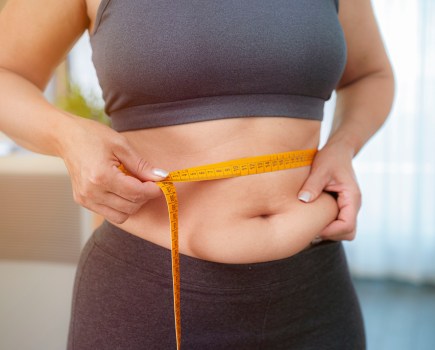
‘Menopause causes a significant drop in estrogen and progesterone, leading to changes such as faster muscle and bone loss, increased abdominal fat, reduced cardiovascular efficiency, and disrupted sleep,’ she adds. The good news is that exercise remains one of the most effective tools available, but the type, intensity, and recovery strategy may need to change.’
Here are five ways to adapt your workouts during perimenopause, menopause and beyond.
1. Make strength training non-negotiable
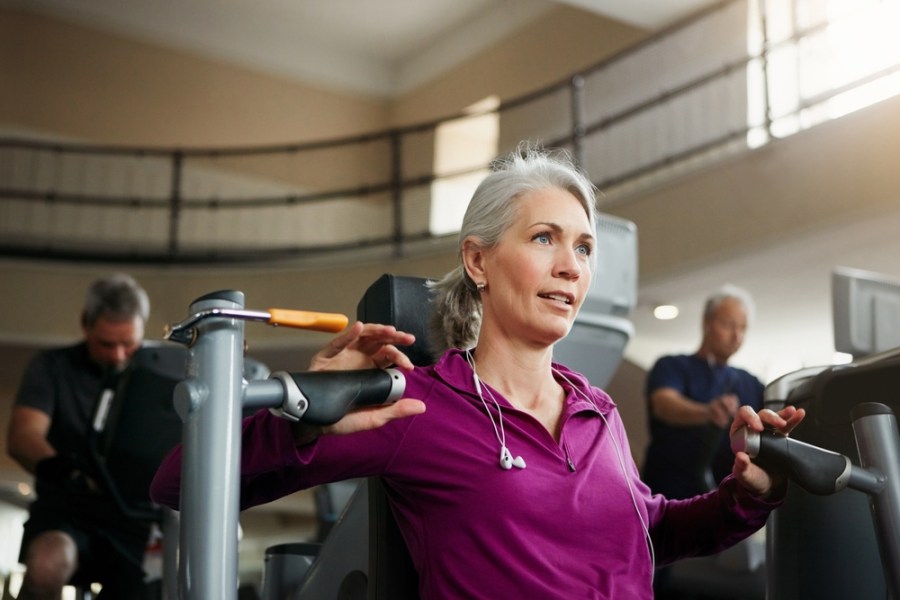
As you age, your lean muscle mass and bone density begin to decrease. According to Dr Fiona, the most important training shift for most midlife women is to make strength work a consistent priority. ‘Falling estrogen accelerates the loss of lean muscle mass and bone mineral density, two of the most significant health risks of menopause,’ she explains. ‘Resistance training directly counters both. Studies show progressive resistance training increases muscle strength and lean mass in peri- and post-menopausal women and reduces the risk of falls and fractures.’
‘A useful target is two to three sessions per week, covering all major muscle groups,’ she suggests. ‘Training to exhaustion is not required as evidence suggests strength and muscle hypertrophy are achievable across a range of intensities when progressive overload is applied. Compound lifts such as squats, deadlifts, rows, and presses offer the greatest return per session. For those new to lifting, menopause can be an ideal time to begin.’
2. Rethink your cardio
While it’s important to focus on strength training during perimenopause and menopause, this doesn’t mean you should stop doing cardio workouts. ‘Cardio remains essential, but the goal often shifts,’ Dr Fiona tells us. ‘Aerobic exercise helps reduce cardiovascular risk, which rises sharply after menopause, supports insulin sensitivity, improves lipid profiles, and may help improve overall cardiometabolic health.’
‘Moderate-intensity aerobic activity (such as brisk walking, cycling, or swimming) at around 150 minutes per week remains the cornerstone recommendation,’ she recommends. ‘But High Intensity Interval Training (HIIT) also earns its place here. HIIT has been shown to improve cardiovascular fitness and body-composition measures in post-menopausal women, often more efficiently than steady-state exercise alone.’
If you’re looking to build a new weekly fitness routine, Dr Fiona recommends creating a varied mix to support your fitness from all angles. ‘A practical weekly template might include: two to three resistance sessions, two moderate cardio sessions, and one HIIT session, with at least one full rest day,’ she suggests.
3. Prioritise bone-loading movement
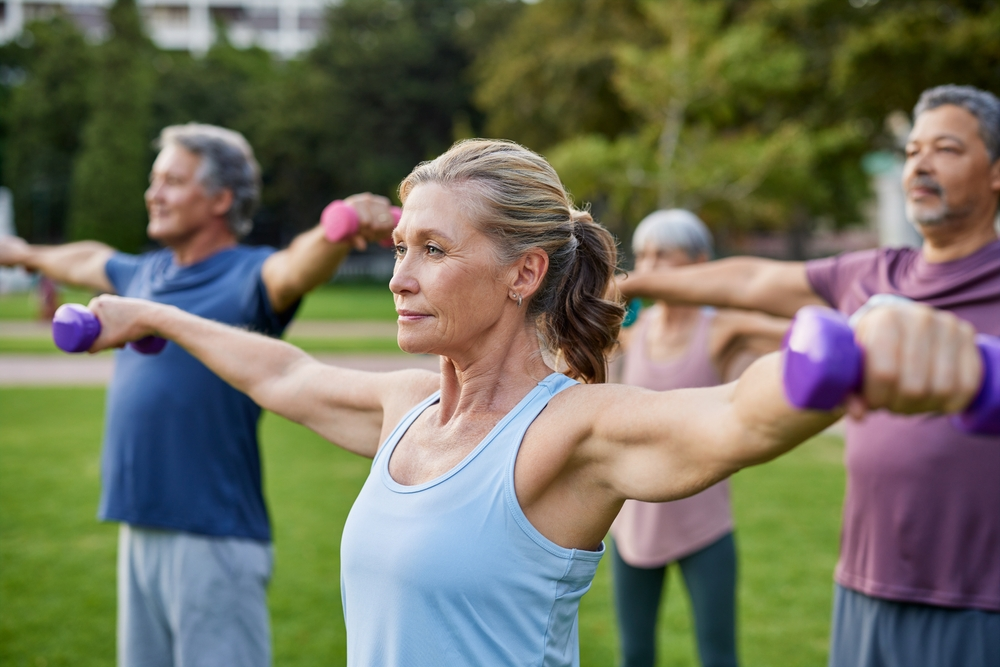
Bone density decreases as you reach the menopause, which can make you more prone to breakages. To combat this, Dr Fiona recommends trying a range of weight-bearing activities, as these will help to maintain bone strength. ‘Weight-bearing and high-impact activities, such as jumping and running, are among the most effective stimuli for maintaining bone density,’ explains Dr Fiona. ‘When joint health allows, these movements should be included in a fitness programme. Dance, tennis, hiking, and plyometric circuits can all contribute.’
If you’re struggling with joint pain, there are also some lower-impact activities you can try. These offer the same bone-boosting benefits, minus the strain and impact on your joints. ‘For those managing joint pain, lower-impact aquatic or supported exercise can still contribute to strength, cardiovascular fitness, mobility, and confidence, so effective training does not always have to mean pounding a treadmill,’ Dr Fiona adds.
4. Respect recovery signals
When you reach menopause, your post-workout recovery will change, too. ‘One common mistake is applying a younger training template to a body operating in a different hormonal environment,’ explains Dr Fiona. ‘Declining estrogen can affect connective tissue resilience and sleep quality, both of which directly influence recovery capacity.’
Dr Fiona recommends listening to your body and adapting as needed. ‘Signals that training load may need to be reduced include persistent fatigue, worsening sleep, recurring niggles, and lack of progress despite consistent effort,’ she explains. ‘A sensible approach is to allow at least 48 hours between heavy resistance sessions for the same muscle groups, include active recovery such as yoga, walking, or mobility work, and treat sleep as a core training variable rather than an afterthought.’
5. The bigger picture
When it comes to adapting your approach to fitness during the menopause, it’s important to think beyond those long gym sessions. ‘Incidental movement also matters,’ says Dr Fiona. ‘Breaking up prolonged sitting with short “exercise snacks”, even 30 seconds to five minutes of activity throughout the day, can support heart health, glucose control, blood pressure, strength, and circulation.’
‘Menopause is not a reason to train less, it is a reason to train with more intention,’ she adds. ‘The women who thrive through this transition are often those who stop fighting the body’s changes and start working with them.’