
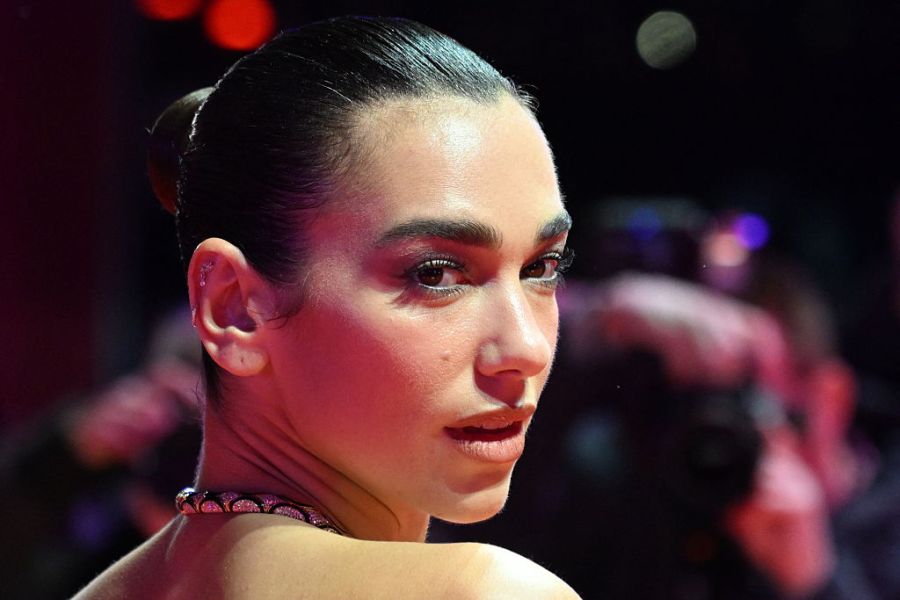
The pop star’s fitness routine is surprisingly achievable, combining short bursts of high-intensity exercise with Pilates, boxing, spinning and yoga. Here’s how to build a balanced version of Dua Lipa’s training into your own week
PICS: Getty Images
Dua Lipa may spend much of her life performing high-energy choreography in front of thousands of people, but her approach to fitness isn’t simply about spending hours in the gym.
In fact, one of the most useful things about her workout routine is how often she keeps things short.
The singer has previously spoken about using 15-minute HIIT sessions when her schedule is particularly busy, alongside a much broader mix of training that includes reformer Pilates, boxing, spinning, yoga, strength work and dance.
And that variety is important. Rather than hammering the same muscles and energy systems every day, Lipa’s approach combines cardiovascular fitness, core strength, mobility, coordination and recovery.
It’s a useful template for anyone trying to get fitter without making exercise feel like another full-time job.
The 15-minute workout that gets Dua Lipa moving
When time is tight, Dua Lipa has previously said she likes a quick 15-minute HIIT workout that she can complete before starting her day.
That’s a particularly practical strategy if your main barrier to exercise is finding the time. You don’t need a full hour, a complicated programme or a gym session to raise your heart rate and get your muscles working.
Lannay Dale-Tooze, content writer and personal trainer at Gymshark, suggests using simple bodyweight exercises such as burpees, mountain climbers, high knees and jumping jacks for a short home-based session.
The advantage is that there’s no equipment to set up and little preparation required.
If you’re training in a gym, she suggests a simple sprint interval session: warm up for two minutes, complete seven rounds of 30-second treadmill sprints followed by 30 seconds of recovery, then finish with a one-minute easy jog.
The important point, however, is not to confuse a short workout with an easy workout. HIIT is supposed to be demanding, so beginners should build intensity gradually rather than attempting an all-out session immediately.
And while high-intensity exercise can produce a small amount of additional energy expenditure after training, it shouldn’t be viewed as a magical “afterburn” effect. The bigger benefit is that short, vigorous exercise can make it easier to accumulate useful cardiovascular training when time is limited.

Pilates is the foundation
If HIIT provides the intensity, Pilates provides some of the control and stability.
Lipa is a long-time fan of reformer Pilates and has continued to incorporate it into her routine while travelling. In a 2025 British Vogue profile, her schedule was described as including yoga, reformer Pilates, weight training and dance rehearsals, with Lipa saying she looks after her body “like an athlete”.
She has also written about Pilates herself through Service95, describing it as a way to strengthen her core, improve posture and flexibility and support her wellbeing.
There is some evidence behind those benefits, too. A recent systematic review found that Pilates can have positive effects on aspects of posture, although the evidence isn’t uniform across every measure.
For a Dua-inspired session, you don’t necessarily need a reformer. Bodyweight movements such as glute bridges, side planks and Pilates roll-ups can provide a similar emphasis on controlled movement and core stability.
That makes Pilates a useful counterpoint to HIIT: rather than simply trying to work harder, you’re learning to control your body better.
Boxing builds fitness without feeling like cardio
Boxing is another regular feature of Lipa’s training, and it’s easy to see why it fits a performance-heavy lifestyle.
A boxing session can combine cardiovascular conditioning with footwork, coordination, reaction time and upper-body endurance. It also forces you to brace your core and move your entire body rather than simply working one muscle group.
Lipa has previously described boxing as both a fitness tool and a stress reliever, while her wider training routine has repeatedly included boxing alongside Pilates, yoga and spinning.
That last point is worth stealing from her routine: exercise doesn’t have to feel like exercise.
If you find conventional cardio boring, boxing, dance or a spin class can provide a cardiovascular workout while giving you something else to concentrate on.
Spinning keeps the engine running
Cycling and spinning provide another relatively low-impact way to train your cardiovascular system.
Unlike running, cycling places less repetitive impact through the ankles and knees, while a hard spin session can still challenge your heart and lungs.
Dale-Tooze also points out the social element. Classes can make training more enjoyable and provide a degree of accountability — something that can be just as important for consistency as the workout itself.
And consistency is where Lipa’s approach really starts to make sense.
Her routine isn’t about finding one “best” workout. It’s about having several different ways of moving so that training remains interesting.
Don’t underestimate yoga
Yoga might seem like the least intense part of the programme, but it plays an important role in balancing everything else.
Lipa has been practising yoga for years and has spoken about using it during touring periods. In 2022, she shared a yoga flow through Service95 and described her practice as helping her feel grounded during an intense period of touring.
More recently, Service95 reported that regular yoga remained part of her wellbeing routine on tour.
From a training perspective, yoga can complement harder sessions by working on mobility, balance, controlled movement and breathing.
Dale-Tooze suggests poses such as downward-facing dog and cobra for working on the posterior chain, mobility and posture.
There’s also a psychological benefit. If your training week consists entirely of sessions designed to exhaust you, it’s difficult to recover — or stay motivated. Having lower-intensity movement in the programme gives you a chance to keep moving without constantly chasing maximum effort.
How Dua trains her abs
Lipa has previously revealed that her own ab routine includes different variations of crunches, leg raises and planks — although she admits that planks are probably her least favourite.
The important lesson here is not to chase hundreds of crunches in the hope of revealing a six-pack.
A strong core is about much more than visible abs. Your abdominal muscles, obliques, lower back and surrounding musculature help transfer force between your upper and lower body, stabilise your trunk and support movement.
For a simple home core session, try:
Bicycle crunches: 10-15 reps per side
Leg raises: 10-15 reps
Plank: 20-45 seconds
Complete three rounds, two or three times a week, leaving enough recovery between sessions.
If leg raises cause back discomfort, Dale-Tooze recommends swapping them for bird dogs, which train core stability while placing less demand on the spine.
And don’t expect a Dua Lipa-style midsection simply by copying her ab exercises. Visible abdominal definition depends on several factors, including genetics, muscle development and overall body composition. No single exercise can dictate where or how quickly body fat is lost.
The real secret is variety
Perhaps the most useful thing to take from Lipa’s training isn’t a particular exercise at all.
It’s the way she combines different forms of training.
Her routine can be viewed as a simple fitness pyramid: short, intense cardio for conditioning; Pilates and strength work for muscular control; boxing and spinning for fitness and variety; and yoga for mobility and recovery.
That also broadly fits current physical-activity guidance. UK guidelines recommend adults accumulate at least 150 minutes of moderate activity or 75 minutes of vigorous activity each week, alongside muscle-strengthening work on at least two days. They also emphasise that some activity is better than none.
You don’t need to copy a pop star’s schedule to benefit from the principle.
Try two or three short strength or HIIT sessions, add a Pilates or mobility session, get some steady-state cardio through walking, cycling or another activity you enjoy, and leave room for recovery.
That’s arguably the most sustainable part of Dua Lipa’s workout routine: keep moving, keep it varied and find forms of exercise you actually enjoy doing.
And if you’ve only got 15 minutes today, that’s still enough to get started.