
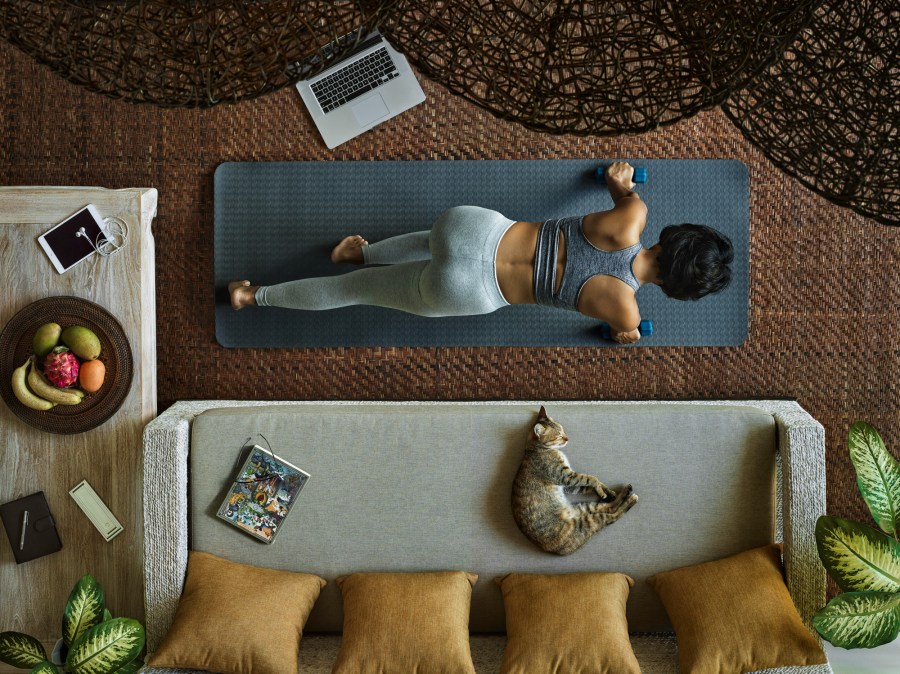
Whether you’re travelling, working away or simply short on time, this full-body bodyweight workout from a personal trainer will help you build strength, improve fitness and stay in shape using nothing but your own body
PICS Getty Images
You don’t need a gym membership, expensive equipment or even much space to stay fit.
Whether you’re in a hotel room, on holiday, working away or simply training at home, your own body provides everything you need for an effective workout. In fact, bodyweight training isn’t just a substitute for lifting weights – it can improve strength, mobility, balance and cardiovascular fitness while helping iron out weaknesses that machines often hide.
Personal trainer and movement coach Leandro Fornito believes consistency matters far more than location.
“When you’re travelling, it’s not always easy to find space to train – but that shouldn’t stop you,” he says. “All you need is your own body.”
The following workout hits every major muscle group using just 10 simple exercises. Perform them as a circuit and you’ll finish with a session that challenges your strength, elevates your heart rate and helps maintain lean muscle wherever life takes you.
Why bodyweight training works
Bodyweight workouts aren’t simply a backup plan for when you can’t reach the gym. They help improve movement quality, balance, coordination and stability while strengthening the smaller muscles that support your ankles, knees, hips and shoulders.
They’re also surprisingly effective for improving cardiovascular fitness. Keep the rest periods short and move briskly between exercises and you’ll challenge both your muscles and your heart in a single workout.
Perhaps the biggest advantage is convenience. There’s no equipment to carry, no waiting for machines and no excuses. Whether you’re travelling for work, enjoying a summer holiday or squeezing in 20 minutes before breakfast, you can still get an effective session done.
How to do the workout
Complete each exercise in order, resting as little as possible between movements. Once you’ve finished all 10 exercises, rest for one minute before repeating the circuit. Aim for two rounds, or three if you’re feeling particularly energetic.
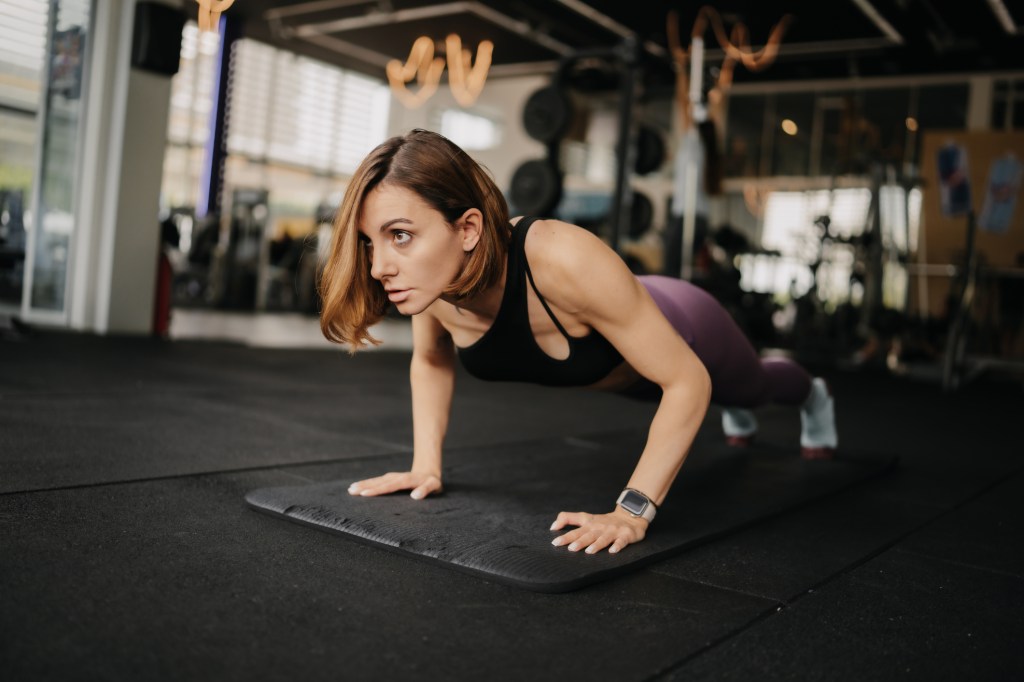
1. Spiderman press-up
Primary muscles: Chest, triceps, core
Reps: 20 (10 each side)
Why do it?
Lifting one leg as you lower into the press-up forces your stabilising muscles and core to work much harder than during a standard press-up, improving both upper-body strength and balance.
How to do it
- Start in a press-up position.
- Lower your chest towards the floor while bringing one knee towards the same-side elbow.
- Press back up and return your foot to the floor.
- Alternate sides with each repetition.
2. Side crunch
Primary muscles: Obliques
Reps: 20 (10 each side)
Why do it?
This move strengthens your obliques and rotational core muscles, helping improve posture and athletic movement.
How to do it
- Lie on your side with your knees bent.
- Place one hand beside your head.
- Lift your shoulders towards your knees by squeezing your abs.
- Pause briefly before lowering with control.
3. Jump lunge
Primary muscles: Quads, glutes, hamstrings
Reps: 10 (5 each leg)
Why do it?
Jump lunges develop lower-body power and coordination while raising your heart rate.
How to do it
- Begin in a lunge.
- Explode upwards, switching legs in mid-air.
- Land softly in a lunge on the opposite side before repeating.
4. Diamond press-up
Primary muscles: Chest, triceps
Reps: 20
Why do it?
Bringing your hands together shifts more of the workload onto the triceps while still challenging the chest.
How to do it
- Form a diamond shape with your thumbs and index fingers.
- Keep your body straight.
- Lower until your chest is just above the floor.
- Push back to the start.
5. Clapping press-up
Primary muscles: Chest, triceps
Reps: 8
Why do it?
Adding an explosive element develops upper-body power and coordination.
How to do it
- Lower quickly into a press-up.
- Drive explosively upward until your hands leave the floor.
- Clap before landing softly and resetting.
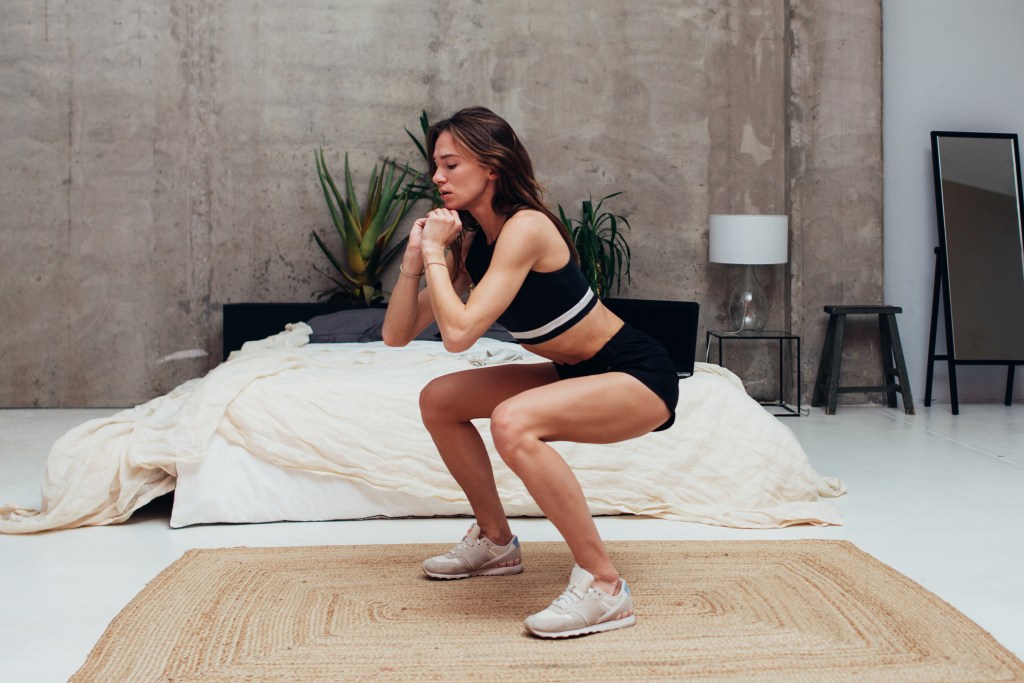
6. Squat
Primary muscles: Quads, glutes
Reps: 20
Why do it?
One of the best full-body functional exercises, squats strengthen your legs while improving everyday movement.
How to do it
- Stand with feet just wider than shoulder-width.
- Sit your hips back until your thighs are at least parallel to the floor.
- Keep your chest lifted.
- Drive through your heels to stand.
7. Single-leg Romanian deadlift
Primary muscles: Hamstrings, glutes
Reps: 8 each leg
Why do it?
This balance challenge strengthens the posterior chain while improving stability and coordination.
How to do it
- Balance on one leg.
- Hinge forwards from the hips while keeping your back straight.
- Lower until you feel a stretch in your hamstrings.
- Return to standing under control.
8. Russian twist
Primary muscles: Core
Reps: 20 (10 each side)
Why do it?
A brilliant bodyweight movement for rotational strength and a more resilient core.
How to do it
- Lean back to roughly 45 degrees.
- Keep your back straight.
- Rotate your torso from side to side while maintaining the same body angle.
9. Full burpee
Primary muscles: Quads, hamstrings, chest, shoulders, core
Reps: 5
Why do it?
Combining strength and cardio, the full burpee delivers maximum training benefit in minimal time.
How to do it
- Perform one full press-up.
- Jump your feet forward.
- Explode upwards into a jump with your hands overhead.
- Repeat smoothly.
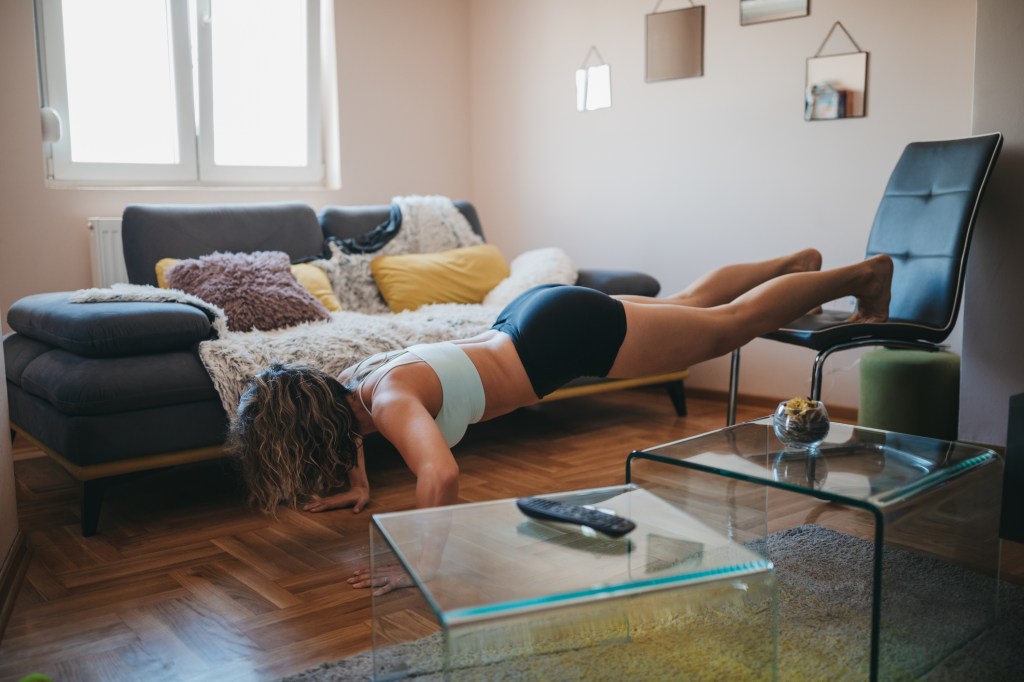
10. Decline plank
Primary muscles: Core
Reps: 30 seconds
Why do it?
Elevating your feet increases the challenge for both your shoulders and abdominal muscles.
How to do it
- Place your forearms on the floor.
- Rest your feet on a bed, chair or sofa.
- Keep your body in a straight line.
- To make it harder, move your elbows slightly forwards.
The bodyweight workout that goes anywhere
Missing a week in the gym doesn’t have to mean losing strength or fitness. This simple circuit covers every major movement pattern — pushing, squatting, hinging, rotating, stabilising and generating power — making it an ideal workout whether you’re travelling, training at home or simply short on time.
Better still, you’ll return to your normal routine feeling strong and capable, rather than facing the daunting prospect of rebuilding lost fitness. Sometimes, the best piece of exercise equipment is the one you’ve been carrying around all along.