
Electrolytes are no longer just for your water bottle; they are a growing beauty trend in skincare. To see just how well they work on the skin, I put the world’s first electrolyte facial to the test and asked the experts if they believed this treatment is the next big thing in the world of beauty.
First pic: Getty images
What are electrolytes?
Electrolytes in drinks, powders and gels are saturating the sports nutrition market because they usually contain water, salts and minerals to ensure your body maintains the right balance in fluid. They tend to include sodium in them which helps replace any lost in sweat, magnesium and calcium to support bones and potassium to help with muscle recovery. They are not energy drinks but are often more favourable than water as they can taste sweeter and therefore keep you better hydrated.
What are electrolytes in skincare?
Electrolytes in skincare also contain salts and minerals and, like electrolytes that you digest, help with hydration. In fact, electrolyte skincare contains most of the ingredients found in sports products, including magnesium to help support the skin barrier, potassium to balance the skin and calcium to help with cell turnover. The sodium in them often works like the superhero skin product hyaluronic acid, helping to infuse hydration into the skin and ensure it retains moisture.
Unlike the oral form, skincare electrolytes are a fairly new beauty trend, with more and more brands introducing them to their product range – probably helped fuelled in popularity by the boom of electrolyte sports drinks.
The electrolyte facial

Suzanne before the electrolyte facial.
Launched this summer, the world’s first electrolyte facial was created by the at-home beauty app Ruuby in conjunction with the electrolyte drink Nonni. It claims to be a replenishing treatment designed to reset tired, dehydrated skin from the inside out.
The 60-minute facial involves sculpting, hydrating and nourishing the skin through magnesium and calcium skincare electrolytes – and other ingredients – alongside lymphatic massage to help rid of puffiness, lift skin and help make it glow.
My experience of the £94 electrolyte facial
After an intense game of padel – where I drank an electrolyte sports drink – I was more than happy to lie down for an hour on the therapists massage table. It had been thirsty work getting through my 90-minute match so, whilst I was nicely hydrated inside, I was ready to see if my skin – which is very dry – was going to feel the same.
The treatment itself is super relaxing and had it not been for the fact I needed to stay awake to review it, I’d have happily dozed off. My skin was double cleansed before the electrolytes were applied to it; magnesium and calcium creams, followed by an electrolyte-rich serum, lymphatic drainage, face mask, eye patches and various other layers of lotions and potions.
I could feel my tight skin bounce back to life, with the intense hydration being massaged into it. Once finished, I was handed the Nonni electrolyte drink which was great timing and obviously – being a midlife woman – asked if too much electrolyte consumption would have me needing the toilet more! As it happens, no; which is saying something for someone who is up at least once a night for a bathroom visit.
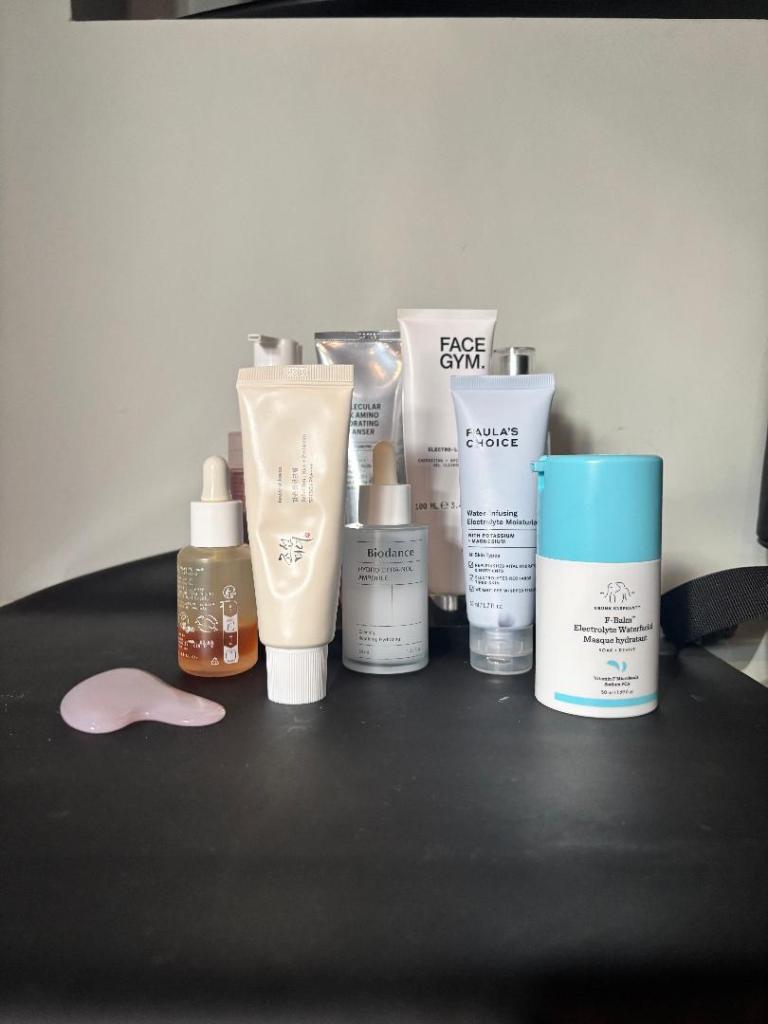
These are the products used in the electrolyte facial.
The result
The proof is in the pudding, or the drink/skincare should I say, as my face felt super soft, clean and glowy. In fact, the sculpting massage technique seemed to lift my cheekbones and the following day my skin still retained its glow. Think intense hydration, and plenty of glow-inducing ingredients that leave skin looking brighter, plumper and more refreshed. Perfect for menopausal skin if, like me, your complexion is a bit dull and dry.

Could electrolyte skincare be the next big beauty trend? We asked the experts
According to dermatologist Dr Anna Andrienko, an aesthetics doctor at Dr Ducu Clinics there is some logic behind using electrolytes in skincare.
“Magnesium and calcium are important minerals for the skin and play a role in maintaining normal skin function and the skin barrier. So I can see why they’re being used in a treatment focused on soothing and hydration,” she explained.
“However, I wouldn’t say that electrolytes themselves are a miracle hydration ingredient. How hydrated your skin becomes will depend much more on the overall formulation and the other ingredients being used. If the serum contains good humectants and moisturising ingredients, for example, these are likely to be doing much of the work when it comes to increasing and retaining moisture.
“That said, there’s nothing particularly surprising about electrolytes being included in a hydrating facial, and if the skin feels calmer, softer and more hydrated afterwards, then it can certainly be a useful part of the treatment.”
As for whether electrolyte facials are worth it, Dr Riaz Agha, a consultant plastic and reconstructive surgeon at Harley Clinic Group says they may be worthwhile as a hydrating facial and an enjoyable experience, provided the products suit your skin. In my case, they certainly did!
“There is some research supporting mineral-containing skincare treatments,” he explained. “What that research does not establish is whether the electrolyte stage in this facial gives better results than an otherwise comparable treatment without it. I would judge the products, the treatment itself and the price.”
How can magnesium and calcium help the skin?
“Here, we are talking about mineral salts containing magnesium or calcium. When dissolved, they release electrically charged particles called ions,” added Dr Agha.
“Calcium helps regulate how skin cells mature and form the protective outer layer. Magnesium is also involved in normal cell function, and researchers have investigated its role in skin-barrier recovery.
“These are real biological roles, but we still need evidence showing what happens when particular mineral ingredients are applied to the skin.”
Is there evidence that applying them can improve hydration or soothe skin?
There is some evidence, particularly in dry, eczema-prone skin, explains Dr Agha.
“A controlled study published in 2005 found that bathing a forearm in a magnesium-rich Dead Sea salt solution improved hydration and reduced roughness and redness compared with bathing the other forearm in tap water.
“A later randomised trial found that a cream containing magnesium and ceramides improved skin hydration in people with eczema. However, the researchers could not separate magnesium’s contribution from that of ceramides and other ingredients, including glycerol.
“These findings are worth taking seriously. They concern specific salt mixtures or creams used over several weeks, though, and do not establish what a single electrolyte facial will achieve.”
For more details of the electrolyte facial, visit https://www.ruuby.com/