
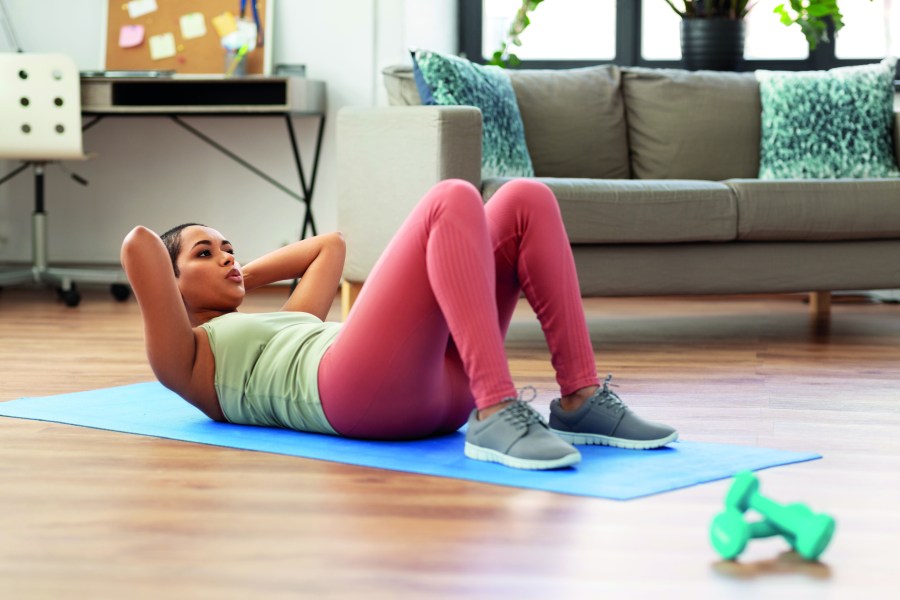
Heal and strengthen your body with the help of this postpartum workout by pregnancy fitness specialist and mum of four, Ashley Nowe. Spoiler alert – there’s not a kegel in sight!
Words: Ashley Nowe | Images: Shutterstock & Ashley Nowe
Pregnancy and childbirth take a major toll on the body. Muscles get stretched, connective tissue is thinned, ligaments are extended – and, for some, scar tissue is formed. Despite these enormous physical changes, many women aren’t told how to properly rehabilitate their bodies – particularly their core and pelvic floor. Many mothers go on to believe that their postpartum side effects are just the price of motherhood.
The good news is, core and pelvic floor training can improve postpartum side effects, whether you had your baby eight weeks ago or 18 years ago. Restoring core and pelvic-floor function can reduce incontinence, prolapse, back and hip pain, and even improve your waistline and intimacy.
And, if you’re thinking kegel exercises are the answer, think again. For optimal pelvic health, your pelvic floor needs to be able to both relax and lengthen, as well as lift and contract. Total body exercises and a postpartum workout that focuses on breath and core activation are far more functional than kegels in improving core and pelvic floor health.
Try this 10-minute postpartum workout
This is a great workout to improve diastasis recti and prolapse, and reduce back pain and incontinence. All you need is a resistance band mini loop. For each exercise, focus on breathing. On the challenging part of any exercise, you want to exhale to help activate the pelvic floor. Make sure you always listen to your body and stop if you feel in pain or pressure.
Squat with Band
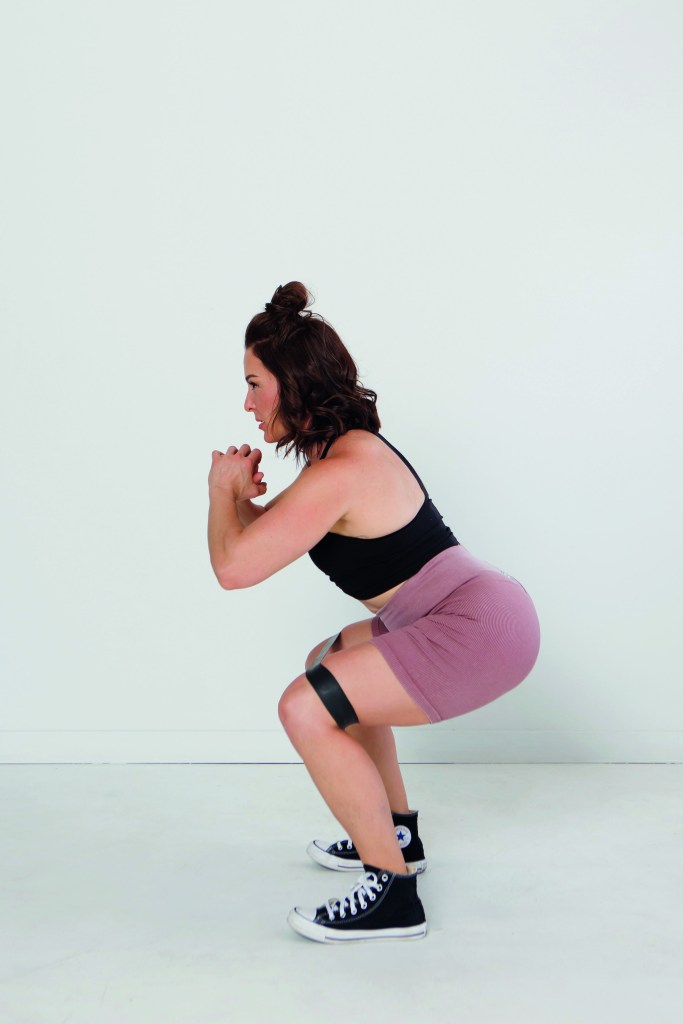
- Start with the resistance band just over the tops of the knees.
- Inhale as you squat down, knees pressing gently into the band.
- As you squat down, think about reaching your glutes back as if you are sitting in a chair.
- Exhale audibly out your mouth with a ‘haaaa’ or ‘sssss’ noise as you stand, lifting your pelvic floor and gently squeezing your glute muscles at the top.
- Perform 10 reps.
Band Step Back
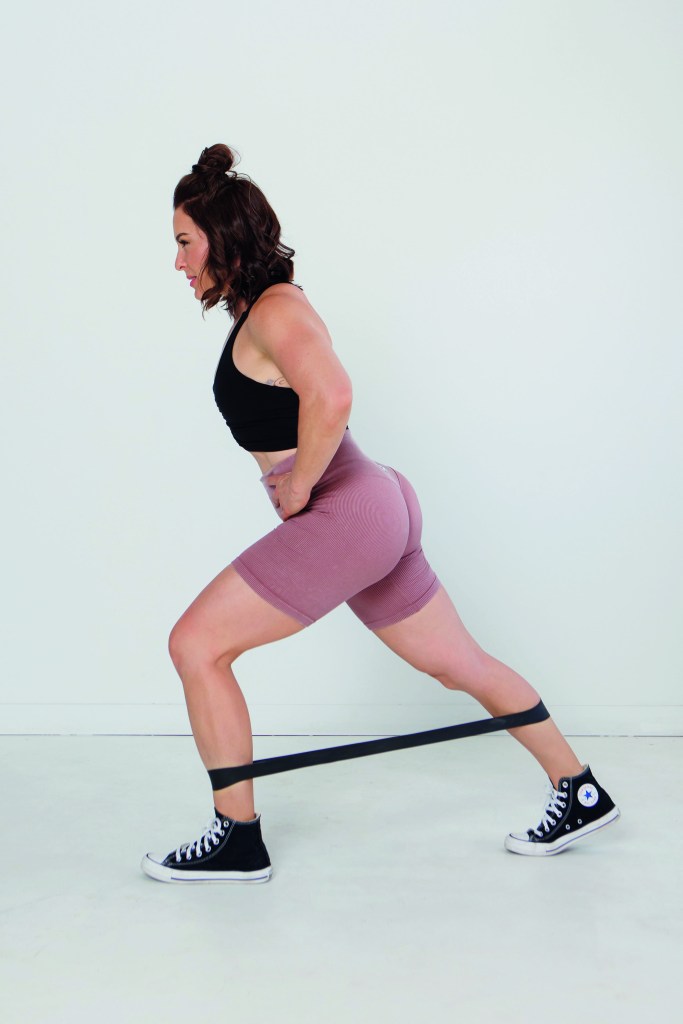
- Start with the band around your ankles, slight bend in the knees, and feet hip-width apart.
- Inhale and let your breath go down into your body, relaxing your pelvic floor.
- Exhale audibly out your mouth as you extend one leg straight back, lifting your pelvic floor.
- Perform 10 reps on each side.
Monster Walks
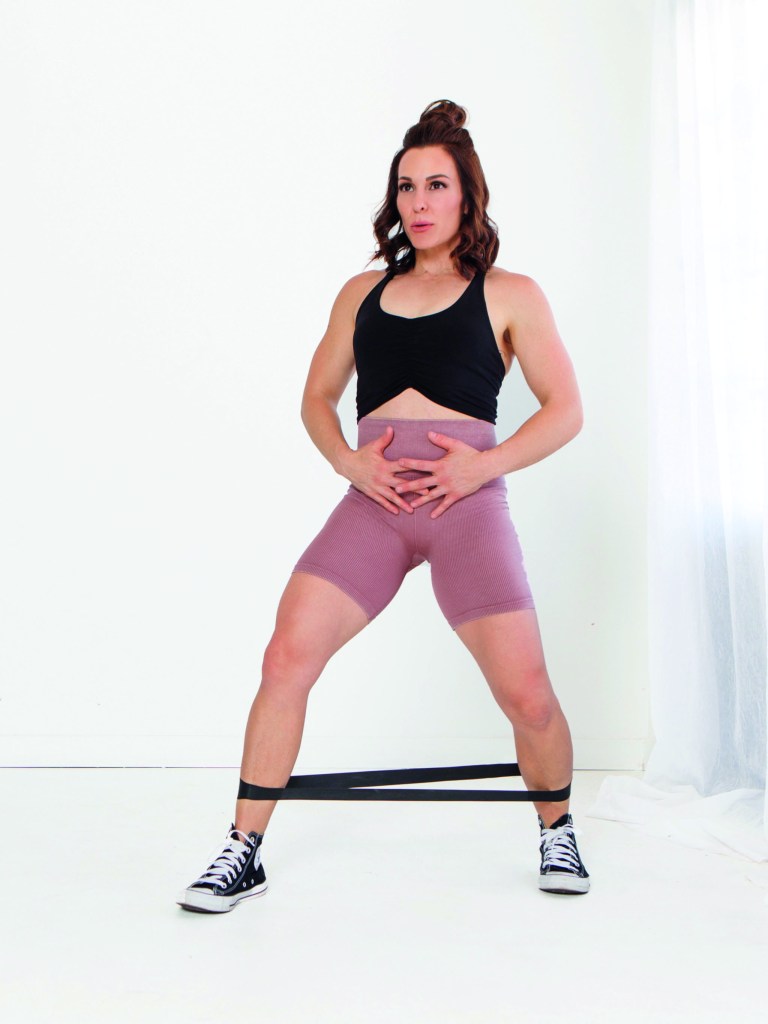
- Stand with the band over your ankles.
- Start with your feet hip-width apart.
- Inhale in the starting position.
- Exhale and lift your pelvic floor as you step out and slightly diagonal.
- Perform 20 reps.
Having an uncomfortable first trimester? Try this prenatal yoga flow to move better during pregnancy
Side Shuffle with Band
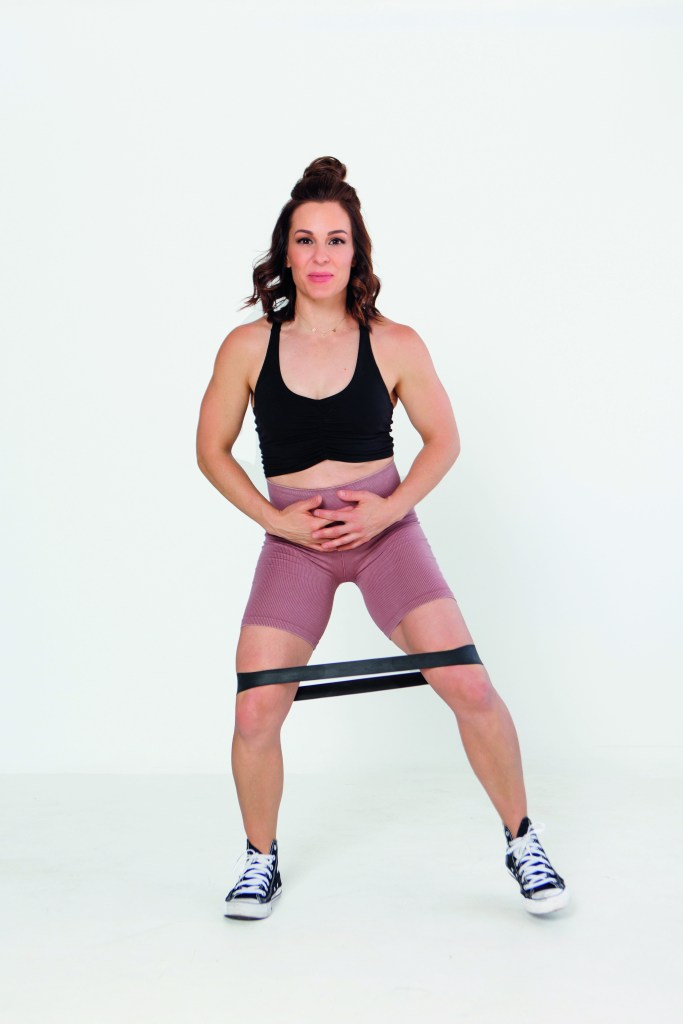
- Start with the band just over the tops of your knees (or at your ankles for a more challenging move).
- Keeping a slight bend in your knees, step to the side without letting the band push your knee in.
- Exhale with each step to the side, lifting your pelvic floor and pulling your belly in and up.
- Perform 20 reps.
Elevated Bridge with Band Abduction
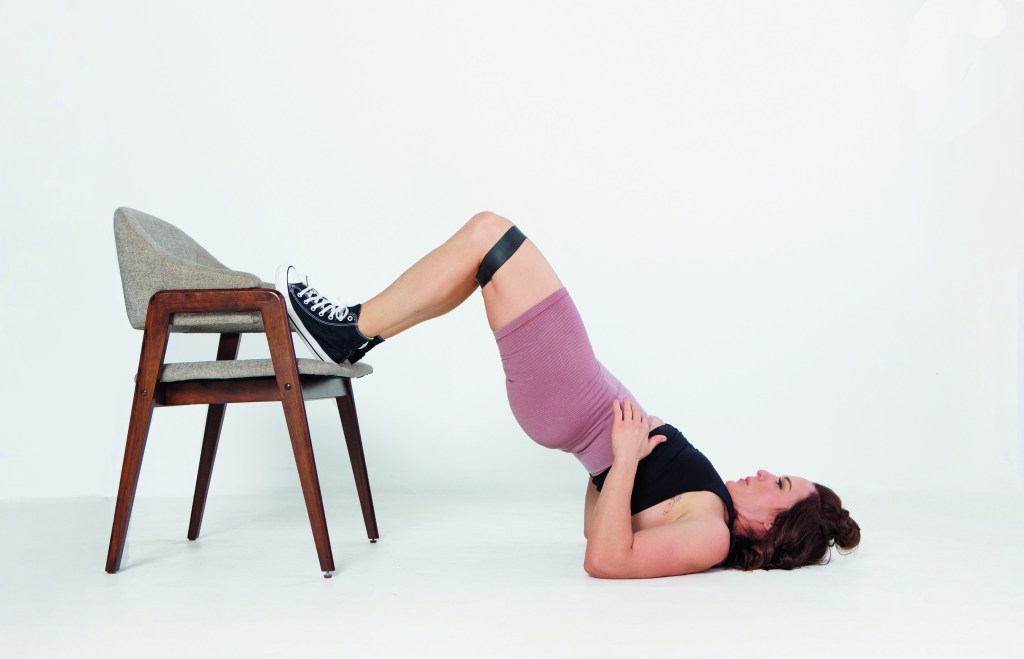
- Place the band just over the tops of your knees.
- Have your back on the ground and your feet on an elevated surface.
- Inhale while your back is on the ground, letting the breath go down into your ribs and tummy.
- Take a big exhale out through your mouth as you lift your bottom, gently pressing your knees out into the band, and squeezing your glutes at the top.
Hip Extension
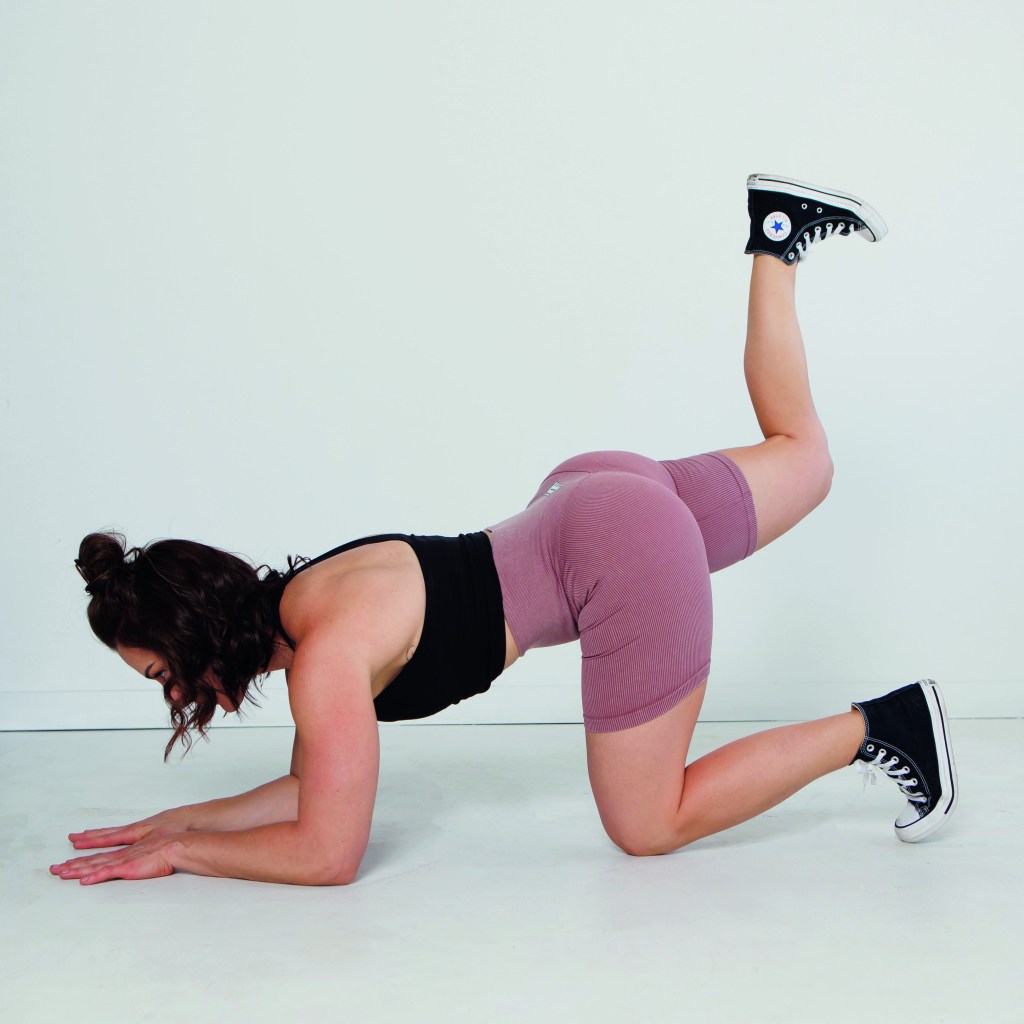
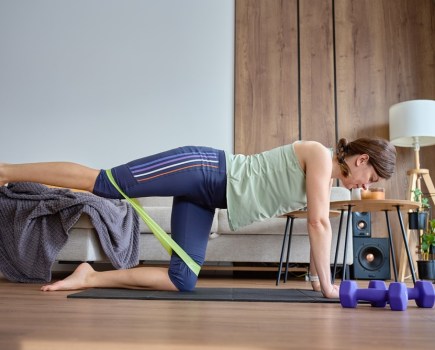
- Start on your forearms and knees, with your spine in a neutral position.
- Inhale while both knees are on the ground, letting your tummy relax.
- Take a big, audible exhale as you lift your foot toward the ceiling, lifting your pelvic floor and drawing your belly button in and up.
- Perform 10 reps on each side.
Ashley Nowe is a certified pregnancy and postpartum fitness specialist, founder of Get Mom Strong (instagram.com/getmomstrong) and creator of the health and fitness app SLAM (Strong Like A Mother).