
Yoga teacher Eve Boggenpoel passes on the tips, books and moves that inspire her love of yoga – and shares some less common poses to give you an extra challenge
Some of my most treasured yoga memories involve practising outside – whether on a sandy beach in Barbados, the patio in my back garden or, quite literally, in the sea on the east coast of England. Over the years, my practice has increased my muscle mass, enhanced my flexibility, taught me how to calm a busy mind and given me the strength to cope with bereavement. Wherever, and however, you practise, I hope these tips help you find your centre through yoga.
Find your inspiration
Work with teachers you resonate with, but who still challenge you. Most importantly, honour the teacher within you. Nurturing a mindful connection with your body, understanding and responding to its needs and allowing your inner wisdom to guide you will have a wide-range of benefits.
WF favourites: Mimi Kuo-Deemer (mkdeemer.com), whose heart-centred approach to teaching combines yoga, qi gong and Buddhism with somatic and natural movement. Queen of sequencing, Jean Hall (yogajeannie.com), who enabled me – a 50-something student who hadn’t done wheel for 35 years – to do this challenging backbend as easily as if I was stretching my hands over my head.
Join a community
Connecting with other yogis will enrich your experience. Learn from and be inspired by other people’s journeys, and find a sense of identity as you share your unique gifts with others. In becoming part of the yoga community, in your own small way, you also influence the tradition of yoga.
WF favourites: Having trained at triyoga (triyoga.co.uk), we know from experience the quality of the teachers. Along with a solid yoga offering from regular and guest teachers, the four London studios also introduce you to everything from trauma and tension-release exercises to cacao ceremonies with sacred music, alongside in-house alternative therapies, cafés and teacher training. If you prefer online, as well as classes, courses, retreats and challenges, our go-to streaming site ekhartyoga.com also feeds body and soul with mindfulness, chanting, ayurvedic philosophy and healthy recipes.
Build your resources
Compared with studios, streaming sites, YouTubers and Instagrammers offering a wealth of learning options, the humble reference book may seem a little outdated, but don’t be misled, a good yoga book can be invaluable.
WF favourites: We turn to BKS Iyengar’s The Path to Holistic Health (DK, £25) time and again. It has some of the most in-depth posture guides you’ll find (with 360-degree images showing how the pose should look from all angles), along with benefits, contraindications and modifications for different levels. There are also sections on yoga philosophy, stress and a 20-week yoga course. What is indispensable, however, is the comprehensive ailment guide, with 45-minute-plus sequences for all kinds of conditions from sinusitis to IBS, migraines to heavy periods. I’d take this book to my desert island.
Expand your yoga repertoire
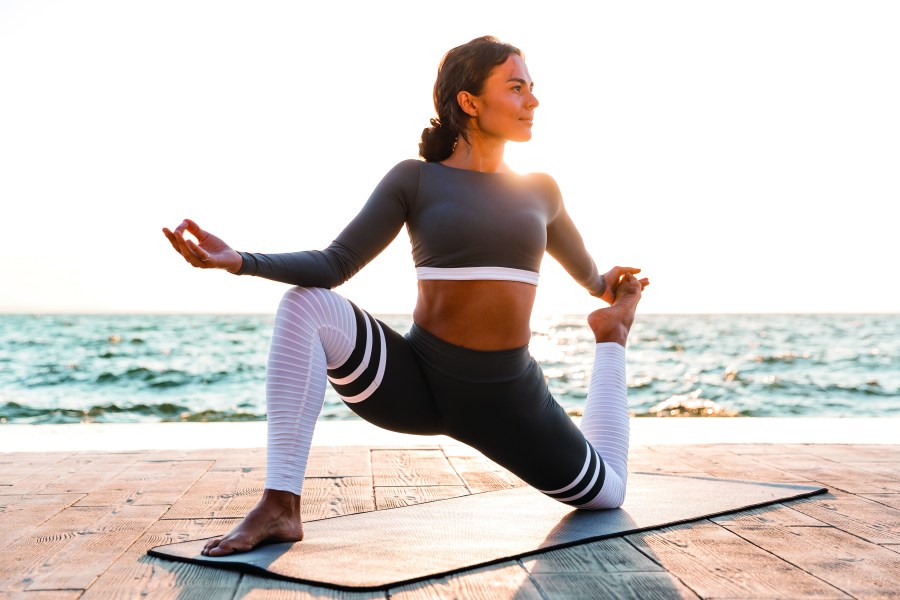
Here are some less common poses to give you an extra challenge. Always remember to listen to your body and progress gradually.
For strength: Side plank variation
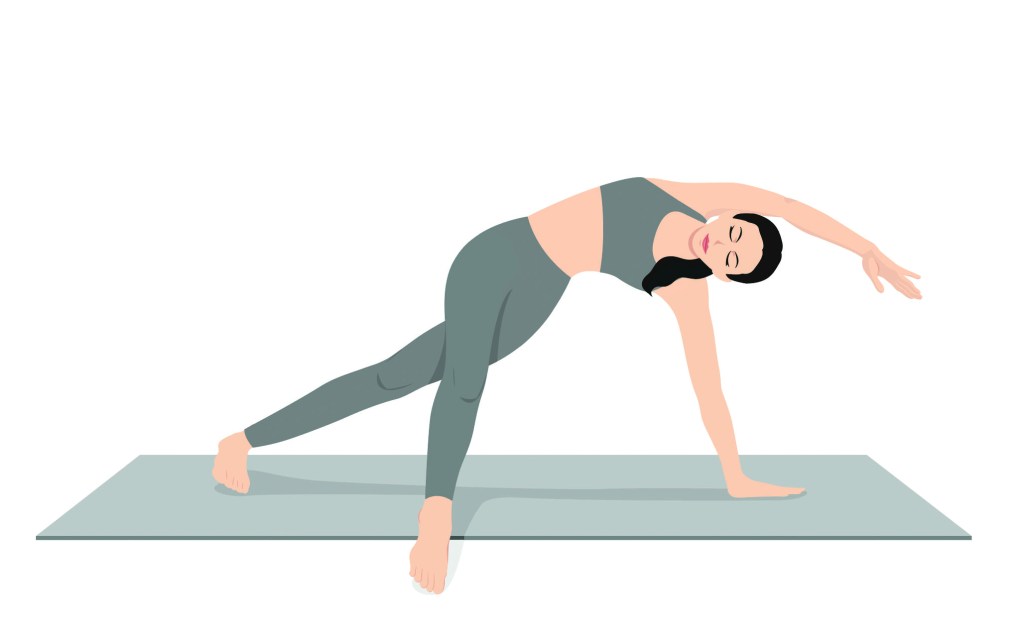
Little beats a plank for building strength, working as it does on the core and upper body, but this side plank variation adds an extra demand. By raising one leg and extending the top arm overhead, your balance is challenged, meaning you have to work harder to remain stable. From side plank, root through the supporting arm and, on an inhale, reach the upper arm overhead. When you feel balanced, extend the top leg forwards and raise it a foot off the ground. Hold for five-to-10 breaths then switch sides.
For balance: Bird of paradise
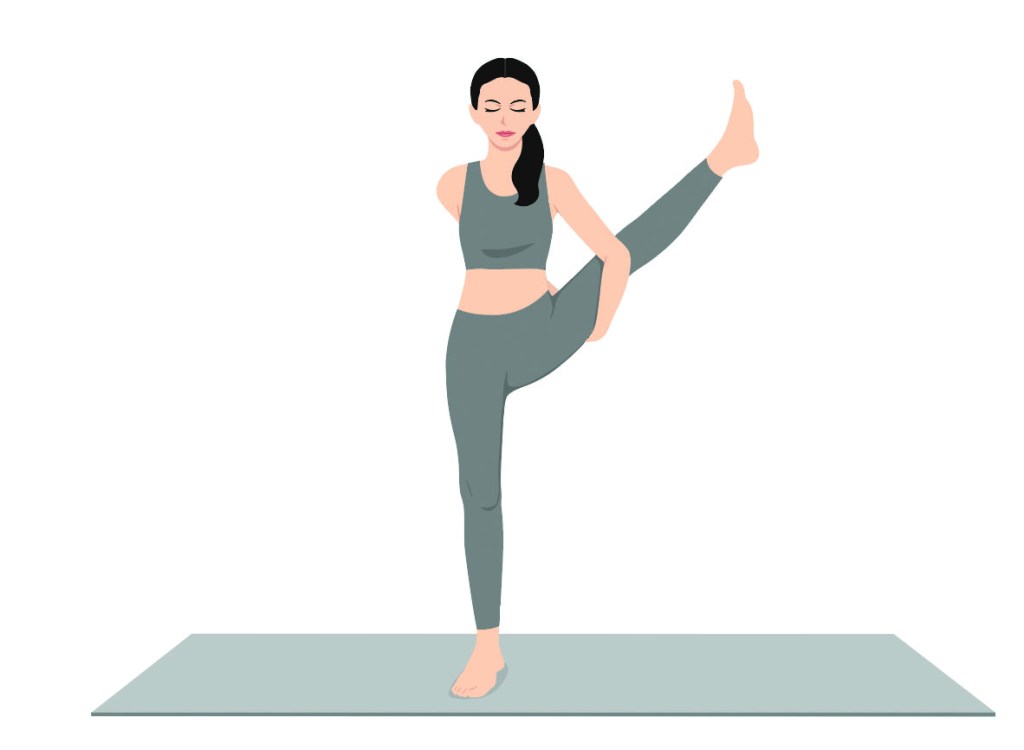
If I was banned from practising tree, this would be my next best option. From standing, grasp the big toe of your left foot, releasing the knee out to the side. Ground through your right foot, take the right arm to the side (rest against a wall if needed), then release the left leg forwards, straightening the knee if you can (or, wrap a strap around the ball of the foot and hold both ends with left hand). Take your left leg out to the side. Remain here (extended hand-to-toe pose), or wrap your arms around your raised leg for bird of paradise.
Reset in five minutes: the simple yoga workout that will instantly recharge your mind and body
For inner calm: Bound garland
Closing your eyes and folding forwards in this alternative to child’s pose helps quieten the mind. Come into a low squat, knees wide, hands to floor. Turn your feet out so knees are over toes, then lower your heels, taking feet as far apart as necessary so your heels can anchor into the ground (if needed, rest heels on a folded blanket). Release the tailbone and fold forwards, then take your hands behind your back and grasp together (alternatively, rest hands on the floor in front of you). Take five-to-10 breaths into your back, then release.
For flexibility: Moon salutation
Moon salutes make a beautiful alternative to sun sequences as they mobilise the spine on a sideways plane. Following the diagram, right, on your first round, aim to take three to five breaths in each pose, then repeat the sequence two or three times. Always work with your breath, inhaling as you open the body or extend the arms, exhaling as you fold forwards or sideways.
For more yoga advice, breathing tips and techniques, posture guides and sequences, check out Eve Boggenpoel’s series of yoga books (amazon.co.uk), available now.