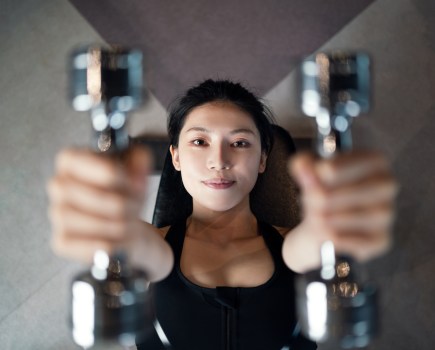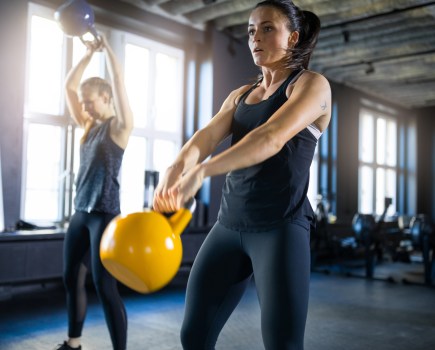


The squat rack’s occupied, there’s a queue for the cables and someone’s settled into your favourite leg press. Here’s how to adapt your session and still leave feeling stronger
Words: Faye James Pics: Getty Images
You’ve made it to the gym, changed into your kit and opened your workout plan. Then you look around. Every bench is occupied, the dumbbells you need have disappeared and the person on the squat rack has only just started.
It’s tempting to abandon the plan and head for the treadmill. But a crowded gym doesn’t have to derail your strength session. Knowing which exercises you can swap, and which parts of your workout deserve priority, gives you more options than waiting impatiently beside a machine.
There’s reassuring evidence behind that flexibility. The American College of Sports Medicine’s updated resistance training guidance recognises that free weights, bands and bodyweight exercises can all deliver benefits. For general fitness, you have several effective ways to train.
Match the movement
Before replacing an exercise, consider what it’s there to do. A leg press and a goblet squat both involve bending and straightening your knees and hips. A seated cable row and a supported dumbbell row both involve pulling towards your body. They aren’t identical, but they can offer useful alternatives within a general strength routine.
Some practical swaps include:
- Leg press occupied? Try a goblet squat, holding a dumbbell close to your chest.
- Chest press unavailable? Use a dumbbell floor press or press-ups against a fixed, stable raised surface.
- Cable row taken? Try a one-arm dumbbell row, supporting your free hand on a stable bench.
- Barbell unavailable for Romanian deadlifts? Use dumbbells for the same hip-hinge movement.
Choose alternatives you already know how to perform. A busy evening is a poor moment to attempt an unfamiliar lift from a hurried video.
Keep the purpose of the exercise in mind, too. A biceps curl involves pulling, but it won’t replace the broader back work of a row.
Reset the weight
Swapping equipment means reassessing the load, The number on a machine’s weight stack doesn’t translate directly into the same weight in dumbbells. Your position, balance demands and the equipment’s mechanics all change how an exercise feels.
Begin with a lighter practice set. Check that you can control the movement through a comfortable range before increasing the weight.
For a general strength session, finish your working sets feeling you could manage roughly two more good repetitions. The final reps should require effort without becoming a struggle to hold your position. Training to complete muscular failure isn’t essential for the average healthy adult, according to ACSM’s review.
Change the order thoughtfully
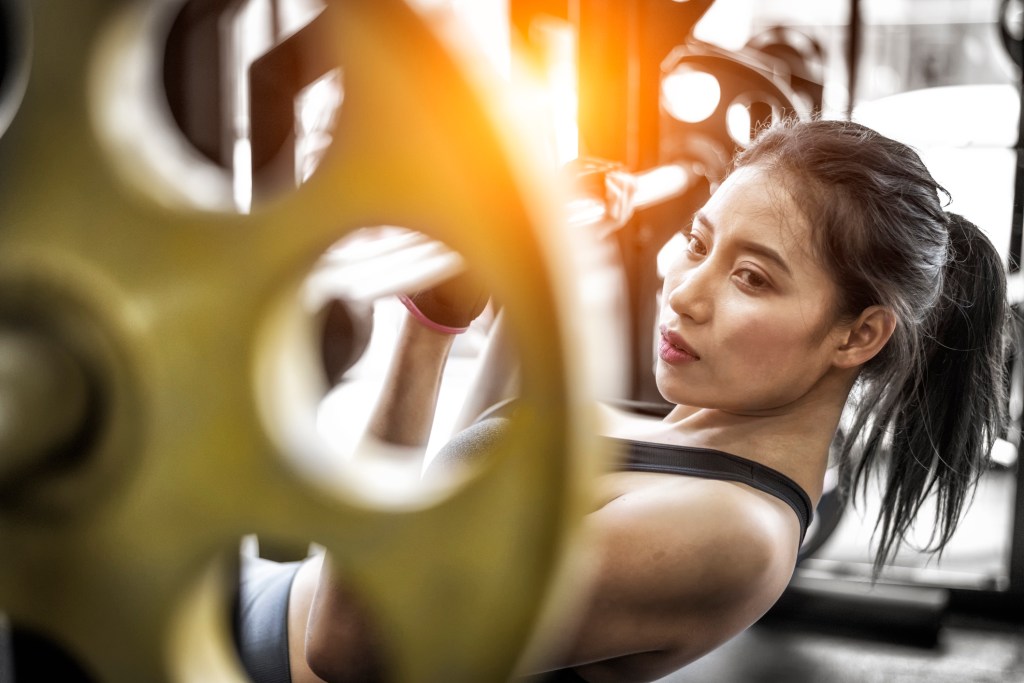
If the leg press is occupied but your upper-body equipment is free, you may be able to start there and return to legs later.
However, consider what you’ll need fresh muscles for. Exhausting your shoulders before an important overhead press could affect how well you perform it.
Where possible, keep your most demanding or highest-priority exercise near the beginning. If you’re following a programme designed to improve a particular lift, ask your trainer to identify suitable alternatives in advance. For a general workout, a little rearranging is often easier than replacing everything.
Keep your rest
Once you finally claim some equipment, it’s tempting to rush through every set before somebody asks to share.
Give yourself time to recover. For many straightforward strength exercises, around one to two minutes between sets is a useful starting point; demanding lifts may need longer. Take enough time that your next set remains controlled, rather than starting simply because you’re anxious about losing your place. ACSM’s free-weight guidance recommends resting at least a minute between sets.
You can ask someone to alternate sets if the equipment allows straightforward adjustments. Try: “Would you mind if I worked in between your sets?” Respect their answer, and avoid sharing arrangements that involve repeatedly unloading a heavy barbell.
Have a shorter session ready
Decide in advance what you’ll prioritise if time or equipment is limited. For a general full-body session, that might mean a squat or lunge, a hip hinge, a push and a pull. Complete your planned sets of those before considering smaller accessory exercises.
Perhaps that becomes goblet squats, dumbbell Romanian deadlifts, floor presses and supported rows. You’ll still need appropriate weights and safe space, but fewer stations can make the session easier to organise.
Record any substitutions, including weights and repetitions, so you can compare like with like next time. A dumbbell floor press deserves its own entry rather than being logged as a machine chest press.
You don’t need a different workout every visit. You need a familiar backup that lets you make sensible choices when the gym gets busy, and get on with training.