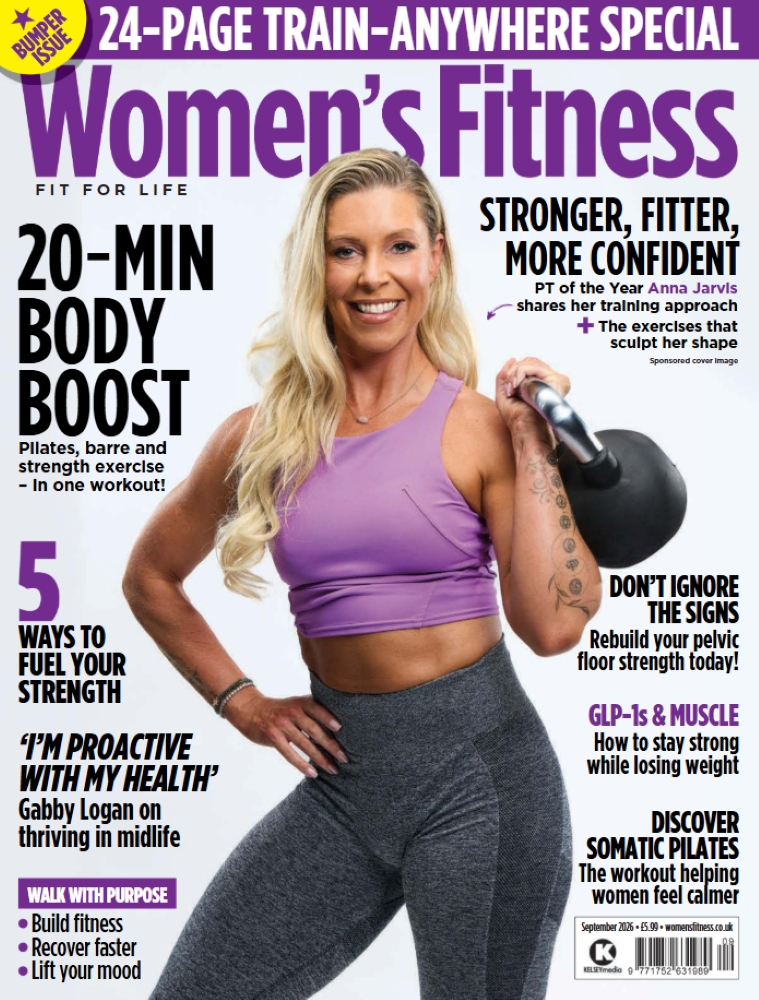


Discover how strength training helps with endurance running with strength and conditioning coach Nolan Sunnassee
Words: Nolan Sunnassee | Images: Shutterstock & Melissa Bailey
Traditionally, its believed that to improve your running, all you need to do is run, both in terms of regularity and distance. However, if you’re serious about clocking up the miles, it pays to add some strength training to your programme rather than focusing solely on cardio exercise.
Whether you’re new to running or a seasoned pro, the right strength and conditioning will not only help improve your performance but will also help you avoid injury. And it pays to get your technique right from the outset.
Strength training isn’t usually perceived as something runners need to do, however, this is partly due to the misconception that weight training makes you heavier, bulkier and slower. Although some types of weight training can cause this effect, not all lifting is created equally, and doing the right type of strength work can dramatically improve your running technique and times.
Sharpen up your nervous system
So how does it work? There are many ways that getting stronger will improve your running, including being able to put more force into the ground, enhancing your nervous system, reducing muscle imbalances, improving coordination and boosting your running economy.
Putting more force into the floor increases speed and can improve running economy and it doesn’t even require a huge effort to do this: a simple exercise such as hopping on one leg makes your body focus on the feeling of hitting the floor; it strengthens the muscles in your ankles and helps even up any imbalances in your legs.
Lifting weights also sharpens your nervous system, especially when lifting a heavy weight you can only move five times max. The heavier the weight, the harder the nervous system must work to coordinate the muscles. Additionally, doing whole-body exercises makes your nervous system work harder, enhancing muscle activation and improving your performance.
Improving your form
A weakness for distance runners is that as they get tired, they lose their technique. Lifting heavy weights with proper technique provides strength for your whole body, enabling you to hold your form for longer. What’s more, muscle imbalances make you slower as your body is only as strong as its weakest link – think of it like a car with one of the tyres only half inflated, which impacts the overall drive. As such, your body will be held back from its full potential by any weakness. Working individual legs or arms, especially at the beginning of a structured programme, helps rebalance your body and makes it stronger and more powerful.
Remember the key point is always technique. The more you can distribute force in the right places, the stronger you will be and the more natural it will become when doing the movement again and again. Only perfect practice makes perfect – especially true when you consider it takes 10,000 hours to truly master a skill!
7 moves to get stronger… and run for longer!
You needn’t lift super heavy weights in the gym to see benefits. These simple bodyweight exercises can help you improve your posture and strength, and you can do them at home!
Bodyweight squat
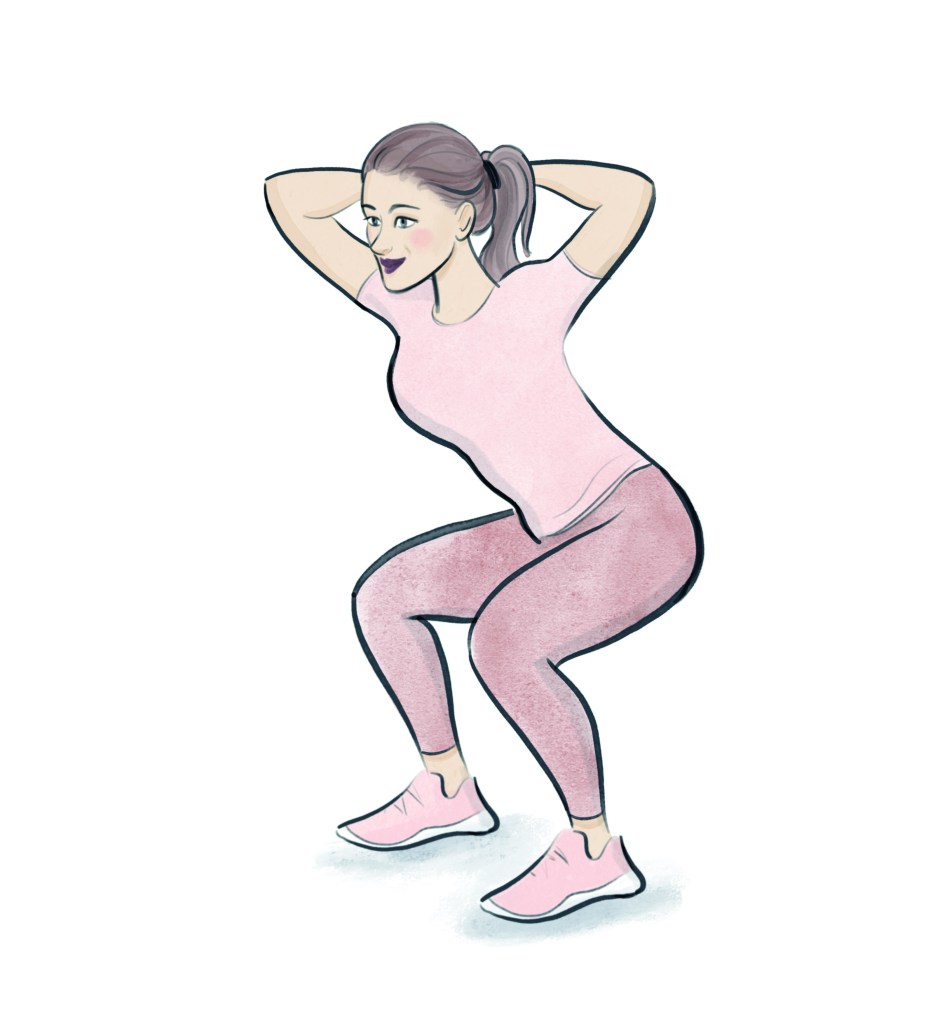
- Start with feet shoulder-width apart, hands interlocked behind your head.
- Keeping your chest high, sit down as low as you can, bum close to the floor, ensuring your heels remain down.
- From the bottom position, push through your heels back up to standing.
- Perform 15 times.
Leg lunges
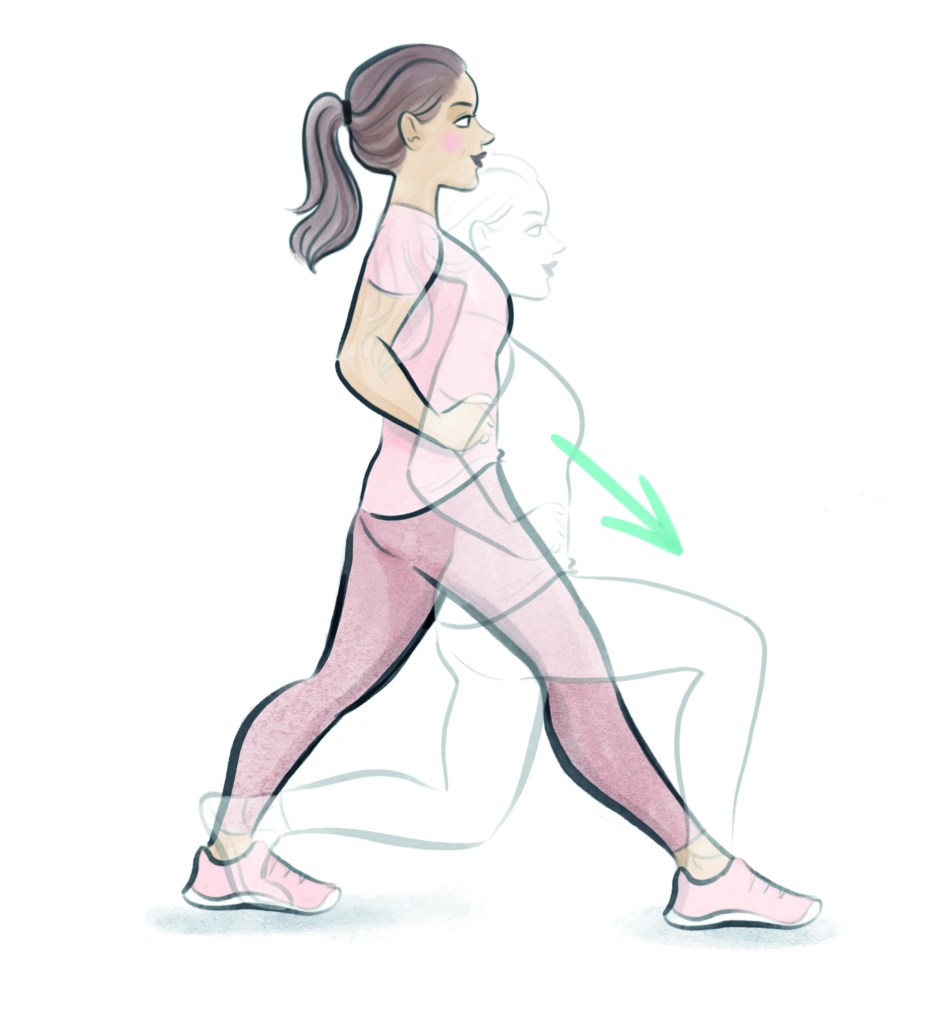
- Take a big step forward with your right leg, keeping your knee in line with your middle toe. This is the start position.
- With your back straight, bend your right knee so it comes forward as far as you can, with the heel remaining on the floor.
- Push back up to the start position.
- Perform 15 times on each leg.
Single-leg touches
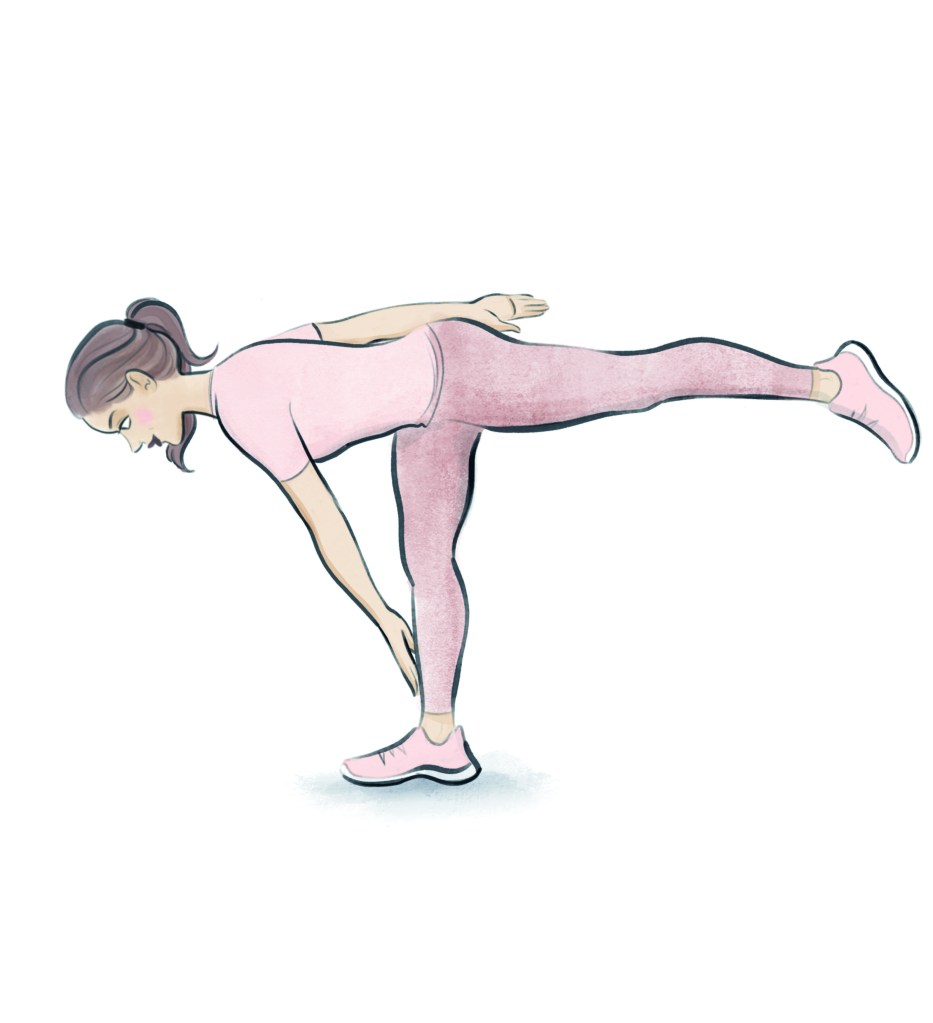
- Stand on your right leg with your left leg back behind you off the floor.
- Reach slowly forward with your left hand until it touches your right shin. Your left leg will lift up behind you and needs to stay straight.
- Slowly come back upright.
- Perform 15 times on each leg.
Aeroplanes
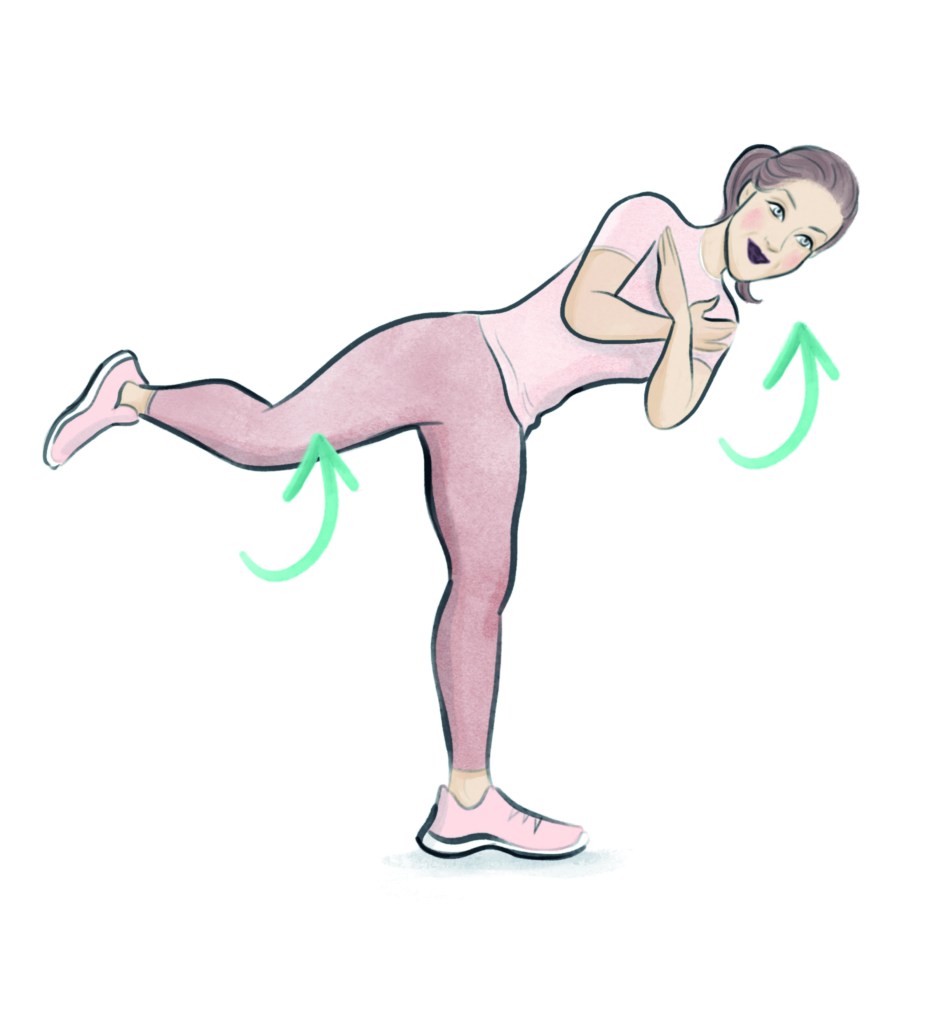
- Stand on one leg, the other slightly bent, and have your hands crossed over your chest.
- Keeping your back straight, slowly bend forward to about 60 degrees, letting your bent leg come up behind you.
- Now, turn your head and body slowly towards the lifted leg (you’ll look a bit like a dog cocking it’s leg up to wee!) – this will challenge your balance and stabilising muscles.
- Rotate slowly back so your body is again facing down, then come upright, leg still off the floor.
- Perform 15 times on each leg.
Swiss-ball hamstring curls
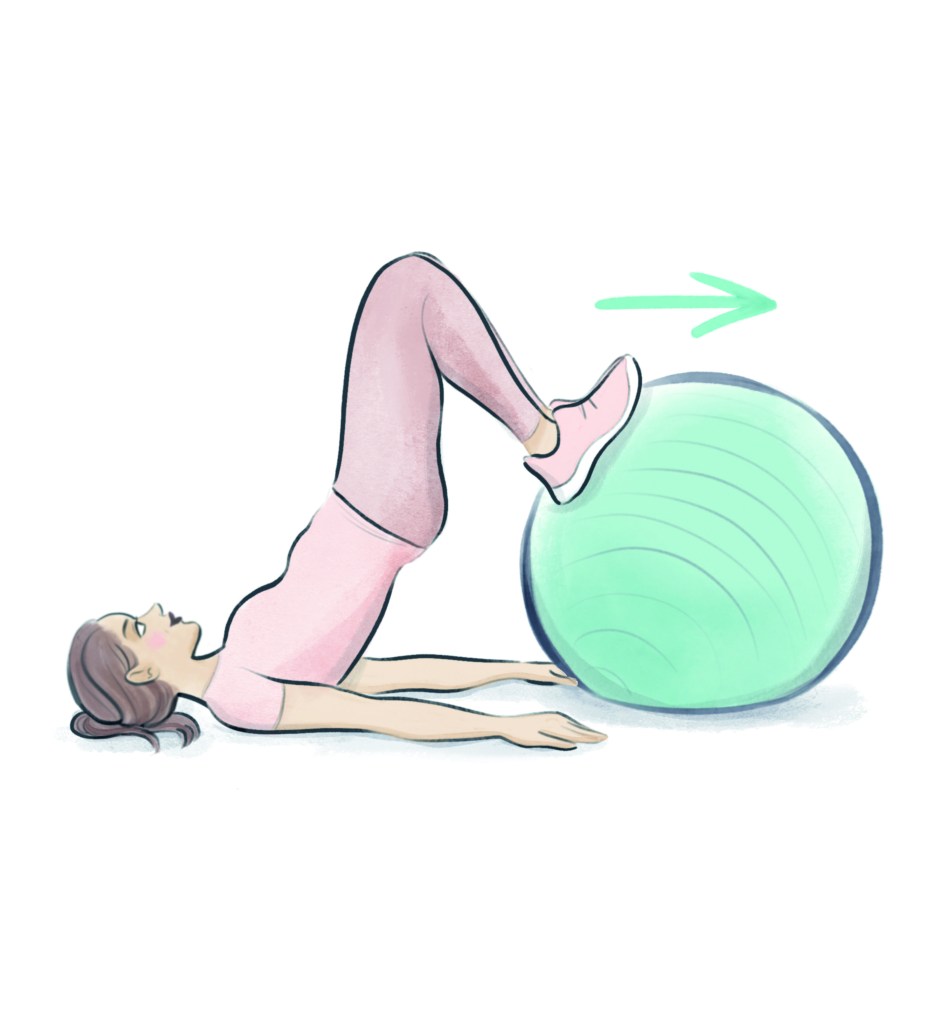
- Lie on the floor on your back, with your heels on a Swiss ball.
- Lift your hips up so they’re level with your knees with your legs straight.
- Whilst keeping this lifted hip position, draw your heels toward your bottom – the ball will move towards you as your feet come down and over it.
- Slowly move your feet back out so your knees are straight. Do this slowly as it’s a difficult move to master.
- Perform 15 times.
How to run at any age: The science-backed training plan that works (no matter your fitness level)
Swiss-ball hip extensions
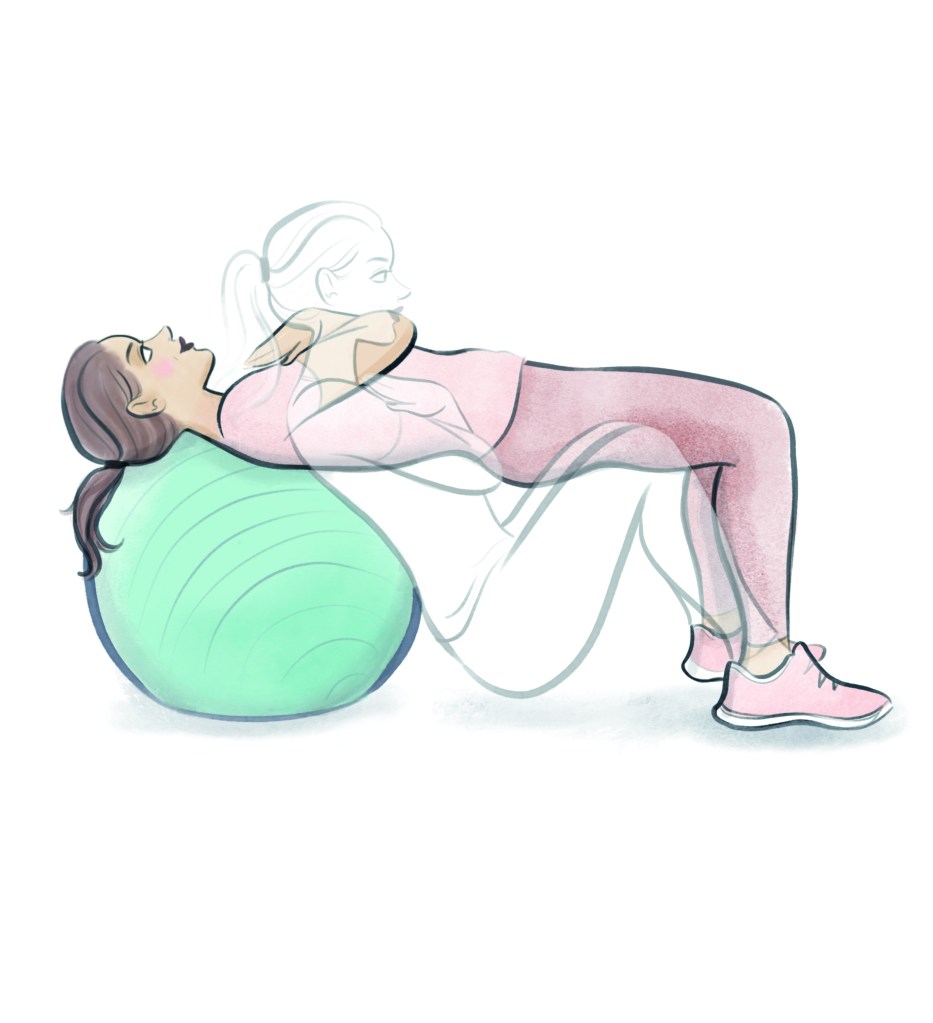
- Lie with your head and shoulders on a Swiss ball, your bottom up, and your feet flat on the ground.
- Lower your hips towards the floor while keeping your back straight. Pause at the bottom.
- Lift your hips back up so they are level with your knees (and shoulders, depending on the size of the ball).
- Avoid overarching your back.
- Perform 15 times.
Single-leg hops
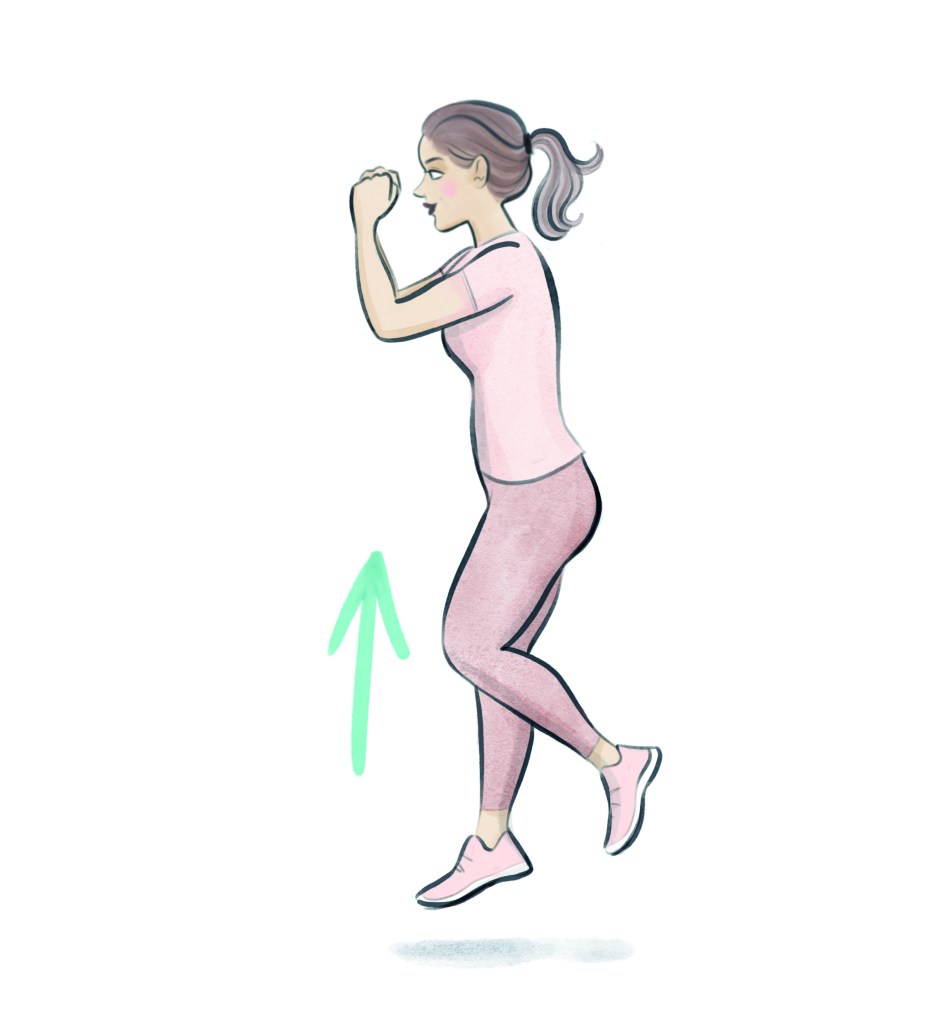
- Stand on one leg, the other foot lifted just slightly.
- Hop on the supporting leg, softly landing each time.
- Keep your knee in line with your middle toe as you push off and land, and your shoulders in line with your knees.
- Perform 15 times on each leg.
Nolan Sunnassee MSc (Hons) PICP ACSM Biosig CE is a personal trainer, strength and conditioning coach, nutritional advisor and Biosignature Modulator. To maximise your health and fitness contact him at [email protected] and visit evo-fit.co.uk