
You don’t need endless crunches or a complicated core workout to build stronger abs. These four simple moves will work your midsection from every angle – and take less than 20 minutes
Let’s be honest: when winter comes around, and we’re reaching for cosy oversized hoodies rather than bikinis, it’s tempting to put training – or at least our ab workouts – on the back burner, but as I’ve reached 44, I’ve realised just how important it is to train your core all year round – plus I’ve never really bought into the idea of frantically training your abs six weeks before summer anyway.
A strong core for me isn’t just about getting visible abs. Your core helps stabilise your spine, maintain good posture, transfer force between your upper and lower body and helps create the bracing you need when you squat, deadlift, run or simply move through everyday life.
And the good news? You don’t need fancy equipment or endless variations to train it effectively.
I asked Jason Pena, Certified Personal Trainer at Ultimate Performance, for four moves that will get the job done. They may look simple, but if you perform them properly, you’ll quickly realise that you don’t need to complicate ab training.
Why this ab workout works
“These four moves may seem basic, but not when you do the moves right,” explains Pena. “And this is something I see all the time. Holding a plank for 60 seconds doesn’t necessarily mean your abs have been working hard for 60 seconds. If you’re hanging through your hips, allowing your lower back to dip or simply surviving the position, you’re missing much of the point.”
Yes, a lot of people can hold a plank, but are they actually using their abs? “Probably not,” adds Pena. “Instead, they hang on their hip flexors, lower back, or just lock the position, which is why there’s no point giving someone complex ab work if they cannot brace and feel the muscle in a plank first,” says Jason. “You have to squeeze the abs as hard as you can on every second of the hold. If you do that properly, most people will not last 30 seconds the first time they try it. That is the point. If you finish a set and feel like you could have done plenty more, the set was too easy, and your abs weren’t forced to change.”
In other words, don’t mistake simple for easy – a plank is only as hard as you make it.
These four exercises aim to create tension through the core by squeezing until you can not squeeze anymore, and then maintain it while working your midsection in different ways. “The front plank teaches you to brace and resist extension through the lower back, while the side plank targets the obliques and challenges lateral stability. Sit-ups add a more dynamic element, taking the abdominal muscles through flexion,” he says. “Together, they make a simple, no-fuss routine that covers a lot of bases.”
And while no ab workout can magically strip fat from your stomach (that’s where good nutrition comes in), strengthening the muscles underneath can build a firmer, stronger midsection that won’t see you panic-crunching your way come Spring.
The workout
Aim to do this routine two to three times a week, leaving recovery time between sessions. Move from one exercise to the next with as little rest as you comfortably can, then rest for 60 seconds at the end of the round.
Complete 3 rounds, focusing on control and keeping your core engaged throughout. Quality beats speed here – if your form starts to disappear, stop, reset and go again. “Treat each set like it matters,” adds Pena.
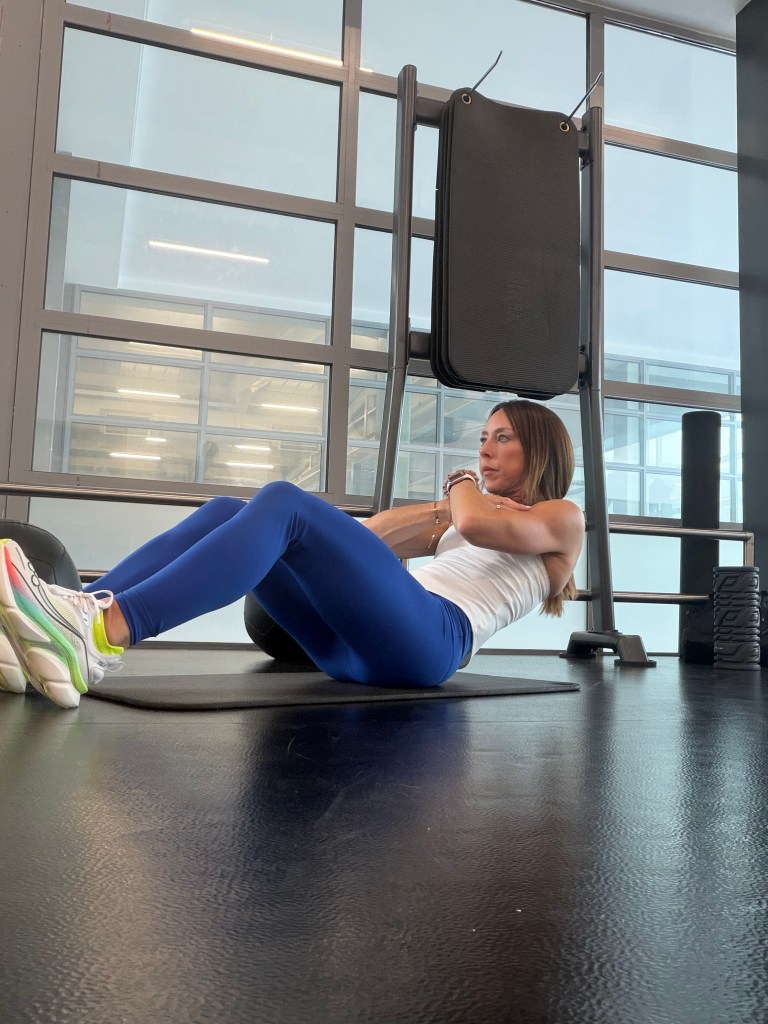
1. Sit-ups
Reps: 10
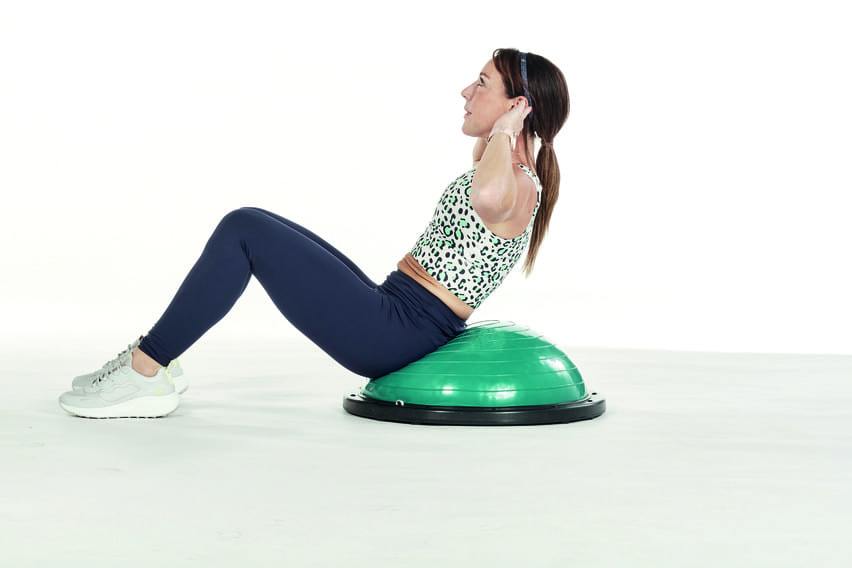
Lie on your back with your knees bent and feet planted on the floor. Brace your core, then use your abdominal muscles to curl your torso upwards towards your knees. Keep the movement controlled rather than using momentum to throw yourself up, then slowly lower yourself back to the floor
Make it count: The slower you lower, the more work your abs have to do as they fight against gravity. Pull your belly button in and roll down through your spine.
To progress: “When 10 reps feel easy, add reps or a light plate on your chest”, suggests Pena. “Stop two to three reps before your form breaks.”
2. Side plank – right side
Time: 45 seconds
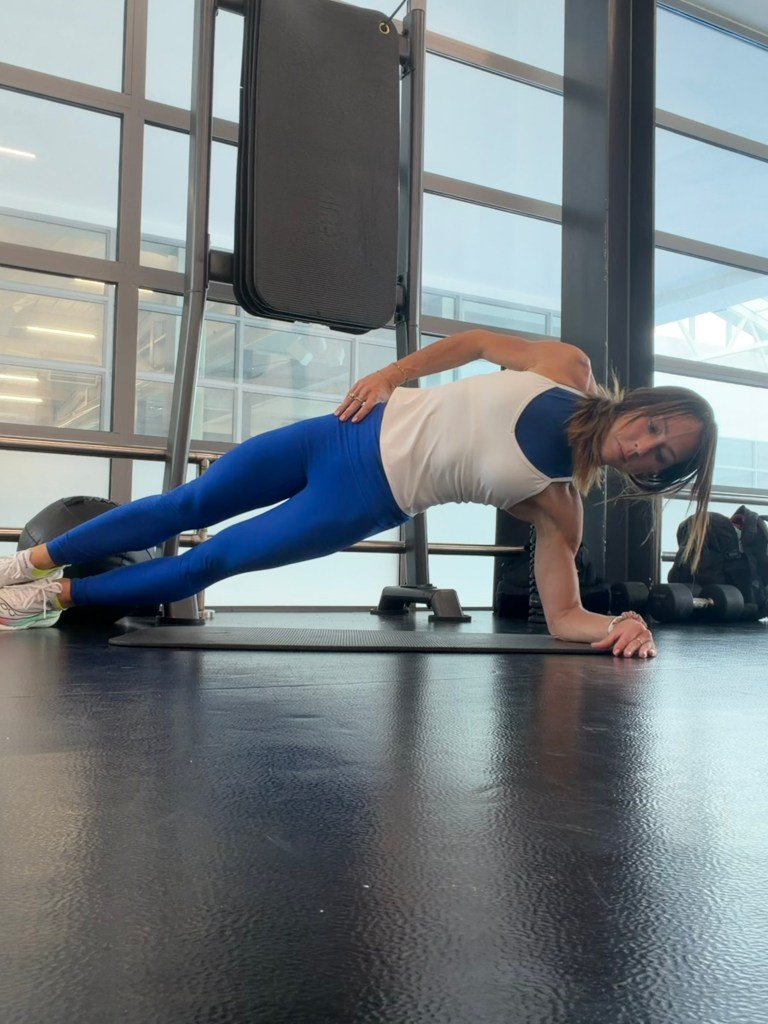
Lie on your right side with your elbow underneath your shoulder and your legs extended. Lift your hips away from the floor until your body forms a straight line from your head to your feet.
Keep your hips high, squeeze your glutes and brace your abs so you are in a complete straight line.
Make it count: Don’t let your hips rotate forwards or drop towards the floor. You should lift through the side of your waist rather than your shoulder – and think about creating a rainbow shape as you lift through the obliques.
To progress: “When 45 seconds feels easy, and your hips stay high, add five to ten seconds”, says Pena.
3. Side plank – left side
Time: 45 seconds
Repeat the side plank on your left side, again concentrating on creating tension and keeping your body in a nice straight line.
Make it count: Stop if the hips drop or rotate. If you are squeezing properly, 45 seconds will feel like plenty.
To progress: “When 45 seconds feels easy and your hips stay high, add five to ten seconds”, says Pena.
4. High plank
Time: 60 seconds
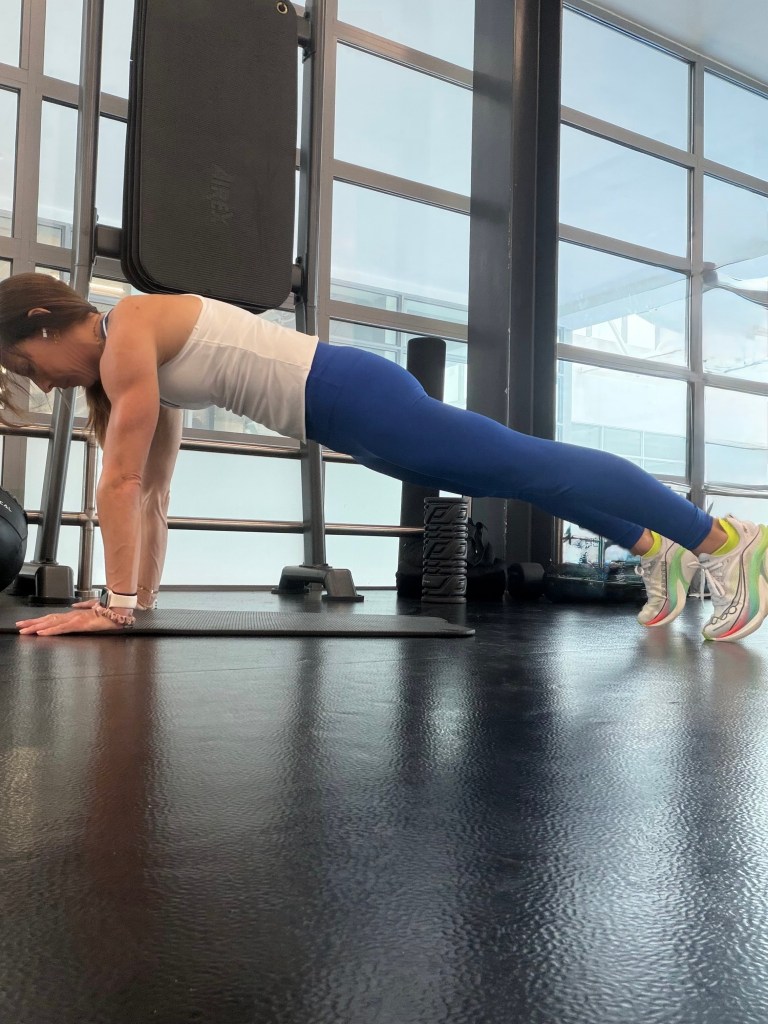
Place your hands directly underneath your shoulders and extend your legs behind you, as though you’re at the top of a press-up.
Now make the position active by pushing the floor away with your hands, squeezing your glutes, and bracing your abs as though you’re trying to pull your belly button up towards your spine. Your body should form one strong line without your hips sinking or your bottom rising up in a V shape.
Make it count: Create as much tension as you can while still breathing normally. If you can do that for the full 60 seconds, your abs should be working considerably harder than they would during a passive plank.
To progress: “When 60 seconds feels easy while you stay braced, add five to ten seconds,” says Pena. “If the hips sag or the bum rises, the set is already done.”