
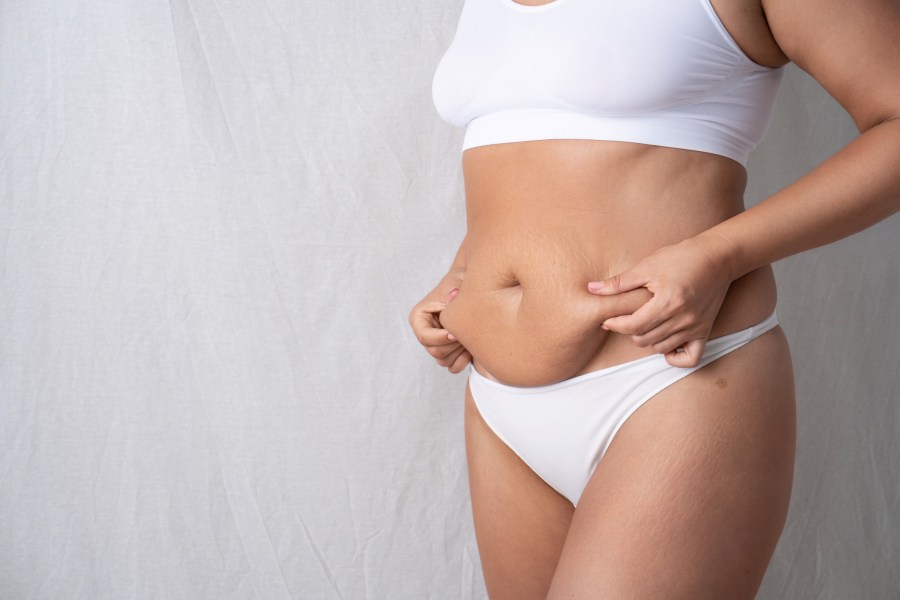
Want a trimmer waist by Christmas? Experts explain how women over 50 can combine strength training, walking and simple changes to their diet to reduce body fat, preserve muscle and feel stronger in just six weeks.
It is possible to tone up your belly and get a smaller waistline in six weeks that doesn’t involve living on salads and working out every day. Whilst Christmas is still two months away, by starting now to make simple changes to what you eat, moving more and doing some strength training, experts say you can realistically lose some belly fat and get trimmer for the festive season.
We asked a food scientist dietician and personal trainers what really works, which exercises are worth doing and how you can shed the weight without resorting to crash dieting.
Is it actually possible to lose belly fat in six weeks?
First up, yes it is, but don’t expect a huge body transformation in that time. It all depends on your starting baseline (and waist line!).
According to personal trainer and fitness expert Anwen Davies, six weeks is a long enough period of time for you to see and feel a noticeable difference.
“Most women aged 50 and above can expect to see a slightly smaller waistline, clothes that fit more comfortably, an increase in energy and better strength across the six weeks but see the time period as the start of a meaningful change, not an automatic flatter stomach,” she explained.
And if you follow the below advice, dietician and food scientist Dr Shy Vishnumohan says it is an excellent starting point.
“With six weeks of consistent nutrition and exercise, some women may notice a small change in their waist or how their clothes fit. Others may notice improvements in strength and energy before anything visible happens.”
What weight loss could be realistically achieved in six weeks?
Again, it all comes down to what your starting weight is but Dr Shy points to around 0.25-0.5 kg a week as a reasonable, gradual pace.
“Over six weeks, that could mean roughly 1-3 kg off the scales, although not all of that will necessarily be fat,” she pointed out. “I would much rather see a woman lose 1-2 kg gradually while maintaining her strength than lose 5 kg quickly through crash dieting.
“In clinic, I’m not just interested in how much weight a woman loses. I’m interested in what she is losing and what she is keeping. Muscle is something we want to hold on to, particularly after 50.”
Why is belly fat so hard to lose
For women in their fifties and beyond (and earlier when perimenopause hits), belly fat can become much harder to shift, even if they have been slim all their lives.
“Belly fat is notoriously one of the most difficult areas to shift weight after the menopause. A natural decline in oestrogen levels prompts the body to store fat around the middle, and muscle mass drops as we age too, slowing metabolism in the process,” explained Anwen.
The result is many midlife women are left with a belly they don’t recognise and frustration on how to get rid of the fat that has accumulated. This is something Dr Shy sees often in her clinic with her female clients.
“One of the things I hear from women in midlife is, ‘My weight hasn’t changed much, but my waist has.’ They are not imagining it. Falling oestrogen levels around menopause can change where fat is stored, with more accumulating around the middle. We can’t choose where our bodies lose fat first, and doing more crunches won’t specifically burn belly fat.”
What to do before you start following a six-week plan
Anwen advises on taking three small steps for your first week:
1: Check in with your GP first. This is especially important if you have joint problems, osteoporosis, high blood pressure, or haven’t exercised for a while.
Pick your training days. Put three strength sessions and two or three walks into your calendar and treat them as if they were important work meetings. No room for opting in or out.
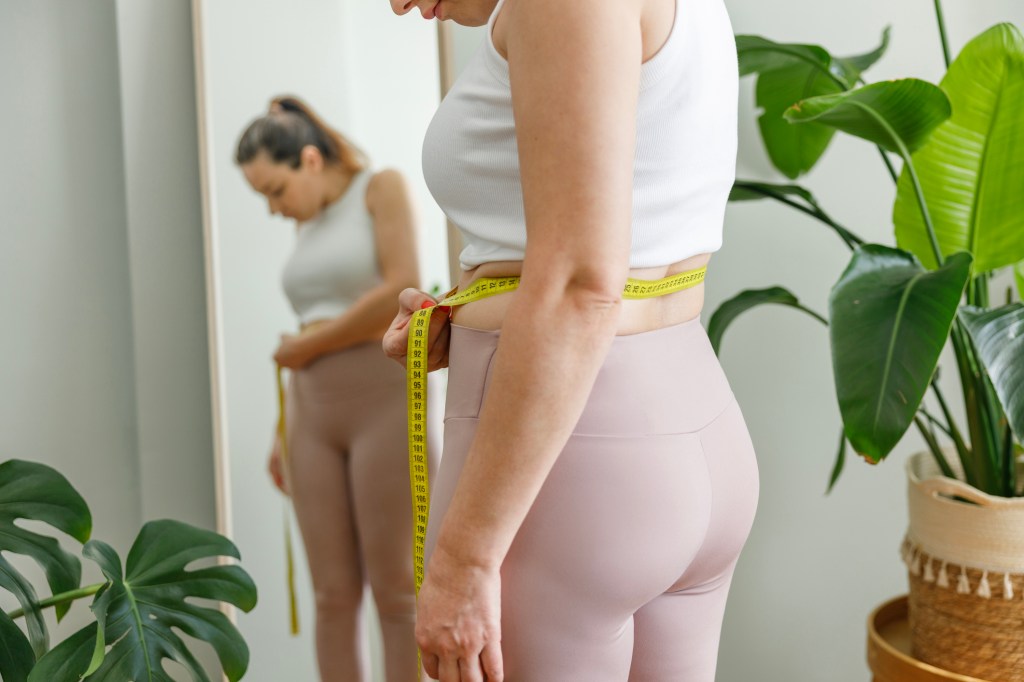
Take your starting measurements. Measure your waist, take pictures of yourself and make a note of how you feel, so you have a reference point to compare with when your six weeks is up.
How to track progress
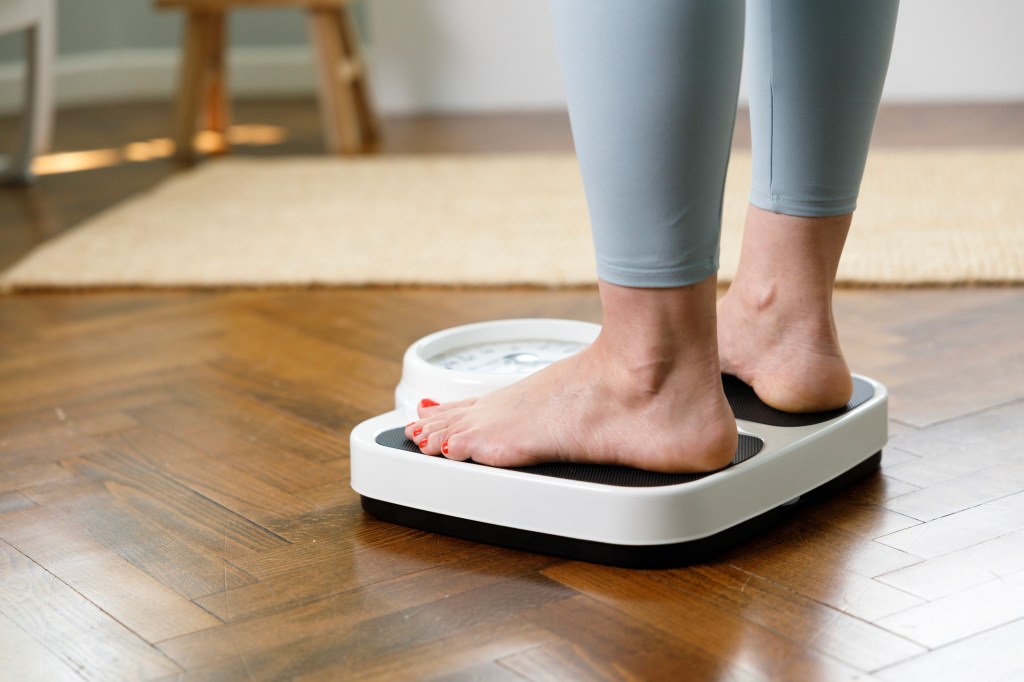
Weighing scales and belly fat loss
As much as we all love to jump on the scales and see them go down if we are trying to lose weight, they can often be misleading when you are trying to lose belly fat.
“It is common for women to lose belly fat and not see their weight decline on the scales,” explained Anwen. “This is because strength training (one of the exercises recommended in the plan) builds muscle at the same time that you are shedding fat from your body, so the scales may not even register your progress at all despite the body changing shape.
“Fluid retention and hormonal fluctuations can also mask progress from one day to the next, so progress isn’t linear here.”
In agreement, Dr Shy says the scales only give you one number. “They don’t tell you how much of that is fat, muscle, water or digestive contents. I encourage women to notice whether their waistband feels more comfortable, they are lifting heavier weights, or whether they have more energy. Sometimes the early difference around the tummy is actually less bloating or fluid retention, rather than fat loss. That’s worth recognising too.”
Better ways to track progress with your belly fat loss programme
Waist measurement. Measure at the same point once a week, ideally first thing in the morning.
Clothes. Keep monitoring how your trousers fit and document any noticeable changes.
Photos. Take a front-on picture and a side-on picture every fortnight in the same light.
What to eat for belly fat loss
“The aim is to eat well, not to eat very little. That’s really key. Extreme calorie cutting at this stage tends to lead to muscle loss, which works against the goal,” warned Anwen.
Protein at every meal.
“Opt for food like eggs, fish, chicken, Greek yoghurt, tofu, beans and lentils which are all good at helping preserve muscle and keep you feeling fuller for longer. A palm-sized portion at each meal is a good guide for quantities,” advised Anwen.
Fibre and plenty of vegetables.
“Aim to fill half your plate with different veg and look to factor in wholegrains, fruit and pulses to support digestion and steady energy.
Healthy fats.
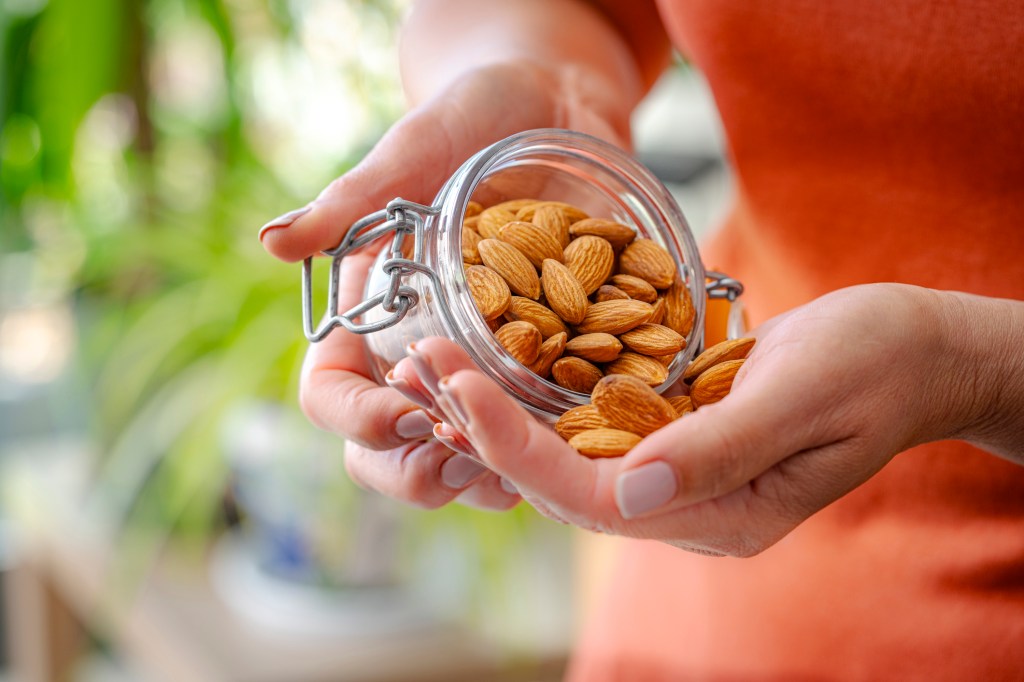
“Olive oil, nuts, seeds, avocado and oily fish are good choices in sensible portions. Don’t try and eliminate fats from your diet entirely – these are helpful ways of working fat into your diet that won’t see you pile on weight.
Water.
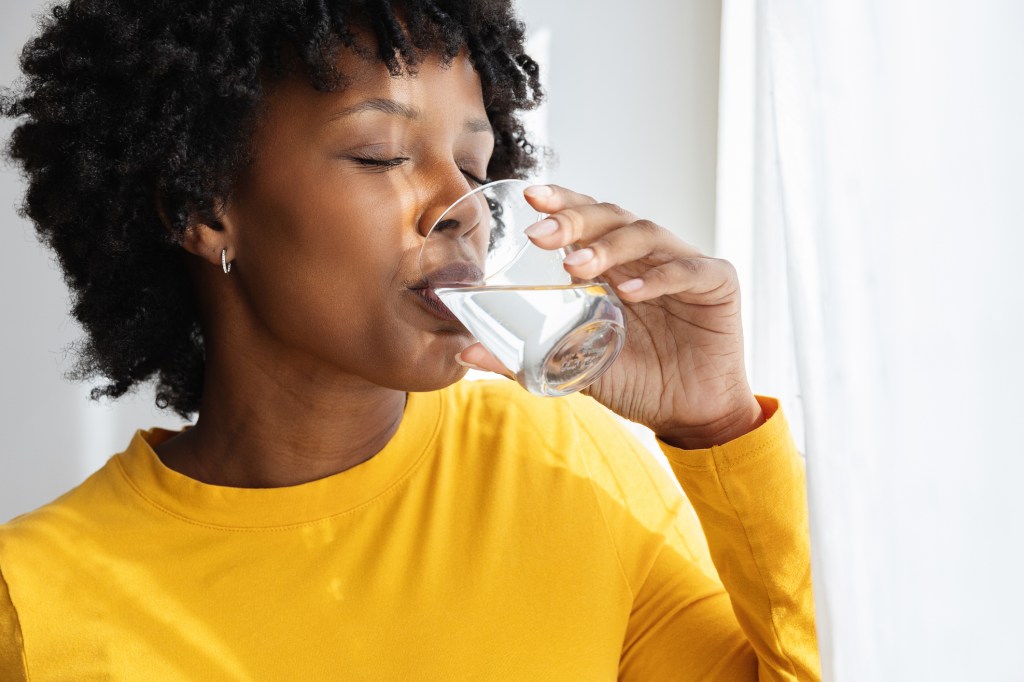
“Absolutely critical and underpins all of the above. Drinking enough helps regulate our appetite and energy.”
Have protein spread across the day
One thing Dr Shy stresses is to spread your protein across meals, rather than consume it at only one.
“One thing I pay particular attention to is protein when women come to me for nutritional advice,” she said. “It’s easy to have toast for breakfast, a light salad for lunch and then most of your protein at dinner.
“I would rather see protein spread across the day. For many women, around 25-30 g at each main meal is a practical starting point, although individual needs vary.
“Then we build in vegetables, fruit, beans, wholegrains and healthy fats. Fibre helps with fullness and digestive health, and you don’t need to give up bread, rice or potatoes to lose fat.
“Of course, overall energy intake matters. But a calorie deficit doesn’t have to mean tiny meals. Sometimes small changes to portions, alcohol, grazing or energy-dense extras are enough.”
An example meal plan guide
“I would keep it surprisingly ordinary. If you are going through the menopause you don’t need to eat anything different to your family like detox drinks or have a separate menu,” said Dr Shy. You could try the below.”
Breakfast: Greek yoghurt with oats, berries and chia seeds, or eggs with cottage cheese on wholegrain toast.
Lunch: Chicken or tofu and chickpea salad with wholegrain bread or a wrap.
Dinner: Salmon, chicken, tofu or lentil curry with plenty of vegetables and a portion of rice or potatoes.
Snack, if needed: Fruit, yoghurt or a small handful of nuts.
What to reduce
As with all sensible nutritional advice, everything in moderation is the best mindset to have.
Nothing needs to be banned outright, but adjusting a few things in our diets like the below makes a real difference,” recommended Anwen.
Alcohol. It’s high in calories, affects sleep and tends to encourage snacking. Cutting back to one or two drinks a week during the six weeks means you’re not cutting it out completely but consuming it in more sensible quantities.
Sugary drinks and ultra-processed snacks. These won’t fill you up as much as you think. But they will add a lot of unnecessary calories in the process.
Large portions of refined carbohydrates late in the day. White bread, pastries and biscuits are easy to overeat – if you are eating them, try not to snack on them at night.
Skipping meals. It often leads to overeating later and makes it harder to get enough protein. Don’t miss out on breakfast; it’s called the most important meal of the day for a reason.
What are the best and most effective exercises to lose belly fat over the next six weeks?
“No single exercise burns fat from the stomach alone,” said Anwen. “The most effective approach is to build muscle and burn more energy overall, and the body itself will ultimately be the judge of deciding where the fat comes off. The best options are what I recommend below.”
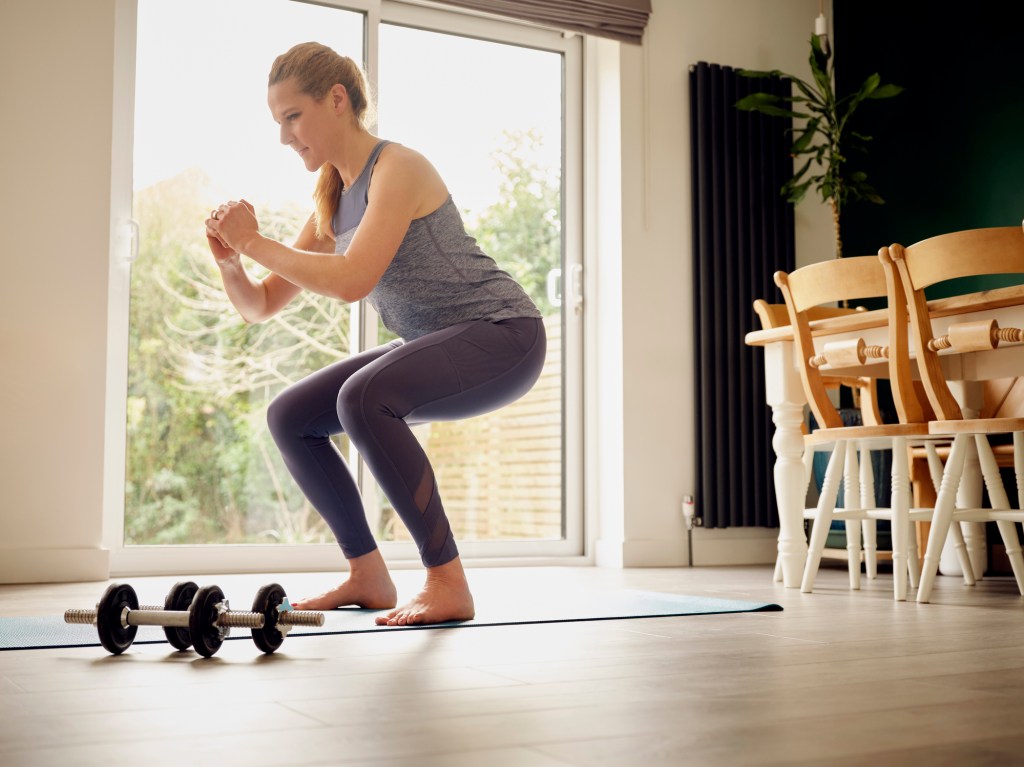
Strength training. Squats, deadlifts, lunges, rows and presses work the biggest muscles and help protect muscle mass and bone density.
Brisk walking. It’s low impact and easy to fit into the day, which is important when considering day-to-day life and sustainable ways of keeping fit. A pace where you can talk but not sing is what you’re aiming for.
Interval walking. Alternating a few minutes at a faster pace with a few minutes at a softer pace adds variety and challenge without hammering your joints.
Gentle core work. Dead bugs, bird dogs and planks all strengthen our deep core muscles and support posture. These are invisible exercises in that they won’t burn belly fat directly, but will help you tone your stomach to make it look and feel firmer as fat comes off.
An example six-week exercise plan to follow
“This is a simple, safe structure for a woman in her 50s or beyond who is reasonably active,” said Anwen.
Important disclaimer: anyone newer to exercise should start with lighter weights and fewer sets.
Weekly structure
Monday. Full body strength A (see below for suggested exercise)
Tuesday. 30-minute brisk walk
Wednesday. Rest or gentle stretching
Thursday. Full body strength B (see below for suggested exercise)
Friday. 30-minute interval walk
Saturday. Full body strength C (see below for suggested exercise) or a longer relaxed walk
Sunday. Rest
Strength workouts (2 to 3 sets of 10 to 12 repetitions each, with 60 seconds’ rest)
Workout A. Squats to a chair, dumbbell chest press, bent-over rows, glute bridges, dead bugs
Workout B. Romanian deadlifts, shoulder press, step-ups, lat pulldown or resistance band pull-aparts, bird dogs
Workout C. Lunges, press-ups against a wall or bench, single-arm rows, side-lying leg lifts, forearm plank (hold for 20 to 30 seconds)
Progression
Weeks 1 and 2. Learn the movements and use lighter weights. Aim to finish each set feeling as if you could do two or three more repetitions.
Weeks 3 and 4. Increase the weight slightly or add a set. For interval walks, try 3 minutes fast and 2 minutes easy, repeated five times.
Weeks 5 and 6. Aim to finish sets feeling you could do one or two more repetitions. Extend the intervals or add a little more distance to the walks.
Extra advice
American fitness coach Jesse Ramos Jr lost 90lbs at the age of 40 and since his own personal weight transformation, he has gone on to help hundreds of others, including advising women on how to shift belly fat. His top tips below.
This is his advice to women at 50 and beyond who want to lose belly fat in a 6-week window.
1. Don’t Trust the Scale
When women over 50 build lean muscle and drop visceral fat, total body weight on the scale often stays completely flat even as the waistline shrinks. In a 6-week window, I coach my clients to ignore the scale entirely and focus on:
* Progress photos taken in the exact same lighting (front and side views).
* Soft tape measurements around the narrowest waist and belly button.
* How denim and tailored clothes feel, plus improvements in daily energy and mood.
2. Focus on Sleep & Cortisol Recovery
Fat loss doesn’t actually happen in the gym—it happens during deep REM sleep. High stress or sleep deprivation keeps cortisol elevated, which signals the body to hoard fat around the midsection to protect vital organs. Prioritizing 7–8 hours of quality sleep, hot baths, chamomile tea, and stress reduction are genuine, non-negotiable fat-loss tools.
3. Strategic Nutrition & Food Timing
Start by clearing out excess processed foods and high-fat items from the pantry today. Front-load your carbohydrates before 2:00 PM so your body uses that fuel during active daytime hours rather than storing it during evening rest.
Sample Daily Structure:
* Breakfast: Scrambled eggs or egg whites with turkey bacon and sliced avocado.
* Snack: A handful of raw almonds with dark chocolate or a low-calorie protein bar.
* Lunch: Grilled chicken breast with sweet potato and a fiber-rich salad for satiety.
* Mid-Afternoon: Fresh watermelon juice infused with ginger and lemon.
* Dinner: Baked or grilled fish with charred broccoli.
4. Train the Largest Muscle Groups
Legs equal longevity !!!
To maximize calorie burn and protect joint health, we need to focus on compound movements that use multiple body parts together:
* Train Legs 2x a Week: Legs and glutes are your largest muscle groups. Exercises like bodyweight squats, split-squat lunges, and stair climbing require huge amounts of energy and drive overall body fat loss.
* Full-Body Complexes: Combine upper and lower body movements, like a moderate dumbbell shoulder press (8–15 lbs) paired with bodyweight squats, deadlifts with rows, or split squats with bicep curls.
* NEAT: Any extra movement outside the gym like daily walks hiking swimming or a recreation activity is where a massive chunk of body fat loss actually occurs.